Award-Winning Physical Chemistry Tutors
serving Tampa, FL
Physical Chemistry
Tutors in Tampa
Private 1-on-1 tutoring, weekly live classes for academic support, test prep & enrichment, practice tests and diagnostics, and more to elevate grades and test scores.
Based on 3.4M Learner Ratings
UniversitiesSchools & Universities
DeliveredHours Delivered
ProficiencyGrowth in Proficiency
Who needs tutoring?
No obligation. Takes ~1 minute.
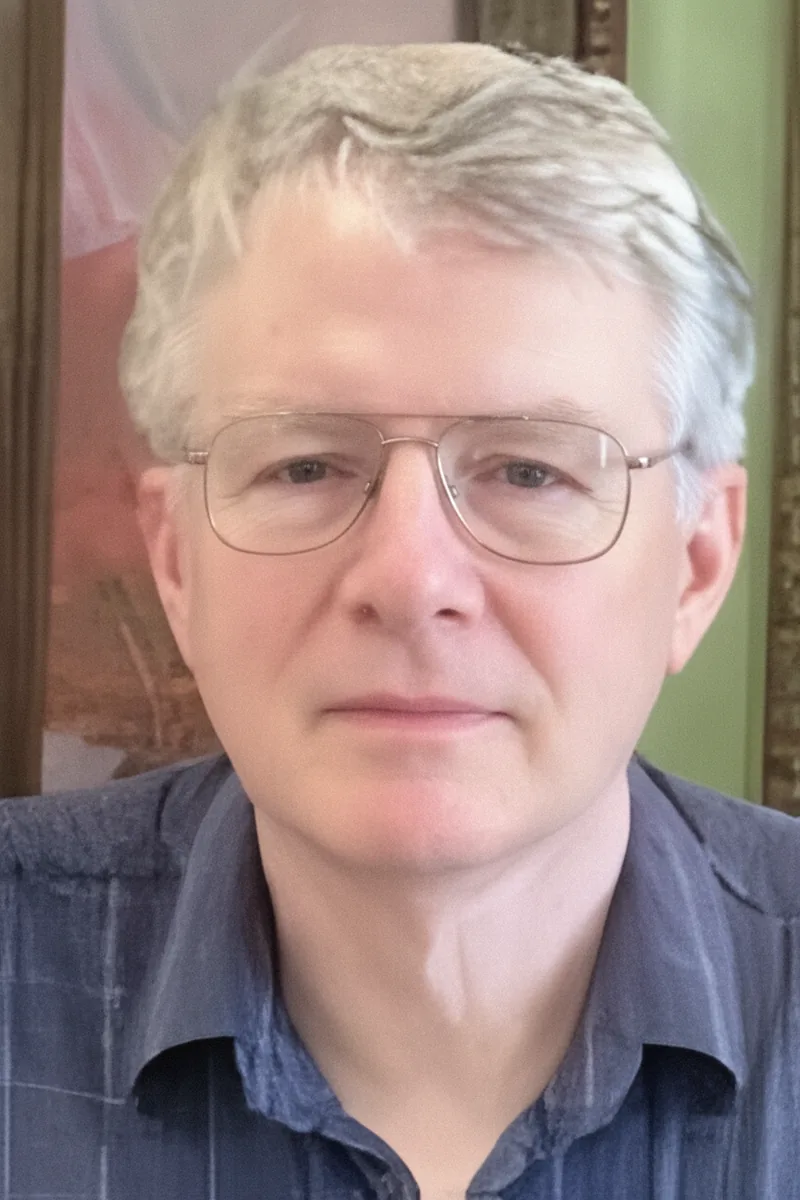
I grew up in the Boston area and now live in Citrus County, Florida. I graduated from MIT in chemical engineering and worked for many years as a chemical process engineer, so I have a strong background in math and science, especially chemistry and thermodynamics. I've also been granted six U.S. patents. When the pandemic hit us, I moved to Florida and did part-time work as a chess tutor, then became a substitute teacher in the middle and high schools in our district. I enjoyed working with the students, many of whom had difficulty learning in big classes with many disruptions. I found that I could best help these students by using real-world examples to teach difficult concepts in a new way. Often, then, the student would come away with a new perspective and a much better understanding of the concept. I was happy to be able to help. These days as a VT tutor, I continue to use, whenever possible, real-world examples in my own material in chemistry and thermodynamics.

Genetics PhD work is surprisingly calculus-intensive — population dynamics, statistical mechanics of molecular interactions, and the thermodynamic stability of nucleic acid structures all demand the same quantitative reasoning that drives p-chem. Nicholas brings that background to topics like free energy calculations and kinetic modeling, where his comfort with both the math and the molecular biology underneath it keeps derivations grounded in actual chemical behavior. Rated 4.8 by students.
Biomedical engineering at BU and Tufts meant Anthony lived in the math that makes p-chem intimidating — differential equations, thermodynamic modeling, and the kinetics of biological systems — long before applying it to physical chemistry specifically. His research background studying neurodegenerative disease therapies keeps him fluent in the quantitative reasoning behind concepts like Gibbs free energy, phase equilibria, and reaction rate theory. Rated 4.9 by students, he connects each derivation to the physical system it describes so the notation carries real meaning.
Two chemistry degrees — bachelor's and master's — mean Chad has gone through the full p-chem gauntlet himself, from quantum mechanical models and statistical thermodynamics to the calculus-dense derivations of chemical kinetics. He teaches the subject by zeroing in on where the math and the molecular picture disconnect for each student, whether that's a tricky partial derivative in a thermodynamic identity or the logic behind a partition function. Rated 4.8 by students.
Two years as an organic chemistry lab TA at the college level gave Maha hands-on experience with the reaction kinetics and thermodynamic reasoning that form the backbone of any p-chem sequence. Now pursuing graduate work in public health at Johns Hopkins, she approaches topics like equilibrium constants and energy diagrams through the lens of someone who's had to apply them in real experimental settings, not just derive them on paper. Rated 5.0 by students.
Biology research through the American Museum of Natural History and pre-med coursework at Cornell gave Krishna hands-on exposure to the thermodynamic and kinetic principles that p-chem formalizes — energy changes in biological systems, reaction rates, equilibrium behavior. She uses that life-science grounding to make topics like Gibbs free energy and rate laws feel like descriptions of real molecular events rather than pure derivation exercises.
Cornell's chemical engineering curriculum puts you through p-chem at an intense pace — Rahul graduated magna cum laude, which means he didn't just survive thermodynamics, quantum mechanics, and kinetics but internalized the reasoning behind each derivation. He pushes past rote symbol manipulation to make sure students can articulate why a particular state function applies or what a phase boundary physically represents. Rated 4.9 by students.
Scoring in the 98th percentile on the MCAT required Nishant to internalize the thermodynamic and kinetic reasoning that p-chem makes rigorous — enthalpy diagrams, equilibrium constants, and rate law derivations all showed up under intense time pressure before he encountered them in their full mathematical form as a medical student at Case Western. He teaches a physics TA's instinct for applied problem-solving to the calculus-dense material, breaking a topic like a Maxwell relation or a phase diagram into the physical question it's actually answering.
Decades as a PhD chemical engineer meant Steven was solving Clausius-Clapeyron problems, reaction kinetics models, and energy balance derivations long before they were textbook exercises — they were daily work. He breaks down p-chem's toughest material by explaining a concept one way, re-explaining it from a different angle, then grounding it in a real engineering application where the math actually matters. Rated 4.9 by students.
Biochemistry lab work and a dual bachelor's in arts and biochemistry mean Andrew has already applied the thermodynamics, kinetics, and quantum mechanical concepts that make p-chem brutal — calculating free energy changes in enzyme systems, modeling reaction rates at the molecular level. He unpacks the heavy calculus in derivations by keeping one foot in the real chemistry, so a partition function or a phase diagram reads as a description of molecular behavior rather than an exercise in pure math. Rated 4.9 by students.
A bio-organic chemistry degree means Alex spent serious time with thermodynamic cycles, kinetics derivations, and the quantum mechanical underpinnings of molecular behavior — the core of any p-chem course. He approaches the subject by tying each derivation back to the organic and biochemical systems students already recognize, so an intimidating equation like the Arrhenius expression becomes a story about why reactions speed up at the molecular level.
A physics degree gives Cory something many p-chem tutors lack — native comfort with the quantum mechanics and statistical mechanics that chemistry students often encounter for the first time in this course. He treats topics like wave functions, partition functions, and thermodynamic state variables as extensions of the physics he already thinks in, then builds the chemical context around them. Rated 4.9 by students.
Differential equations, calculus, and organic chemistry all sit in Nate's regular teaching rotation, which means he's constantly moving between the math and the chemistry that p-chem smashes together — and he knows exactly where students lose the thread between the two. He zeroes in on building intuition around concepts like chemical potential and equilibrium thermodynamics by tying each derivation back to the reaction behavior students already recognize from general and organic chemistry. Rated 5.0 by students.
Testimonials
Because the right Physical Chemistry tutor makes all the difference.
Average Session Rating – Based on 3.4M Learner Ratings
Nearby Physical Chemistry Tutors
Other Tampa Tutors
Related Science Tutors in Tampa
Frequently Asked Questions
Physical chemistry combines abstract concepts with quantitative problem-solving, which creates unique challenges for many students. The most common struggle areas include thermodynamics (understanding entropy and free energy), kinetics (reaction rates and mechanisms), and equilibrium calculations. Students often find it difficult to visualize molecular-level phenomena and connect them to macroscopic observations. Additionally, unit conversions and dimensional analysis cause trouble for many, as physical chemistry requires precision in calculations alongside conceptual understanding.
Physical chemistry requires genuine understanding of underlying principles, not rote memorization. Expert tutors break down complex concepts like thermodynamics and molecular behavior by connecting them to real-world applications—whether that's how refrigerators work or why certain reactions proceed in one direction. Personalized instruction allows tutors to identify where your conceptual gaps are and rebuild your foundation, using diagrams, simulations, and problem-solving approaches that help you develop intuition for how molecules and energy actually behave. This deeper understanding makes tackling harder problems and new topics much more manageable.
Yes. Connecting theory to the scientific method is a crucial part of physical chemistry. Tutors can help you understand what's actually happening in experiments, interpret data correctly, and troubleshoot unexpected results. They can also help you design experiments that properly test hypotheses and discuss how to analyze results using the physical chemistry principles you're learning. This bridges the gap between classroom theory and what happens in the lab, making both more meaningful.
Varsity Tutors connects you with expert tutors who have strong backgrounds in physical chemistry and experience teaching at your level—whether you're in high school AP Chemistry, college General Chemistry II (where physical chemistry topics appear), or an upper-level Physical Chemistry course. During the matching process, tutors learn about your specific course, curriculum, and current challenges so personalized instruction is tailored to exactly where you are. This means you get someone who understands both the subject matter and the specific demands of your course.
Tampa's average student-teacher ratio is about 16.6:1, which means your chemistry teacher is managing a full classroom while you're trying to grasp abstract concepts. In a class that large, it's hard to get personalized attention when you're stuck on thermodynamics or equilibrium problems. Personalized 1-on-1 instruction removes this constraint—tutors can slow down on difficult concepts, spend time on your specific weak areas, and adjust their explanation style to how you learn best. Research shows that 1-on-1 tutoring is significantly more effective for complex subjects like physical chemistry.
Physical chemistry is math-heavy, and many students struggle with translating word problems into equations or handling multi-step calculations. Expert tutors work through the mathematics step-by-step, helping you understand not just how to use a formula but why that formula applies to the specific situation. They also target common pitfalls like unit conversions, significant figures, and dimensional analysis. This builds both your computational confidence and your ability to set up problems correctly from the start.
Absolutely. Tutors help you develop test-taking strategies specific to physical chemistry—how to approach problems under time pressure, which concepts are most likely to appear on exams, and how to check your work for calculation errors. For AP Chemistry, they can help you understand the types of questions the exam emphasizes, practice free-response problems, and build the conceptual reasoning skills the AP exam rewards. Regular tutoring builds your understanding throughout the course, which is more effective than cramming before the exam.
Let’s find your perfect tutor
Answer a few quick questions. We’ll recommend the right plan and match you with a top 5% tutor.