Award-Winning Physical Chemistry Tutors
serving Palm Bay, FL
Physical Chemistry
Tutors in Palm Bay
Private 1-on-1 tutoring, weekly live classes for academic support, test prep & enrichment, practice tests and diagnostics, and more to elevate grades and test scores.
Based on 3.4M Learner Ratings
UniversitiesSchools & Universities
DeliveredHours Delivered
ProficiencyGrowth in Proficiency
Who needs tutoring?
No obligation. Takes ~1 minute.
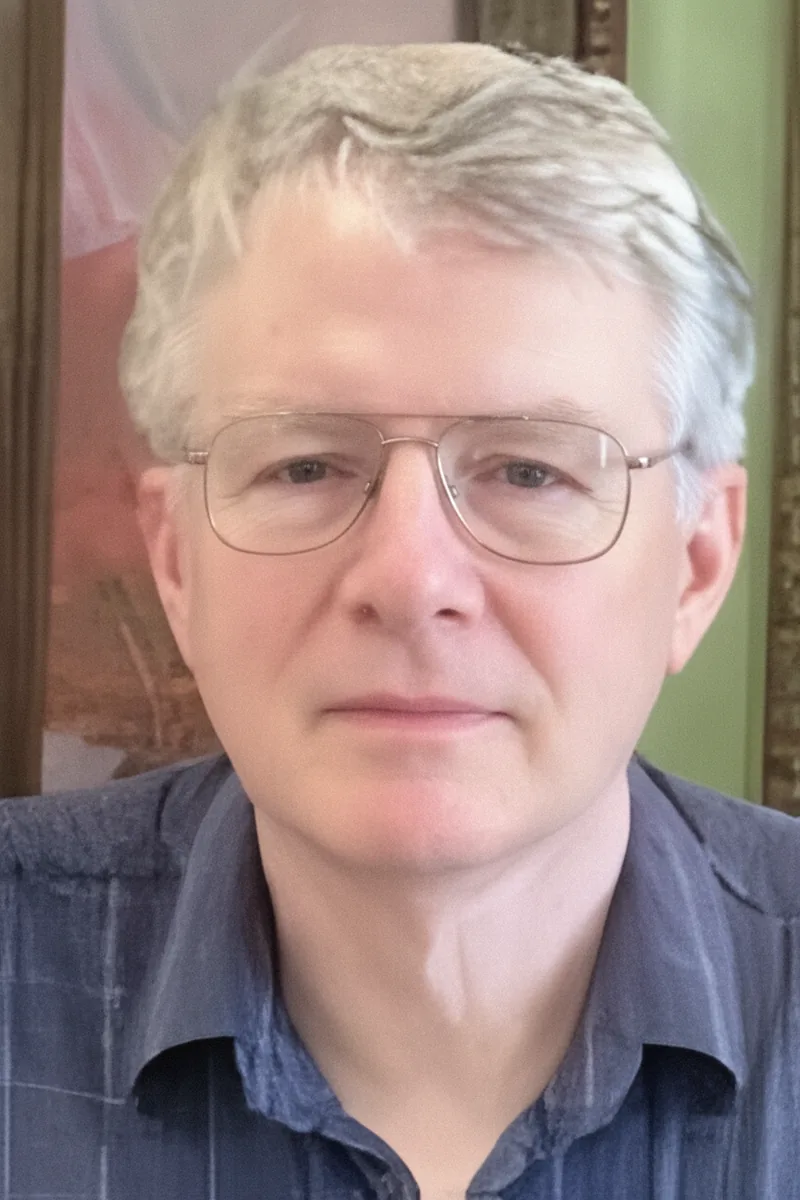
I grew up in the Boston area and now live in Citrus County, Florida. I graduated from MIT in chemical engineering and worked for many years as a chemical process engineer, so I have a strong background in math and science, especially chemistry and thermodynamics. I've also been granted six U.S. patents. When the pandemic hit us, I moved to Florida and did part-time work as a chess tutor, then became a substitute teacher in the middle and high schools in our district. I enjoyed working with the students, many of whom had difficulty learning in big classes with many disruptions. I found that I could best help these students by using real-world examples to teach difficult concepts in a new way. Often, then, the student would come away with a new perspective and a much better understanding of the concept. I was happy to be able to help. These days as a VT tutor, I continue to use, whenever possible, real-world examples in my own material in chemistry and thermodynamics.

Genetics PhD work is surprisingly calculus-intensive — population dynamics, statistical mechanics of molecular interactions, and the thermodynamic stability of nucleic acid structures all demand the same quantitative reasoning that drives p-chem. Nicholas brings that background to topics like free energy calculations and kinetic modeling, where his comfort with both the math and the molecular biology underneath it keeps derivations grounded in actual chemical behavior. Rated 4.8 by students.
A PhD in chemistry means Justin didn't just pass p-chem — he lived in its formalism for years, from quantum mechanical models to statistical thermodynamics, and then kept using it through doctoral research. That depth shows when he teaches: he can trace a concept like chemical potential or a Maxwell relation back to the physical picture driving the math, catching the exact step where a student's understanding breaks down. Rated 5.0 by students.
As an MD/PhD student at Northwestern with a chemistry PhD focus and a B.S. in Chemical Science from Michigan, Austin has gone deep on the thermodynamics and quantum mechanics that form p-chem's backbone — and he's still actively working through advanced coursework in these areas. He tackles derivations by building chemical intuition first, so when a student hits a wall at, say, a Legendre transform connecting internal energy to Gibbs free energy, the math follows naturally from understanding what each variable physically represents.
Pre-med coursework at Rutgers — graduating summa cum laude with a 4.0 — put Sam through the gauntlet of thermodynamics, kinetics, and quantum chemistry that p-chem demands, all while building the calculus fluency needed to survive dense derivations. He approaches topics like enthalpy, entropy, and rate laws by stripping each equation back to the physical scenario it models, making the leap from math to molecular meaning less painful.
Thermodynamics, quantum mechanics, kinetics — physical chemistry is where math and chemistry collide, and most students need a tutor comfortable in both languages. Natasha's chemical engineering degree gave her deep fluency with partition functions, phase diagrams, and rate laws, and her MIT graduate work keeps those concepts sharp. She approaches p-chem by deriving key equations alongside students so the physics behind each formula becomes visible.
Thermodynamics, kinetics, and quantum mechanics all converge in physical chemistry — and that's exactly where Monika's biochemistry and molecular biology training intersects. She breaks down intimidating topics like Gibbs free energy calculations and reaction rate laws by tying them to real chemical systems she studied during her PhD research. Rated 4.8 by students.
Kirby's biochemistry degree at Michigan meant grinding through the thermodynamics and kinetics that sit at the heart of p-chem — Gibbs free energy calculations, equilibrium derivations, and the statistical mechanics of molecular systems were baked into her upper-level coursework. She breaks down the calculus-heavy formalism by keeping each variable tied to the chemical reality it represents, so a daunting derivation like a Clausius-Clapeyron equation reads as a description of phase behavior rather than an abstract math exercise. Rated 4.9 by students.
A physics degree gives Cory something many p-chem tutors lack — native comfort with the quantum mechanics and statistical mechanics that chemistry students often encounter for the first time in this course. He treats topics like wave functions, partition functions, and thermodynamic state variables as extensions of the physics he already thinks in, then builds the chemical context around them. Rated 4.9 by students.
Rice's chemistry curriculum put Asad through the full p-chem gauntlet — thermodynamics, quantum mechanics, kinetics — and his path to medical school at UT Houston means he's had to internalize concepts like enthalpy, entropy, and equilibrium well enough to apply them in biological and clinical contexts. That dual pressure of rigorous chemistry coursework and MCAT preparation sharpened his ability to explain why a derivation works, not just how to grind through the math.
Biomedical engineering at BU and Tufts meant Anthony lived in the math that makes p-chem intimidating — differential equations, thermodynamic modeling, and the kinetics of biological systems — long before applying it to physical chemistry specifically. His research background studying neurodegenerative disease therapies keeps him fluent in the quantitative reasoning behind concepts like Gibbs free energy, phase equilibria, and reaction rate theory. Rated 4.9 by students, he connects each derivation to the physical system it describes so the notation carries real meaning.
Computational linguistics might seem far from p-chem, but Justin's SAT-level math chops and his chemistry coursework give him enough quantitative grounding to tackle the foundational concepts — working through state functions, basic thermodynamic relationships, and the algebra behind equilibrium expressions. He's strongest at slowing down the notation-heavy steps that lose students early in a p-chem sequence, making sure each symbol maps to something physically real before moving forward.
Having studied quantum mechanics and electromagnetism as part of his physics degree, Michael already speaks the mathematical language that makes p-chem so demanding — the wave equations, the statistical distributions, the calculus buried inside every thermodynamic derivation. He teaches from the physics side in, explaining why a Boltzmann distribution or a partition function behaves the way it does before layering on the chemical context that gives it practical meaning.
Testimonials
Because the right Physical Chemistry tutor makes all the difference.
Average Session Rating – Based on 3.4M Learner Ratings
Nearby Physical Chemistry Tutors
Other Palm Bay Tutors
Related Science Tutors in Palm Bay
Frequently Asked Questions
Physical Chemistry combines abstract theoretical concepts with complex mathematical problem-solving, making it one of the most challenging chemistry courses. Students often struggle with visualizing molecular behavior at the quantum level, mastering thermodynamics and kinetics equations, and understanding how to apply these concepts to real-world scenarios like drug design or materials science. Many also find unit conversions and dimensional analysis tricky, especially when working with gas laws, equilibrium calculations, and electrochemistry problems.
Personalized 1-on-1 instruction allows tutors to identify exactly where your understanding breaks down—whether it's the underlying physics, the math, or the connection between theory and application. Rather than memorizing formulas, a tutor can help you develop a conceptual framework so you understand *why* equations work and *when* to use them. This approach is especially powerful in Physical Chemistry, where mastering the logic behind concepts like entropy, activation energy, and reaction rates makes problem-solving intuitive rather than rote.
Your first session is a chance for your tutor to understand your current level, learning style, and specific goals—whether you're preparing for an exam, working through difficult units, or building foundational understanding. You'll likely review recent assignments or exams, discuss which topics feel most confusing, and work through a problem or concept together so your tutor can see how you approach Physical Chemistry. From there, your tutor will create a personalized plan to address your biggest challenges and build your confidence.
Absolutely. While balancing equations might seem like a procedural skill, understanding the logic behind it—why atoms must be conserved and how to systematically approach complex reactions—makes the process much faster and less frustrating. Tutors can also help you connect stoichiometry to larger Physical Chemistry concepts like limiting reagents, reaction yields, and thermochemical calculations, showing you how these fundamentals support everything you'll learn later in the course.
Yes. Many Physical Chemistry courses include lab components where you measure reaction rates, determine equilibrium constants, or study thermodynamic properties. Tutors can help you understand the scientific method behind your experiments, interpret your data, explain unexpected results, and connect lab observations to theoretical predictions. This bridges the gap between classroom concepts and hands-on science, deepening your overall understanding of how Physical Chemistry works in practice.
Varsity Tutors connects you with expert tutors who have strong backgrounds in chemistry and physics, and who understand the specific challenges of Physical Chemistry. When you reach out, you'll be matched based on your needs, schedule, and learning style. Your tutor will have the expertise to guide you through quantum mechanics, thermodynamics, kinetics, and other advanced topics with clarity and patience.
Yes. Varsity Tutors connects students in Palm Bay with personalized Physical Chemistry tutoring tailored to your school's curriculum and your individual learning needs. Whether you attend one of the 26 schools in the Palm Bay area or are homeschooled, you can access expert instruction designed around your schedule and goals.
Definitely. Tutors can help you review key concepts, practice problem-solving under timed conditions, identify knowledge gaps, and develop test-taking strategies specific to Physical Chemistry. Whether you're preparing for a midterm, final, or AP Chemistry exam (which includes significant Physical Chemistry content), personalized instruction helps you build both conceptual understanding and the confidence to tackle complex problems on test day.
Let’s find your perfect tutor
Answer a few quick questions. We’ll recommend the right plan and match you with a top 5% tutor.