Award-Winning Physical Chemistry Tutors
serving Miami, FL
Physical Chemistry
Tutors in Miami
Private 1-on-1 tutoring, weekly live classes for academic support, test prep & enrichment, practice tests and diagnostics, and more to elevate grades and test scores.
Based on 3.4M Learner Ratings
UniversitiesSchools & Universities
DeliveredHours Delivered
ProficiencyGrowth in Proficiency
Who needs tutoring?
No obligation. Takes ~1 minute.
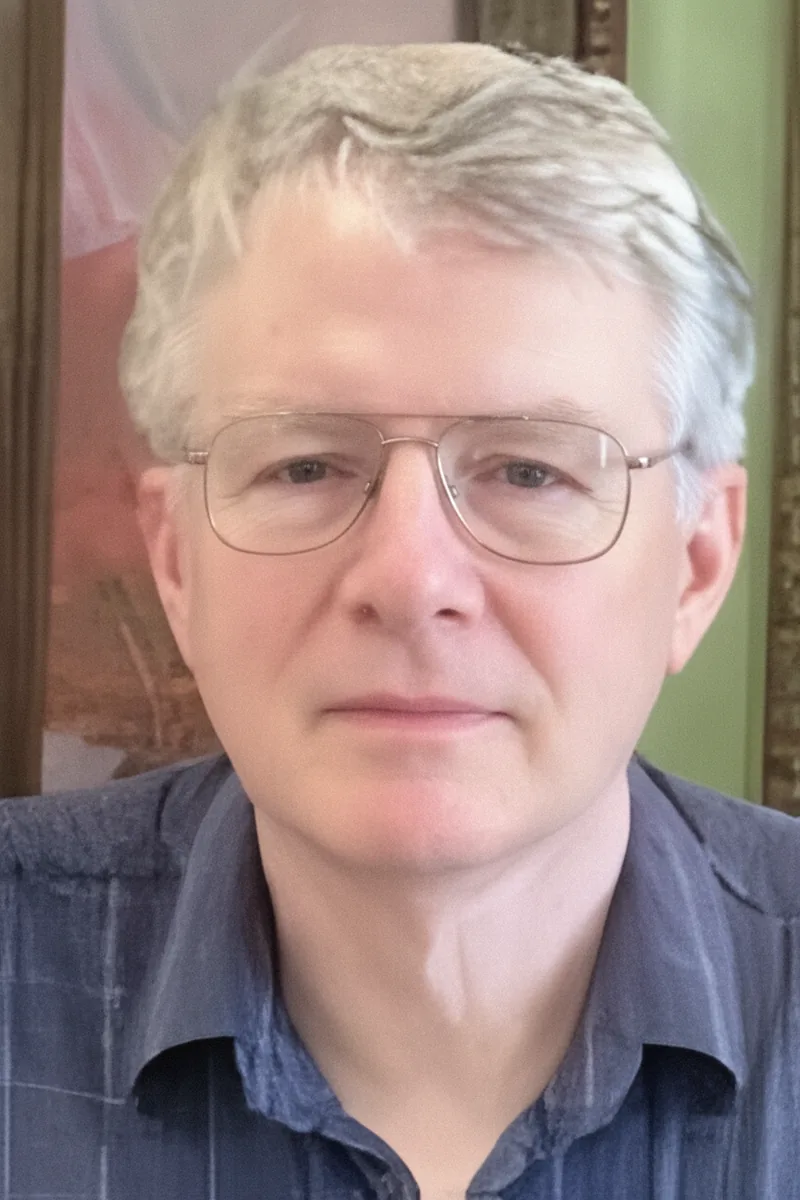
I grew up in the Boston area and now live in Citrus County, Florida. I graduated from MIT in chemical engineering and worked for many years as a chemical process engineer, so I have a strong background in math and science, especially chemistry and thermodynamics. I've also been granted six U.S. patents. When the pandemic hit us, I moved to Florida and did part-time work as a chess tutor, then became a substitute teacher in the middle and high schools in our district. I enjoyed working with the students, many of whom had difficulty learning in big classes with many disruptions. I found that I could best help these students by using real-world examples to teach difficult concepts in a new way. Often, then, the student would come away with a new perspective and a much better understanding of the concept. I was happy to be able to help. These days as a VT tutor, I continue to use, whenever possible, real-world examples in my own material in chemistry and thermodynamics.

Genetics PhD work is surprisingly calculus-intensive — population dynamics, statistical mechanics of molecular interactions, and the thermodynamic stability of nucleic acid structures all demand the same quantitative reasoning that drives p-chem. Nicholas brings that background to topics like free energy calculations and kinetic modeling, where his comfort with both the math and the molecular biology underneath it keeps derivations grounded in actual chemical behavior. Rated 4.8 by students.
Medical school at the Medical College of Wisconsin means Abrahim encounters p-chem's core concepts daily — reaction kinetics in pharmacology, thermodynamic energy balances in physiology, and the quantum mechanical principles behind spectroscopic diagnostics. His UCLA biology degree and 34 ACT demonstrate the mathematical fluency needed to work through derivations involving state functions, equilibrium constants, and entropy calculations without losing sight of what the chemistry actually describes. Rated 5.0 by students.
Biology coursework builds a surprising amount of p-chem intuition — enzyme kinetics, membrane energetics, and metabolic thermodynamics all run on the same free energy and rate equations that dominate a physical chemistry sequence. Ade uses that biological grounding to make abstract derivations tangible, turning something like a Boltzmann distribution into a concrete picture of how molecules actually partition energy across states.
Cornell's biological sciences curriculum put Alec through rigorous quantitative coursework, but it was his TA experience in general chemistry — running problem-solving sessions where students had to wrestle with energy, equilibrium, and rate laws — that sharpened his instinct for where p-chem concepts start to blur. He teaches the subject by slowing down at the exact calculus step where the physical meaning tends to disappear, whether that's setting up a thermodynamic cycle or interpreting what a rate constant actually tells you about molecular collisions. Rated 4.8 by students.
I am most passionate about biology and chemistry. I am a firm proponent of education, believing it to be absolutely necessary for an improved quality of life, and I try to impart this appreciation to all of my students.
P-chem is where thermodynamics, quantum mechanics, and kinetics collide, and most students feel overwhelmed by the math intensity alone. Jacob's biochemistry-emphasis BS in Chemistry means he tackled these derivations firsthand — from partition functions to the Schrödinger equation — and he's skilled at unpacking the physical meaning behind each equation so the math stops feeling arbitrary. Rated 5.0 by students.
Conservation biology at ASU gave River a working familiarity with the thermodynamic and kinetic principles that p-chem puts under a mathematical microscope — energy flows in ecosystems, reaction energetics in biochemical cycles, and the statistical behavior of molecular populations. That biology-first perspective lets River approach topics like Gibbs free energy and equilibrium constants by starting with the physical intuition before wading into the calculus. Rated 4.8 by students.
As an MD/PhD student at Northwestern with a chemistry PhD focus and a B.S. in Chemical Science from Michigan, Austin has gone deep on the thermodynamics and quantum mechanics that form p-chem's backbone — and he's still actively working through advanced coursework in these areas. He tackles derivations by building chemical intuition first, so when a student hits a wall at, say, a Legendre transform connecting internal energy to Gibbs free energy, the math follows naturally from understanding what each variable physically represents.
This is Jacob's home turf. He earned his Ph.D. in Physical Chemistry from UC Berkeley and now conducts research at Northwestern, so topics like quantum mechanics, statistical thermodynamics, and spectroscopy are part of his everyday work. He walks students through the math-heavy derivations that make p-chem notoriously difficult, connecting each equation back to the physical picture it describes.
Studying biochemistry and cell biology at Rice means Sugi already had to internalize the thermodynamic and kinetic principles that drive cellular processes — free energy calculations for metabolic reactions, equilibrium constants governing binding events — before tackling them in their pure mathematical form. She unpacks p-chem derivations by linking each variable back to the molecular behavior it quantifies, turning something like a chemical potential expression into a description of what molecules are actually doing at a phase boundary. Rated 5.0 by students.
Enric holds a PhD in Chemistry, which means p-chem wasn't just a course requirement — it was the foundation his entire research career was built on, from quantum mechanical modeling to thermodynamic analysis at the graduate level. He teaches the subject by slowing down at the exact calculus step where a derivation goes from followable to opaque, rebuilding the physical reasoning behind each manipulation before moving forward. Rated 5.0 by students.
Decades as a PhD chemical engineer meant Steven was solving Clausius-Clapeyron problems, reaction kinetics models, and energy balance derivations long before they were textbook exercises — they were daily work. He breaks down p-chem's toughest material by explaining a concept one way, re-explaining it from a different angle, then grounding it in a real engineering application where the math actually matters. Rated 4.9 by students.
Biomedical engineering at BU and Tufts meant Anthony lived in the math that makes p-chem intimidating — differential equations, thermodynamic modeling, and the kinetics of biological systems — long before applying it to physical chemistry specifically. His research background studying neurodegenerative disease therapies keeps him fluent in the quantitative reasoning behind concepts like Gibbs free energy, phase equilibria, and reaction rate theory. Rated 4.9 by students, he connects each derivation to the physical system it describes so the notation carries real meaning.
Testimonials
Because the right Physical Chemistry tutor makes all the difference.
Average Session Rating – Based on 3.4M Learner Ratings
Nearby Physical Chemistry Tutors
Other Miami Tutors
Related Science Tutors in Miami
Frequently Asked Questions
Physical Chemistry combines principles of physics and chemistry to study matter and energy at the molecular level. Most courses cover thermodynamics (heat, energy, and spontaneity), kinetics (reaction rates and mechanisms), quantum mechanics (atomic structure and bonding), and equilibrium. Additional topics often include electrochemistry, spectroscopy, and statistical mechanics. Since Miami's school districts follow Florida's standards, coursework typically emphasizes both theoretical understanding and practical applications—making it important to connect these abstract concepts to real-world systems.
Physical Chemistry is challenging because it requires understanding abstract molecular-level concepts while simultaneously applying complex mathematics. Students often struggle with visualizing quantum states, balancing thermodynamic equations, and connecting mathematical derivations to physical meaning. Personalized tutoring helps by breaking down these interconnected topics into manageable pieces, building strong foundational understanding rather than relying on memorization, and showing how equations represent real chemical behavior. A tutor can also identify whether gaps are in math skills, conceptual understanding, or problem-solving strategy—and address each specifically.
Lab work is essential in Physical Chemistry because it grounds theoretical concepts in observable phenomena—seeing how temperature affects reaction rates, measuring equilibrium constants, or observing spectroscopic data makes the theory concrete. Tutoring can strengthen your lab skills by helping you understand the scientific reasoning behind experimental design, interpret data correctly, and write clear lab reports that explain results. A tutor can also help you prepare for lab practicals, troubleshoot unexpected results, and develop the systematic thinking that makes you a more independent scientist.
Memorizing formulas might get you through homework problems, but Physical Chemistry requires deeper understanding—knowing why a formula applies, what each variable represents, and when it breaks down. For example, memorizing the ideal gas law is different from understanding what happens when gases deviate from ideal behavior and why. Tutoring emphasizes conceptual mastery by connecting equations to molecular behavior, using visual models and real examples, and helping you develop problem-solving strategies that work across different scenarios. This approach builds lasting understanding and makes exam preparation far more effective.
Varsity Tutors connects you with experienced tutors who have deep expertise in Physical Chemistry and understand the curriculum taught in Miami's schools. When you connect with a tutor through Varsity Tutors, you get matched based on your specific needs—whether that's strengthening foundational concepts, improving problem-solving speed, or preparing for the AP Chemistry exam's Physical Chemistry section. Your tutor can provide personalized instruction tailored to your learning style and goals, making your study time more efficient and effective.
Absolutely. Unit conversions and dimensional analysis are critical skills in Physical Chemistry because you're constantly working with energy in different units (joules, calories, electron volts), pressure in various scales (atm, Pa, bar), and concentrations in multiple forms (molarity, molality, mole fraction). Many students lose points on exams not from conceptual misunderstanding but from careless unit errors. Tutoring helps you develop systematic approaches to dimensional analysis, build confidence with unit conversions, and create mental frameworks that prevent these errors. Mastering this skill early makes Physical Chemistry problems feel much more manageable.
Success in AP or honors Physical Chemistry requires mastery across several areas: strong algebra and logarithm skills for calculations, conceptual understanding of thermodynamic principles and reaction kinetics, ability to interpret graphs and data, and practice with multi-step problems that combine several topics. Beyond memorizing content, focus on developing your scientific reasoning—learning to predict how systems respond to changes and justify your predictions. Tutoring can help you identify which topics are your weakest areas, practice with exam-style questions under timed conditions, and build strategies for tackling unfamiliar problems confidently.
Let’s find your perfect tutor
Answer a few quick questions. We’ll recommend the right plan and match you with a top 5% tutor.