Award-Winning Physical Chemistry Tutors
serving Sarasota, FL
Physical Chemistry
Tutors in Sarasota
Private 1-on-1 tutoring, weekly live classes for academic support, test prep & enrichment, practice tests and diagnostics, and more to elevate grades and test scores.
Based on 3.4M Learner Ratings
UniversitiesSchools & Universities
DeliveredHours Delivered
ProficiencyGrowth in Proficiency
Who needs tutoring?
No obligation. Takes ~1 minute.
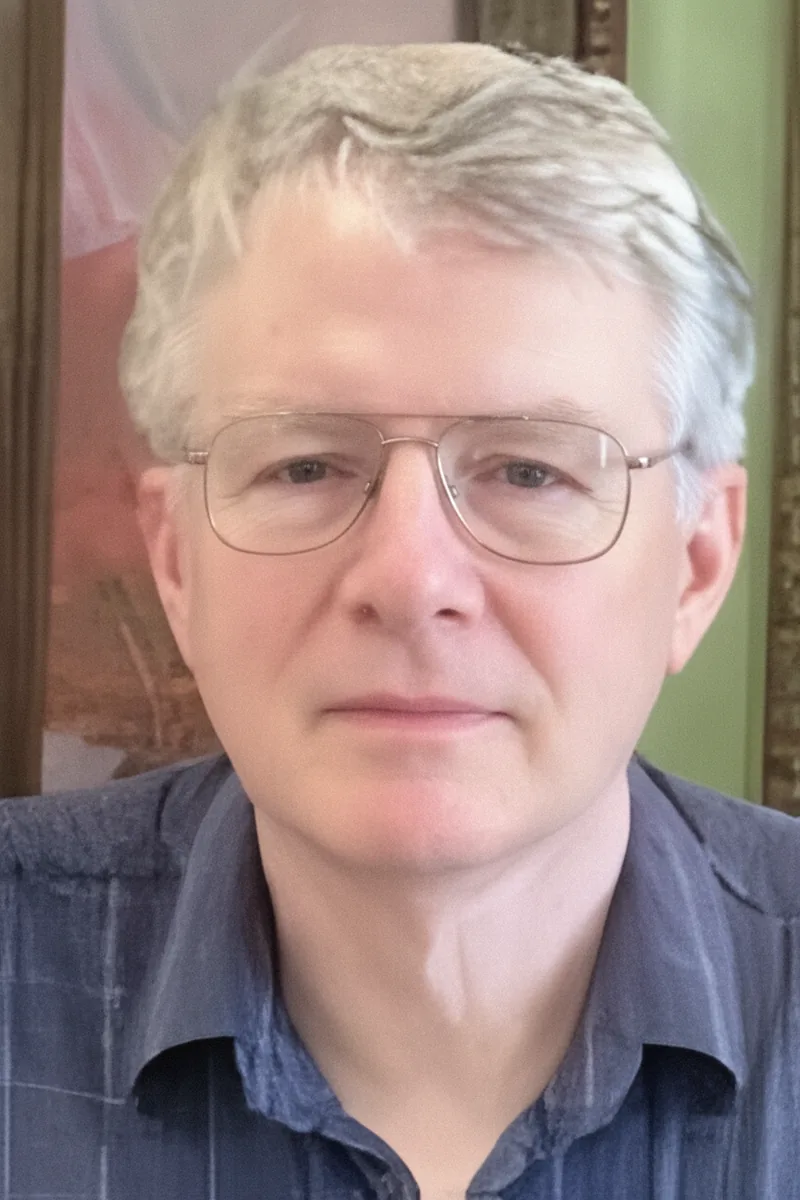
I grew up in the Boston area and now live in Citrus County, Florida. I graduated from MIT in chemical engineering and worked for many years as a chemical process engineer, so I have a strong background in math and science, especially chemistry and thermodynamics. I've also been granted six U.S. patents. When the pandemic hit us, I moved to Florida and did part-time work as a chess tutor, then became a substitute teacher in the middle and high schools in our district. I enjoyed working with the students, many of whom had difficulty learning in big classes with many disruptions. I found that I could best help these students by using real-world examples to teach difficult concepts in a new way. Often, then, the student would come away with a new perspective and a much better understanding of the concept. I was happy to be able to help. These days as a VT tutor, I continue to use, whenever possible, real-world examples in my own material in chemistry and thermodynamics.
Genetics PhD work is surprisingly calculus-intensive — population dynamics, statistical mechanics of molecular interactions, and the thermodynamic stability of nucleic acid structures all demand the same quantitative reasoning that drives p-chem. Nicholas brings that background to topics like free energy calculations and kinetic modeling, where his comfort with both the math and the molecular biology underneath it keeps derivations grounded in actual chemical behavior. Rated 4.8 by students.
Biology research through the American Museum of Natural History and pre-med coursework at Cornell gave Krishna hands-on exposure to the thermodynamic and kinetic principles that p-chem formalizes — energy changes in biological systems, reaction rates, equilibrium behavior. She uses that life-science grounding to make topics like Gibbs free energy and rate laws feel like descriptions of real molecular events rather than pure derivation exercises.
Earning a B.S. in Chemistry means Uttam has worked through the thermodynamics, kinetics, and quantum mechanics sequence firsthand — he knows exactly where a derivation like the Clausius-Clapeyron equation starts losing students and how to rebuild the logic step by step. His broad teaching range across calculus, algebra, and multiple chemistry levels keeps him sharp at bridging the math-chemistry gap that makes p-chem uniquely difficult.
Rice's chemistry curriculum put Asad through the full p-chem gauntlet — thermodynamics, quantum mechanics, kinetics — and his path to medical school at UT Houston means he's had to internalize concepts like enthalpy, entropy, and equilibrium well enough to apply them in biological and clinical contexts. That dual pressure of rigorous chemistry coursework and MCAT preparation sharpened his ability to explain why a derivation works, not just how to grind through the math.
Garrett's biology degree means he already thinks in terms of systems — enzyme kinetics, membrane potentials, metabolic energy flow — which gives him a concrete anchor for the abstract math that makes p-chem so intimidating. He teaches thermodynamic and kinetic concepts by connecting derivations to the biological and chemical phenomena they describe, so something like a Gibbs free energy calculation feels like a tool rather than an exercise in symbol-pushing.
I am most passionate about biology and chemistry. I am a firm proponent of education, believing it to be absolutely necessary for an improved quality of life, and I try to impart this appreciation to all of my students.
Studying biochemistry and cell biology at Rice means Sugi already had to internalize the thermodynamic and kinetic principles that drive cellular processes — free energy calculations for metabolic reactions, equilibrium constants governing binding events — before tackling them in their pure mathematical form. She unpacks p-chem derivations by linking each variable back to the molecular behavior it quantifies, turning something like a chemical potential expression into a description of what molecules are actually doing at a phase boundary. Rated 5.0 by students.
Pre-med coursework at Rutgers — graduating summa cum laude with a 4.0 — put Sam through the gauntlet of thermodynamics, kinetics, and quantum chemistry that p-chem demands, all while building the calculus fluency needed to survive dense derivations. He approaches topics like enthalpy, entropy, and rate laws by stripping each equation back to the physical scenario it models, making the leap from math to molecular meaning less painful.
Katherine's broad math and science background — spanning calculus, thermodynamics, and physics — means she's comfortable with the multivariable calculus and differential equations that make p-chem derivations so dense. She takes apart concepts like Maxwell relations and chemical potential by slowing down at the exact algebraic step where the physical intuition tends to disappear. Rated 5.0 by students.
Cornell's biological sciences curriculum put Alec through rigorous quantitative coursework, but it was his TA experience in general chemistry — running problem-solving sessions where students had to wrestle with energy, equilibrium, and rate laws — that sharpened his instinct for where p-chem concepts start to blur. He teaches the subject by slowing down at the exact calculus step where the physical meaning tends to disappear, whether that's setting up a thermodynamic cycle or interpreting what a rate constant actually tells you about molecular collisions. Rated 4.8 by students.
I am currently an adjunct professor of chemistry at a small liberal arts college in the Chicago area. Previously, I worked in the chemical industry for several years as a researcher, but I've found that the most satisfying moments have come when I am able to share my expertise with someone else. Similarly, I very much enjoyed the four semesters in the graduate school when I was a teaching assistant. It gave me the opportunity to work with students and help them develop an understanding for the subject. These are the primary reasons that I have decided to go into teaching.
This is Jacob's home turf. He earned his Ph.D. in Physical Chemistry from UC Berkeley and now conducts research at Northwestern, so topics like quantum mechanics, statistical thermodynamics, and spectroscopy are part of his everyday work. He walks students through the math-heavy derivations that make p-chem notoriously difficult, connecting each equation back to the physical picture it describes.
Biochemistry lab work and a dual bachelor's in arts and biochemistry mean Andrew has already applied the thermodynamics, kinetics, and quantum mechanical concepts that make p-chem brutal — calculating free energy changes in enzyme systems, modeling reaction rates at the molecular level. He unpacks the heavy calculus in derivations by keeping one foot in the real chemistry, so a partition function or a phase diagram reads as a description of molecular behavior rather than an exercise in pure math. Rated 4.9 by students.
Testimonials
Because the right Physical Chemistry tutor makes all the difference.
Average Session Rating – Based on 3.4M Learner Ratings
Nearby Physical Chemistry Tutors
Other Sarasota Tutors
Related Science Tutors in Sarasota
Frequently Asked Questions
Physical Chemistry combines abstract theoretical concepts with complex mathematical problem-solving, making it one of the most challenging chemistry courses. Students often struggle with visualizing molecular-level phenomena, mastering thermodynamics and kinetics equations, and connecting mathematical derivations to real-world chemical behavior. Many find the shift from memorization-based chemistry to conceptual understanding particularly difficult, especially when balancing multiple variables in equilibrium and rate law problems.
Personalized 1-on-1 instruction allows tutors to identify exactly where conceptual gaps exist—whether it's understanding entropy, mastering unit conversions, or applying the scientific method to lab analysis. Tutors can work at your pace, breaking down abstract concepts through visual explanations and worked examples, then guide you through problem-solving strategies specific to your learning style. This targeted approach helps you build both content mastery and the scientific reasoning skills needed to tackle unfamiliar problems on exams.
Your first session is focused on understanding your specific needs and building a foundation for future work. The tutor will assess your current understanding of key Physical Chemistry concepts, identify areas where you're struggling most, and discuss your goals—whether that's improving exam performance, understanding lab work, or preparing for AP Chemistry or college coursework. From there, you'll develop a personalized plan that addresses your priorities and learning style.
Yes. Tutors can help you understand the theoretical principles behind your lab experiments, interpret data using the scientific method, and connect observations to concepts like reaction rates, equilibrium, and thermodynamic principles. Whether you're analyzing calorimetry results, calculating activation energy, or writing lab reports that connect experimental evidence to theory, personalized instruction helps you develop stronger scientific reasoning and technical skills.
Varsity Tutors connects students in Sarasota with tutors who have deep expertise in Physical Chemistry—many with advanced degrees in chemistry, physics, or related fields, and experience teaching or tutoring the subject at high school and college levels. Tutors understand both the content and the common conceptual roadblocks students face, allowing them to explain complex topics clearly and guide you through challenging problem sets with confidence.
Physical Chemistry requires fluency with equations ranging from the ideal gas law to Gibbs free energy calculations. Tutors break down the logic behind each equation, help you understand what variables represent and why they matter, and teach systematic problem-solving strategies—like unit conversions and dimensional analysis—that work across different problem types. This approach builds your confidence and reduces errors on exams.
Improvement depends on your starting point and goals, but most students see meaningful progress within 4-6 weeks of consistent tutoring as they strengthen foundational concepts and problem-solving strategies. For exam preparation or tackling a specific unit, focused work over 2-3 weeks can make a significant difference. The key is regular practice between sessions combined with personalized guidance to correct misconceptions quickly.
Varsity Tutors makes it easy to connect with qualified Physical Chemistry tutors serving students in Sarasota. You can share your specific needs—whether you're in high school, AP Chemistry, or college-level Physical Chemistry—and we'll match you with a tutor whose expertise and teaching style fit your goals. From there, you can schedule your first session and start working on the concepts and skills that matter most to you.
Let’s find your perfect tutor
Answer a few quick questions. We’ll recommend the right plan and match you with a top 5% tutor.