Award-Winning Physical Chemistry Tutors
serving Jacksonville, FL
Physical Chemistry
Tutors in Jacksonville
Private 1-on-1 tutoring, weekly live classes for academic support, test prep & enrichment, practice tests and diagnostics, and more to elevate grades and test scores.
Based on 3.4M Learner Ratings
UniversitiesSchools & Universities
DeliveredHours Delivered
ProficiencyGrowth in Proficiency
Who needs tutoring?
No obligation. Takes ~1 minute.

Genetics PhD work is surprisingly calculus-intensive — population dynamics, statistical mechanics of molecular interactions, and the thermodynamic stability of nucleic acid structures all demand the same quantitative reasoning that drives p-chem. Nicholas brings that background to topics like free energy calculations and kinetic modeling, where his comfort with both the math and the molecular biology underneath it keeps derivations grounded in actual chemical behavior. Rated 4.8 by students.
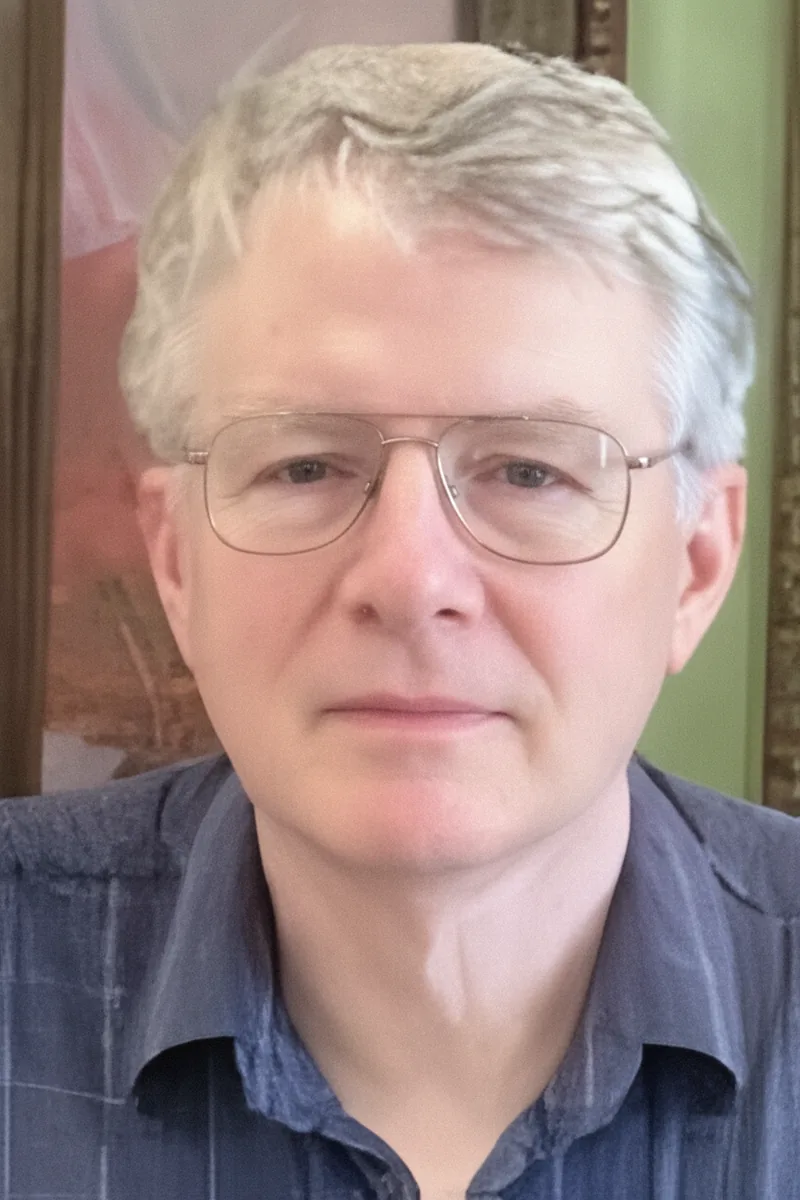
I grew up in the Boston area and now live in Citrus County, Florida. I graduated from MIT in chemical engineering and worked for many years as a chemical process engineer, so I have a strong background in math and science, especially chemistry and thermodynamics. I've also been granted six U.S. patents. When the pandemic hit us, I moved to Florida and did part-time work as a chess tutor, then became a substitute teacher in the middle and high schools in our district. I enjoyed working with the students, many of whom had difficulty learning in big classes with many disruptions. I found that I could best help these students by using real-world examples to teach difficult concepts in a new way. Often, then, the student would come away with a new perspective and a much better understanding of the concept. I was happy to be able to help. These days as a VT tutor, I continue to use, whenever possible, real-world examples in my own material in chemistry and thermodynamics.
Studying biochemistry and cell biology at Rice means Sugi already had to internalize the thermodynamic and kinetic principles that drive cellular processes — free energy calculations for metabolic reactions, equilibrium constants governing binding events — before tackling them in their pure mathematical form. She unpacks p-chem derivations by linking each variable back to the molecular behavior it quantifies, turning something like a chemical potential expression into a description of what molecules are actually doing at a phase boundary. Rated 5.0 by students.
Medical school at the Medical College of Wisconsin means Abrahim encounters p-chem's core concepts daily — reaction kinetics in pharmacology, thermodynamic energy balances in physiology, and the quantum mechanical principles behind spectroscopic diagnostics. His UCLA biology degree and 34 ACT demonstrate the mathematical fluency needed to work through derivations involving state functions, equilibrium constants, and entropy calculations without losing sight of what the chemistry actually describes. Rated 5.0 by students.
Pursuing a dual Ph.D./Pharm.D. at UConn with graduate work in medicinal chemistry means Xhesika encounters the thermodynamic and kinetic formalism of p-chem as daily working tools — calculating drug stability, modeling reaction pathways, predicting how molecular interactions shift with temperature and pressure. She teaches derivations like Maxwell relations and Clausius-Clapeyron by tying each variable back to the pharmacological systems where she actually uses them, so the math carries chemical weight instead of feeling like abstract symbol-pushing.
Maurice's teaching background in special education sharpens his ability to break down the layered abstractions in p-chem — when a student is lost inside a Gibbs free energy derivation, he isolates exactly which conceptual step broke down and rebuilds from there. His coursework across calculus, statistics, and chemistry gives him enough quantitative range to walk through the thermodynamic and kinetic formalisms, even if p-chem isn't his deepest specialty.
Earning a B.S. in Chemistry means Uttam has worked through the thermodynamics, kinetics, and quantum mechanics sequence firsthand — he knows exactly where a derivation like the Clausius-Clapeyron equation starts losing students and how to rebuild the logic step by step. His broad teaching range across calculus, algebra, and multiple chemistry levels keeps him sharp at bridging the math-chemistry gap that makes p-chem uniquely difficult.
Pre-med coursework at Rice plus dual degrees in environmental sciences and ecology meant Daniel was solving energy balance problems and applying thermodynamic reasoning to natural systems well before encountering p-chem's formal derivations. His lab technician work at Rice keeps the quantitative skills sharp — setting up calculations involving enthalpy, equilibrium, and kinetic models is part of the daily routine, not a distant textbook memory.
Two biomedical engineering degrees mean Allyson has been doing the calculus-heavy thermodynamics and kinetics work that p-chem formalizes — modeling energy transfer in biological systems, working through rate equations for physiological processes — since undergrad. She zeroes in on the specific mathematical step where a derivation goes from followable to opaque, whether that's a tricky partial derivative in a Maxwell relation or the statistical reasoning inside a Boltzmann distribution. Rated 4.9 by students.
I am most passionate about biology and chemistry. I am a firm proponent of education, believing it to be absolutely necessary for an improved quality of life, and I try to impart this appreciation to all of my students.
Computational linguistics might seem far from p-chem, but Justin's SAT-level math chops and his chemistry coursework give him enough quantitative grounding to tackle the foundational concepts — working through state functions, basic thermodynamic relationships, and the algebra behind equilibrium expressions. He's strongest at slowing down the notation-heavy steps that lose students early in a p-chem sequence, making sure each symbol maps to something physically real before moving forward.
A physics degree means Eitan spent years inside the quantum mechanics, statistical mechanics, and thermodynamics that p-chem courses formalize on the chemistry side — Schrödinger's equation, Boltzmann statistics, and state functions are native territory rather than new abstractions. He teaches the derivations by clarifying the physical picture each equation encodes, so a student wrestling with a partition function or a Carnot cycle can see the molecular behavior driving every calculus step. Holds a 5.0 rating.
Thermodynamics, quantum mechanics, and kinetics all collide in physical chemistry, and the math intensity alone can be overwhelming. As a chemistry major at TCU who's worked through p-chem coursework firsthand, Nathan breaks down derivations — partition functions, the Schrödinger equation, phase diagrams — into manageable logical steps. He connects the heavy math back to the physical meaning so equations stop feeling arbitrary.
A bio-organic chemistry degree means Alex spent serious time with thermodynamic cycles, kinetics derivations, and the quantum mechanical underpinnings of molecular behavior — the core of any p-chem course. He approaches the subject by tying each derivation back to the organic and biochemical systems students already recognize, so an intimidating equation like the Arrhenius expression becomes a story about why reactions speed up at the molecular level.
Testimonials
Because the right Physical Chemistry tutor makes all the difference.
Average Session Rating – Based on 3.4M Learner Ratings
Nearby Physical Chemistry Tutors
Other Jacksonville Tutors
Related Science Tutors in Jacksonville
Frequently Asked Questions
Physical Chemistry combines abstract theoretical concepts with complex mathematical applications, making it one of the most challenging chemistry courses. Students often struggle with visualizing molecular behavior, balancing thermodynamic equations, understanding equilibrium concepts, and applying calculus to chemistry problems. Personalized tutoring helps break down these interconnected topics into manageable pieces, allowing you to build conceptual understanding rather than just memorizing formulas.
While General Chemistry introduces basic atomic structure and bonding, Physical Chemistry dives deep into the quantitative relationships between matter, energy, and molecular behavior. Physical Chemistry requires stronger math skills and focuses on thermodynamics, kinetics, quantum mechanics, and statistical mechanics—topics that explain the "why" behind chemical reactions at a molecular level. Tutors experienced in Physical Chemistry help you develop the mathematical reasoning and conceptual frameworks needed to succeed in this more advanced course.
During your first session, a tutor will assess your current understanding of foundational concepts, identify specific areas where you're struggling (whether it's thermodynamics, kinetics, or mathematical applications), and learn your learning style. From there, they'll create a personalized plan that targets your weak spots while building confidence in areas where you're strong. Most students find that having someone explain difficult concepts one-on-one makes Physical Chemistry feel much more manageable.
Yes—tutors can help you understand the theory behind lab experiments, prepare for lab reports, and connect experimental results to the concepts you're learning in lecture. They can explain how to approach data analysis, work through calculations, and understand what your results mean in the context of thermodynamic principles or reaction kinetics. This bridges the gap between theory and hands-on application, deepening your overall understanding of Physical Chemistry.
Tutors help you develop problem-solving strategies for the types of questions you'll encounter—whether it's thermodynamic calculations, equilibrium problems, or conceptual reasoning questions. They work with you to identify your weak areas, practice similar problems repeatedly, and build the confidence you need to tackle unfamiliar questions on test day. Consistent, focused preparation with a tutor typically leads to significant score improvements because you're learning how to think through problems, not just memorizing solutions.
Look for tutors with strong backgrounds in chemistry and mathematics—ideally with experience teaching or tutoring Physical Chemistry specifically. They should be able to explain abstract concepts clearly, help you visualize molecular-level phenomena, and guide you through complex calculations. Varsity Tutors connects you with expert tutors who have demonstrated expertise in Physical Chemistry and a track record of helping students master this challenging subject.
True understanding comes from connecting formulas to the concepts they represent—knowing not just how to use an equation, but why it works and when to apply it. A tutor helps you ask the right questions: What does this variable represent? How do these concepts relate? What happens if I change this value? By working through problems together and exploring the reasoning behind each step, you develop deeper conceptual understanding that makes Physical Chemistry feel less like memorization and more like logical problem-solving.
Many students notice improved clarity and confidence within 2-3 sessions as concepts start to click and they develop better problem-solving strategies. More significant grade improvements typically emerge over 4-8 weeks of consistent tutoring, depending on where you're starting and how frequently you meet. The key is regular, focused practice between sessions—tutors help you identify what to work on so your independent study time is as productive as possible.
Let’s find your perfect tutor
Answer a few quick questions. We’ll recommend the right plan and match you with a top 5% tutor.