Award-Winning Latin Tutors
serving Portland, OR
Latin
Tutors in Portland
Private 1-on-1 tutoring, weekly live classes for academic support, test prep & enrichment, practice tests and diagnostics, and more to elevate grades and test scores.
Based on 3.4M Learner Ratings
UniversitiesSchools & Universities
DeliveredHours Delivered
ProficiencyGrowth in Proficiency
Who needs tutoring?
No obligation. Takes ~1 minute.
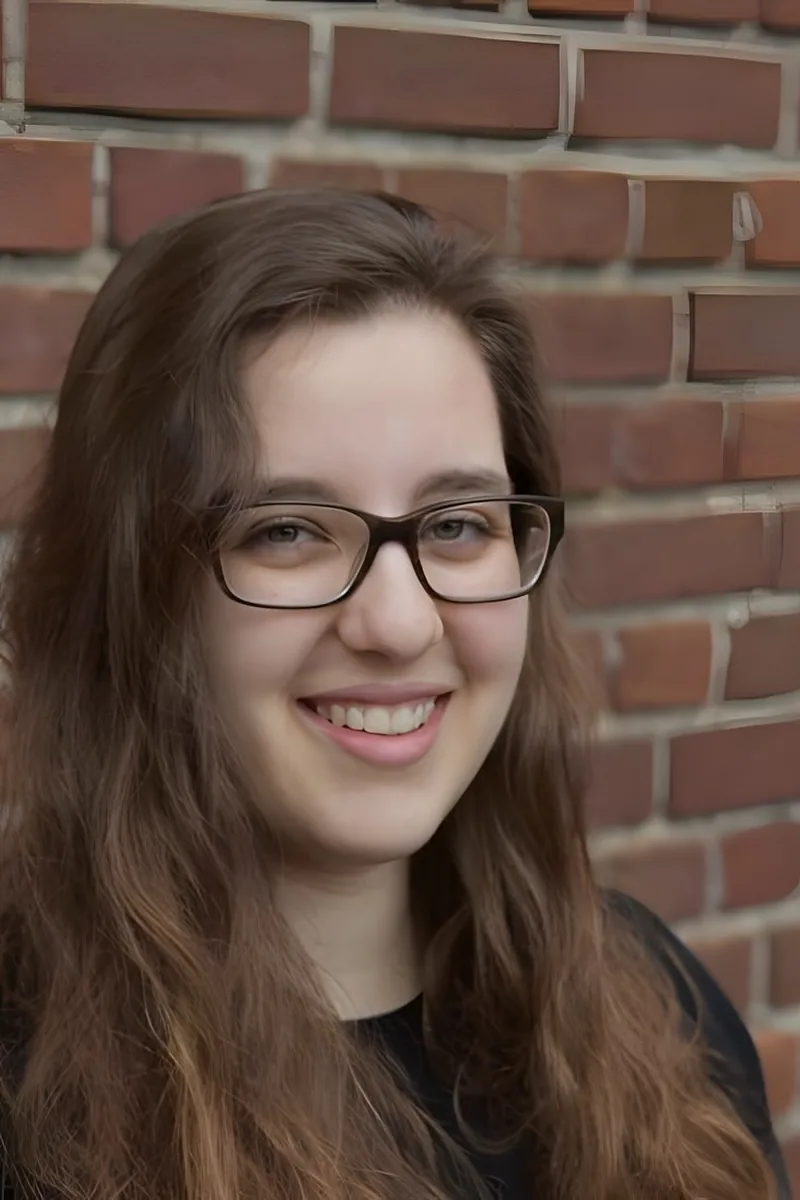
I am a graduate of Reed College with a degree in Classics. I came to Portland five years ago all the way from New York city and fell in love with the community and landscape of the Pacific Northwest. I worked as a peer tutor in high school and college, and have tutored English, Math, Reading, Writing, Attic Greek, Latin, and Humanities. I also spent five years as a Hebrew School teacher where I worked with elementary age children teaching basic Hebrew and Jewish studies. I'm passionate about tutoring because I believe every student can achieve any academic goal they set their mind to as long as they are given the tools for success. I aim to turn every "I can't" into "I know I can." I want to instill in my students a confidence in their own academic abilities and a true love of learning. I like to work with a student's unique skills to help them master new or difficult material. My ultimate goal is to help my students truly comprehend the material, and be able to apply what they have learned when encountering new problems and questions. When I'm not working I spend my time hiking at the Sandy River Delta with my husky puppy, Kili, or whipping up new vegan recipes. I love to read, especially modern fiction and historical biographies, and try to travel as much as I am able; my most recent trip was to Italy, and this winter I am heading South to the Antarctic.

Studying through all four levels of Latin while majoring in psychology and minoring in neuroscience at Texas A&M, Paris knows the language from both the humanities and the scientific side — Latin roots show up constantly in her neuroscience coursework, which keeps the vocabulary alive and practical. She teaches grammar by building systematic habits around case identification and verb parsing, so students develop the kind of methodical reading process that holds up when sentences get long and layered. Rated 5.0 by students.
Cristiana earned her BA in Classics from Tor Vergata University in Rome, where Latin wasn't just an academic exercise but part of the scholarly air she breathed daily. She tackles declensions, conjugations, and prose composition by connecting grammar to the literature students actually want to read — Caesar, Cicero, Virgil — so syntax rules stick because they're attached to real sentences.
Grace's AP Latin coursework and political science studies at Vanderbilt mean she's read Roman oratory and governance texts in their original language — the kind of dense, clause-heavy prose where getting ablative absolutes and indirect statements right actually matters. She brings that firsthand experience with politically charged Latin passages to her teaching, walking students through how to decode complex syntax by anchoring each grammatical choice in what the author was trying to argue.
An honors thesis on linguistic relativity among bilinguals gave Mary a researcher's eye for how languages encode meaning differently — exactly the kind of thinking that makes Latin's case system and word order feel logical rather than arbitrary. She teaches all three levels and draws on her speech-language pathology training at Vanderbilt to break down how Latin's morphological patterns actually work at a structural level, not just as rules to memorize. Rated 5.0 by students.
Having studied Latin through all four levels and prepped for the SAT Subject Test in it, Mahalia knows the language well enough to walk students through everything from first-declension nouns to sight-reading passages of original text. Her creative writing background gives her a sharp ear for how sentences are built — a skill that translates directly to parsing Latin word order, identifying clause boundaries, and making sense of authors who bury their main verbs three lines deep. Rated 5.0 by students.
Holding a PhD in English, Craig has spent years tracing how Latin's grammatical architecture — its case system, subjunctive moods, and participial constructions — shaped the literary traditions he studies professionally. He teaches Latin 2 and 3 with particular attention to how reading fluency develops, walking students through the process of holding a complex periodic sentence in their head long enough to render it into natural English. Rated 5.0 by students.
Few students realize how much Latin overlaps with engineering thinking — every sentence is a system of interlocking parts where case endings, verb forms, and clause boundaries have to be identified and assembled in the right order. June studied Latin through four levels and prepared for the SAT Subject Test in it, giving her fluency with everything from basic noun declensions to reading original texts. Her electrical engineering training at Brown reinforces the same methodical, structure-first approach that makes complex translations manageable.
Skylar took Latin through the graduate level at Johns Hopkins and earned a 5 on the AP Latin exam, so she knows the language from first-declension basics all the way through Vergil and Caesar at an advanced level. She breaks down complex constructions — ablative absolutes, indirect discourse, subjunctive clauses — by connecting grammar to the logic of what a Roman author is actually trying to say. That approach turns translation from guesswork into a skill students can repeat on any unseen passage.
Classics majors don't just dabble in Latin — Rebecca is building her entire undergraduate degree around the language and its literary tradition, covering all four levels plus AP. That depth means she can walk a first-year student through basic conjugation patterns and then, in the next session, tackle the syntactic complexity of reading Vergil or Cicero in the original. Rated 5.0 by students.
Working in Sewanee's writing center gave Wallis a sharp eye for how Latin grammatical structures — particularly case usage and participial constructions — surface in English academic prose, making her explanations feel grounded rather than abstract. She also studied at the European University at St. Petersburg, where reading across languages reinforced the kind of close, syntax-level attention that Latin translation demands. Her Latin 1 and Latin 2 teaching covers foundational declensions through more complex sentence parsing.
Psychology's technical vocabulary is packed with Latin — terms like "affect," "stimulus," "ego," and "corpus callosum" all come straight from the language, and Aneri's neuroscience coursework at Cornell means she hits these roots constantly. She teaches Latin 1 and 2 with a knack for turning conjugation and declension patterns into something systematic, drawing on the same analytical rigor that earned her a 1520 SAT. Her SAT Subject Test preparation in Latin adds direct experience with the kind of grammar and reading comprehension the language demands.
Studying Classics at Yale means Maddie doesn't just translate Latin — she lives inside the language, reading original Roman texts as part of her daily coursework across all four levels and beyond. Her Socratic instinct kicks in during translation work especially: rather than correcting a misidentified subjunctive or misread ablative, she asks targeted questions that lead students to catch the error themselves and internalize the grammar rule behind it.
Testimonials
Because the right Latin tutor makes all the difference.
Average Session Rating – Based on 3.4M Learner Ratings
Nearby Latin Tutors
Other Portland Tutors
Related Languages Tutors in Portland
Frequently Asked Questions
Latin builds a strong foundation for understanding English vocabulary, grammar, and the Romance languages like Spanish and French. Beyond academics, studying Latin develops critical thinking skills and connects you to ancient history, literature, and culture. Many students find that mastering Latin's logical structure and complex grammar strengthens their overall language abilities and test performance.
Students typically struggle most with verb conjugation—Latin verbs change form based on tense, mood, person, and number, which requires systematic practice to master. Vocabulary retention is another common hurdle, as Latin words don't always follow predictable patterns. Additionally, understanding how cases (nominative, accusative, ablative, etc.) change word meanings requires patience and repetition. Personalized tutoring helps you focus on your specific weak points rather than moving at a classroom pace.
During your first session, a tutor will assess your current Latin level—whether you're just starting out, working through a specific text, or preparing for AP Latin. They'll ask about your goals, identify areas where you need the most support (grammar, translation, cultural context), and discuss your learning style. From there, they'll create a personalized plan tailored to your needs, whether that's building foundational grammar skills, improving translation accuracy, or deepening comprehension of classical texts.
Both are essential, and the best approach balances them. Strong grammar knowledge gives you the tools to decode sentences, but reading actual Latin texts—from simple passages to Cicero and Virgil—shows you how grammar works in context and builds your fluency. A personalized tutor helps you integrate these skills: learning a grammatical concept and immediately applying it to authentic texts reinforces understanding far better than either approach alone.
Yes, and this is one of the biggest advantages of 1-on-1 tutoring. While classroom settings rarely allow time for conversational Latin practice, a tutor can guide you through reading passages aloud, discussing translations, and even engaging in basic Latin conversation. This oral practice helps you internalize pronunciation, rhythm, and the flow of the language—skills that strengthen your overall comprehension and make reading Latin texts more natural.
AP Latin requires mastery of grammar, vocabulary, translation accuracy, and cultural knowledge—a lot to juggle alongside classroom instruction. A tutor creates a focused study plan, identifies your weak spots in grammar or vocabulary, provides targeted practice with released exam passages, and gives you feedback on translation quality and essay writing. With Portland's 17.2:1 student-teacher ratio, personalized tutoring ensures you get the intensive preparation AP-level work demands.
This depends on your level and goals. Beginners typically start with simplified texts and gradually progress to classical authors. High school students often study Cicero's speeches, Virgil's Aeneid, or Ovid's Metamorphoses, depending on their curriculum. A tutor works with the texts assigned by your school or, if you're self-studying, helps you select appropriate passages that match your proficiency level and interests while building toward your goals.
Look for tutors with strong Latin credentials—ideally a degree in Classics, Latin, or a related field, or extensive teaching experience at the high school or college level. They should be fluent in Latin grammar and translation, familiar with major classical texts, and able to explain complex concepts clearly. Varsity Tutors connects you with expert tutors who have proven expertise in Latin and experience working with students at your level, whether you're in middle school, high school, or preparing for AP exams.
Let’s find your perfect tutor
Answer a few quick questions. We’ll recommend the right plan and match you with a top 5% tutor.