Award-Winning French Tutors
serving Milwaukee, WI
French
Tutors in Milwaukee
Private 1-on-1 tutoring, weekly live classes for academic support, test prep & enrichment, practice tests and diagnostics, and more to elevate grades and test scores.
Based on 3.4M Learner Ratings
UniversitiesSchools & Universities
DeliveredHours Delivered
ProficiencyGrowth in Proficiency
Who needs tutoring?
No obligation. Takes ~1 minute.
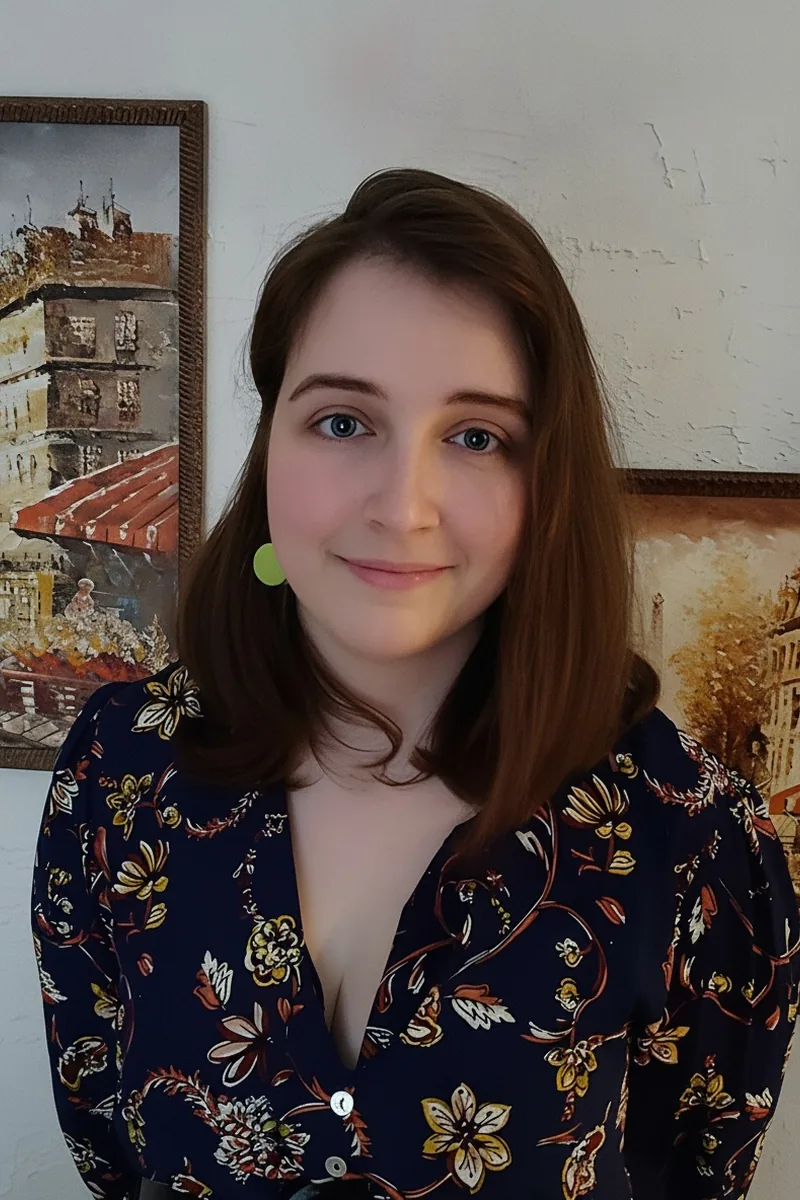
Learning French grammar requires recognizing patterns — verb conjugation groups, gendered noun rules, pronoun placement — and Elizabeth's mathematical training makes her especially good at spotting and teaching those patterns explicitly. She tackles tricky areas like the subjunctive mood and passé composé vs. imparfait by giving students clear decision frameworks instead of long lists to memorize.

Learning French grammar — verb conjugations, gendered nouns, the subjunctive — benefits enormously from someone who also understands English grammar deeply. Kelly teaches both French and English grammar, which means she can explain exactly where the two languages align and where they diverge, making tricky concepts like the passé composé versus the imparfait click faster.
Lexy earned her BA in French and then completed a master's in French-English translation at Swansea University in Wales, giving her the kind of deep grammatical knowledge that makes conjugation tables and subjunctive mood actually make sense. She unpacks tricky concepts like gendered agreement, partitive articles, and pronoun placement by connecting them to how French speakers actually think about their language.
I am currently studying at Northwestern University, on the track to a Bachelor of Arts in Statistics with a double major in Mathematical Methods in the Social Sciences, which is just a fancy way of saying math-based economics, and a minor in Legal Studies as well as Marketing. After my undergraduate studies, I plan on working in consulting for a few years before attending law school. Finally, I hope to combine my law studies with my consulting work to become a well-rounded corporate lawyer. At Northwestern, I provide SAT tutoring to Chicago-area juniors and seniors. In high school, I tutored third through fifth graders in basic reading and writing skills and developed their interpersonal skills through group crafts and teamwork activities. While I am open to tutoring a broad range of subjects and tests, I am most passionate about Math, Statistics, Economics, and US History. In my experience helping students prepare for the SAT, I have found that interactive activities and group work really help! I am a firm believer in the work-hard-play-hard mindset and find it to be absolutely necessary for a balanced lifestyle, and I try to impart this appreciation to all of my students. While I encourage my students to keep up with their studies and work hard, I also believe that studying needs to be balanced out with interests and fun.
Learning Spanish to a degree-level depth gave Sydney a strong grasp of Romance language mechanics — the gendered nouns, conjugation systems, and sentence structures that French shares with Spanish — which she uses to demystify French grammar for students who find it intimidating. She's particularly good at drawing cross-language parallels that make new vocabulary and verb patterns click faster. Rated 4.9 by students.
Having studied French through the advanced level, Jackie tackles everything from verb conjugation patterns and pronoun placement to reading comprehension in the target language. She connects grammar rules to practical usage so that concepts like the subjunctive mood or passé composé vs. imparfait distinction actually make sense instead of feeling like arbitrary rules to memorize.
Chelsey studied French through two levels of coursework and brings a structured, analytical approach to the language — breaking down verb conjugations, grammatical gender, and sentence construction so patterns become intuitive. Her background in literature also means she can connect French language learning to cultural context, from reading short texts to understanding idiomatic expressions.
While French isn't John's primary academic focus, his University of Chicago liberal arts education included substantial engagement with foreign language study. He approaches French grammar with the same structural logic he applies to mathematics — breaking conjugation patterns, pronoun placement, and tense usage into clear, systematic rules that are easier to internalize and apply.
From nailing the partitive article to untangling the imparfait/passé composé distinction, French grammar has a logic that clicks once someone lays it out clearly. Jorge spent years reading and discussing Francophone texts during his studies at Harvard and Columbia, and that deep familiarity with how French actually works — in academic writing, in conversation, in culture — comes through in how he teaches the language.
Learning French grammar often clicks faster when someone can explain why a structure works, not just what the rule is. Kirstie's liberal arts training and strong grounding in Latin give her an unusual ability to connect French syntax back to its roots, making patterns like subjunctive triggers and pronoun placement feel logical rather than arbitrary.
Manolya teaches French across multiple levels — from verb conjugation patterns and gendered noun agreement through advanced reading comprehension and composition. Her depth in the language spans AP-level coursework and standardized French exams, giving her a clear sense of what trips students up at each stage. Rated 5.0 by students.
Ashley has studied French through the advanced level and maintained her fluency alongside a demanding engineering career. She tackles tricky grammar concepts like the subjunctive mood and compound tenses with the same structured, logical approach she applies to engineering problems — breaking rules into patterns students can internalize rather than just memorize.
As a French major who studied the language through advanced literature and cultural analysis, Xaviera brings depth that goes well beyond conjugation drills. She connects grammar concepts like the subjunctive and passé composé to real usage — showing students how French actually sounds and functions in context. From beginning vocabulary to complex written expression, she adapts to each level.
While French isn't Finley's primary academic focus, he has studied the language through multiple levels and brings the same structured, analytical approach he uses in his Harvard coursework to grammar rules, verb conjugations, and reading comprehension. He's particularly useful for students who need help organizing their study approach and building vocabulary systematically.
Learning French through all four levels takes sustained momentum, and Ivanna keeps students progressing by linking new grammar — passé composé versus imparfait, relative pronouns, conditional constructions — back to patterns they already know. Her own experience as a multilingual learner gives her sharp instincts for where English speakers tend to stumble in French.
A French major at Northwestern, Emma doesn't just teach vocabulary lists and verb conjugations — she builds lessons around reading, listening, and conversation so that grammar concepts like the subjunctive or object pronoun placement click in context. Her dual background in French language and French literature gives her a depth that's especially useful for students moving past the intermediate plateau.
Testimonials
Because the right French tutor makes all the difference.
Average Session Rating – Based on 3.4M Learner Ratings
Nearby French Tutors
Other Milwaukee Tutors
Related Languages Tutors in Milwaukee
Frequently Asked Questions
Speaking practice is one of the biggest challenges in traditional classroom settings, where students often get limited opportunities to talk. Personalized 1-on-1 French tutoring gives you dedicated conversation time with an expert tutor who can provide real-time feedback on pronunciation, accent, and natural phrasing. Tutors can tailor conversations to your interests and proficiency level, helping you build confidence and fluency through active practice rather than passive listening.
French verb conjugation is notoriously complex because verbs change based on subject, tense, and mood—making it easy to feel overwhelmed in a classroom where you might not get individualized attention. A tutor can break conjugation patterns into manageable chunks, show you the underlying logic, and use targeted practice to help patterns stick in your memory. Rather than memorizing tables, tutors help you understand conjugation rules and apply them naturally in conversation and writing.
Research on learning shows that spaced repetition and retrieval practice—reviewing words at strategic intervals and using them in context—are far more effective than cramming. A tutor can incorporate vocabulary into personalized conversations, writing exercises, and real-world scenarios relevant to your life, making words stick better than flashcard apps alone. They can also help you recognize word families and patterns (like common prefixes and suffixes) to expand your vocabulary more efficiently.
Absolutely. Beyond grammar and vocabulary, understanding French culture—from current events to literature, food, and social customs—makes language learning more meaningful and memorable. Tutors can weave cultural context into lessons, discuss French films or books you're interested in, and help you understand how language reflects culture. This immersion-style approach helps you develop not just language skills but genuine cultural fluency.
Reading and writing require different skills than speaking and listening, and many students need targeted help in these areas. Tutors can guide you through authentic French texts at your level, teach you writing conventions and style, and provide detailed feedback on essays or compositions. They can also help you understand nuances like formal vs. informal language, which is especially important in French where register matters significantly.
Whether you're in a Milwaukee public, private, or charter school, tutors understand the French curriculum standards and can align their instruction with what you're learning in class. They can help you prepare for exams like AP French, support you if you're struggling with specific units, or accelerate your progress if you're ready to move ahead. This personalized approach works alongside your classroom instruction to fill gaps and deepen your understanding.
Yes—this is one of the biggest advantages of 1-on-1 tutoring. Tutors can listen to your pronunciation, identify specific sounds you're struggling with (like the French 'r' or nasal vowels), and provide targeted exercises to help you improve. Regular feedback and modeling from a native or fluent speaker helps you internalize correct pronunciation patterns much faster than learning from recordings or apps.
Fluency depends on your starting level and how much you practice, but research suggests reaching professional-level proficiency typically requires around 600-750 hours of focused study and practice. With personalized tutoring, you can use that time much more efficiently by focusing on your specific weak areas and getting expert guidance. Many students see noticeable improvements in speaking confidence and comprehension within a few months of consistent 1-on-1 instruction.
Let’s find your perfect tutor
Answer a few quick questions. We’ll recommend the right plan and match you with a top 5% tutor.