Award-Winning Physical Chemistry Tutors
serving Richmond, VA
Physical Chemistry
Tutors in Richmond
Private 1-on-1 tutoring, weekly live classes for academic support, test prep & enrichment, practice tests and diagnostics, and more to elevate grades and test scores.
Based on 3.4M Learner Ratings
UniversitiesSchools & Universities
DeliveredHours Delivered
ProficiencyGrowth in Proficiency
Who needs tutoring?
No obligation. Takes ~1 minute.
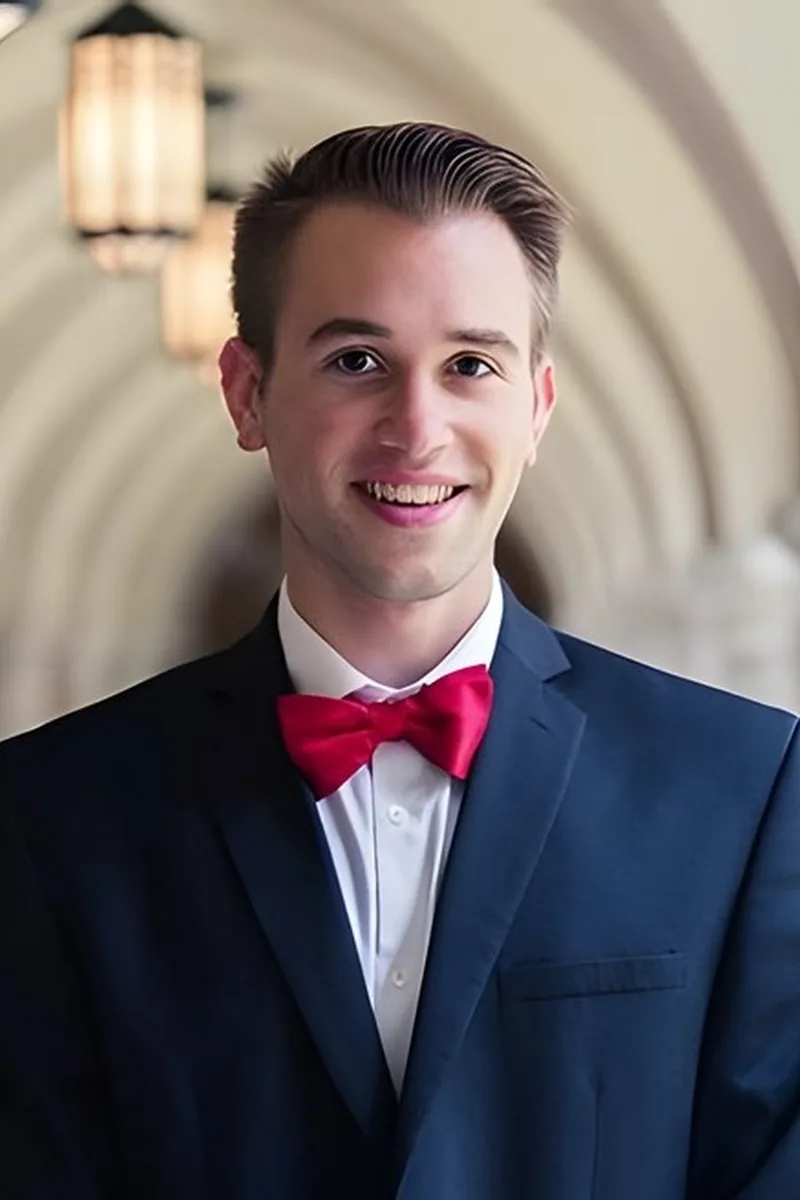
Biochemistry lab work and a dual bachelor's in arts and biochemistry mean Andrew has already applied the thermodynamics, kinetics, and quantum mechanical concepts that make p-chem brutal — calculating free energy changes in enzyme systems, modeling reaction rates at the molecular level. He unpacks the heavy calculus in derivations by keeping one foot in the real chemistry, so a partition function or a phase diagram reads as a description of molecular behavior rather than an exercise in pure math. Rated 4.9 by students.

I am currently a graduate student in Chemical Engineering at the University of Delaware. I am working on using magnetic and flow fields to create advanced materials by directing the self-assembly process of nanoparticles . I have tutored students in Chemistry, Physics and Math all throughout undergraduate and graduate work. I truly enjoy breaking material down into its core components that allows the students to understand complicated information.
Medical school at the Medical College of Wisconsin means Abrahim encounters p-chem's core concepts daily — reaction kinetics in pharmacology, thermodynamic energy balances in physiology, and the quantum mechanical principles behind spectroscopic diagnostics. His UCLA biology degree and 34 ACT demonstrate the mathematical fluency needed to work through derivations involving state functions, equilibrium constants, and entropy calculations without losing sight of what the chemistry actually describes. Rated 5.0 by students.
Pre-med coursework at Rutgers — graduating summa cum laude with a 4.0 — put Sam through the gauntlet of thermodynamics, kinetics, and quantum chemistry that p-chem demands, all while building the calculus fluency needed to survive dense derivations. He approaches topics like enthalpy, entropy, and rate laws by stripping each equation back to the physical scenario it models, making the leap from math to molecular meaning less painful.
I am pursuing a career in dentistry/oral surgery and will be beginning dental school at Boston University this fall. For this reason I recently took the DAT, which I am capable of assisting you with as well. During my undergraduate education, which I completed this past December, I worked in my school's tutoring center, helping my peers succeed in mathematics and science courses. Outside of my academic life, I am a big sports fan and I mostly follow the New York sports teams. For fun, I like to play basketball and golf with my friends. I am looking forward towards getting to know you and helping you with your academic needs.
Two years as an organic chemistry lab TA at the college level gave Maha hands-on experience with the reaction kinetics and thermodynamic reasoning that form the backbone of any p-chem sequence. Now pursuing graduate work in public health at Johns Hopkins, she approaches topics like equilibrium constants and energy diagrams through the lens of someone who's had to apply them in real experimental settings, not just derive them on paper. Rated 5.0 by students.
Kirby's biochemistry degree at Michigan meant grinding through the thermodynamics and kinetics that sit at the heart of p-chem — Gibbs free energy calculations, equilibrium derivations, and the statistical mechanics of molecular systems were baked into her upper-level coursework. She breaks down the calculus-heavy formalism by keeping each variable tied to the chemical reality it represents, so a daunting derivation like a Clausius-Clapeyron equation reads as a description of phase behavior rather than an abstract math exercise. Rated 4.9 by students.
I grew up in the Boston area and now live in Citrus County, Florida. I graduated from MIT in chemical engineering and worked for many years as a chemical process engineer, so I have a strong background in math and science, especially chemistry and thermodynamics. I've also been granted six U.S. patents. When the pandemic hit us, I moved to Florida and did part-time work as a chess tutor, then became a substitute teacher in the middle and high schools in our district. I enjoyed working with the students, many of whom had difficulty learning in big classes with many disruptions. I found that I could best help these students by using real-world examples to teach difficult concepts in a new way. Often, then, the student would come away with a new perspective and a much better understanding of the concept. I was happy to be able to help. These days as a VT tutor, I continue to use, whenever possible, real-world examples in my own material in chemistry and thermodynamics.
Computational linguistics might seem far from p-chem, but Justin's SAT-level math chops and his chemistry coursework give him enough quantitative grounding to tackle the foundational concepts — working through state functions, basic thermodynamic relationships, and the algebra behind equilibrium expressions. He's strongest at slowing down the notation-heavy steps that lose students early in a p-chem sequence, making sure each symbol maps to something physically real before moving forward.
Enric holds a PhD in Chemistry, which means p-chem wasn't just a course requirement — it was the foundation his entire research career was built on, from quantum mechanical modeling to thermodynamic analysis at the graduate level. He teaches the subject by slowing down at the exact calculus step where a derivation goes from followable to opaque, rebuilding the physical reasoning behind each manipulation before moving forward. Rated 5.0 by students.
Neuroscience at the undergraduate level means Amy has already tangled with the thermodynamics and kinetics that p-chem formalizes — Nernst equation derivations, membrane energetics, and the statistical behavior of ion channels all demand that same calculus-heavy reasoning. She uses those biological touchpoints to make abstract topics like entropy and equilibrium constants feel grounded in systems students can actually picture. Rated 5.0 by students.
Two biomedical engineering degrees mean Allyson has been doing the calculus-heavy thermodynamics and kinetics work that p-chem formalizes — modeling energy transfer in biological systems, working through rate equations for physiological processes — since undergrad. She zeroes in on the specific mathematical step where a derivation goes from followable to opaque, whether that's a tricky partial derivative in a Maxwell relation or the statistical reasoning inside a Boltzmann distribution. Rated 4.9 by students.
Testimonials
Because the right Physical Chemistry tutor makes all the difference.
Average Session Rating – Based on 3.4M Learner Ratings
Other Richmond Tutors
Related Science Tutors in Richmond
Frequently Asked Questions
Physical Chemistry requires mastering abstract concepts like thermodynamics, kinetics, and quantum mechanics while also applying mathematical skills to solve complex problems. Many students struggle with visualizing molecular-level phenomena, balancing equations with multiple variables, and understanding how theoretical principles connect to real laboratory observations. Personalized tutoring helps break down these interconnected topics into manageable pieces and shows how each concept builds on the previous one.
Effective Physical Chemistry tutoring bridges the gap between theory and practice by explaining the science behind experimental procedures and helping you interpret results. Tutors can clarify why certain techniques matter, how to approach error analysis, and how laboratory observations connect to the thermodynamic or kinetic principles you're studying. This deeper understanding makes lab reports more meaningful and helps you develop stronger scientific reasoning skills.
Yes—Physical Chemistry is heavily mathematical, involving calculus, algebra, and unit conversions that are essential for solving thermodynamics, kinetics, and quantum mechanics problems. If math isn't your strongest area, a tutor can help you build confidence with the specific mathematical tools you'll need, such as partial derivatives, integration, and dimensional analysis. Many students find that strengthening these skills alongside chemistry concepts makes the entire subject more manageable.
Your first session will focus on understanding your specific challenges—whether that's conceptual confusion about entropy, difficulty with problem-solving strategies, or struggles with a particular unit like thermodynamics or quantum mechanics. The tutor will assess your current understanding and learning style, then work with you to create a personalized plan that targets your weaknesses while building on your strengths. You'll likely work through a practice problem together to establish how the tutor can best support your learning.
Understanding Physical Chemistry means grasping why equations work, how variables relate to each other, and how abstract concepts apply to real systems—not just memorizing formulas. Tutors use visualization techniques, real-world examples, and guided problem-solving to help you develop deep conceptual understanding. This approach not only improves exam performance but also builds the scientific reasoning skills you'll need for advanced chemistry, research, or science-based careers.
Richmond's diverse school districts and strong academic community provide excellent opportunities for chemistry education, though Physical Chemistry can be challenging to master without specialized support. Varsity Tutors connects you with expert tutors who understand Physical Chemistry curriculum standards and can tailor instruction to your specific course requirements and learning goals. Whether you're preparing for an exam, working through difficult problem sets, or building foundational understanding, personalized tutoring provides the focused support that classroom instruction alone often can't offer.
Exam preparation with a tutor goes beyond reviewing notes—it involves practicing problem-solving under timed conditions, identifying your most common mistakes, and strengthening weak conceptual areas before test day. Tutors can help you develop effective study strategies, work through previous exams or practice problems, and build confidence with the types of questions you'll encounter. This targeted preparation typically results in better understanding of the material and improved exam performance.
Look for tutors with strong backgrounds in chemistry or related sciences—ideally with experience teaching or tutoring Physical Chemistry specifically. They should be able to explain complex concepts clearly, help you develop problem-solving strategies, and connect theory to real-world applications and lab work. Varsity Tutors matches you with expert tutors who have demonstrated expertise in Physical Chemistry and a track record of helping students succeed.
Let’s find your perfect tutor
Answer a few quick questions. We’ll recommend the right plan and match you with a top 5% tutor.