Award-Winning AP Psychology Tutors
serving Richmond, VA
AP Psychology
Tutors in Richmond
Private 1-on-1 tutoring, weekly live classes for academic support, test prep & enrichment, practice tests and diagnostics, and more to elevate grades and test scores.
Based on 3.4M Learner Ratings
UniversitiesSchools & Universities
DeliveredHours Delivered
ProficiencyGrowth in Proficiency
Who needs tutoring?
No obligation. Takes ~1 minute.
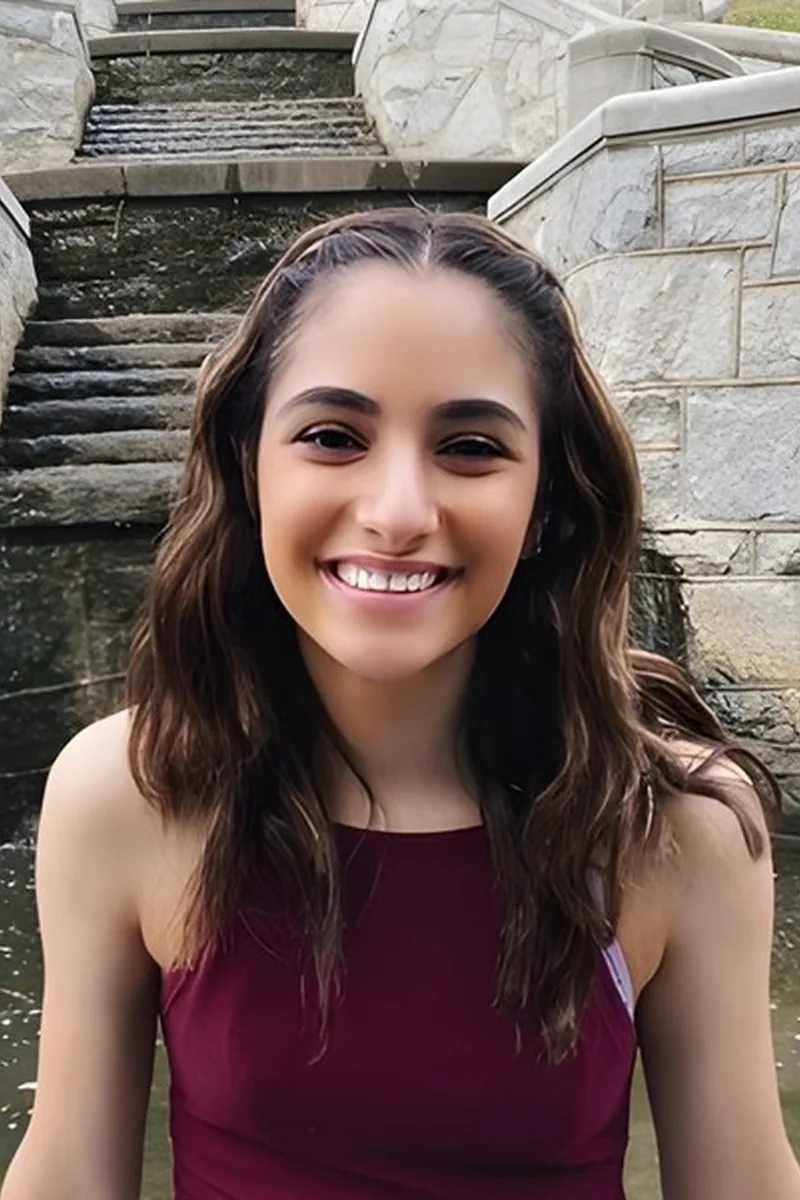
Bioinformatics requires learning how biological systems interact at the molecular level — the same neurotransmitter pathways, genetic influences, and neural signaling that anchor AP Psychology's biological bases of behavior unit. Shahad's pre-med coursework in biology and chemistry gives her a concrete, science-grounded way to explain those mechanisms, and her 4.9 rating speaks to how effectively she translates that knowledge into clear, exam-ready understanding for the rest of the curriculum's terminology-dense units.

Alexis earned her psychology degree and knows exactly which theories, experiments, and terminology the AP exam emphasizes — from Milgram's obedience studies to the nuances of classical versus operant conditioning. She breaks down the trickiest free-response prompts by teaching students to weave multiple perspectives (biological, cognitive, sociocultural) into a single cohesive answer. Rated 5.0 by students.
With degrees in both mathematics and psychology from UCLA, Professor Florence teaches AP Psychology the way the exam actually tests it — connecting research methodology and statistical reasoning to every major unit, from learning theory to abnormal psych. That dual background means topics like experimental design, correlation vs. causation, and interpreting data feel intuitive rather than bolted on, which is exactly where many students quietly lose points on both multiple-choice and free-response sections.
William studied psychology as his undergraduate major, so the AP Psych curriculum — from Piaget's stages to the nuances of the DSM — maps directly onto coursework he's already completed rather than material he's reverse-engineering from a prep book. His neuroscience background adds particular depth to the biological bases of behavior unit, where he breaks down neurotransmitter systems and brain region functions with the confidence of someone planning a PhD in neuropsychology. A 34 ACT also means he knows standardized testing strategy inside and out, which translates into sharper free-response technique.
I am an enthusiastic and detail-oriented English and test prep tutor with a strong academic background in communications.
Sonia's neuroscience degree and current medical school training mean the biological bases of behavior unit — neurotransmitters, brain regions, neural plasticity — is material she's internalized through years of clinical and academic work, not just a chapter to memorize. Where she particularly stands out is connecting that deep science background to the psychological theories built on top of it, so concepts like psychopharmacology, sensation-perception, and the stress-illness relationship make intuitive sense rather than feeling like disconnected vocabulary.
Orlando's economics training built real fluency with statistical reasoning and data interpretation — skills that translate directly to AP Psychology's research methods unit, where students need to parse experimental designs, identify variables, and evaluate significance without getting lost in jargon. He also brings strong essay-writing chops from his arts background, which he applies to coaching free-response answers where precise term definitions and clean scenario application separate 4s and 5s from 3s.
Josh's AP Statistics training gives him a practical edge in the research methods unit of AP Psych, where interpreting experimental design, correlation vs. causation, and statistical significance trips up students who treat it as pure vocabulary memorization. He also tutors AP Micro and Macroeconomics, which means concepts like decision-making heuristics, motivation, and behavioral economics in the social psychology and cognition units come with built-in real-world examples rather than abstract definitions.
Hi y'all! I hold my Master of Science in Psychology of Sport and my Bachelor of Science in both Psychology and Applied Human and Sport Physiology. I have many years of tutoring under my belt, working with people of all levels from elementary school through college in hard science subjects (Biology, Chemistry, and Mathematics), a few social sciences (History, Psychology, Economics), and language arts. When not tutoring, I love playing soccer and I even coach a youth team. I love encouraging students to learn, grow, and think critically for themselves.
Political science trains you to analyze how people form beliefs, respond to authority, and behave in groups — which overlaps directly with AP Psychology's social psychology and cognition units, where concepts like obedience, conformity, and groupthink show up on nearly every exam. Linnea pairs that analytical background with strong writing and editing skills, coaching students to construct the kind of precise, term-rich free-response answers that separate 4s from 5s.
Cognitive science at Rice meant Adam studied the AP Psych curriculum from the inside out — perception, memory, language processing, and the neural underpinnings of behavior were core coursework, not elective reading. That training makes him especially sharp on the cognition and biological bases units, where he connects concepts like dual-process theory and neural plasticity to the real research behind them rather than treating them as isolated vocabulary terms.
Neuroscience coursework and PA training mean Julia knows the biological bases of behavior unit from the inside — she can trace a neurotransmitter pathway or explain hemispheric lateralization with the fluency of someone who studied these systems for her degree, not just for a single AP unit. That science depth also sharpens her approach to sensation-perception and states of consciousness, where she ties textbook definitions back to the underlying neural mechanisms so they stick beyond exam day. Rated 5.0 by students.
Sally's CLEP Introductory Psychology background and her science-technology-culture concentration at Georgia Tech give her a solid handle on the research methods, biological bases of behavior, and cognitive psychology concepts that dominate the AP exam. She teaches students to distinguish between similar-sounding theories — like the difference between classical and operant conditioning — so they can tackle free-response questions with confidence.
Testimonials
Because the right AP Psychology tutor makes all the difference.
Average Session Rating – Based on 3.4M Learner Ratings
Practice AP Psychology
Free practice tests, flashcards, and AI tutoring for AP Psychology
Other Richmond Tutors
Related Social Sciences Tutors in Richmond
Frequently Asked Questions
AP Psychology covers eight major units: Scientific Foundations of Psychology, Research Methods and Statistics, Sensation and Perception, Learning, Cognition, Motivation/Emotion/Personality, Testing and Individual Differences, and Abnormal Psychology and Treatment. The exam also includes Clinical and Counseling Psychology, and Social Psychology. For students in Richmond preparing for the AP exam, understanding how these units connect—rather than memorizing isolated facts—is key to scoring well on the multiple-choice and free-response sections.
The AP Psychology exam consists of 100 multiple-choice questions (90 minutes) and 2 free-response questions (50 minutes). The multiple-choice section tests conceptual understanding and application of psychological principles, while the free-response questions require you to synthesize knowledge across units and explain real-world scenarios using psychological terminology. Many students struggle with pacing on the multiple-choice section—spending too long on difficult questions—so practice tests and strategic time management are essential for success.
Students often find Research Methods and Statistics, Cognition, and Abnormal Psychology most challenging because they require understanding complex processes and distinguishing between similar concepts. For example, confusing correlation with causation, mixing up neurotransmitter functions, or conflating different psychological disorders are common mistakes. Personalized 1-on-1 instruction helps clarify these conceptual gaps and teaches you how to apply terminology accurately on both multiple-choice and free-response questions.
Most students benefit from 3-4 months of consistent preparation, starting around January for a May exam. This timeline allows you to cover all eight units thoroughly, take multiple full-length practice tests, and identify weak areas for targeted review. If you're starting later or struggling with specific topics, connecting with a tutor can accelerate your progress by providing focused instruction on the concepts holding you back rather than reviewing material you already understand.
Free-response questions require you to apply psychological concepts to scenarios and explain your reasoning clearly using accurate terminology. The key is practicing these questions under timed conditions and learning exactly what graders are looking for—typically 3-4 specific concepts or examples that demonstrate deep understanding. Tutors can review your responses, identify gaps in your explanations, and teach you how to structure answers that earn maximum points.
Taking 4-6 full-length practice tests throughout your preparation is ideal—this gives you multiple opportunities to identify weak units, practice pacing, and build test-day confidence. After each test, spend time analyzing your mistakes to understand whether you misunderstood a concept, misread a question, or ran out of time. Personalized tutoring helps you prioritize which concepts to review based on your specific error patterns rather than re-studying everything.
A score of 3 or higher earns college credit at most universities, but competitive schools often expect a 4 or 5. The national average is around 2.9, so scoring a 4 puts you well above average. Your target should depend on your college goals and current performance on practice tests—if you're scoring 60-70% on full-length tests, focused tutoring on weak areas can realistically move you toward a 4 or 5 by exam day.
Varsity Tutors connects you with expert tutors for students in Richmond who specialize in AP Psychology and understand the specific demands of the exam. When you get matched with a tutor, you can discuss your current score, identify which units are most challenging, and create a personalized study plan that fits your timeline. Whether you need help with research methods, free-response writing, or building confidence before test day, tutors tailor instruction to your exact needs.
Let’s find your perfect tutor
Answer a few quick questions. We’ll recommend the right plan and match you with a top 5% tutor.