Award-Winning Physiology Tutors
serving Salt Lake City, UT
Who needs tutoring?
FEATURED BY


TUTORS FROM
- YaleUniversity
- PrincetonUniversity
- StanfordUniversity
- CornellUniversity
Award-Winning Physiology Tutors serving Salt Lake City, UT
Certified Tutor
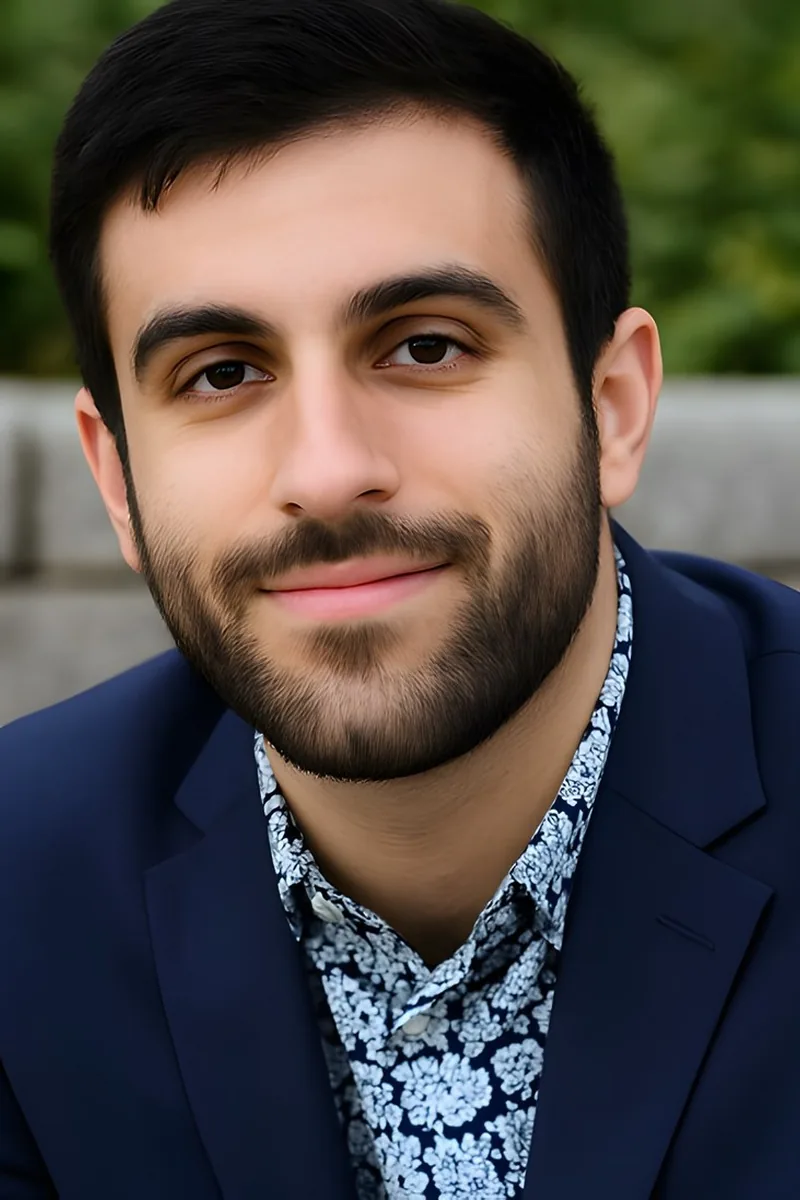
Shayan
Understanding physiology means thinking in systems — how a nerve impulse triggers muscle contraction, how the nephron filters blood, how cardiac output adjusts during exercise. Shayan's pre-health training at Penn gives him a clinical lens on these mechanisms, and he teaches each system by walking t...
University at Buffalo
Bachelors, Biology, General
University of Pennsylvania
Current Grad Student, Pre-Health
Certified Tutor
14+ years
Understanding physiology means tracing cause and effect across organ systems — why a drop in blood pH triggers faster breathing, or how the nephron maintains electrolyte balance under stress. Garrett's biology degree gives him the depth to walk through these feedback loops at the molecular, cellular...
University of Pennsylvania
Bachelor in Arts
Certified Tutor
10+ years
Emily
Emily's cell and molecular biology concentration at Duke means she learned physiology from the inside out — starting with ion channel behavior and membrane dynamics before ever reaching the organ-system level. Now in medical school at Columbia, she teaches topics like action potential propagation, g...
Duke University
Bachelors in Biology (concentration in Cell and Molecular Biology); minor in Chemistry
Columbia University in the City of New York
Current Grad Student, Medicine (MD)
Certified Tutor
Matt
Understanding physiology means seeing the body as an integrated system, not a list of organ functions to memorize. Matt's graduate work in nutrition required mastering renal, endocrine, and cardiovascular physiology at the molecular level, so he teaches concepts like action potentials, cardiac outpu...
Columbia University in the City of New York
Master of Science, Human Nutrition
University of Pittsburgh
Bachelor of Science, Neuroscience minor in Spanish & Chemistry
Certified Tutor
Kelly
Kelly's cancer biology PhD at Cornell involved deep study of how cells signal, divide, and maintain homeostasis — the same organ-system physiology that dominates undergraduate coursework. She digs into membrane transport, cardiac function, and endocrine feedback loops with the precision of someone w...
Cornell University
PhD (Cancer and Cell Biology research)
Cornell University
Bachelor's in Biological Engineering
Certified Tutor
Courtney
Understanding physiology means tracking cause and effect across organ systems — how a change in blood pH triggers respiratory compensation, or why cardiac output depends on both stroke volume and heart rate. Courtney's biology graduate work and undergraduate teaching experience at ASU give her a det...
Arizona State University
Master of Science, Biology, General
University of Notre Dame
Bachelor of Science, Environmental Sciences
Certified Tutor
14+ years
Few tutors can teach physiology the way someone who studied it in medical school can — Daniel understands cardiac output, renal filtration, and respiratory mechanics not just as textbook diagrams but as interconnected systems he learned to reason through clinically. He unpacks each organ system by t...
Cornell University
Bachelor in Arts
Tel Aviv University
Doctor of Medicine, Medicine
Certified Tutor
10+ years
Jhonatan
Understanding physiology means tracing cause and effect across organ systems — why a drop in blood pressure triggers the renin-angiotensin pathway, or how an action potential propagates along a myelinated axon. Jhonatan's neuroscience specialization gives him deep fluency in these mechanisms, partic...
University of Chicago
Bachelors, Biological Sciences, Specialization in Neuroscience
Certified Tutor
15+ years
Rachel
Rachel's approach to physiology leans on breaking down the overlap between systems — showing, for example, how the muscular and nervous systems coordinate during a reflex arc, or how respiratory adjustments compensate for metabolic acidosis. Her biology and anatomy teaching background means she can ...
Washington University in St. Louis
Bachelor in Arts, Women and Gender Studies
Certified Tutor
16+ years
Emily
Working in a research lab at UTHealth, Emily deals with biochemistry and cell biology daily — which means she can teach physiology from the molecular level up, connecting what's happening inside the cell to what's happening in the organ system. That's especially useful for topics like membrane trans...
Rice University
Bachelor of Science
Certified Tutor
Jean
Understanding how the body maintains homeostasis — from cardiac output regulation to renal filtration mechanics — requires more than memorizing diagrams. Jean earned her Doctor of Medicine at Harvard Medical School, where she spent four years connecting physiological systems to real clinical cases, ...
Harvard College
Bachelor in Arts, Sociology
Harvard Medical School
Doctor of Medicine, Medicine
Certified Tutor
Alex
Preparing for an Occupational Therapy doctorate means Alex has spent years inside physiology — not just memorizing organ systems but understanding how cardiac output, respiratory mechanics, and renal filtration actually behave in living patients. That clinical lens turns dense material like action p...
Washington University in St. Louis
Masters, Occupational Therapy Doctorate Program
University of Minnesota-Twin Cities
Bachelors, Psychology
Certified Tutor
13+ years
Daniel
Studying physiology in dental school meant mastering everything from cardiac output equations to nerve signal propagation in the trigeminal system. Daniel unpacks organ system functions by tying each mechanism back to a clinical scenario — how the kidneys regulate blood pressure, why the sympathetic...
Arizona State University
Bachelor of Science, Microbiology
University of California Los Angeles
Doctor of Dental Science, Dentistry
Certified Tutor
James
Studying physiology in a doctoral physical therapy program at Washington University means James isn't just reading about organ systems — he's applying concepts like cardiac output, muscle fiber recruitment, and respiratory mechanics to clinical cases every week. That applied lens makes him especiall...
SUNY University at Albany
Bachelor of Science, Economics and Japanese
Washington University in St. Louis
Current Grad, Physical Therapy
Certified Tutor
13+ years
Casey
Understanding physiology means tracing cause and effect across organ systems — why a drop in blood pH triggers faster respiration, or how the nephron maintains electrolyte balance through filtration and reabsorption. Casey's bioengineering degree required deep fluency in these mechanisms, and she ex...
Rice University
Bachelor of Science
Nearby Physiology Tutors
Other Salt Lake City Tutors
Related Science Tutors in Salt Lake City
Frequently Asked Questions
Your first session is designed to understand your current level, learning goals, and specific challenges in physiology. A tutor will assess your grasp of foundational concepts like cell structure, organ systems, and homeostasis, then create a personalized plan targeting the areas where you need the most support—whether that's understanding complex processes like gas exchange or preparing for exams.
Many students struggle with visualizing how different organ systems interact and maintain homeostasis, especially when studying complex processes like cardiovascular function or kidney filtration. Others find it difficult to connect molecular-level mechanisms to whole-body responses, or they memorize facts without truly understanding the underlying principles. Personalized instruction helps break these concepts into manageable pieces and builds understanding step-by-step rather than relying on memorization alone.
In a typical Salt Lake City classroom with an average student-teacher ratio of 19.3:1, it's challenging for instructors to address each student's unique learning pace and gaps. Personalized tutoring allows a tutor to focus entirely on your learning style, spend extra time on difficult concepts like muscle contraction or neural signaling, and adjust explanations until concepts truly click. This targeted approach typically leads to faster mastery and stronger performance on assessments.
Yes, tutors are familiar with Utah's science standards and the physiology content covered in high school biology courses, AP Biology, and college-level physiology. Whether you're preparing for state assessments, AP exams, or college coursework, a tutor can ensure instruction aligns with your specific curriculum and learning objectives while going deeper into concepts that challenge you.
A solid understanding of cell biology, basic chemistry (especially pH and molecular interactions), and anatomy provides the foundation for physiology success. If you're weak in these areas, a tutor can help strengthen them while introducing physiological concepts, or focus purely on physiology if your foundations are solid. Building these connections helps you understand not just what happens in the body, but why it happens.
Tutors use targeted practice with past exam questions, help you identify which concepts you've mastered and which need more work, and teach test-taking strategies specific to physiology questions. They can also help you develop visual study aids and practice explaining complex processes—skills that are essential for both written exams and free-response questions on standardized tests like the AP Biology exam.
Absolutely. Whether you're tackling advanced topics like endocrine regulation, muscle physiology, or cardiovascular mechanics in an honors or AP course, or preparing for college-level physiology, personalized instruction can break down complex multi-system interactions into clear, understandable pieces. Tutors can also connect these advanced concepts to real-world applications, making them more memorable and meaningful.
Many students notice improved understanding and confidence within 2-3 sessions as foundational gaps are addressed and concepts become clearer. More significant improvements in exam performance or mastery of advanced topics typically emerge over 4-8 weeks of consistent tutoring, depending on your starting point and how frequently you meet. The key is consistent practice between sessions combined with personalized guidance from your tutor.
Connect with Physiology Tutors in Salt Lake City
Get matched with local expert tutors