Award-Winning Pre-Calculus Tutors
serving Salt Lake City, UT
Pre-Calculus
Tutors in Salt Lake City
Private 1-on-1 tutoring, weekly live classes for academic support, test prep & enrichment, practice tests and diagnostics, and more to elevate grades and test scores.
Based on 3.4M Learner Ratings
UniversitiesSchools & Universities
DeliveredHours Delivered
ProficiencyGrowth in Proficiency
Who needs tutoring?
No obligation. Takes ~1 minute.

Differential equations and Calculus II don't go well without rock-solid pre-calculus instincts — and since Eric teaches both, he knows exactly which gaps in trigonometric reasoning or function composition will derail a student later. He tackles the course by connecting each new concept back to the algebra underneath it, especially when topics like rational functions or logarithmic properties start feeling disconnected from anything familiar. Holds a 5.0 rating.
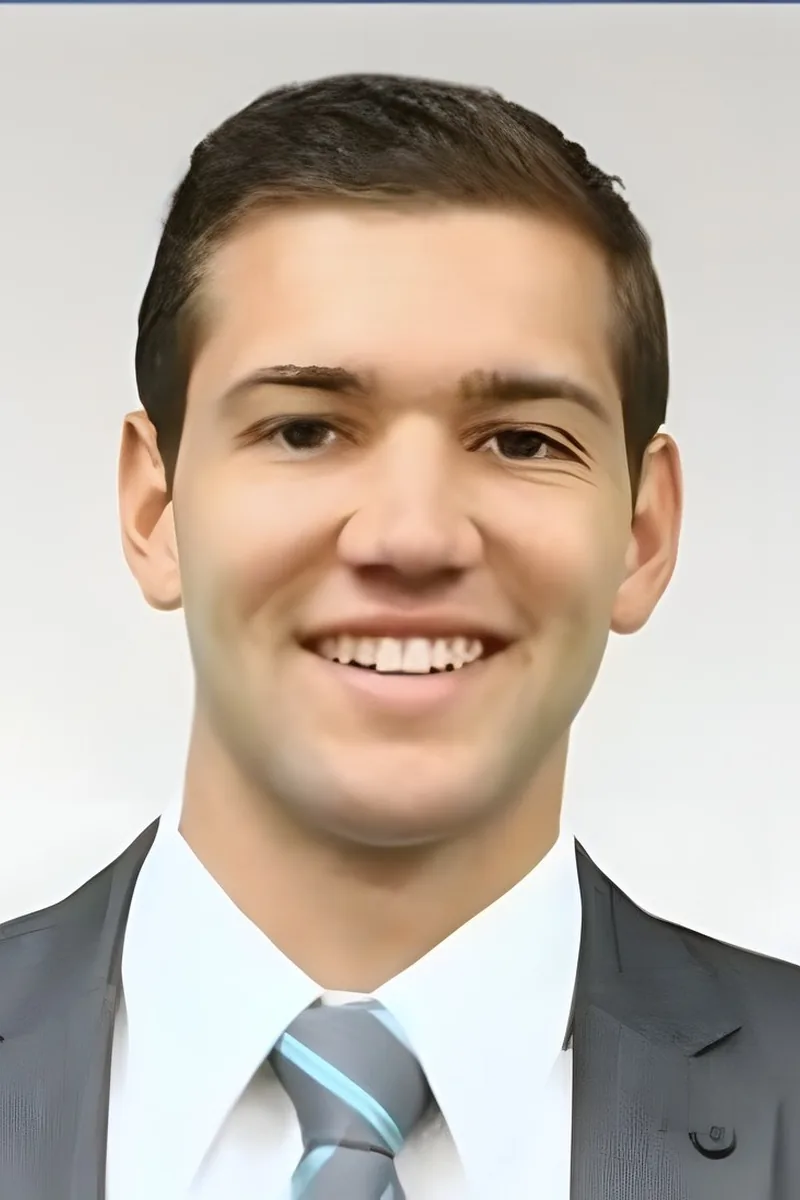
The jump to Pre-Calculus trips up students who've been getting by on memorized procedures — suddenly they need to actually understand function behavior, trigonometric identities, and limits conceptually. Taylor's engineering coursework at BYU means he works with these ideas constantly, and he walks through each concept by showing how the pieces link together rather than treating them as isolated formulas.
Working in BYU's physics help lab since 2014, Matthew has watched hundreds of students stumble on the same pre-calculus sticking points — the jump from memorizing trig values to actually understanding the unit circle, or the moment when function transformations stop being a set of rules and start being visual intuition. His applied physics training means he teaches these concepts as tools he genuinely uses, connecting topics like polar coordinates and parametric equations to the physical systems that make them concrete. A 34 ACT confirms the quantitative instincts behind his approach.
Currently studying applied and computational mathematics, Kacey is immersed in the exact material pre-calculus builds toward — so she teaches topics like parametric equations and trigonometric identities with a clear sense of where each concept is actually heading. She's particularly sharp at diagnosing which algebraic habits are holding students back when function behavior starts getting abstract. Her 33 ACT and 4.8 rating reflect consistent results across her math students.
I'm patient, personable, and have an incredible gift for explaining things in a way that makes sense. I majored in Math Education (with a minor in Computer Science), and I have more than eight years of experience teaching math and other STEM subjects.
Mechanical engineering at the University of Utah means Samantha is constantly applying the trigonometric identities, polar coordinates, and function transformations that pre-calculus students are just learning to navigate — she's solving dynamics and thermodynamics problems that depend on this material daily. She tackles the course by connecting each new concept back to the algebra students already have down, then showing exactly where it leads in the calculus sequence she also teaches. Her 33 ACT confirms the quantitative skills behind that bridge-building approach.
Computational mathematics as a major means Joseph isn't just passing through pre-calculus — he's building on it every day, using the function behavior, trigonometric reasoning, and limit intuition that the course introduces as scaffolding for higher-level work. He zeros in on the moment where algebra stops being about solving for x and starts being about understanding how entire families of functions behave, which is exactly the conceptual shift that trips most students up. His 33 ACT and 5.0 rating back that up.
The jump to pre-calculus is where many students first encounter trigonometric identities, polar coordinates, and limits — concepts that feel disconnected from anything they've done before. Eileen bridges that gap by tying each new idea back to familiar algebra and geometry, giving students a clear roadmap into calculus.
Second-year medical school at Baylor means Michelle is neck-deep in the quantitative reasoning that pre-calculus builds — rate-of-change intuition for physiology, logarithmic models for acid-base chemistry, and exponential functions for everything from bacterial growth to drug clearance. Her biochemistry degree from Rice cemented the algebraic and trigonometric groundwork she now draws on daily, so she teaches these topics as someone who genuinely needed them to stick. A 1570 SAT confirms the mathematical precision behind her approach.
The jump into pre-calculus — trigonometric identities, limits, and complex functions — trips up even strong math students who breezed through earlier courses. Julia breaks these topics into logical building blocks, connecting each new idea back to the algebra and geometry students already know. Her Stanford coursework in economics and quantitative methods keeps her sharp on exactly the kind of function analysis pre-calc demands.
Studying molecular biology at Yale means Maxwell constantly encounters the mathematical scaffolding that pre-calculus builds — exponential models for gene expression kinetics, logarithmic scales for concentration data, and trigonometric functions underlying structural biology. He zeros in on how these function families actually behave and transform, connecting the symbolic manipulation back to intuition so students aren't just memorizing identities in isolation. His 33 ACT and 5.0 rating back that up.
What separates students who survive pre-calculus from those who actually understand it is whether they've internalized the *why* behind each technique — and Daniel, as an applied mathematics major, learned every concept the hard way, by sitting down and working through the logic piece by piece. That deliberate approach makes him especially effective at breaking down topics like rational functions and graph transformations, since he teaches the reasoning he had to build for himself rather than skipping steps that feel obvious. Rated 4.7 by students.
The University of Chicago's core curriculum put Valerie through rigorous math coursework alongside her Classics and Theatre studies, giving her a working command of the function families, transformations, and trigonometric reasoning that define pre-calculus. She's particularly sharp at demystifying sequences and series — breaking the pattern logic down step by step until the formulas feel inevitable rather than arbitrary. Her 1540 SAT confirms the quantitative skill behind her approach.
The jump into pre-calculus — trigonometric identities, limits intuition, complex rational functions — is where many students realize they can't rely on memorized shortcuts anymore. Benjamin's economics coursework at the University of Chicago keeps him immersed in the kind of rigorous mathematical thinking that pre-calc demands. He connects each new concept back to its underlying logic so students actually retain it.
I've been working with students for over seven years, from middle school all the way through college, across subjects like math, calculus, statistics, linear algebra, chemistry, and physics, with a lot of SAT and ACT prep mixed in. My background is perhaps a little unconventional. I have two bachelor's degrees, one in Engineering and one in Communication Studies, plus a Master's in Design. That combination means I can guide you through challenging technical material and communicate it in a way that is easy to grasp. What I care most about is helping students get to a place where they don't need me anymore. I know that sounds like a strange thing for a tutor to say, but I think it's the right goal. I'm not here to walk you through steps to copy down. I want you to understand why something works, because that's what holds up under pressure, on a test you haven't seen before. If you're ready to ace that test or prove that theorem that's been bugging you, reach out and let's work together
A year as a course assistant in Harvard's math department teaching introductory calculus gave Richard a sharp sense of exactly which pre-calculus skills — polynomial end behavior, composite functions, rate-of-change intuition — students need locked down before day one of calc. He teaches those topics with that forward view, connecting each piece to where it's actually headed so nothing feels like busywork. His 36 ACT and 1600 SAT confirm the quantitative range behind that perspective.
Someone who genuinely loves puzzles and mathematical challenges tends to teach pre-calculus differently — Dylan digs into why a rational function has asymptotes where it does, or what's really happening geometrically when you compose two transformations, rather than handing students a recipe to follow. His three education-focused degrees and a 34 ACT reflect that depth, and his 5.0 rating suggests students notice the difference.
The jump into limits, trigonometric identities, and composite functions can feel overwhelming without someone who knows how to sequence the ideas clearly. Pinelopi has tutored math from pre-algebra through calculus, which means she can pinpoint exactly which earlier concept a student is missing when pre-calc material stops making sense. Rated 5.0 by students.
Mechanical engineering at Harvard means Christopher spends most of his time in calculus and differential equations — but he knows exactly which pre-calculus skills hold that work together, especially fluency with trigonometric graphs, composite functions, and the algebraic manipulation that makes limits possible later. He teaches each topic by gradually removing scaffolding until a student can tackle problems independently, flagging the specific mistakes that tend to snowball in calculus. His 35 ACT and 4.8 rating reflect a tutor who's recently built the same bridge his students are crossing now.
Testimonials
Because the right Pre-Calculus tutor makes all the difference.
Average Session Rating – Based on 3.4M Learner Ratings
Practice Pre-Calculus
Free practice tests, flashcards, and AI tutoring for Pre-Calculus
Nearby Pre-Calculus Tutors
Other Salt Lake City Tutors
Related Math Tutors in Salt Lake City
Frequently Asked Questions
Pre-Calculus moves from solving equations to understanding functions deeply—you'll spend less time on "what's the answer?" and more on "why does this function behave this way?" This shift from procedural to conceptual understanding trips up many students because it requires visualizing patterns, making connections between algebraic and graphical representations, and thinking about functions as objects rather than just operations. Personalized tutoring helps bridge this gap by breaking down abstract concepts into concrete steps and showing how trigonometry, exponential functions, and sequences all connect to calculus.
Word problems require translating English into mathematical language—a skill that improves with guided practice and feedback. The key is developing a consistent strategy: identify what you know, define your variables clearly, set up the equation or function, solve, and verify your answer makes sense in context. Many students skip the setup phase and jump to calculations, which leads to errors. Working with a tutor who can walk through your problem-solving process helps you catch where you're losing the thread and builds confidence in tackling unfamiliar problem types.
Graphing connects the abstract algebraic world to something visual you can actually see—it's where patterns become obvious. In Pre-Calculus, you'll graph polynomials, rational functions, exponential functions, and trigonometric functions, and understanding how the equation relates to the shape of the curve is essential for calculus. Many students memorize rules without seeing why they work, which makes it hard to apply them to new situations. Personalized instruction focuses on building that visual intuition so you can predict what a graph will look like before you plot it, and recognize what an equation is telling you.
Trigonometry is often the most intimidating part of Pre-Calculus because there are so many identities and formulas to learn. The secret is understanding that it all comes from the unit circle and right triangles—once you see how sine, cosine, and tangent relate to angles and coordinates, the identities and applications make sense instead of feeling random. Starting with strong foundational understanding of the unit circle, then building up to identities and applications, prevents the memorization trap. Tutors experienced in Pre-Calculus can show you these connections visually and help you develop strategies for deciding which identity or approach to use when solving problems.
Showing work isn't just about getting the right answer—it reveals your thinking process and helps teachers (and tutors) identify exactly where misunderstandings happen. In Pre-Calculus, partial credit depends on demonstrating conceptual understanding, not just final answers. When you write out your steps, you're also building the habits you'll need in calculus, where the process matters as much as the result. If you're losing points on work presentation, a tutor can help you organize your solutions clearly and ensure you're justifying each step, which often boosts your grade significantly.
Your first session is about understanding where you are and where you want to go. A tutor will likely review recent assignments or tests to identify specific gaps—whether it's function notation, solving trigonometric equations, or graphing transformations—then work through one or two problems with you to understand your problem-solving approach and learning style. This diagnostic helps create a personalized plan focused on your actual needs rather than generic review. By the end of the first session, you should have clarity on what to work on and concrete strategies for tackling your toughest topics.
Math anxiety is real and common, especially in Pre-Calculus where the material gets abstract and fast-paced. Personalized tutoring creates a low-pressure environment where you can ask "dumb questions" without judgment and work at your own pace—no rushing through concepts you don't fully understand. Many students find that anxiety decreases dramatically once they see patterns and connections they were missing, and realize they're capable of understanding the material. A tutor can also teach you problem-solving strategies and test-taking techniques that build confidence, and help you recognize where you actually understand more than you think you do.
Pre-Calculus curriculum is fairly consistent across Utah schools—most follow similar progressions through functions, trigonometry, and sequences—but individual schools and teachers emphasize different topics and use different textbooks. When you connect with a tutor through Varsity Tutors, you can discuss your specific textbook, course focus, and upcoming assessments, so the tutor can align sessions with exactly what your teacher expects. This targeted approach means you're not wasting time on material you don't need and you're getting support on the specific problem types and concepts your class emphasizes.
Let’s find your perfect tutor
Answer a few quick questions. We’ll recommend the right plan and match you with a top 5% tutor.