Award-Winning Middle School Math Tutors
serving Salt Lake City, UT
Middle School Math
Tutors in Salt Lake City
Private 1-on-1 tutoring, weekly live classes for academic support, test prep & enrichment, practice tests and diagnostics, and more to elevate grades and test scores.
Based on 3.4M Learner Ratings
UniversitiesSchools & Universities
DeliveredHours Delivered
ProficiencyGrowth in Proficiency
Who needs tutoring?
No obligation. Takes ~1 minute.

The jump from arithmetic to proportional reasoning, negative numbers, and basic geometry catches a lot of middle schoolers off guard. Ben identifies the specific concept a student is shaky on — whether it's fraction operations or setting up equations from word problems — and rebuilds confidence from that exact point. His 5.0 rating comes from making students feel like they're figuring things out themselves, not just being told answers.
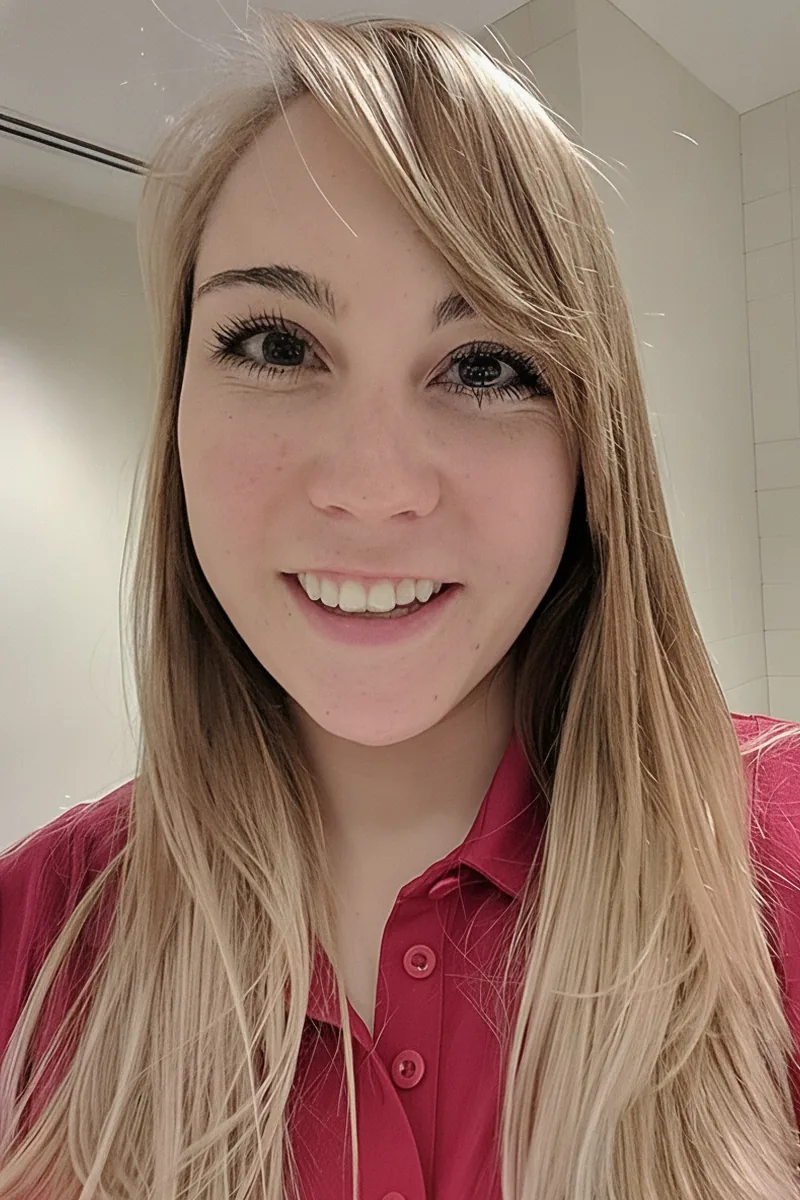
Kristin tutors math and writing in roughly equal measure, which gives her a useful edge when middle schoolers hit the stage where math problems start requiring more reading comprehension — setting up equations from word problems, interpreting what a question is actually asking, pulling relevant numbers from a paragraph of context. Her sociology coursework at the University of Utah keeps her sharp on data interpretation and proportional reasoning, and her 5.0 rating from students suggests she makes those skills click.
A knack for crafting analogies makes Garrett especially effective with middle schoolers tackling fractions, ratios, and introductory equations for the first time. He treats every problem as a chance to build number sense, using visual models and everyday scenarios so students see the reasoning behind each step rather than just following a procedure.
At the middle school level, math confidence matters as much as math skill — a student who shuts down at fractions or proportional reasoning carries that avoidance into algebra and beyond. Eric pinpoints the specific concept causing the roadblock, whether it's decimal operations, ratios, or early equation solving, and rebuilds understanding from that exact point.
A 4.0 GPA in a science-heavy program means Joshua uses math daily — from ratios in lab work to statistical analysis in research. He brings that practical fluency to middle school topics like proportions, percentages, and basic geometry, showing students how these skills actually get used beyond the textbook.
The jump from arithmetic to algebraic thinking is where a lot of students quietly lose confidence — fractions become equations, and word problems start requiring multi-step reasoning. Rebecca has loved math since elementary school and brings that genuine enthusiasm to middle schoolers working through ratios, proportions, and early linear relationships.
Fractions, ratios, and proportions tend to trip students up when they can't see how the ideas connect — Spencer breaks those links down visually so the logic sticks before moving to harder problems. His science-heavy genetics background means he's constantly using math in real contexts, which gives middle schoolers a convincing answer to "when will I ever use this?"
The leap from elementary arithmetic to middle school math catches students off guard when fractions, ratios, and negative numbers all show up at once. Matthew zeroes in on the specific concept causing the roadblock — whether it's proportional reasoning or graphing on the coordinate plane — and builds from there. His 4.8 rating speaks to how well that targeted approach works.
Math at the middle school level is often where students first encounter abstract thinking — variables, proportional reasoning, and integer operations that don't behave like simple arithmetic anymore. Joseph breaks these concepts down using concrete examples and step-by-step logic, drawing on his education background to spot exactly where confusion sets in. Rated 5.0 by students, he keeps sessions structured without making them feel like another class.
Seven years of peer tutoring — much of it in remedial and ESL settings — taught Samantha how to strip a math concept down to its clearest possible language, which is exactly what middle schoolers need when decimals, fractions, and early variable work start piling up at once. Her English teaching degree at BYU might seem like an odd fit for math, but breaking a sentence into grammatical parts and breaking an expression into terms are surprisingly similar skills. She holds a 5.0 rating and a 34 ACT, so the quantitative chops are there too.
Having tutored peers through their toughest homework assignments in math, Ali knows exactly where middle schoolers tend to get stuck — whether it's proportional reasoning, negative number operations, or translating word problems into equations. She takes the time to unpack each problem step by step so students actually understand the logic behind the answer. Her 5.0 rating speaks to that approach.
The jump from basic arithmetic to fractions, decimals, ratios, and early equation-solving is one of the biggest transitions in a student's math life. Grey is a self-described kinesthetic learner who believes younger students learn best by actively solving problems rather than watching lectures — a philosophy he honed tutoring at the University of Utah's academic center. He keeps sessions interactive, turning each new concept into a series of small challenges that build confidence step by step.
A physics degree means John spent years watching algebra and geometry collide in real problems — projectile motion, circuits, wave behavior — so he can show middle schoolers exactly what their work with equations, ratios, and graphing is building toward. He's particularly strong at teaching students to organize multi-step solutions cleanly, a habit that pays off long before high school. Rated 4.8 by students.
The jump from elementary math to middle school math introduces integer operations, basic equation-solving, and early coordinate graphing — all concepts that set the trajectory for algebra readiness. Helaman connects each new idea to something tangible, like using negative numbers to track football yardage or plotting real data on a graph, so students build genuine number sense.
I'm patient, personable, and have an incredible gift for explaining things in a way that makes sense. I majored in Math Education (with a minor in Computer Science), and I have more than eight years of experience teaching math and other STEM subjects.
I am dedicated, passionate, patient, and enthusiastic. I am also empathetic, and above all, I love teaching..Helping students is fulfilling because it allows educators to inspire and empower young people to reach their full potential.Believing in the student's potential to develop into extraordinary young learners.I'm passionate about education,and I'm actively engaged in various activities that promote learning and knowledge sharing.I volunteer at local schools,helping students with their studies and providing mentorship.I do believe that passion in education acts as a guiding light that motivates students to excel in their academic endeavors.It fuels one's determination,resilience,and performance leading to holistic growth and success.And ignites a fire within students,pushing them to go the extra mile in pursuit of their goals.Increased resilience when faced with setbacks,drives the student to bounce back stronger,learning valuable lessons along the way.Passion in education,lead the students to strive for excellence,resulting in a higher level of achievement in their academic pursuits.
Fractions, proportions, and early equation-solving can either build genuine number sense or just become rote procedures a student forgets by next semester. Caroline approaches middle school math by making sure each concept — whether it's integer operations or basic graphing — actually makes sense before moving on. Her engineering and MBA background gives her a long view of where these skills lead, which keeps students motivated.
Ratios, proportions, and early equation-solving can feel abstract to middle schoolers who've only ever worked with straightforward arithmetic. Marisa bridges that gap by connecting each new concept to something concrete — turning word problems into stories and fractions into visual models that actually click.
Scoring a 35 on the ACT and a 1550 on the SAT means Vansh didn't just survive middle school math — he built the kind of fluency with fractions, decimals, and early algebraic reasoning that carries through standardized testing years later. His finance studies at WashU in St. Louis keep that quantitative thinking sharp, and he's particularly good at showing students how to organize their scratch work so careless mistakes stop eating into their grades. Rated 4.8 by students.
At the middle school level, math starts asking students to think abstractly for the first time — proportional reasoning, negative numbers, introductory geometry, and basic equation solving. Brian brings a calm, structured style to these topics, breaking each problem into small logical steps so younger students build genuine confidence instead of just copying procedures.
Every concept in middle school math — ratios, proportional reasoning, negative numbers, basic geometry — becomes a building block for high school. Tracy pinpoints exactly which block is wobbly before stacking more on top, whether that means revisiting fraction operations or pushing ahead into linear equations. She's been tutoring students at this level since she was in middle school herself, so she understands where confusion typically hides.
The jump from elementary arithmetic to middle school math — ratios, proportional reasoning, negative numbers, intro to linear equations — is one of the steepest in a student's entire math career. Vinay tackles these topics by anchoring abstract ideas in concrete examples before moving to symbolic notation. Ten years of tutoring K-12 students means he's seen every version of where kids get stuck and knows how to get them unstuck.
Building number sense in middle school — whether it's fraction operations, proportional reasoning, or early work with variables — sets the trajectory for every math class that follows. JF has been tutoring students as young as third grade since high school and knows how to make concepts like ratios and integer arithmetic click before they become obstacles in algebra.
Fractions, ratios, and proportional reasoning trip up more middle schoolers than almost any other topic — and they're the exact foundation that makes or breaks success in algebra later. Michelle breaks these concepts into concrete, visual steps so students actually understand the logic behind each operation. Rated 4.9 by her students, she keeps sessions focused and practical.
The jump from elementary math to middle school math means juggling ratios, proportions, and introductory geometry all at once. Daniel keeps each topic grounded in practical scenarios — splitting a bill, scaling a recipe, measuring a room — so the reasoning clicks before the formulas pile up.
A year as a course assistant in Harvard's math department — teaching introductory calculus to undergraduates — gave Richard an unusual vantage point on middle school math: he knows exactly which arithmetic and pre-algebraic habits (especially around fractions, negative numbers, and variable expressions) need to be rock-solid before higher math stops making sense. He scored a 36 ACT and 1600 SAT, but more relevantly, he's spent time volunteering to teach a weekly course to middle schoolers through Harvard's Leadership Institute, so he's comfortable matching his explanations to how younger students actually think.
Most of Samuel's tutoring centers on writing and language arts, but his math roster runs from elementary through calculus — and middle school is where those subjects quietly overlap, since word problems and multi-step equations demand the same careful reading skills he teaches in English. He's especially effective at slowing students down to decode what a problem is actually asking before they start computing. Rated 5.0 by students.
The middle school math years — ratios, proportions, integer operations, intro to linear equations — set the trajectory for everything that comes after. Sugi approaches these topics by building the reasoning behind each procedure, so a student doesn't just cross-multiply but understands why it works. Rated 5.0 by her students, she keeps sessions structured without making them feel like a lecture.
Testimonials
Because the right Middle School Math tutor makes all the difference.
Average Session Rating – Based on 3.4M Learner Ratings
Nearby Middle School Math Tutors
Other Salt Lake City Tutors
Related Math Tutors in Salt Lake City
Frequently Asked Questions
Salt Lake City's 16 school districts use a variety of math programs, with many adopting standards-aligned curricula that emphasize both conceptual understanding and procedural fluency. The transition from arithmetic to algebra and geometry requires students to think more abstractly about mathematical relationships. A tutor familiar with your student's specific program can bridge any gaps and reinforce the concepts being taught in the classroom.
Middle school marks a shift from learning procedures (like how to divide) to understanding why those procedures work. Students encounter variables, multi-step equations, and abstract reasoning for the first time, which can feel overwhelming. Personalized tutoring helps students build confidence by connecting new concepts to what they already know and showing them the patterns that make math logical rather than arbitrary.
Word problems require students to translate language into mathematical operations—a skill that doesn't always develop naturally from procedural practice alone. Expert tutors teach students to break problems into steps: identify what's given, determine what's being asked, choose the right operation, and check if the answer makes sense. With guided practice, students learn to see word problems as puzzles to solve rather than obstacles to avoid.
Showing work reveals a student's thinking process and helps catch conceptual misunderstandings that might lead to wrong answers on harder problems later. It also builds the problem-solving strategies students need for algebra, geometry, and standardized tests. Tutors can help students develop clear, organized approaches to work that teachers can follow—and that students can use to check their own thinking.
Math anxiety often stems from feeling lost or embarrassed, which personalized instruction directly addresses. Working one-on-one with a tutor in a judgment-free environment lets students ask questions without pressure, build confidence through small wins, and develop a growth mindset about their abilities. Many students discover they actually understand math once it's explained in a way that clicks for them.
The first session focuses on understanding your student's current level, learning style, and specific challenges—whether that's graphing, equations, fractions, or test anxiety. The tutor will assess what your student already knows and identify gaps to address. This foundation helps create a personalized plan that targets the right skills and builds momentum quickly.
Proofs require students to think logically and justify their reasoning—skills that don't come naturally to everyone. Tutors break down the logic of proofs step-by-step, help students recognize patterns in geometric relationships, and build the confidence to construct their own arguments. With practice and clear guidance, students move from confusion to understanding how to prove mathematical statements.
Varsity Tutors connects you with expert tutors who specialize in middle school math and understand the curriculum your student is learning. You can share your student's specific challenges and learning preferences, and we'll match them with a tutor who's a great fit. The process is straightforward—reach out to get started, and your student can begin personalized instruction quickly.
Let’s find your perfect tutor
Answer a few quick questions. We’ll recommend the right plan and match you with a top 5% tutor.