Award-Winning ACT Science Tutors
serving Salt Lake City, UT
ACT Science
Tutors in Salt Lake City
Private 1-on-1 tutoring, weekly live classes for academic support, test prep & enrichment, practice tests and diagnostics, and more to elevate grades and test scores.
Based on 3.4M Learner Ratings
UniversitiesSchools & Universities
DeliveredHours Delivered
ProficiencyGrowth in Proficiency
Who needs tutoring?
No obligation. Takes ~1 minute.
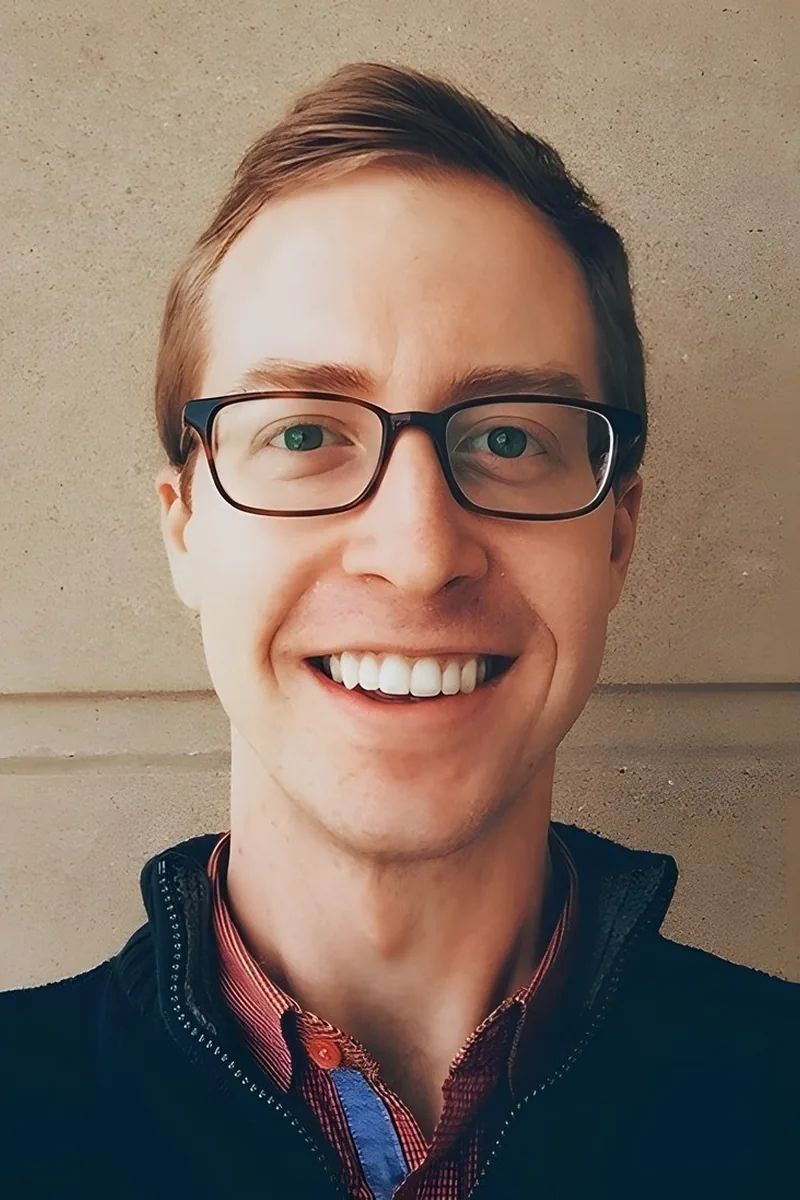
Contrary to what the name suggests, ACT Science is really a data interpretation exam — most questions can be answered by reading graphs, tables, and experimental setups carefully without any outside science knowledge. Ben treats the section like a reading comprehension exercise with numbers, teaching students to trace variables across figures and identify conflicting viewpoints in dueling-scientist passages. His 34 ACT composite backs up the method.
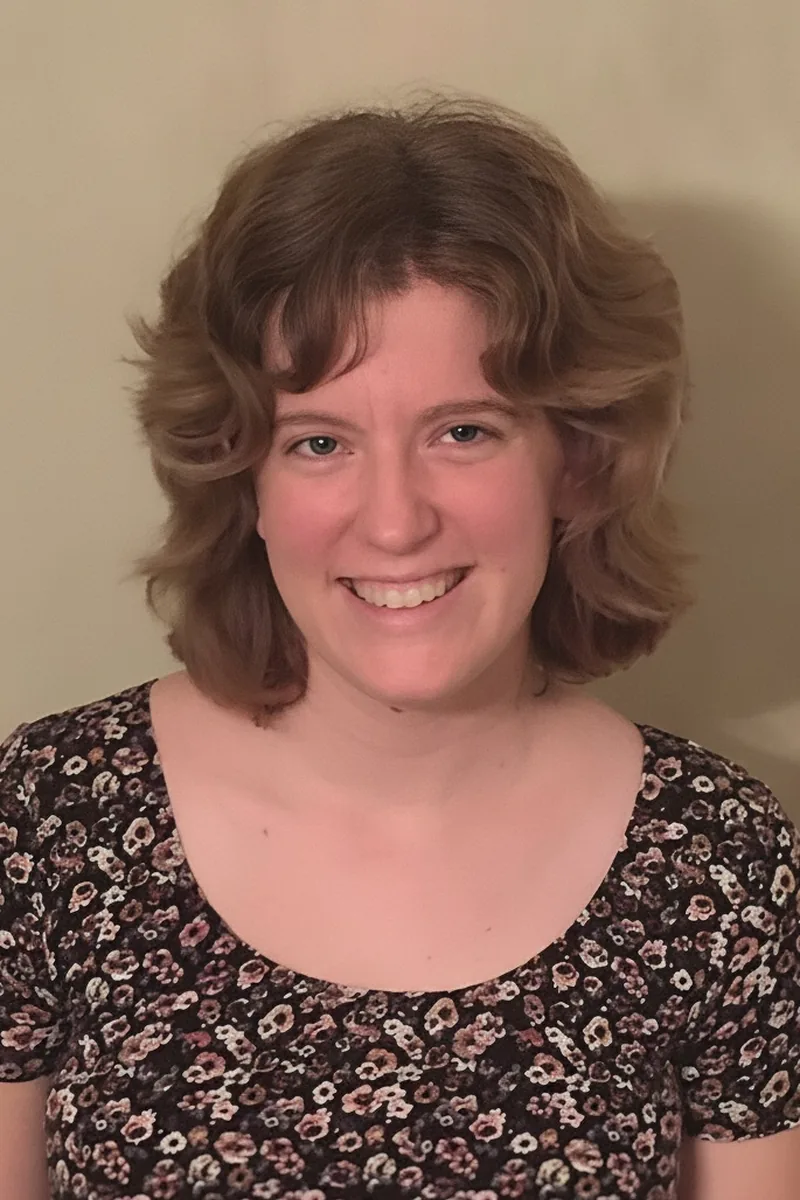
The ACT Science section is really a test of graph literacy and experimental reasoning, not biology or chemistry knowledge. Kristina's PhD in biomedical engineering means she's spent years interpreting complex data sets, conflicting research findings, and experimental controls — the exact skills this section demands. She teaches students to read figures before reading text, which consistently saves time.
I'm currently working toward graduating from the University of Utah with a degree in Sociology. I tutor mainly math and writing, but am able to tutor in a variety of subjects. I strive to make my tutoring sessions productive and enjoyable by getting students involved and excited about learning.
I'm not that guy! Like many students, understanding comes with repetition of principles and hard work. I have the perspective of a student trying to understand, not a teacher trying to preach. I love working with people from the ground up; we start at the comfort zone and work our way to improvement. I know I don't know everything, so I'm excited to learn as well!
Kendall's physics degree makes the ACT Science section click in a way most prep tutors can't replicate — she reads data tables and experimental designs the way she learned to in lab, and teaches students to do the same in under a minute per question. Her approach treats the section as a graph-reading and reasoning exercise, since the actual science knowledge required is minimal. She scored a 35 ACT composite and holds a 5.0 rating.
As a passionate tutor with over 2 years of experience, I am dedicated to helping students excel in mathematics, particularly in subjects like Algebra, Calculus, and Geometry. Currently pursuing a Bachelor's in Data Science at Utah State University, I leverage my academic background to provide real-world applications that make complex concepts more relatable. My teaching philosophy centers on fostering a supportive learning environment where students feel comfortable asking questions and exploring their understanding. I believe in tailoring my approach to meet each student's unique needs, which not only boosts their confidence but also enhances their academic success. Outside of tutoring, I enjoy engaging in problem-solving challenges and exploring new technologies, which further fuels my enthusiasm for teaching and learning.
My tutoring approach is one of coaching, mentoring, and helping the student understand exactly what level and detail of help that they need to get ahead. Combining the personal discipline learned during 20 years as a Naval Officer with the unique expertise learned in one-on-one communication with peers and sailors as well as my five children, I can help you or your child succeed. A Bachelor's in Electrical Engineering, and a Math Minor help qualify me for tutoring in many subjects. My individualized tutoring methods also raised my step-son's Physics grade from a C to an A in one semester. I specialize in mathematics (basic arithmetic through calculus) but can help in many other subjects. Learning should be fun, but should also, at times, bring "Instant" results. I work to keep positive encouragement in every lesson, tutoring, or test preparation session. I speak fluent Spanish!
I am senior at Brigham Young University with a 4.0 GPA. I am majoring in Exercise Science and am going to go to Physical Therapy school. I am also getting a minor in Psychology. I lived in France for two years and became fluent in the French language. I continue to converse with natives in French. I was a college chemistry TA for three semesters and love teaching chemistry. I did very well on standardized tests. I love to teach and impart knowledge to others in a way that is compatible with individual learning styles.
I enjoy helping students build confidence in chemistry, physics, and the ACT. I just finished up my sophomore year studying biomedical engineering with a 3.99 GPA. While at school, I am a peer tutor for general chemistry, organic chemistry, and physics 1. I love getting to know my students and helping them out with their unique concerns. I have a very problem-based teaching philosophy where we work through lots of practice problems together. I can't wait to meet you! Let's connect!
The ACT Science section barely tests science knowledge — it's really about reading graphs, interpreting conflicting experimental setups, and drawing conclusions from data tables under a tight clock. Matthew treats it exactly that way, drilling students on how to extract trends from figures before even reading the surrounding text. His 35 ACT composite backs up the approach.
The ACT Science section isn't really testing science knowledge — it's testing how fast you can read graphs, compare data sets, and evaluate conflicting viewpoints. Rebecca scored a 34 composite and, as a pre-med math major at the University of Utah, brings sharp data-analysis instincts that translate directly into teaching students to extract answers efficiently from dense figures and tables.
Having lived in seven states before college, Jared learned to adapt quickly — a skill he now applies to the ACT Science section's rapid shifts between biology graphs, chemistry tables, and physics experiments across seven passages in 35 minutes. He teaches students to identify the key variables in each figure before reading any surrounding text, which keeps pacing tight and prevents jargon-induced freezes. His 34 ACT composite and 4.9 rating reflect a no-nonsense, data-first approach.
I am fluent in Spanish.
Most students panic when they see the ACT Science section's graphs and data tables, but the trick is treating it like a reading comprehension exercise with numbers. Samantha, who scored a 34 composite, teaches students to ignore the intimidating scientific jargon and zero in on what the figures are actually showing. Her 5.0 rating speaks to how well that approach clicks.
I am currently studying Elementary Education at Brigham Young University. I am also minoring in TESOL (Teaching English to Speakers of Other Languages) and Spanish DLI (Dual Language Immersion). I am fluent in Spanish because I lived in Mexico for 18 months, but I also went through the language learning process in high school classes and understand the challenges students face. I love teaching and tutoring anyone with a desire to improve, especially elementary aged students. I try to make learning fun and accessible to each individual student's learning style. In my spare time I like to read, cook, play tennis and paint.
Most students panic at the ACT Science section because it looks like a science test, but it's really about reading graphs, interpreting data tables, and evaluating conflicting hypotheses under time pressure. Rachel scored a 33 ACT composite and treats this section as a logic and reading exercise, teaching students to extract answers from figures before even glancing at the questions.
Most students panic when they see the ACT Science section, but it's less about knowing biology or chemistry and more about interpreting graphs, tables, and conflicting viewpoints under time pressure. John's physics background means he's deeply comfortable with data analysis and experimental design — the two skills that actually drive scores on this section. Rated 4.8 by students.
I am invested in each of my students' success and work hard to help them succeed. Consequently, each of my past tutoring clients has seen significant improvement.
I am currently a student at Brigham Young University studying Applied Physics. After finishing my degree I am planning on pursuing a master's degree in Aerospace Engineering. Since January 2014 I have worked in the physics help lab at BYU. Throughout this time I have greatly enjoyed helping many students increase their understanding of physics. I love seeing my students have a "light-bulb" moment where suddenly everything we discussed makes sense to them. I think it is extremely important for everyone to have (at least) a basic understanding of math and science as this helps us to better understand our world. I am greatly motivated to teach in a way that my students understand the fundamental principles and not in a way that they can merely get the right answer. I love trying to pass on my enthusiasm for math and science to my students, and I am always looking for ways to show how cool and fun mastering these subjects can be. Although I am most passionate about physics, I also tutor math and Spanish. When I'm not studying or teaching I enjoy swimming, reading (especially Michael Crichton and Orson Scott Card), and exchanging movie quotes with my roommates.
I am a Sophomore at BYU from Sacramento, CA. Currently, I am studying Mechanical Engineering with a minor in Management. I love understanding how everything works and that is one of my biggest motivators in school and learning in general. The subjects in which I am most proficient are Calculus, any type of Algebra and test-taking skills. I am also fluent in Spanish having spent two years in Spain where I talked with peoples of various Spanish-speaking countries emphasizing the Castillian accent. I would love to be able to share my enthusiasm for understanding with everyone.
I am certain that everyone has gifts waiting to be uncovered.
The ACT Science section is less about knowing biology or chemistry and more about reading graphs under pressure. Samantha, who scored a 33 composite and studies engineering, treats each passage like a data interpretation exercise — teaching students to ignore filler text and zero in on trends, variables, and conflicting viewpoints. That approach turns a stressful section into one of the easiest to improve.
I am no longer needed.
The ACT Science section is really a data interpretation exam disguised as biology, chemistry, and physics. Dennis's astrophysics research at Princeton — where he analyzed simulations of cosmic ray acceleration and turbulent plasmas — gave him the exact skill set this section tests: reading complex graphs, comparing experimental setups, and drawing conclusions from conflicting data sets under time pressure. Rated 4.7 by students.
Most students overthink the ACT Science section because they assume it tests scientific knowledge — it's actually a speed-reading exercise disguised as science. Kevin, who earned a 36 composite, teaches students to extract trends from graphs, compare experimental setups, and identify conflicting viewpoints without getting lost in jargon. His engineering background means he can also fill in the real science when a question does require outside knowledge, particularly in physics and chemistry.
I am a current sophomore at Rensselaer Polytechnic Institute, where I am majoring in Biology as part of the 7 Year Accelerated Medical Program. I am also minoring in Healthcare Economics and Policy. My favorite subjects in school are Chemistry, Biology, and Math, but I also enjoy the process of writing and editing thought provoking essays. During high school, I spent time tutoring for the National Honor Society. My approach to tutoring is to teach the concepts in a simplistic manner and reinforcing the concepts while adding difficulty through effective practice problems. In my free time, I have recently found myself reading, working out, drawing, and spending time with my siblings.
I am a junior at Purdue University studying Aerospace Engineering and am part of the Air Force ROTC program. I have 6 years of tutoring experience at places including Kumon, Mathnasium, and Purdue University. I have worked with kids of all ages from kindergarten to sophomores in college, each with their own set of unique strengths, and tutored a variety of subjects, including calculus, trigonometry, geometry, thermodynamics, chemistry, and physics. Like many of my previous students, I struggled to understand concepts that I was being taught and was a terrible test taker. However, I found ways to overcome my obstacles and develop an better intuition for what I was learning. I believe that it is only this intuition and understanding that helps overcome these obstacles. My least favorite thing to see people be discouraged, so with a little bit of guidance and reassurance, I want to show people that they are capable of anything they put their mind to.
I am currently a student at Duke University studying Biomedical Engineering and Economics. Just a little bit about me and some of my interests. Some of my favorite academic interests include memoirs and modern classics. I think Catcher in the Rye is still one of my all time favorite books but Percy Jackson, a modern classic, is up there too. Beyond academics, I take great guilty pleasure in watching TV shows such as Westworld, Sherlock, How I Met Your Mother, and even The Bachelorette when I'm at a low point.
I am a recent graduate of Cornell University, where I received a B.S. in Chemical Engineering and graduated Magna Cum Laude. Over the past several years, I have worked with students from diverse backgrounds and experiences tutoring thermodynamics (my personal favorite), chemistry, and math. I have also tutored in the past for ACT/SAT and other subjects such as history, but I am deeply passionate about science and engineering. I tend to push my students to understand conceptual topics, as opposed to rote or algorithmic learning. In my free time, I love to bake sourdough, learn about history, garden, and recently started biking again.
I am passionate about helping students with math, science, test prep, and more! As sophomore undergraduate at Brown University studying Mathematics and Biophysics, I am well experienced with many topics. I received a perfect 36 on my ACT, so I am very confident with test taking.
Most students panic when they see an unfamiliar experiment on ACT Science, but the section rarely tests scientific knowledge — it tests whether you can read graphs, compare data trends, and evaluate conflicting hypotheses under time pressure. Rhea, a biology major at UChicago on the pre-med track, unpacks each passage type (data representation, research summaries, conflicting viewpoints) with a different reading strategy. Her 36 ACT composite came from treating this section as a data literacy exercise.
Most students overthink the ACT Science section because they treat it like a science test — but it's really about extracting trends from graphs, tables, and conflicting viewpoints under time pressure. As a biology researcher who interprets experimental data daily, Max reads these passages the way a scientist would: figure labels first, then axes, then relationships. That systematic approach, paired with his 36 ACT composite, makes the section far less intimidating.
Sreya treats the ACT Science section as a data interpretation exercise, not a science quiz — which is exactly what it is. Her chemistry background at the University of Michigan means she's comfortable with the conflicting viewpoints passages that trip up most students, but she emphasizes that graph-reading speed and experimental design logic matter far more than content knowledge. Rated 5.0 by students.
The ACT Science section is less about biology or chemistry knowledge and more about reading graphs under pressure — and Tracy, who scored a 36 composite, approaches it exactly that way. She teaches students to ignore the scientific jargon, locate the variables in each figure, and identify trends before even glancing at the questions. Once students stop trying to understand the experiment and start extracting data, their accuracy jumps.
Testimonials
Because the right ACT Science tutor makes all the difference.
Average Session Rating – Based on 3.4M Learner Ratings
Practice ACT Science
Free practice tests, flashcards, and AI tutoring for ACT Science
Nearby ACT Science Tutors
Other Salt Lake City Tutors
Related Test Prep Tutors in Salt Lake City
Frequently Asked Questions
The ACT Science section tests your ability to understand, interpret, and reason with scientific information—not memorized facts. You'll encounter three question types: Data Representation (graphs and tables), Research Summaries (experimental descriptions), and Conflicting Viewpoints (competing scientific theories). The section has 40 questions in 35 minutes, so pacing and quick comprehension are critical skills.
Score improvement depends on your starting point and commitment, but most students see meaningful gains with focused preparation. Research on 1-on-1 instruction shows that personalized tutoring can accelerate learning significantly by targeting your specific weak areas—whether that's reading dense passages quickly, interpreting unfamiliar graphs, or managing time across all three question types. Many students improve by 2-4 points with consistent practice and strategic guidance.
The top challenges are pacing (35 minutes feels rushed), interpreting unfamiliar data formats, and distinguishing between relevant and irrelevant information in dense passages. Many students also struggle with the Conflicting Viewpoints section because it requires comparing multiple perspectives rather than just finding data. A tutor can help you develop efficient reading strategies, practice recognizing question patterns, and build confidence with timed practice tests.
Varsity Tutors connects you with expert tutors who customize their approach to your needs. Your tutor will assess your strengths and weaknesses, develop a targeted study plan, teach test-specific strategies, and guide you through timed practice sections. Sessions typically include strategy instruction, practice problems with detailed feedback, and homework to reinforce what you've learned between appointments.
Effective pacing starts with understanding question types—Data Representation questions are usually quickest, Research Summaries take moderate time, and Conflicting Viewpoints often require the most careful reading. A tutor can teach you to scan passages strategically, identify what information each question actually needs, and practice allocating roughly 5-6 minutes per passage. Timed drills with feedback help you internalize faster reading without sacrificing accuracy.
Most students benefit from taking 3-5 full practice tests under timed conditions, spaced throughout their preparation. This builds stamina and helps you identify patterns in your mistakes. Between full tests, practice individual sections or question types to target specific skills. A tutor can help you review practice tests strategically, focusing on why you missed questions rather than just what the right answer is.
Your first session is a diagnostic and planning meeting. Your tutor will review your ACT Science background, assess your current skill level (often through a practice section), and identify your biggest challenges—whether that's time management, specific question types, or content gaps. Together, you'll establish clear goals and create a personalized study plan tailored to your timeline and test date.
Salt Lake City students benefit from personalized 1-on-1 instruction that fits their schedule and learning style. With 126 schools across 16 districts in the area, students have diverse academic backgrounds and preparation levels—a tutor can meet you exactly where you are. Varsity Tutors connects you with expert tutors who understand ACT Science thoroughly and can help you achieve your target score efficiently.
Let’s find your perfect tutor
Answer a few quick questions. We’ll recommend the right plan and match you with a top 5% tutor.