Award-Winning Spanish Tutors
serving San Antonio, TX
Spanish
Tutors in San Antonio
Private 1-on-1 tutoring, weekly live classes for academic support, test prep & enrichment, practice tests and diagnostics, and more to elevate grades and test scores.
Based on 3.4M Learner Ratings
UniversitiesSchools & Universities
DeliveredHours Delivered
ProficiencyGrowth in Proficiency
Who needs tutoring?
No obligation. Takes ~1 minute.

Thomas teaches Spanish with an emphasis on grammar fundamentals — verb conjugation patterns, pronoun usage, and sentence structure — that give students a reliable framework for reading, writing, and speaking. His approach is systematic, breaking each new tense or construction into clear rules before applying them in practice exercises. That structure is especially useful for students in Spanish 1 or 2 who feel lost when topics start stacking up.
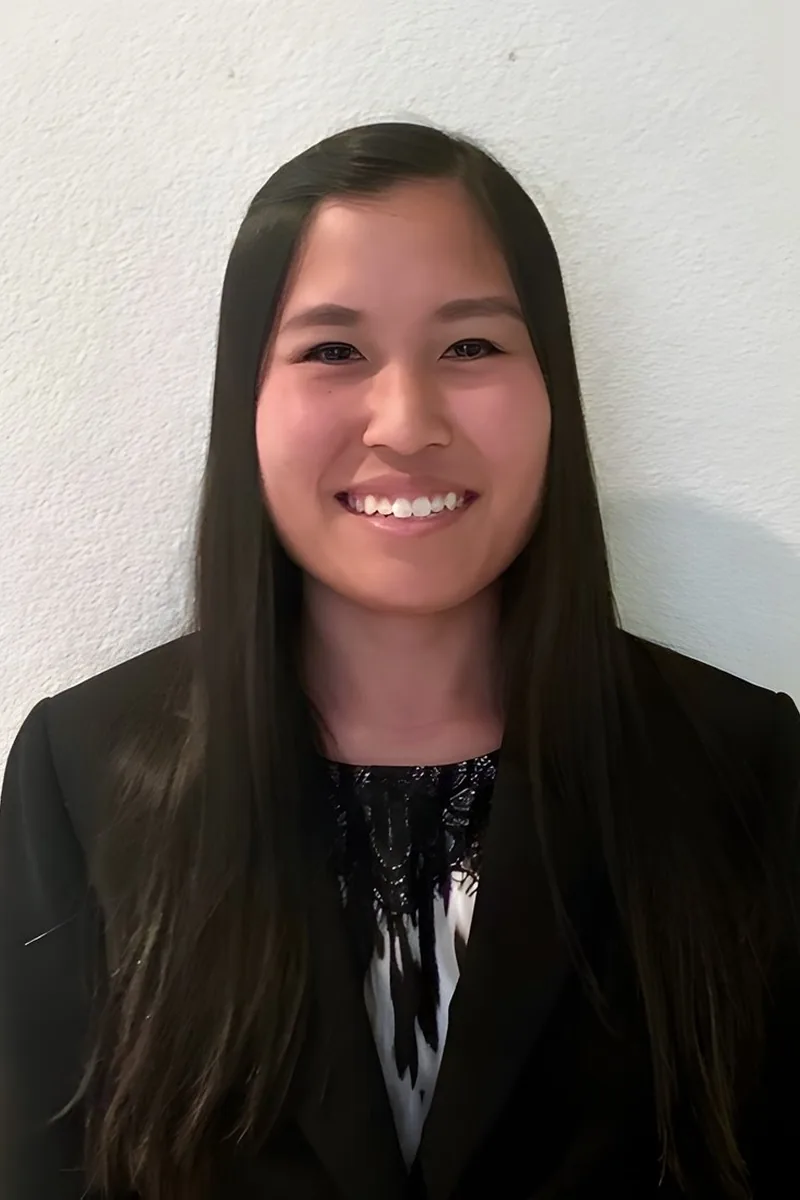
Triple-majoring in Plan II Honors, Psychology, and Music at UT Austin meant Jasmine spent four years rapidly absorbing dense material across unrelated disciplines — a skill that transfers directly to picking up a new language's grammar systems and vocabulary. She applies that same structured learning approach to Spanish, breaking down conjugation patterns and sentence-building rules into the kind of clear, repeatable steps that stick. Rated 5.0 by students.
I enjoy helping others realize their potential and making the impossible possible. Everyone can reach their goals, and it is my goal to help you reach yours! Math is my favorite subject, and I have even participated in competitions for it. I hope to help others fall in love with math as well.
Medical school at Baylor means Sugi regularly encounters Spanish-speaking patients and medical terminology rooted in Latin — a context that sharpens her ear for vocabulary patterns and grammatical structures in ways a standard classroom can't replicate. Her cognitive science background from Rice also gives her a research-backed understanding of how the brain acquires new languages, so she tailors practice around the memorization and retrieval techniques that actually stick. Rated 5.0 by students.
Jake has tutored Spanish across multiple levels and speaks the language well enough to teach everything from verb conjugation patterns in the preterite and imperfect to reading comprehension strategies for literary passages. His approach emphasizes understanding the logic behind grammar rules so students can apply them flexibly, not just memorize charts.
Aditi teaches Spanish with an emphasis on building grammar systematically — verb conjugations, pronoun usage, sentence structure — so students can construct their own sentences instead of relying on memorized phrases. She covers beginner through intermediate levels and connects vocabulary to real-world contexts that make retention easier.
Paul picked up conversational and reading-level Spanish while traveling through South America, which gives his tutoring a practical edge — he knows what it's like to need the subjunctive tense in an actual conversation, not just on a worksheet. He's strongest with students working on verb conjugation, reading comprehension in Spanish, and building everyday vocabulary.
Learning Spanish as a cognitive science student gave Adam an unusual advantage: he understands how the brain acquires a second language and uses that knowledge to make vocabulary and grammar stick faster. His Spanish minor at Rice covered everything from verb conjugation patterns to conversational fluency. Whether a student is wrestling with the subjunctive mood or building everyday speaking confidence, Adam tailors the approach to how they learn best.
Learning Spanish from second grade through college and then into medical school interpreting, Sanjay knows exactly where English speakers get tripped up — ser versus estar, the subjunctive mood, preterite versus imperfect. He approaches the language as someone who built fluency from scratch rather than growing up bilingual, which means he has concrete strategies for the grammar patterns and vocabulary gaps that slow most learners down.
A bachelor's degree in Spanish from Loyola Marymount means Iselee doesn't just teach vocabulary lists — she explains how the subjunctive actually works in context, why ser and estar aren't interchangeable, and how sentence rhythm changes between formal and conversational registers. Whether a student is conjugating verbs for the first time or polishing reading comprehension skills, she connects grammar to real communication rather than abstract rules.
Editing for multiple newspapers sharpened Molly's instinct for how language works at the sentence level — subject-verb agreement, word order, tense consistency — and those same mechanics are exactly what trips students up in Spanish grammar. She applies that editorial eye to help break down conjugation patterns and sentence construction, treating Spanish as a system of rules that can be learned the same way you'd learn to tighten a paragraph.
A Spanish minor at Texas A&M means Kinjal didn't just learn vocabulary lists — she studied grammar, composition, and reading comprehension at the university level. She's especially comfortable teaching verb conjugation patterns (preterite vs. imperfect, subjunctive triggers) and building the sentence-construction skills students need for written assignments and exams.
Studying neuroscience at Rice means Brett spends his days learning how the brain acquires and retains new information — an advantage he puts to work when teaching Spanish vocabulary and grammar concepts like ser versus estar or preterite conjugations. He designs practice around what actually sticks in memory, not just what fills a worksheet. Rated 5.0 by students.
Engineering coursework at Rice trained Theresa to break complex systems into logical components — a skill that translates surprisingly well to Spanish, where verb tenses, pronoun placement, and agreement rules follow predictable patterns once you see the underlying structure. She teaches across four levels of Spanish and uses that analytical mindset to make vocabulary and grammar click for students who respond better to logic than memorization.
Mechanical engineering at Rice means Ashton spends most of his time in equations and code, but he's also carried Spanish through multiple levels of coursework — enough to know that conjugation patterns and grammatical gender follow learnable rules, not random chaos. He tackles the language the way he'd tackle a design problem: break it into components, understand how each piece connects, and practice assembling them until it feels automatic.
Madison's background in International and Intercultural Communication means she teaches Spanish with real cultural context — connecting verb conjugations and sentence structure to how native speakers actually think and express ideas. Her ESL teaching experience at Pat Neff Elementary sharpened her ability to break down tricky concepts like ser vs. estar or subjunctive mood in ways that click quickly.
Coming from a STEM magnet high school and now pursuing cognitive science at Rice, Natalie brings an analytical learner's perspective to Spanish — she knows what it takes to internalize verb conjugations, pronoun placement, and sentence structure as a non-native speaker. She breaks grammar rules into logical patterns that make concepts like subjunctive mood and ser vs. estar click rather than feel arbitrary.
Teaching Spanish from level 1 through level 4, Misael covers everything from foundational verb conjugations and noun-adjective agreement to subjunctive mood and complex sentence structures. His approach connects grammar rules to real usage patterns so students internalize the language instead of just memorizing charts.
Studying both biological and physical sciences means Mingee spends most of her time in technical, pattern-driven disciplines — and she applies that same structured thinking to Spanish, treating conjugation charts and grammatical gender like classification systems to be mapped rather than memorized. Her 5.0 rating suggests the approach works, especially for students who want clear rules before they start producing sentences on their own.
Living in both Spain and Latin America gave Lisanne the kind of fluency that textbooks can't replicate — she knows when to use the subjunctive not because she memorized a chart, but because it sounds wrong without it. Her Harvard PhD and Brown BA in International Studies mean she can connect grammar concepts like ser vs. estar or preterite vs. imperfect to the cultural contexts that make them intuitive.
Learning Spanish verb conjugations in isolation rarely sticks, so Si builds lessons around practical sentence construction — moving from present-tense basics through preterite vs. imperfect distinctions in real conversational contexts. His experience with multiple languages gives him an intuitive sense for where English speakers tend to stumble with Spanish grammar and pronunciation.
As a native Spanish speaker, Giovanna brings an intuitive grasp of the language that textbooks can't replicate — she knows which verb conjugations trip students up, why the subjunctive mood feels so foreign to English speakers, and how to explain ser versus estar in a way that actually sticks. Her teaching spans Spanish 1 through Spanish 4, so she's comfortable whether a student is just learning present tense or tackling advanced grammar and literature.
Growing up with Portuguese and Spanish as living languages — not classroom exercises — gave Caio an intuitive grasp of how Spanish grammar, vocabulary, and idiomatic expressions actually function in conversation. He teaches verb conjugations and subjunctive mood through real-world usage patterns, building the kind of fluency that sticks beyond the next quiz.
Two months teaching English in Chiang Mai, Thailand gave Samantha firsthand experience navigating a second language in immersive, high-stakes settings — an understanding she brings to Spanish grammar, verb conjugation, and conversational fluency. She approaches the language structurally, connecting tense patterns and sentence construction to the logic students already use in English.
Lillian's linguistics training at Lewis and Clark College gives her a structural lens on Spanish — she can explain why certain verb forms exist, not just when to use them. That background is especially useful for unpacking patterns in tense and mood that feel arbitrary without a deeper understanding of how languages organize meaning.
Bridget earned her bachelor's degree in Spanish, then moved to Barcelona for a master's program conducted entirely in Spanish and Catalan — so her fluency is lived, not just academic. She digs into verb conjugation patterns, subjunctive triggers, and reading comprehension by connecting grammar rules to how native speakers actually use the language every day.
While Spanish isn't Nathan's primary academic focus, his structured approach to learning — honed through a rigorous dual-major program at Rice — translates well to tackling verb conjugations, vocabulary acquisition, and reading comprehension in a second language. He brings the same analytical discipline to grammar patterns that he applies to his history and science coursework.
Growing up speaking Spanish at home and attending school in Mexico gave Alfonso native-level command of the language across conversation, writing, and formal grammar. He teaches verb conjugations, subjunctive mood, and sentence structure the way he internalized them — through actual usage patterns rather than rote charts. That dual perspective of a native speaker who also learned the rules formally makes tricky concepts like ser vs. estar click faster.
Having studied Spanish at every level from undergraduate literature seminars to doctoral-level phonology and syntax research, Amy understands the language from the inside out. She teaches grammar not as a set of rules to memorize but as a system with its own logic — making conjugation patterns, subjunctive triggers, and ser-versus-estar distinctions click in a way that sticks.
Growing up as a native Spanish speaker and then mastering academic English gives Mariane an intuitive understanding of where the two languages collide — ser versus estar, subjunctive triggers, pronoun placement. She teaches grammar through context and conversation rather than isolated conjugation drills, so students internalize patterns they can actually use. Her 4.9 rating speaks to how effectively that approach clicks.
Jordan has taught Spanish from introductory vocabulary and verb conjugation through more advanced topics like subjunctive mood and reading comprehension. His approach leans on structured repetition and contextual practice — building sentences around real scenarios rather than isolated grammar drills. Rated 5.0 by students.
Emily has extensive experience teaching Spanish from beginner grammar through advanced composition, covering everything from verb conjugation patterns to subjunctive mood usage. Her approach connects vocabulary and structure to real communication, so students internalize the language instead of just translating word by word. She holds a 5.0 rating.
Studying one Romance language deeply changes how you learn another — John's bachelor's in French and graduate linguistics training give him a structural understanding of Spanish grammar that makes conjugation patterns, subjunctive triggers, and pronoun placement click faster. He connects Spanish to the broader logic of how languages work, which is especially useful for students who need more than just memorization drills.
Studying Latin American Studies at Rice means Lila doesn't just know Spanish grammar — she uses the language regularly to engage with academic texts, regional politics, and cultural analysis. She teaches everything from verb conjugation patterns and pronoun placement to building conversational confidence, adjusting her approach based on whether a student needs help with classroom assignments or real-world fluency.
I am a graduate of UC San Diego with a Bachelors in Neuroscience through the Psychology department. After graduating, I went to Michigan Technological University and did some graduate work, before moving to Texas to be closer to my parents. I did my alternative certification program through Texas Teachers and am highly qualified to teach Science for grades 7-12. I have been a teacher in public and charter schools for the last four years, and have tutoring experience extending over ten years behind me as well.
Learning Spanish verb conjugations and vocabulary sticks better when there's a system behind it — Natalie applies the same structured study methods she used to earn a 1560 SAT and tackle a double major at Rice. She breaks down tricky concepts like ser vs. estar, subjunctive mood triggers, and pronoun placement into clear patterns students can actually internalize.
Managing an MBA while juggling 19 different subject areas means Kari is used to picking up new frameworks quickly and breaking them down for others — a habit that carries over into teaching Spanish grammar and vocabulary. She approaches verb conjugations and sentence structure with the same organized, step-by-step thinking she applies to her business coursework, which tends to resonate with students who want clear logic behind the rules.
Minoring in history at Duke means Christopher regularly engages with Spanish-language primary sources — colonial documents, political speeches, policy texts — which gives him a practical grip on the language that goes beyond classroom drills. He leans on that reading experience to teach vocabulary in context and to break down grammatical structures like ser versus estar or preterite versus imperfect through real-world usage rather than abstract rules.
Meghana's neuroscience studies demand she learn technical vocabulary across disciplines, and she applies that same structured approach to building Spanish skills — breaking down conjugation patterns and grammatical gender into logical categories that stick. She teaches Spanish 1 and 2 alongside conversational practice, connecting new grammar to phrases students can actually use in dialogue rather than just on worksheets.
Learning Spanish grammar — verb conjugations, ser versus estar, pronoun placement — sticks better when it's tied to actual communication rather than isolated drills. Scott teaches across multiple levels of Spanish and uses constant back-and-forth dialogue during sessions to reinforce new structures the moment they're introduced. That real-time practice keeps students actively producing language instead of passively copying notes.
Testimonials
Because the right Spanish tutor makes all the difference.
Average Session Rating – Based on 3.4M Learner Ratings
Nearby Spanish Tutors
Other San Antonio Tutors
Related Languages Tutors in San Antonio
Frequently Asked Questions
Speaking fluency develops through consistent, real-time conversation practice—something that's difficult to get in a traditional classroom setting. Varsity Tutors connects you with expert tutors who provide personalized 1-on-1 instruction focused on conversation, helping you build confidence in speaking while receiving immediate feedback on pronunciation, grammar, and natural usage. Regular practice sessions allow you to work through real-world scenarios and develop the conversational patterns you need for actual communication.
Spanish verb conjugation is complex because verbs change based on tense, subject, and mood—with regular and irregular patterns that require both memorization and understanding. Rather than memorizing conjugation tables in isolation, personalized tutoring helps you learn verbs in context through conversation and practical examples, making patterns stick naturally. A tutor can focus on your specific problem areas, whether that's preterite vs. imperfect, subjunctive mood, or irregular verbs, and build your understanding systematically.
Vocabulary sticks when you use it repeatedly in meaningful contexts rather than through isolated memorization. Varsity Tutors connects you with tutors who use spaced repetition, retrieval practice, and conversational application to help new words become part of your active vocabulary. Your tutor can tailor vocabulary lessons to topics you care about—whether that's travel, business, or hobbies—making learning more engaging and memorable.
Accent and pronunciation improve through consistent listening and speaking practice with someone who can model correct sounds and provide real-time feedback. Personalized tutoring gives you the opportunity to practice pronunciation in conversation, not just in drills, and your tutor can identify specific sounds you struggle with—like the Spanish 'r' or regional vowel differences—and help you adjust. Over time, exposure to native-like pronunciation patterns combined with your own practice builds muscle memory for authentic Spanish sounds.
Yes—whether you're taking Spanish I, II, AP Spanish, or preparing for the SAT Spanish subject test, personalized tutoring complements classroom learning by providing focused support on areas where you're struggling. For students in San Antonio's 42 school districts, tutors can align with your specific curriculum, help you prepare for tests and presentations, and fill gaps in understanding that might be holding you back. One-on-one instruction means your tutor can work at your pace and address exactly what your class requires.
Grammar is the foundation, but language is about communication—and that requires understanding cultural context, natural speech patterns, and how native speakers actually use the language. Personalized tutoring goes beyond textbook grammar by incorporating cultural elements, idiomatic expressions, and authentic usage patterns that help you sound natural, not just grammatically correct. Your tutor can share insights about Spanish-speaking cultures and help you understand not just the 'what' but the 'why' behind how Spanish works.
Reading and writing develop through guided practice with feedback—reading authentic materials at your level and writing with someone who can correct your grammar, vocabulary, and style in real time. Varsity Tutors connects you with tutors who can assign targeted reading passages, help you analyze Spanish texts, and guide your writing from simple sentences to essays and creative work. Personalized instruction means your tutor adjusts difficulty and focus based on your goals, whether that's academic writing, professional communication, or creative expression.
Your first session is an opportunity for your tutor to understand your current level, learning goals, and specific challenges—whether that's verb conjugation, conversation confidence, or test preparation. Your tutor will likely assess your speaking, listening, and comprehension to identify where to focus, then begin building a personalized plan tailored to your needs. This initial conversation helps establish the foundation for effective, targeted instruction that moves you toward your Spanish language goals.
Let’s find your perfect tutor
Answer a few quick questions. We’ll recommend the right plan and match you with a top 5% tutor.