Award-Winning Physical Chemistry Tutors
serving Providence, RI
Physical Chemistry
Tutors in Providence
Private 1-on-1 tutoring, weekly live classes for academic support, test prep & enrichment, practice tests and diagnostics, and more to elevate grades and test scores.
Based on 3.4M Learner Ratings
UniversitiesSchools & Universities
DeliveredHours Delivered
ProficiencyGrowth in Proficiency
Who needs tutoring?
No obligation. Takes ~1 minute.
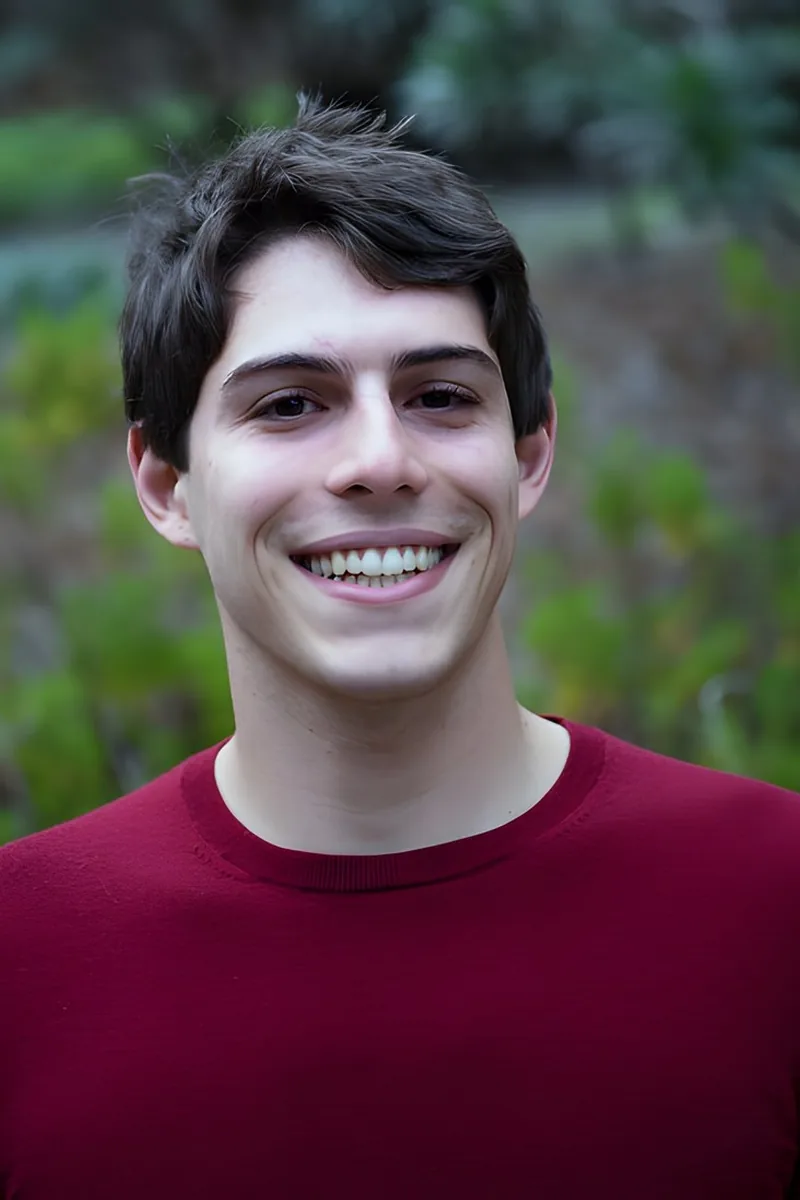
This is Jacob's home turf. He earned his Ph.D. in Physical Chemistry from UC Berkeley and now conducts research at Northwestern, so topics like quantum mechanics, statistical thermodynamics, and spectroscopy are part of his everyday work. He walks students through the math-heavy derivations that make p-chem notoriously difficult, connecting each equation back to the physical picture it describes.

Katherine's broad math and science background — spanning calculus, thermodynamics, and physics — means she's comfortable with the multivariable calculus and differential equations that make p-chem derivations so dense. She takes apart concepts like Maxwell relations and chemical potential by slowing down at the exact algebraic step where the physical intuition tends to disappear. Rated 5.0 by students.
Having studied quantum mechanics and electromagnetism as part of his physics degree, Michael already speaks the mathematical language that makes p-chem so demanding — the wave equations, the statistical distributions, the calculus buried inside every thermodynamic derivation. He teaches from the physics side in, explaining why a Boltzmann distribution or a partition function behaves the way it does before layering on the chemical context that gives it practical meaning.
Pre-med coursework at Rice plus dual degrees in environmental sciences and ecology meant Daniel was solving energy balance problems and applying thermodynamic reasoning to natural systems well before encountering p-chem's formal derivations. His lab technician work at Rice keeps the quantitative skills sharp — setting up calculations involving enthalpy, equilibrium, and kinetic models is part of the daily routine, not a distant textbook memory.
Earning a B.S. in Chemistry means Uttam has worked through the thermodynamics, kinetics, and quantum mechanics sequence firsthand — he knows exactly where a derivation like the Clausius-Clapeyron equation starts losing students and how to rebuild the logic step by step. His broad teaching range across calculus, algebra, and multiple chemistry levels keeps him sharp at bridging the math-chemistry gap that makes p-chem uniquely difficult.
Pursuing a dual Ph.D./Pharm.D. at UConn with graduate work in medicinal chemistry means Xhesika encounters the thermodynamic and kinetic formalism of p-chem as daily working tools — calculating drug stability, modeling reaction pathways, predicting how molecular interactions shift with temperature and pressure. She teaches derivations like Maxwell relations and Clausius-Clapeyron by tying each variable back to the pharmacological systems where she actually uses them, so the math carries chemical weight instead of feeling like abstract symbol-pushing.
Medical school at Tufts demands fluency in the thermodynamics and kinetics that p-chem students dread — Eric works through Gibbs free energy calculations, entropy-driven processes, and rate equations daily in a clinical science context, which keeps the material grounded rather than purely abstract. His economics background also sharpens the kind of quantitative modeling and equilibrium thinking that translates surprisingly well to topics like chemical potential and phase diagrams.
Biology coursework builds a surprising amount of p-chem intuition — enzyme kinetics, membrane energetics, and metabolic thermodynamics all run on the same free energy and rate equations that dominate a physical chemistry sequence. Ade uses that biological grounding to make abstract derivations tangible, turning something like a Boltzmann distribution into a concrete picture of how molecules actually partition energy across states.
Two chemistry degrees — bachelor's and master's — mean Chad has gone through the full p-chem gauntlet himself, from quantum mechanical models and statistical thermodynamics to the calculus-dense derivations of chemical kinetics. He teaches the subject by zeroing in on where the math and the molecular picture disconnect for each student, whether that's a tricky partial derivative in a thermodynamic identity or the logic behind a partition function. Rated 4.8 by students.
Biology research through the American Museum of Natural History and pre-med coursework at Cornell gave Krishna hands-on exposure to the thermodynamic and kinetic principles that p-chem formalizes — energy changes in biological systems, reaction rates, equilibrium behavior. She uses that life-science grounding to make topics like Gibbs free energy and rate laws feel like descriptions of real molecular events rather than pure derivation exercises.
As an MD/PhD student at Northwestern with a chemistry PhD focus and a B.S. in Chemical Science from Michigan, Austin has gone deep on the thermodynamics and quantum mechanics that form p-chem's backbone — and he's still actively working through advanced coursework in these areas. He tackles derivations by building chemical intuition first, so when a student hits a wall at, say, a Legendre transform connecting internal energy to Gibbs free energy, the math follows naturally from understanding what each variable physically represents.
Studying biochemistry and cell biology at Rice means Sugi already had to internalize the thermodynamic and kinetic principles that drive cellular processes — free energy calculations for metabolic reactions, equilibrium constants governing binding events — before tackling them in their pure mathematical form. She unpacks p-chem derivations by linking each variable back to the molecular behavior it quantifies, turning something like a chemical potential expression into a description of what molecules are actually doing at a phase boundary. Rated 5.0 by students.
Testimonials
Because the right Physical Chemistry tutor makes all the difference.
Average Session Rating – Based on 3.4M Learner Ratings
Other Providence Tutors
Related Science Tutors in Providence
Frequently Asked Questions
Physical chemistry bridges chemistry and physics, focusing on how matter behaves at the molecular level—including thermodynamics, kinetics, and quantum mechanics. It's challenging because it requires both strong math skills and the ability to visualize abstract molecular concepts. Many students struggle with the mathematical rigor and connecting equations to real-world chemical behavior, which is where personalized tutoring can make a significant difference.
Students typically find thermodynamics (entropy, enthalpy, Gibbs free energy), equilibrium calculations, and kinetics most difficult. Quantum mechanics and molecular orbital theory also trip up many learners because they require visualizing invisible atomic and molecular structures. Balancing the mathematical problem-solving with conceptual understanding—rather than just memorizing formulas—is key to mastering these topics, and tutors can help you develop both skills simultaneously.
Your first session focuses on understanding your current level, identifying specific pain points, and learning your preferred approach to complex material. A tutor will assess whether you're struggling with the math, the concepts, lab applications, or a combination, then create a personalized plan tailored to your course and goals. This foundation ensures every session that follows builds directly on what you need most.
Tutors help you understand the theory behind experiments—why reactions occur at certain rates, how temperature and pressure affect systems, and how to interpret lab data through the lens of physical chemistry principles. This connection transforms lab work from following procedures into genuine scientific inquiry, helping you see how abstract concepts like equilibrium and kinetics play out in real experiments you conduct.
While physical chemistry is math-intensive, tutors work with you on both the mathematical techniques and the conceptual understanding behind them. If math is a weak point, tutors can strengthen those skills alongside chemistry content—explaining not just how to solve an equation, but why that equation describes the chemical system you're studying. This integrated approach builds confidence in both areas.
Yes, Varsity Tutors connects Providence students with expert tutors who specialize in physical chemistry and understand the specific curricula used across Rhode Island schools. Whether you attend school in one of Providence's 17 school districts or are preparing for college-level chemistry, you can get matched with a tutor who fits your schedule and learning style.
Absolutely. Tutors help you master both the conceptual foundations and problem-solving strategies needed for exams like AP Chemistry (which includes significant physical chemistry content). They'll work through practice problems, help you identify weak areas, and teach you how to approach multi-step problems systematically—building the confidence and skills you need to perform well.
Physical chemistry rewards deep understanding over memorization—tutors focus on building your conceptual grasp of why reactions occur, how systems reach equilibrium, and what molecular forces drive chemical behavior. By working through problems together and connecting theory to applications, you develop genuine understanding that transfers to new problems and real-world scenarios, rather than relying on memorized formulas.
Let’s find your perfect tutor
Answer a few quick questions. We’ll recommend the right plan and match you with a top 5% tutor.