Award-Winning AP Chemistry Tutors
serving Providence, RI
AP Chemistry
Tutors in Providence
Private 1-on-1 tutoring, weekly live classes for academic support, test prep & enrichment, practice tests and diagnostics, and more to elevate grades and test scores.
Based on 3.4M Learner Ratings
UniversitiesSchools & Universities
DeliveredHours Delivered
ProficiencyGrowth in Proficiency
Who needs tutoring?
No obligation. Takes ~1 minute.

I'm passionate about helping students learn study skills to succeed at all levels of academics. I love working with all types of students and exploring different study strategies to tailor each lesson to individual strengths and needs.
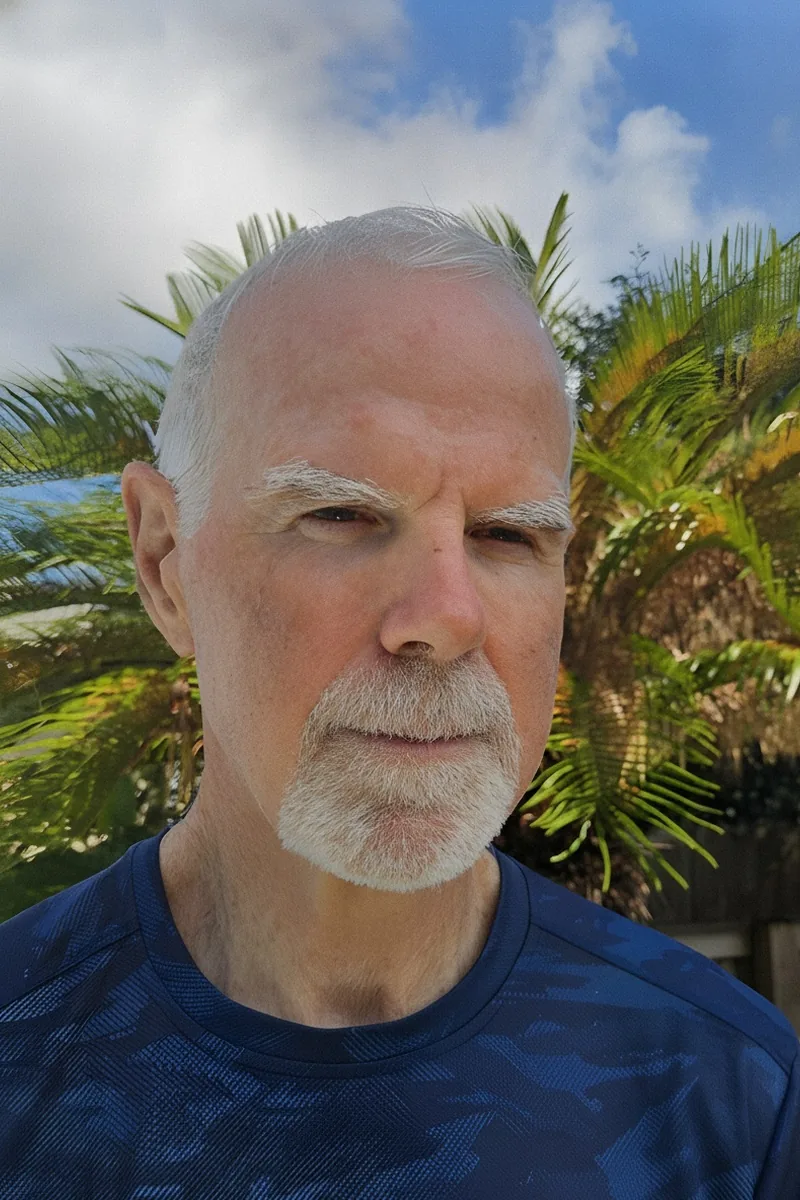
A PhD in chemical engineering means Steven didn't just study chemistry — he lived in thermodynamics, kinetics, and equilibrium for an entire career. For AP Chemistry, he unpacks topics like electrochemistry, reaction mechanisms, and Le Chatelier's principle by explaining the concept, restating it differently, and then grounding it in a real-world scenario that makes the logic stick. Rated 4.9 by students.
Thermodynamics, equilibrium, and electrochemistry each demand a different kind of thinking, and AP Chemistry punishes students who treat them as separate chapters instead of interconnected ideas. Jonathan's background spans both biology and chemistry at Cornell, so he unpacks concepts like Gibbs free energy and Le Chatelier's principle by showing how they govern real chemical and biological systems. Rated 4.9 by students.
Studying cellular and molecular biology at Yale on the pre-med track, Shreya has gone deep into the chemistry that underpins life at the molecular level — making topics like intermolecular forces, Lewis structures, and VSEPR geometry feel less like abstract rules and more like tools for understanding how molecules actually behave. She teaches AP Chemistry's conceptual questions by grounding them in the molecular reasoning she uses daily in her own coursework. Rated 5.0 by students with a 36 ACT.
Eric earned his master's in inorganic chemistry and scored a 1500 on the SAT, so he knows both the content depth and the test-taking stamina that AP Chemistry demands. He digs into the trickiest parts of the exam — equilibrium calculations, electrochemistry, and thermodynamic reasoning — with the kind of precision that turns 3s into 5s. His 5.0 client rating speaks to how well that approach lands.
Teaching 12th grade Chemistry at a high-performing Philadelphia magnet school means Kathleen sees exactly which AP Chemistry concepts — from equilibrium reasoning to periodic trends — trip students up on exams, and she's built classroom-tested strategies for each one. Her Penn M.S.Ed in Secondary Science Education and her chemistry degree give her both the content depth and the pedagogical training to explain why a reaction proceeds the way it does, not just how to get the right answer. Rated 5.0 by students.
Raj's biochemistry and molecular biology degree means he's lived through the college-level versions of every AP Chemistry topic — from reaction kinetics and acid-base equilibria to the thermodynamic principles that trip up most students on free-response questions. He teaches the quantitative side (stoichiometry, ICE tables, rate law setups) by anchoring each calculation in what's physically happening at the molecular level, so students build intuition alongside technique. His 36 ACT and 5.0 rating back up that approach.
Thermodynamics, equilibrium, and electrochemistry each require a different way of reasoning, and AP Chemistry punishes students who try to memorize their way through. Lauren minors in chemistry at Duke and uses her lab experience to ground abstract ideas — like Gibbs free energy or reaction kinetics — in tangible processes students can actually visualize.
Stoichiometry, equilibrium, and thermodynamics each require a different kind of problem-solving, and AP Chemistry expects fluency in all of them by May. Kendall approaches each unit by anchoring the math in the underlying chemical logic — why a reaction favors products, what a mole ratio actually represents — so students can reason through unfamiliar problems on the exam. She also dedicates time to the lab-based questions that many students overlook in their prep.
AP Chemistry's leap from stoichiometry to thermodynamics and equilibrium trips up students who were comfortable in general chem. Matthew, pursuing his biochemistry degree at Yale, unpacks these concepts by showing how energy, entropy, and reaction kinetics actually govern the molecular behavior students already learned about. His 5.0 rating speaks to how well that approach lands.
Stoichiometry, equilibrium, and thermodynamics each demand a different kind of thinking, and AP Chemistry throws all of them at students in one year. Nova's strong science background at Brown — spanning both biology and chemistry — means she can unpack reaction mechanisms and dimensional analysis with the precision this exam requires.
Computational biology at Cornell means Emily lives at the intersection of quantitative reasoning and molecular science — she's worked through the same college-level chemistry that AP students are preparing for, but with the added demand of modeling chemical systems computationally. She teaches topics like equilibrium and reaction energetics by emphasizing the mathematical structure underneath, so students learn to read what equations are actually telling them about molecular behavior. Rated 4.9 by students.
Thermochemistry, equilibrium, and electrochemistry each demand a different kind of thinking, which is part of what makes AP Chem so challenging. Kate tackles each unit by connecting the math to the molecular-level story — explaining why Le Chatelier's principle works, not just how to apply it. Her engineering coursework in chemistry gives her a practical fluency that translates well to exam prep.
Testimonials
Because the right AP Chemistry tutor makes all the difference.
Average Session Rating – Based on 3.4M Learner Ratings
Practice AP Chemistry
Free practice tests, flashcards, and AI tutoring for AP Chemistry
Other Providence Tutors
Related Science Tutors in Providence
Frequently Asked Questions
AP Chemistry covers eight major units: atomic structure and properties, molecular and ionic bonding, intermolecular forces and properties, chemical reactions, kinetics, thermodynamics, equilibrium, and acids/bases. The course emphasizes both conceptual understanding and problem-solving skills, with significant focus on lab work and data analysis. Success requires mastery of foundational concepts like stoichiometry and equilibrium calculations, which build throughout the year.
Score improvement depends on your starting point and commitment level. Students who work with tutors typically see gains of 1-2 points on the AP scale (out of 5) when they focus on weak areas and practice consistently. The most significant improvements come from targeted work on calculation-heavy units like thermodynamics and equilibrium, where personalized instruction helps clarify misconceptions that often hold students back.
Students in Providence and beyond typically struggle most with thermodynamics (enthalpy, entropy, Gibbs free energy), equilibrium calculations, and acid-base chemistry. These topics require strong mathematical skills and the ability to visualize molecular-level processes. Kinetics and reaction mechanisms also trip up many students because they demand both conceptual understanding and the ability to interpret graphs and experimental data accurately.
The AP Chemistry exam is 3 hours long with 60 multiple-choice questions and 3 free-response questions. Key strategies include: managing time by spending roughly 90 minutes on multiple-choice, reading questions carefully to identify what's actually being asked, and showing all work on free-response questions even if you're unsure (partial credit is valuable). Practice tests under timed conditions are essential—they help you identify pacing issues and get comfortable with the question formats before test day.
Lab work makes up about 25% of the AP Chemistry course and is critical for success. The exam includes questions about experimental design, data analysis, and interpreting lab results. Many students struggle because they haven't had enough hands-on practice with equipment or analyzing real experimental data. Tutors can help you understand lab concepts, practice graphing and calculating percent error, and prepare for questions about experimental limitations and improvements.
Ideally, you'll engage with tutoring throughout the school year rather than cramming near exam day in May. If you're struggling with specific units (like thermodynamics or equilibrium), starting tutoring as soon as those topics are covered in class helps you build a strong foundation. If you're preparing for a retake or need intensive review, aim to start 8-12 weeks before the exam, allowing time for practice tests and targeted work on weak areas.
Varsity Tutors connects you with expert tutors who specialize in AP Chemistry and understand the specific curriculum and exam format. When you connect with a tutor, you can discuss your current level, which topics need the most work, and your target score. Tutors can customize sessions around your schedule and focus on the areas where you'll see the biggest score improvements.
Your first session is typically an assessment and planning meeting. The tutor will ask about your current grade, which topics feel strongest and weakest, your exam timeline, and your score goals. They'll likely work through a practice problem or two to understand your problem-solving approach and identify misconceptions. From there, you'll develop a personalized plan that targets your specific weak areas and builds confidence for exam day.
Let’s find your perfect tutor
Answer a few quick questions. We’ll recommend the right plan and match you with a top 5% tutor.