Award-Winning Chemistry Tutors
serving Providence, RI
Chemistry
Tutors in Providence
Private 1-on-1 tutoring, weekly live classes for academic support, test prep & enrichment, practice tests and diagnostics, and more to elevate grades and test scores.
Based on 3.4M Learner Ratings
UniversitiesSchools & Universities
DeliveredHours Delivered
ProficiencyGrowth in Proficiency
Who needs tutoring?
No obligation. Takes ~1 minute.
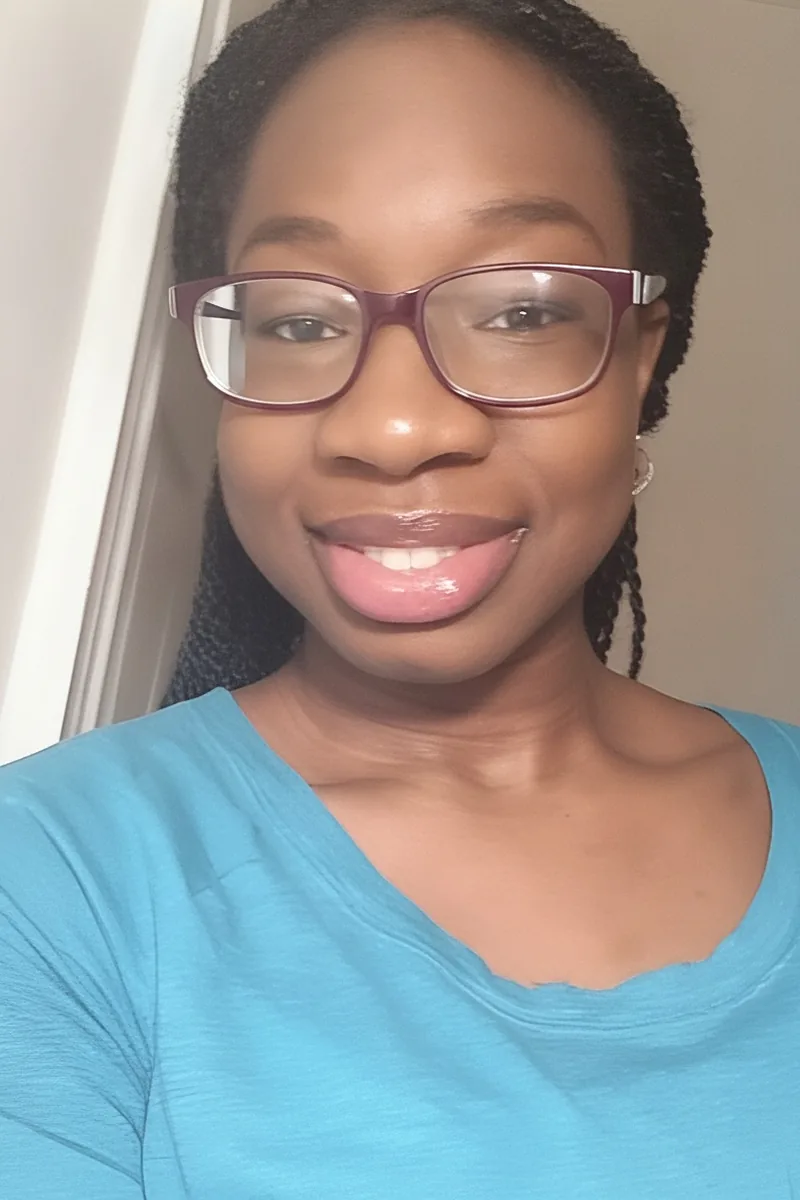
After earning her chemistry degree at Penn and spending a year teaching it to high schoolers, Bintou has seen the subject from both the university lab bench and the classroom whiteboard. She's especially effective at bridging the gap between conceptual understanding and problem-solving — showing a student not just that electrons transfer in a redox reaction, but how to balance the equation and predict voltage. That combination of academic depth and teaching practice makes tricky topics like equilibrium and stoichiometry much more approachable.

William's English and arts background might seem distant from chemistry, but his experience teaching IB Chemistry means he knows the curriculum inside and out — from periodicity and energetics to redox processes. He leans on clear, structured explanations for quantitative topics like mole calculations and enthalpy changes, treating each problem as a logical sequence rather than a formula to memorize.
Balancing equations and stoichiometry tend to be the first real stumbling blocks in chemistry, and they snowball fast if the logic behind them stays fuzzy. Christopher approaches these problems methodically — tracking moles, identifying limiting reagents, connecting macroscopic observations to what's happening at the atomic level. His science-heavy course load keeps these skills sharp on a daily basis.
Studying biology at Brown means Uloma has spent serious time with chemistry — not just memorizing periodic trends and balancing equations, but understanding how thermodynamics, equilibrium, and reaction kinetics actually govern what happens in a beaker or a cell. She connects abstract concepts like Le Chatelier's principle to concrete, visual examples that make them intuitive. Rated 5.0 by students.
I am a graduate of Brown University, where I earned my B.A. in Literary Arts and Visual Arts, taking courses in a wide array of subjects ranging from contemporary American fiction to ancient Indian classics. My first teaching experience came in college when I had the privilege of creating and teaching a series of literature courses at a local community center. There are few experiences I find more enriching than facilitating a meaningful dialogue centered around great works of literature and art. While literature and art are my passion, I also tutor in variety of other subjects, including math, science, and test preparation. I currently work as a lead teacher in the after-school program at Archway Classical Academy in Phoenix.
I am a junior at Brown University pursuing a degree in Politics, Philosophy, and Economics. After I graduate, I intend to enroll in an MD/PhD program in bioethics or health policy. In the past, I have tutored students between ages 10 and 19 in Political Science, Algebra II/Trigonometry, English as a Second Language, and sixth grade English and Math. I decided to become a tutor because my math tutor (from 8th-12th grades) took me from hating math to enjoying and succeeding in it. I want to help others make that same transition--a bad teacher or tough class can crush a student's innate curiosity, but a good tutor can restore it.
I'm passionate about helping students learn study skills to succeed at all levels of academics. I love working with all types of students and exploring different study strategies to tailor each lesson to individual strengths and needs.
Stoichiometry, electron configurations, and equilibrium calculations all demand a specific kind of careful, step-by-step reasoning. As a pre-med biomedical engineering student at Yale, Ellie uses chemistry constantly — from biochemistry coursework to her research in the School of Medicine. She's particularly good at teaching students to set up dimensional analysis and reaction problems methodically so they stop making the small errors that tank exam scores.
From balancing equations to predicting products, chemistry rewards students who understand the logic underneath each rule. Li approaches topics like mole conversions and periodic trends by building up from atomic structure, so students can reason through problems instead of relying on memorized shortcuts.
Balancing equations is mechanical; understanding why copper sulfate is soluble while barium sulfate isn't requires a different kind of thinking. Maggie's dual degree in economics and molecular biology means she learned chemistry from both the quantitative and the conceptual side, and she uses that range to tackle everything from mole conversions to acid-base equilibria. She's especially effective at connecting lab observations to the underlying theory.
Cornell's chemical engineering program is notoriously rigorous on the chemistry side — physical chemistry, organic chemistry, and thermodynamics are all baked into the curriculum before students ever touch reactor design. Rahul graduated magna cum laude from that program, which means he's internalized concepts like reaction kinetics, equilibrium, and energy transfer at a level most chemistry tutors simply haven't reached. He pushes for conceptual understanding over memorization, so students learn to predict what should happen in a reaction rather than just recalling what the textbook says.
Stoichiometry, molecular bonding, and reaction mechanisms are the backbone of Aimee's entire academic career in chemical engineering. She explains concepts like mole ratios and electron configurations by grounding them in the lab and industrial processes she's studied at Georgia Tech, which gives students a concrete anchor for material that can otherwise feel purely theoretical. Rated 4.9 by students.
Stoichiometry, equilibrium, and thermodynamics all click faster when you can see the math underneath them — and JF's math and computer science background at Stanford means that quantitative backbone comes naturally. He breaks down problems like limiting reagent calculations and ICE tables into logical steps that make the numbers feel intuitive rather than overwhelming.
Ocean chemistry is chemistry — stoichiometry, equilibrium, acid-base reactions, and thermodynamics all show up in Lisa's marine biogeochemistry research. She unpacks these concepts by connecting them to tangible phenomena, like why the ocean absorbs CO₂ or how mineral precipitation works in seawater.
Balancing equations and understanding the mole concept are often the first real hurdles in chemistry, and Paula unpacks both by tying them to tangible, everyday examples. She scored a 1520 SAT and 32 ACT, reflecting the kind of cross-disciplinary thinking that makes abstract chemistry topics more accessible.
Stoichiometry, equilibrium, and thermodynamics all click faster when a student sees how they connect to real systems — and Kate's environmental engineering background means she can tie every chemistry concept to tangible processes like water treatment or combustion reactions. She breaks down dimensional analysis and reaction balancing into repeatable steps that build genuine confidence on exams.
Between stoichiometry, equilibrium, and thermodynamics, chemistry asks students to think in multiple registers — quantitative, conceptual, and visual — sometimes in the same problem. Kade's dual focus on biology and chemistry at Northwestern means he's constantly applying these ideas across disciplines, which gives him a practical lens for explaining everything from mole conversions to acid-base titrations.
From balancing redox equations to working through stoichiometry and equilibrium problems, Brittany breaks chemistry down into repeatable problem-solving steps. She tutored both undergraduate and graduate students in General Chemistry I and II at the University of Pennsylvania's Tutoring Center, so she's seen the full range of places where concepts fall apart and knows how to rebuild them.
Stoichiometry, equilibrium, and acid-base reactions all require a kind of disciplined reasoning that Jessica developed through years of medical training, where chemistry underpins everything from pharmacology to metabolic pathways. She breaks down each problem type into a clear sequence of decisions rather than a wall of formulas to memorize.
Testimonials
Because the right Chemistry tutor makes all the difference.
Average Session Rating – Based on 3.4M Learner Ratings
Practice Chemistry
Free practice tests, flashcards, and AI tutoring for Chemistry
Other Providence Tutors
Related Science Tutors in Providence
Frequently Asked Questions
Many Providence students find balancing chemical equations, understanding stoichiometry, and visualizing molecular structures particularly challenging. Beyond memorization, students often struggle to connect abstract concepts like bonding and reaction mechanisms to real-world applications. Personalized tutoring helps bridge this gap by breaking down complex ideas into manageable pieces and showing how chemistry applies to everyday situations—from the chemistry of cooking to environmental processes.
During an initial session, a tutor will assess your current understanding of chemistry concepts, identify specific areas where you're struggling, and learn about your learning style and goals. Whether you're working on general chemistry fundamentals, AP Chemistry, or lab-based coursework, the tutor will create a personalized plan tailored to your needs. This foundation ensures that every subsequent session builds directly on what you need most.
Yes—tutors can help you understand the scientific method, design experiments, interpret lab results, and prepare for lab reports. They can also help you visualize what's happening at the molecular level during experiments, which deepens your understanding of the chemistry behind the procedures. This support is especially valuable for students in Providence schools where lab work is a key component of chemistry courses.
Expert tutors focus on building conceptual understanding rather than rote memorization. They teach you how to think like a chemist—using problem-solving strategies, dimensional analysis, and logical reasoning to approach new problems you haven't seen before. When you understand the 'why' behind chemical reactions and equations, you can apply that knowledge flexibly across different contexts, which is what leads to real mastery and better grades.
Unit conversions and stoichiometry require both mathematical skill and a solid grasp of mole concepts—a foundational idea that many students find abstract and confusing. Tutors break this down step-by-step, using concrete examples and visual tools to help you understand what moles actually represent and how to set up conversion problems systematically. Once the foundation is solid, these problems become much more manageable.
Look for tutors with strong chemistry backgrounds—ideally a degree in chemistry, biochemistry, or a related science field, plus teaching or tutoring experience. It's also valuable if they have experience with your specific chemistry course level, whether that's high school chemistry, honors, AP Chemistry, or college-level general chemistry. Varsity Tutors connects you with expert tutors who understand both the content deeply and how to teach it effectively to students at your level.
Many students see noticeable improvement in understanding and grades within 4-6 weeks of consistent tutoring, especially when they're working on specific challenging topics like equilibrium or redox reactions. However, building strong foundational chemistry skills—particularly if you're catching up on earlier concepts—may take longer. The timeline depends on your starting point, how frequently you meet with your tutor, and how actively you engage with practice problems between sessions.
In a classroom with Providence's average student-teacher ratio, teachers can't always address individual learning gaps or adjust pacing to match your needs. Personalized 1-on-1 instruction allows a tutor to focus entirely on your specific struggles, use teaching methods that match how you learn best, and move at a pace that builds confidence. This targeted approach is especially powerful in chemistry, where foundational concepts directly impact your ability to tackle more complex topics later.
Let’s find your perfect tutor
Answer a few quick questions. We’ll recommend the right plan and match you with a top 5% tutor.