Award-Winning College Chemistry Tutors
serving Oklahoma City, OK
College Chemistry
Tutors in Oklahoma City
Private 1-on-1 tutoring, weekly live classes for academic support, test prep & enrichment, practice tests and diagnostics, and more to elevate grades and test scores.
Based on 3.4M Learner Ratings
UniversitiesSchools & Universities
DeliveredHours Delivered
ProficiencyGrowth in Proficiency
Who needs tutoring?
No obligation. Takes ~1 minute.
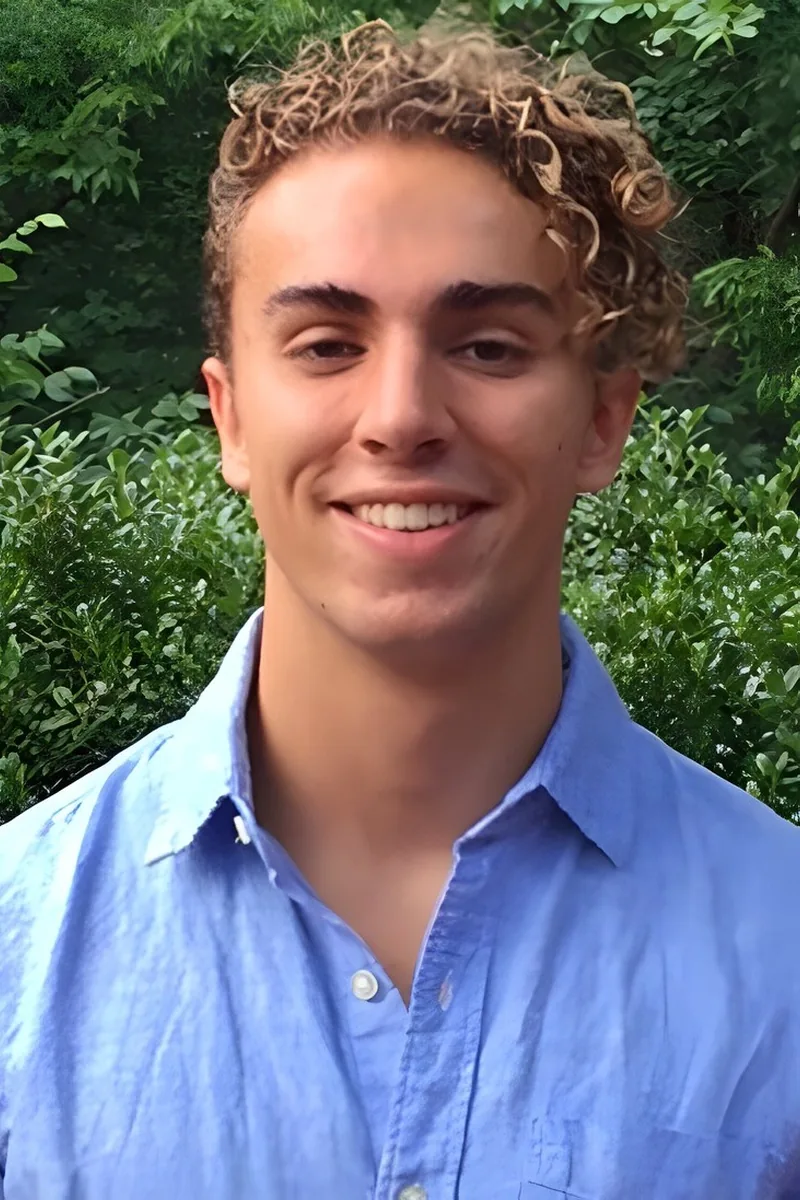
Cellular and molecular biology at the University of Oklahoma means Nathaniel lives in the overlap between biology and chemistry every day — thermodynamics, reaction kinetics, acid-base equilibria, and the organic mechanisms that underpin biochemical pathways. He breaks down general and organic chemistry concepts by connecting them to real biological systems, which makes abstract ideas like Le Chatelier's principle or molecular orbital theory click faster. Rated 5.0 by students.
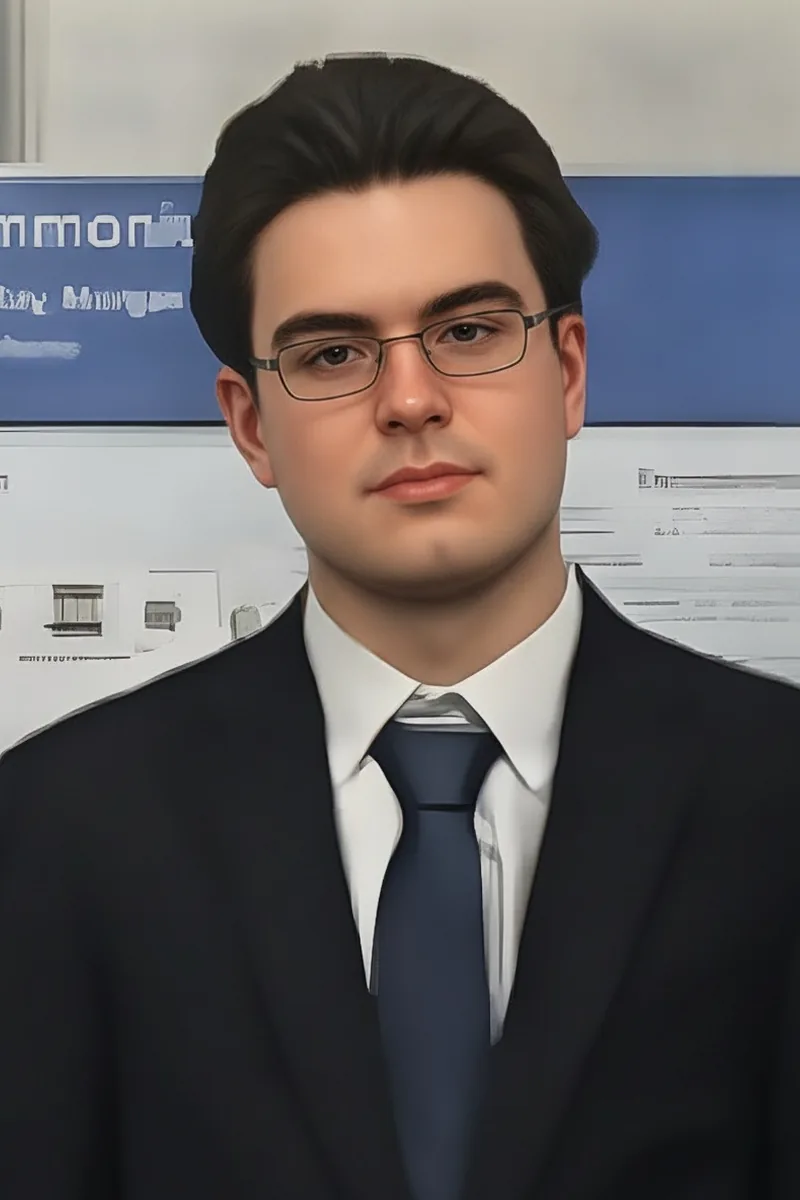
I am a graduate of the University of Oklahoma. I received by Bachelor of Science in Chemical Engineering. I have mostly tutored privately on my own time in one on one sessions. I mostly enjoy helping others with math and science related problems. Education is necessary to improve life and I want others to realize this. In my spare time I enjoy thought provoking literature.
Thermodynamics, equilibrium constants, electrochemistry — college chemistry demands that students juggle quantitative problem-solving with conceptual reasoning at the same time. Raj tackles both sides, drawing on his biochemistry training at Rice to show how general chemistry principles connect to larger molecular behavior. His 5.0 rating speaks to how well that approach lands.
Though political science was her major at the University of Chicago, Asta's tutoring work across both chemistry and quantitative subjects means she's spent real time breaking down the conceptual hurdles in gen chem — balancing equations, working through mole conversions, and making sense of reaction types. Her 5.0 rating speaks to an approach that's honest about meeting the material on its own terms rather than pretending expertise she doesn't have, which students in a tough prerequisite course tend to trust more, not less.
Pre-med bio-psychology coursework at UCSB means Aaron has pushed through college chemistry the same way his students are — as a high-stakes prerequisite where every gap in stoichiometry or equilibrium shows up again in upper-division science courses. He talks through problems conversationally, pressing students to explain the reasoning back to him, which exposes shaky understanding far faster than just re-solving practice sets. Holds a 5.0 rating.
General chemistry at the college level demands more than balancing equations — it requires thinking in terms of energy, equilibrium, and molecular behavior. Jhonatan approaches topics like thermodynamics, acid-base chemistry, and kinetics by grounding abstract formulas in physical intuition, drawing on the quantitative rigor he developed through his biological sciences degree. His 5.0 rating speaks to how well that approach lands with students.
Most college chemistry students don't expect a math major to be the one who makes electron configurations or equilibrium expressions click — but Tessa's mathematics training at Yale means she can cleanly separate the quantitative mechanics of a problem from the chemical reasoning, which is exactly where most gen chem confusion hides. She also scored a 36 ACT and holds a 4.9 rating, though what matters more is her knack for showing students the logical structure underneath topics that otherwise feel like pure memorization.
First-year med students don't forget what tripped them up in gen chem — and Nishad, currently at Sidney Kimmel Medical College at Thomas Jefferson University, uses that recent memory to zero in on the conceptual breaks that derail students in topics like electron configuration, chemical bonding, and equilibrium. His premed background means he's taken college chemistry with the same stakes his students face, and he teaches it by connecting the molecular-level reasoning to the calculations so neither piece feels like it's floating on its own.
Second-year med student at Baylor College of Medicine, Michelle still remembers exactly which gen chem concepts — electron orbitals, buffer systems, reaction thermodynamics — became non-negotiable once biochemistry and physiology started building on them. Her Rice biochemistry degree means she learned college chemistry at a place where the coursework was rigorous enough to expose every shortcut that doesn't hold up, and she teaches accordingly: precise on the fundamentals so nothing collapses later.
Having scored a 36 on the ACT and taught honors chemistry alongside AP-level math and statistics, Ethan brings a quantitative sharpness to college chemistry that's especially useful when students hit the calculation-dense stretches — gas law problems, enthalpy calculations, solution stoichiometry. His environmental science background also means he can ground abstract topics like chemical kinetics and equilibrium in real-world systems where those principles visibly play out. Rated 5.0 by students.
Between AP Chemistry, organic chemistry, and inorganic chemistry, Rebecca has covered college-level chemical concepts from multiple angles — but it's her biology background that shapes how she teaches gen chem topics like electron configurations, bonding, and solution chemistry, always tying them back to the biological systems where students will encounter them again. She's especially sharp at bridging the gap between memorizing periodic trends and actually using them to predict reactivity or molecular behavior. Rated 5.0 by students.
Engineering coursework at Harvard means Christopher regularly uses chemistry concepts like thermodynamics, equilibrium, and reaction kinetics in applied settings. He teaches college chemistry by connecting abstract ideas — say, Gibbs free energy or electrochemical cells — to tangible problems, making the material easier to internalize before exams.
MIT's general chemistry sequence is notoriously fast — Vania not only survived it but tutored other students through it via the university's Seminar XL and Tutorial Services Room programs, where she got fluent in the exact places students stall out on topics like thermochemistry, equilibrium, and electron configuration. Her mechanical engineering training means she thinks about chemistry problems quantitatively, tracing how molecular-level behavior connects to the math rather than treating equations and concepts as separate tasks. Rated 5.0 by students.
I've been working with students for over seven years, from middle school all the way through college, across subjects like math, calculus, statistics, linear algebra, chemistry, and physics, with a lot of SAT and ACT prep mixed in. My background is perhaps a little unconventional. I have two bachelor's degrees, one in Engineering and one in Communication Studies, plus a Master's in Design. That combination means I can guide you through challenging technical material and communicate it in a way that is easy to grasp. What I care most about is helping students get to a place where they don't need me anymore. I know that sounds like a strange thing for a tutor to say, but I think it's the right goal. I'm not here to walk you through steps to copy down. I want you to understand why something works, because that's what holds up under pressure, on a test you haven't seen before. If you're ready to ace that test or prove that theorem that's been bugging you, reach out and let's work together
Testimonials
Because the right College Chemistry tutor makes all the difference.
Average Session Rating – Based on 3.4M Learner Ratings
Nearby College Chemistry Tutors
Other Oklahoma City Tutors
Related Science Tutors in Oklahoma City
Frequently Asked Questions
College Chemistry demands both conceptual understanding and problem-solving skills—many students struggle with balancing equations, unit conversions, and visualizing molecular structures at the atomic level. Additionally, the pace of college coursework is faster than high school chemistry, and labs require applying theoretical concepts to real experiments. Personalized tutoring helps students build a solid foundation in foundational concepts so they can tackle more complex topics with confidence.
During an initial session, a tutor will assess your current understanding of chemistry fundamentals, identify specific areas where you're struggling (whether it's stoichiometry, thermodynamics, or lab interpretation), and discuss your course goals. This helps create a personalized plan that targets your weak spots while building on your strengths. You'll leave with clarity on what to focus on and a roadmap for improvement.
Yes. Tutors can help you understand the scientific method, interpret lab results, and connect experimental observations to theoretical concepts you're learning in lecture. They can also help you prepare for lab practicals, understand safety protocols, and develop the analytical thinking skills needed to design experiments and troubleshoot when results don't match expectations.
No—while some memorization is necessary (like common functional groups or reaction types), true mastery of College Chemistry comes from understanding *why* reactions occur and *how* to apply concepts to new problems. Expert tutors focus on building conceptual understanding through visualization of molecular interactions, step-by-step problem solving, and real-world applications. This approach makes the material stick and helps you perform better on exams and in lab.
Balancing equations and stoichiometry require systematic thinking and practice. Tutors break down the process into manageable steps, help you recognize patterns in different equation types, and provide targeted practice with immediate feedback. With personalized instruction, you'll develop the problem-solving strategies to tackle increasingly complex equations and multi-step stoichiometry problems confidently.
Chemistry involves thinking at the molecular level—something that's hard to visualize without help. Tutors use diagrams, molecular models, animations, and real-world analogies to make abstract concepts like bonding, electron configuration, and molecular geometry concrete and understandable. This visual approach helps bridge the gap between what you see in equations and what's actually happening at the atomic scale.
This depends on your starting point and course goals, but most students benefit from consistent weekly sessions (1-2 hours) combined with independent practice between sessions. For students preparing for exams or struggling significantly, more frequent sessions may help accelerate progress. A tutor can recommend a schedule based on your specific needs and timeline.
Varsity Tutors connects you with expert tutors who have strong backgrounds in chemistry and experience teaching at the college level. When you get matched with a tutor, you can discuss their experience with your specific course, their teaching approach, and any particular topics you need help with. This personalized matching ensures you work with someone who understands College Chemistry and can teach in a way that works for you.
Let’s find your perfect tutor
Answer a few quick questions. We’ll recommend the right plan and match you with a top 5% tutor.