Award-Winning College Chemistry Tutors
serving Tulsa, OK
College Chemistry
Tutors in Tulsa
Private 1-on-1 tutoring, weekly live classes for academic support, test prep & enrichment, practice tests and diagnostics, and more to elevate grades and test scores.
Based on 3.4M Learner Ratings
UniversitiesSchools & Universities
DeliveredHours Delivered
ProficiencyGrowth in Proficiency
Who needs tutoring?
No obligation. Takes ~1 minute.
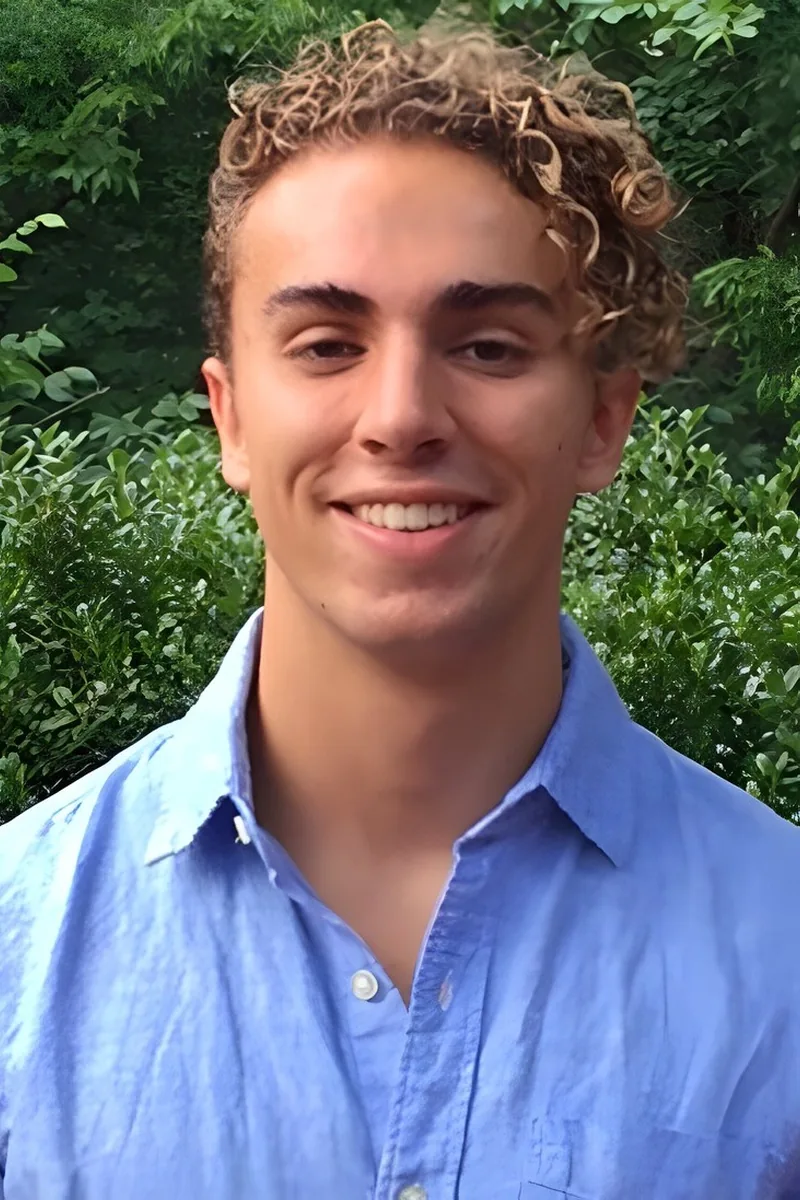
Cellular and molecular biology at the University of Oklahoma means Nathaniel lives in the overlap between biology and chemistry every day — thermodynamics, reaction kinetics, acid-base equilibria, and the organic mechanisms that underpin biochemical pathways. He breaks down general and organic chemistry concepts by connecting them to real biological systems, which makes abstract ideas like Le Chatelier's principle or molecular orbital theory click faster. Rated 5.0 by students.

I am a graduate of the University of Oklahoma. I received by Bachelor of Science in Chemical Engineering. I have mostly tutored privately on my own time in one on one sessions. I mostly enjoy helping others with math and science related problems. Education is necessary to improve life and I want others to realize this. In my spare time I enjoy thought provoking literature.
Medical school demands fluency in chemistry that goes well beyond introductory courses, and Abrahim brings that depth to college-level topics like thermodynamics, kinetics, and electrochemistry. He diagnoses conceptual gaps fast — if a student can balance an equation but can't explain why a reaction is spontaneous, that's exactly where the session will dig in.
Leading weekly peer mentor sessions for General Chemistry at WashU means Sarah doesn't just know college chemistry — she's actively teaching it, walking small groups through problem sets on equilibria, stoichiometry, and solution chemistry every week. That hands-on repetition sharpens her ability to spot exactly where a concept falls apart for each student and rebuild understanding from that point. Rated 5.0 by students.
Fourth-year med student at Albert Einstein College of Medicine, Michael has been applying gen chem principles — acid-base chemistry, reaction thermodynamics, solution behavior — in clinical and biochemical contexts for years, which means he can explain not just how to solve a problem but where that concept resurfaces later. His biology degree from Yeshiva College (summa cum laude) and time teaching MCAT prep for Kaplan gave him practice breaking down the exact topics that trip up college chemistry students: stoichiometry setups, equilibrium expressions, and the leap from qualitative reasoning to quantitative problem-solving.
Tackling college-level chemistry means juggling thermodynamics, kinetics, and equilibrium all in the same problem set. Brittany was employed at the University of Pennsylvania's Tutoring Center specifically for General Chemistry I and II, where she worked with both undergraduates encountering the material for the first time and graduate students brushing up on fundamentals. That range sharpened her ability to adjust explanations to any level of preparation.
Working in a Yale research lab with tools like CRISPR-Cas9 means Matthew encounters gen chem principles — reaction kinetics, molecular interactions, buffer systems — in live experimental contexts, which sharpens how he explains them back at the introductory level. His biochemistry and molecular biology coursework built fluency with the bridge between general chemistry and its applications, so he can show students exactly why mastering something like equilibrium or thermochemistry pays off two courses down the road. Holds a 5.0 rating.
MIT's general chemistry sequence is notoriously fast — Vania not only survived it but tutored other students through it via the university's Seminar XL and Tutorial Services Room programs, where she got fluent in the exact places students stall out on topics like thermochemistry, equilibrium, and electron configuration. Her mechanical engineering training means she thinks about chemistry problems quantitatively, tracing how molecular-level behavior connects to the math rather than treating equations and concepts as separate tasks. Rated 5.0 by students.
Four years of chemical engineering coursework at Pitt meant Olivia didn't just take gen chem — she leaned on it daily through material balances, reaction engineering, and process thermodynamics, so concepts like enthalpy, equilibrium constants, and stoichiometry are second nature rather than distant memories from freshman year. She's especially sharp at bridging the gap when students can set up a problem conceptually but lose the thread during multi-step calculations involving unit conversions or gas law algebra. Rated 4.9 by students.
General chemistry at the college level lives or dies on whether you actually understand what's happening at the molecular level — equilibrium shifts, thermodynamic spontaneity, orbital hybridization — or just memorize formulas. Mosab's health sciences graduate work means he uses these concepts constantly and can connect them to real biochemical applications. Rated 5.0 by students.
A bio-organic chemistry degree means Alex has lived through the full gen chem sequence and then pushed those concepts further — into reaction mechanisms, molecular orbital theory, and the quantitative problem-solving that upper-level chemistry demands. That depth shows up when tackling topics like chemical kinetics or periodic trends, where he can explain not just how to solve a problem but why the underlying chemistry behaves the way it does.
Matt's neuroscience degree with a chemistry minor means he didn't just pass gen chem — he built on it through upper-level coursework in biochemistry and physiology, where concepts like molecular bonding, reaction energetics, and equilibrium stop being abstract and start explaining how biological systems actually function. That applied perspective lets him teach college chemistry topics by anchoring them to something concrete, which tends to make the leap from lecture notes to problem sets much less painful. Rated 5.0 by students.
When college chemistry students feel overwhelmed, it's usually because topics like gas laws, equilibrium, and stoichiometry are piling up faster than they can organize the connections between them — and untangling that clutter is where Rachel excels. Her science background across biology, anatomy, and physiology means she's applied gen chem principles in multiple contexts, so she can show how a concept like acid-base behavior or molecular polarity actually functions beyond the textbook chapter it first appears in.
Pursuing a dual degree in biostatistics and public health at Brown, Joyce has worked through college chemistry with the quantitative rigor that comes from living in both the biology and statistics sides of STEM — so she's comfortable with the molarity calculations, reaction stoichiometry, and equilibrium expressions that overwhelm students who expected a purely conceptual course. She tackles problems by clarifying the chemical logic first, then showing how the math follows naturally from it.
Testimonials
Because the right College Chemistry tutor makes all the difference.
Average Session Rating – Based on 3.4M Learner Ratings
Nearby College Chemistry Tutors
Other Tulsa Tutors
Related Science Tutors in Tulsa
Frequently Asked Questions
College Chemistry often feels overwhelming because it requires mastering both abstract concepts—like molecular structure and bonding—and practical skills like balancing equations and unit conversions. Many students struggle with visualizing how atoms and molecules interact, and connecting theoretical concepts to real-world applications. Personalized 1-on-1 instruction helps break down these complex ideas into manageable pieces and builds the scientific reasoning skills you need to succeed.
Absolutely. Lab work requires understanding both the theory behind experiments and the practical execution of the scientific method. Tutors can help you prepare for labs by explaining the underlying chemistry, guide you through data analysis and calculations, and help you interpret results. This preparation often leads to better lab reports and a deeper understanding of how concepts you've learned apply in real-world settings.
In your first session, a tutor will assess your current understanding of College Chemistry concepts, identify specific areas where you're struggling—whether that's stoichiometry, thermodynamics, or lab preparation—and learn about your learning style. Together, you'll create a personalized plan focused on your goals, whether you're aiming to improve your grade, prepare for exams, or build confidence in the subject. This foundation ensures every session afterward is tailored to your needs.
While there are formulas and facts to know, College Chemistry is fundamentally about understanding concepts and developing problem-solving skills. A strong tutor focuses on helping you grasp why reactions occur, how to predict outcomes, and how to apply principles to new problems—not just memorize. This deeper understanding makes it easier to retain information and perform well on exams that test reasoning, not just recall.
These skills require precision and practice with dimensional analysis, and many students haven't developed a systematic approach before College Chemistry. Tutors can teach you reliable strategies for setting up conversions correctly and checking your work, plus provide targeted practice until the process becomes automatic. Once you master these foundational skills, they apply across every chemistry course you take.
Exam preparation with a tutor goes beyond reviewing notes—it involves practicing problem-solving under timed conditions, identifying knowledge gaps before test day, and building strategies for tackling different question types. Tutors can help you understand why certain answers are correct, connect related concepts, and develop confidence in your reasoning. This targeted preparation typically leads to stronger exam performance and better retention of material.
Look for tutors with strong chemistry backgrounds—ideally a degree in chemistry or a related science field, or extensive experience teaching the subject at the college level. They should be able to explain concepts clearly, help you visualize abstract ideas, and adapt their teaching to your learning style. Varsity Tutors connects you with expert tutors who have proven experience helping students succeed in College Chemistry.
With an average student-teacher ratio of 20.8:1 in Tulsa schools, getting individualized attention in a classroom setting can be difficult. Personalized 1-on-1 instruction allows you to move at your own pace, ask questions freely, and get immediate feedback on your understanding. This focused support is especially valuable in a challenging subject like College Chemistry, where conceptual gaps can compound quickly.
Let’s find your perfect tutor
Answer a few quick questions. We’ll recommend the right plan and match you with a top 5% tutor.