Award-Winning Middle School Math Tutors
serving Oklahoma City, OK
Middle School Math
Tutors in Oklahoma City
Private 1-on-1 tutoring, weekly live classes for academic support, test prep & enrichment, practice tests and diagnostics, and more to elevate grades and test scores.
Based on 3.4M Learner Ratings
UniversitiesSchools & Universities
DeliveredHours Delivered
ProficiencyGrowth in Proficiency
Who needs tutoring?
No obligation. Takes ~1 minute.

Growing up homeschooled with students of different ages and skill levels, Jordan learned early how to adapt math explanations on the fly — a skill that matters when middle schoolers are juggling ratios, basic geometry, and introductory equations all in one semester. He breaks problems into smaller logical steps so students can see the reasoning behind each operation, not just mimic a procedure.
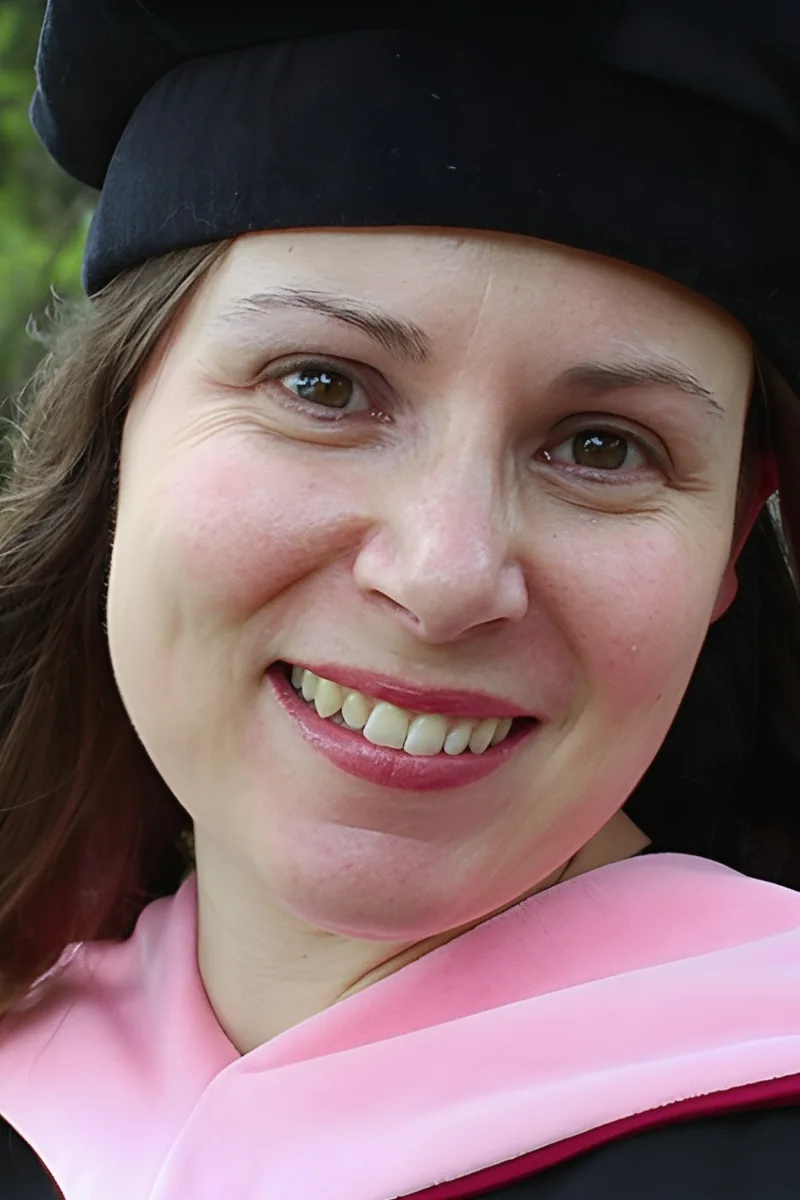
Teaching middle school math means juggling a wide range of readiness levels in topics like ratios, proportional reasoning, and introductory geometry. Anna has taught fifth graders and middle schoolers across multiple subjects, so she knows how to read where a student is struggling and adjust on the fly. Her math certification backs up an approach that emphasizes understanding over shortcuts.
The jump from elementary arithmetic to middle school math — fractions, ratios, negative numbers, basic equations — is where many students quietly lose confidence. Robert teaches these building blocks by connecting them to patterns students already understand, turning something like fraction division from a memorized rule into a concept that actually makes sense.
Ratios, proportions, basic geometry, and early equation-solving all converge in middle school math, and keeping them straight requires a tutor who can connect each topic to the next. Shanta taught developmental and undergraduate math courses at the university level, which gave her a clear picture of how middle school concepts feed directly into high school success. She builds each lesson around the specific skill a student is struggling with, whether that's fraction operations or coordinate graphing.
Four years teaching physics to Navy sailors with widely varying math backgrounds gave Madeline a knack for spotting exactly where a concept breaks down for a student. She applies that same diagnostic instinct to middle school topics like fractions, proportional reasoning, and pre-algebra — building the kind of number sense that pays off for years.
A psychology PhD student who teaches college-level stats and abnormal psych, Kate knows how to break down abstract concepts for learners who aren't yet comfortable with abstraction — which is exactly what middle school math demands as students move from arithmetic into variables, expressions, and proportional reasoning. Her master's work in adolescent health means she's studied how this age group thinks and learns, so she calibrates explanations to match where a student's brain actually is developmentally, not just academically.
Fractions, ratios, and proportional reasoning are the concepts that trip up most middle schoolers — and they're also the building blocks for every math class that follows. Lina's engineering background means she can show students how these ideas connect to real problems, like scaling a recipe or calculating distances on a map. Rated 4.8 by her students.
The math concepts students encounter in middle school — fractions, ratios, proportional reasoning, and early equation work — form the backbone of everything that comes after. Nathan grew up around educators and picked up a knack for explaining these building-block ideas in ways that actually stick, using concrete examples before moving to abstract notation.
The jump from arithmetic to middle school math — ratios, proportions, basic equations, negative numbers — is where many students first decide whether they're "math people" or not. Nathaniel tackles that transition with genuine enthusiasm, making concepts like fraction operations and coordinate graphing feel approachable rather than intimidating. Rated 5.0 by students.
At the middle school level, math shifts from arithmetic to reasoning — fractions become ratios, numbers become expressions, and word problems start requiring multi-step thinking. Naythen excels at making that transition less intimidating by walking through each problem with clear, patient logic. His teaching assistant experience at Northwestern gave him practice adapting explanations until they land.
An English composition degree might not scream math, but Isabel's strength is in breaking down multi-step processes into clear, logical sequences — a skill that transfers directly to teaching middle schoolers how to work through equations and tackle order of operations without skipping steps. Her 4.9 rating from students speaks to a teaching style that keeps kids engaged even when the material feels tedious, which is half the battle at this level.
Aerospace engineering coursework throws calculus and physics at you daily, but Riley remembers the middle school concepts that made all of it possible — integer operations, proportional reasoning, and the first real encounter with variables. That recent memory is an advantage: he can pinpoint exactly which early skills need to be solid before high school math accelerates, and he explains them in straightforward terms rather than engineering jargon.
Between volunteering as a mentor for middle schoolers and grinding through the math-heavy core of an industrial & systems engineering degree at OU, Lily sits at a useful intersection — she knows the content deeply and she knows the age group firsthand. She's particularly strong at breaking down the transition from arithmetic into early algebraic thinking, where engineering training makes concepts like variables and expressions feel like practical tools rather than abstract puzzles.
Pre-engineering coursework means Alexander lives in the math that middle schoolers are just starting to encounter — variables, equations, geometric reasoning — and can show exactly how those building blocks turn into real design and problem-solving tools. His approach leans heavily on asking questions rather than lecturing, pushing students to reason through each step of a problem themselves before he fills in any gaps. That Socratic style tends to build the kind of independent thinking that pays off once math accelerates in high school.
The jump from arithmetic to algebraic thinking is one of the biggest shifts a student faces, and it usually happens in middle school. Susan tackles that transition head-on — building confidence with integers, order of operations, and basic equation-solving so students walk into high school math feeling prepared rather than anxious.
I am a graduate of the University of Oklahoma. I received by Bachelor of Science in Chemical Engineering. I have mostly tutored privately on my own time in one on one sessions. I mostly enjoy helping others with math and science related problems. Education is necessary to improve life and I want others to realize this. In my spare time I enjoy thought provoking literature.
Every concept in middle school math — ratios, proportional reasoning, negative numbers, basic geometry — becomes a building block for high school. Tracy pinpoints exactly which block is wobbly before stacking more on top, whether that means revisiting fraction operations or pushing ahead into linear equations. She's been tutoring students at this level since she was in middle school herself, so she understands where confusion typically hides.
Three science degrees — including one in chemistry — mean Sung has spent years relying on algebra, ratios, and unit conversions in lab settings, so he can show middle schoolers exactly how the math they're learning powers real scientific work. He's particularly strong at breaking down fraction and decimal operations by tying them to measurement and mixing problems that make the steps feel logical rather than arbitrary. Rated 5.0 by students.
The jump from elementary arithmetic to middle school math introduces ratios, proportional reasoning, and basic equation-solving that can intimidate students if the logic isn't made visible. Ingrid uses concrete examples and real-world scenarios to demystify concepts like fractions-to-decimals conversion and simple inequalities. Her experience leading hands-on workshops for undergraduates translates naturally into clear, patient explanations for younger learners.
Having completed the full IB diploma program and scored a 35 on the ACT, Dalton knows what it takes to build the kind of mathematical fluency that carries through high school and beyond — and he can trace that back to the fundamentals middle schoolers are working on now, like operations with integers and setting up simple equations. His Mass Communications degree sharpened his ability to explain ideas clearly and concisely, which turns out to be exactly what a confused seventh grader needs when a concept like negative number arithmetic suddenly stops making sense.
Fractions, ratios, and proportional reasoning are the concepts that quietly determine whether a student thrives or struggles in high school math. Andrew takes the time to unpack why procedures like cross-multiplying actually work, building the kind of number sense that carries through algebra and beyond. His 4.9 rating speaks to how well that patient, explanation-first approach lands with younger learners.
Years of tutoring her younger brother and his friends gave Ellie a front-row seat to the specific places middle schoolers get stuck — fractions turning into decimals, proportional reasoning, and that tricky leap into basic equation solving. She breaks each concept into concrete steps and ties them to scenarios kids actually care about. Her background coaching youth soccer also means she knows how to keep younger learners engaged and motivated.
Building number sense in middle school — whether it's fraction operations, proportional reasoning, or early work with variables — sets the trajectory for every math class that follows. JF has been tutoring students as young as third grade since high school and knows how to make concepts like ratios and integer arithmetic click before they become obstacles in algebra.
Fractions, ratios, and pre-algebra concepts click faster when a student understands the reasoning behind each step — not just the procedure. Sherry's experience as a classroom aide and mentor to middle school girls means she knows how to break down topics like proportional relationships and integer operations in ways that actually stick. Rated 5.0 by students.
The jump from elementary to middle school math introduces ratios, proportional reasoning, and early algebraic thinking all at once, which can feel overwhelming without the right support. Mary's engineering background gives her a knack for showing students how these concepts connect — why understanding fractions deeply, for instance, makes proportions and percentages click naturally. She holds a 5.0 client rating and genuinely enjoys working at this level where curiosity about math can really take root.
Ratios, proportions, and early equation-solving can feel abstract to middle schoolers who've only ever worked with straightforward arithmetic. Marisa bridges that gap by connecting each new concept to something concrete — turning word problems into stories and fractions into visual models that actually click.
Emily's biology training at Yale — where molecular and cellular coursework meant constant work with ratios, concentrations, and quantitative modeling — gives her a fluency with the math middle schoolers are formalizing that goes well beyond textbook drills. She's particularly strong at helping kids see how fractions, decimals, and early variable work connect to each other as one coherent system rather than a pile of disconnected rules. Rated 5.0 by students.
Acting training in New York City has made Marc unusually good at one thing most math tutors overlook: reading the room. He picks up on the exact moment a middle schooler checks out during a fraction or ratio problem and shifts his explanation on the fly — sometimes reframing it as a real scenario, sometimes slowing down to rebuild a single step. His 1550 SAT speaks to genuine math fluency, but it's that performer's instinct for connection that keeps students engaged through the trickier pre-algebraic concepts.
Testimonials
Because the right Middle School Math tutor makes all the difference.
Average Session Rating – Based on 3.4M Learner Ratings
Nearby Middle School Math Tutors
Other Oklahoma City Tutors
Related Math Tutors in Oklahoma City
Frequently Asked Questions
Middle school math moves from learning procedures (like "do this step, then that step") to understanding why those steps work. This conceptual shift can feel overwhelming—students who memorized facts in elementary school suddenly need to explain their thinking and apply concepts to new situations. Personalized tutoring helps bridge this gap by breaking down the reasoning behind each concept, so students build genuine understanding rather than just following formulas.
Word problems require students to translate real-world language into mathematical operations—a skill that takes practice to develop. Many students can solve equations in isolation but struggle to identify what operation to use or set up the problem correctly. Tutors work with students to develop problem-solving strategies like breaking problems into smaller parts, identifying key information, and checking whether answers make sense in context.
Math anxiety—the stress or fear that builds when students feel behind or confused—is common in middle school and can actually interfere with learning and test performance. Personalized 1-on-1 instruction creates a low-pressure environment where students can ask questions without judgment, work at their own pace, and rebuild confidence through small wins. When students see that they can understand concepts with the right explanation, anxiety often decreases naturally.
Showing work isn't just busywork—it helps teachers see where students' thinking breaks down and gives students a way to catch their own mistakes. Middle school math increasingly requires students to explain their reasoning, not just get the right answer. Tutors model clear problem-solving steps, ask students to explain each move, and help them develop organized, easy-to-follow work that demonstrates understanding.
Multi-step equations and graphing require students to juggle multiple concepts at once—order of operations, inverse operations, coordinate systems—while keeping track of what they're solving for. These topics often trip up students who understood single-step equations because the complexity jumps significantly. Tutors break these skills into manageable pieces, help students see the patterns and connections between concepts, and provide targeted practice until students build fluency and confidence.
Yes. Oklahoma City's 21 school districts use different textbooks and approaches, and tutors are familiar with these variations. Whether your student's school uses a traditional sequence or a more integrated approach, Varsity Tutors connects you with tutors who understand your student's specific curriculum and can reinforce what's being taught in class while filling gaps in understanding.
Many middle school students treat each topic as isolated—fractions, decimals, equations, graphing—without seeing how they connect. This fragmented view makes math feel overwhelming and hard to retain. Expert tutors help students recognize underlying patterns (like how fractions, decimals, and percentages represent the same idea) and show how earlier concepts build into later ones, creating a coherent framework that's easier to understand and remember.
The first session focuses on understanding your student's specific challenges, learning style, and goals. The tutor will likely review recent assignments or tests to identify where understanding breaks down, ask questions to gauge conceptual knowledge versus procedural memorization, and begin building a personalized plan. This diagnostic approach ensures that tutoring targets your student's actual needs rather than generic review.
Let’s find your perfect tutor
Answer a few quick questions. We’ll recommend the right plan and match you with a top 5% tutor.