Award-Winning Algebra 2 Tutors
serving Toledo, OH
Algebra 2
Tutors in Toledo
Private 1-on-1 tutoring, weekly live classes for academic support, test prep & enrichment, practice tests and diagnostics, and more to elevate grades and test scores.
Based on 3.4M Learner Ratings
UniversitiesSchools & Universities
DeliveredHours Delivered
ProficiencyGrowth in Proficiency
Who needs tutoring?
No obligation. Takes ~1 minute.

Neuroscience coursework at Vanderbilt threw Benjamin into exponential growth models, logarithmic dose-response curves, and polynomial regression long before most students realize Algebra 2 has real applications — so he teaches those topics with concrete examples already in his back pocket. His 34 ACT confirms the mathematical precision, and his experience tutoring everything from basic algebra through calculus means he can quickly identify the exact gap in earlier reasoning that's making a new concept feel impossible.
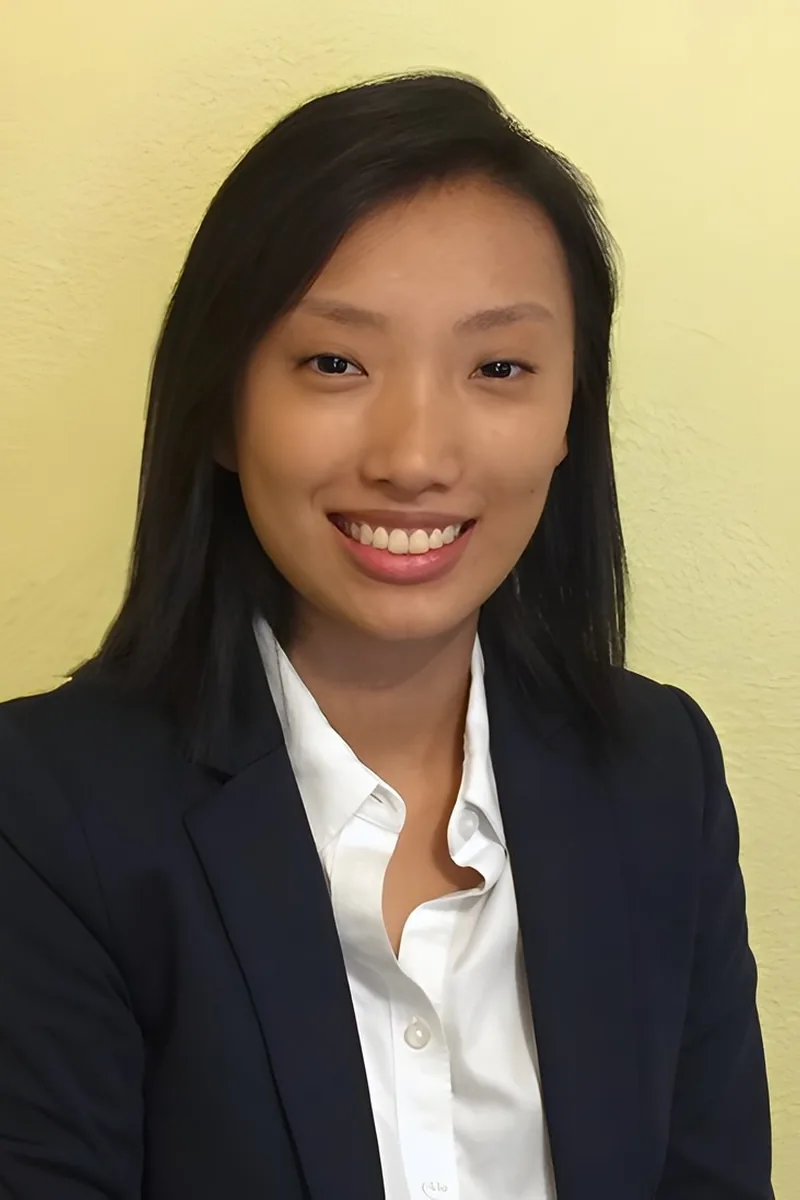
Logarithms, complex numbers, and polynomial long division tend to be the exact spots where Algebra 2 students lose their footing. Hyerin's economics degree required heavy quantitative modeling, so she explains these concepts through real applications — showing how exponential functions describe population growth or how systems of equations solve actual optimization problems. Rated 4.9 by students.
Having earned a math degree and a 1540 SAT, Patrick knows the exact moments in Algebra 2 where students' old tricks stop working — like when comfortable exponent rules suddenly involve fractional and negative cases, or when a function's graph no longer looks like anything from Algebra 1. He tackles those transition points by rebuilding the reasoning behind each new rule, so students carry understanding into pre-calc and beyond instead of a stack of half-remembered formulas.
Having earned dual degrees in biology and mathematics-economics from UCLA, Vinay sees Algebra 2 from both sides — the pure structure of polynomial and rational functions, and the applied reality of using them to model growth, decay, and economic behavior. That dual lens is especially useful when students hit topics like complex numbers or conic sections and need someone who can explain the concept multiple ways until one sticks. He holds a 5.0 rating and a 1570 SAT.
Cornell's chemical engineering program threw Rahul into courses where Algebra 2 concepts like exponential relationships and complex polynomials weren't just homework problems — they were the language of reactor design and thermodynamic modeling. That applied fluency, plus a 36 ACT, means he can explain not just how to manipulate a logarithmic equation but what it's actually describing. He pushes for conceptual understanding over memorized steps, so the math holds up when problems stop looking like textbook examples.
A biology major at Duke might seem like an unlikely Algebra 2 tutor, but Emma's coursework — modeling population dynamics, analyzing ecological data, running biostatistics — kept her deep in exactly the exponential, logarithmic, and polynomial relationships that define the course. She's especially good at showing students why a function behaves the way it does, not just how to solve it. Rated 4.9 by her students.
As a high school math teacher with dual engineering degrees, Dillon knows exactly which Algebra 2 topics — like systems of inequalities and quadratic modeling — trip students up most, because he watches it happen in his own classroom every semester. He teaches those concepts through the real-world engineering problems he solved before switching to education, giving students a concrete reason to care about the abstraction. His 32 ACT composite reflects the same mathematical fluency he brings to breaking down each new idea.
Eshita's neuroscience coursework constantly throws her into exponential growth models and logarithmic scaling — the same tools that trip up most Algebra 2 students when they first appear without real context. She teaches those concepts by grounding them in the quantitative reasoning she uses daily, so students build their own logic for tackling problems instead of relying on memorized steps. Holds a 5.0 rating and a 35 ACT.
I am an upbeat and patient tutor. I like to make learning as fun as possible, and I'm constantly learning new things.
Logarithmic functions, polynomial division, complex numbers — Algebra 2 is where math shifts from procedural to conceptual, and Bryan's background as a Penn math major means he can explain the reasoning behind each new abstraction instead of just drilling formulas. He unpacks topics like rational expressions and conic sections by connecting them to ideas students will see again in calculus and beyond.
Having studied biomedical engineering, Kevin knows firsthand that Algebra 2 concepts like systems of equations and exponential models aren't just classroom exercises — they're the building blocks of everything from drug dosage calculations to medical device design. He's especially effective at unpacking the logic behind complex expressions and transformations so students can tackle unfamiliar problems independently, not just replicate worked examples. Holds a 5.0 rating from his students.
When Algebra 2 topics like logarithms or rational expressions start piling up, Sr slows things down and traces each concept back to the algebraic thinking a student already trusts from earlier courses. A psychology background gives her a sharp read on when someone is nodding along without actually following — and she'll shift explanations on the fly until the reasoning genuinely lands. Her 33 ACT and 4.8 rating speak to both the math fluency and the teaching instincts she brings to each session.
Karen's applied physics degree means she spent years solving problems where Algebra 2 concepts like logarithmic relationships and complex functions weren't optional — they were the language of the work itself. That hands-on fluency lets her teach topics like polynomial behavior or exponential equations by grounding them in tangible scenarios drawn from a student's own interests, whether that's sports statistics or music theory. Rated 5.0 by her students.
Five years at Kumon drilling arithmetic and pre-algebra fundamentals gave Catherine a sharp eye for the exact gaps that trip students up once Algebra 2 ramps into complex expressions and systems — she can tell in minutes whether a shaky grasp on fractions or exponent rules is the real culprit behind a struggle with rational equations. Her neuroscience degree from Ohio State kept her deep in quantitative reasoning, and she approaches each new Algebra 2 concept by making sure the prerequisite algebra is genuinely solid first. Rated 4.9 by her students.
Mechanical engineering at Case Western means Kevin hits Algebra 2 concepts like systems of equations, complex numbers, and polynomial modeling every week in his coursework — they're not abstract topics to him but daily tools. A 36 ACT and 1550 SAT confirm the mathematical precision he brings to sessions, and his background tutoring both small groups and one-on-one gives him a quick read on exactly where a student's reasoning breaks down.
Having tutored across 39 subjects from pre-algebra through calculus 2 and both AP Physics courses, Ishaan sees Algebra 2 as the hinge point where earlier math skills either hold up or quietly fall apart — and he's quick to diagnose which one is happening. He zeroes in on the specific gaps that make topics like polynomial division or complex numbers feel overwhelming, rebuilding those weak links so the new material actually has something to attach to. Holds a 5.0 rating and a 1510 SAT.
Engineering students hit Algebra 2 concepts like systems of equations and complex numbers again and again in circuits and signal processing — Jie, pursuing an accelerated master's in computer engineering at Michigan, can point to exactly where each topic resurfaces and why mastering it now pays off. His 34 ACT and experience tutoring students across every level from freshman core classes to AP coursework mean he's quick to diagnose whether a struggle is a new concept or a gap carried over from Algebra 1.
Chemical engineering coursework drills the kind of algebraic fluency that makes Algebra 2 click — Seung spent years manipulating complex expressions, solving systems, and working with exponential relationships to model real processes like reaction rates and heat transfer. That applied background means he can unpack why a rule works, not just demonstrate the steps, especially when topics like logarithms or polynomial division start to feel disconnected from anything concrete.
Logarithms, complex numbers, polynomial division — Algebra 2 is where math stops feeling like arithmetic and starts requiring genuine abstract reasoning. Maxwell's dual degree in mathematics and physics means he can show students not just the procedure for each problem type but the underlying logic that connects them, making new topics feel like extensions of ideas they already understand. Rated 5.0 by students.
The jump to Algebra 2 is where many students first encounter logarithms, complex numbers, and polynomial behavior — topics that feel disconnected from anything they've seen before. Sunny's calculus and pre-calculus teaching experience means he knows exactly where Algebra 2 concepts are headed, so he connects each new idea to the bigger mathematical picture. His 5.0 rating speaks to how well that forward-looking approach clicks with students.
I'm entering my senior year at Case Western Reserve University. I'm happy to provide tutoring services for those interested in improving their academic performance or exam preparation. The subjects which I am most proficient include SAT Math, Algebra 1 , Algebra 2, Middle School Math, Pre-Algebra, Pre-Calculus, and Trigonometry.
Logarithmic functions, complex numbers, and polynomial division are where most Algebra 2 students start feeling lost. Judith's electrical engineering degree required heavy use of all three, so she teaches these concepts with the fluency of someone who's applied them in circuit analysis and signal processing, not just in a textbook. She holds a 5.0 rating from students.
Logarithms, polynomial division, and rational functions all start making sense once a student sees how each one builds on skills they already have from Algebra 1. Ella connects those dots explicitly, walking through the underlying logic so that new topics feel like extensions rather than entirely foreign concepts. Her 5.0 rating speaks to how well that approach clicks with students.
Five years of tutoring math and chemistry at Ohio State means Ricardo has watched hundreds of students hit the same Algebra 2 wall — the moment when exponential and logarithmic functions stop behaving like anything they've seen before. His chemistry background actually helps here: he can show how those abstract function types model real phenomena like pH scales and reaction rates, turning confusing notation into something tangible. Rated 4.6 by his students.
A PhD in applied mathematics means Dr has taught, used, and rebuilt every concept in Algebra 2 hundreds of times over — from the internal logic of logarithms to why complex numbers behave the way they do in polynomial roots. That depth lets him diagnose exactly which earlier skill is misfiring when a student gets stuck, rather than just re-explaining the current problem. Rated 4.9 by his students.
Practice problems are Brian's core teaching tool — not as mindless repetition, but as a way to build the pattern recognition that Algebra 2 demands when topics like systems of equations or polynomial division suddenly require multiple techniques at once. His computer science training at Case Western means he naturally approaches algebraic reasoning as debugging: isolating exactly where the logic breaks down and fixing that specific step. Holds a 5.0 rating from his students.
Logarithms, complex numbers, and rational functions tend to be the spots where Algebra 2 stops feeling intuitive. Emily's chemistry PhD background means she uses these tools constantly in real research — modeling reaction kinetics, analyzing spectral data — so she can show students why each concept exists, not just how to solve for x.
Logarithms, complex numbers, and rational functions are where many Algebra 2 students start feeling lost, because the problems shift from mechanical steps to abstract reasoning. Samuel tackles that transition head-on, showing students the structure behind each new function type so they can set up and solve problems independently. His 5.0 rating speaks to how well that approach lands.
Electrical engineering at Ohio State means Omar hits polynomial division, complex number operations, and system-of-equation setups in his coursework almost weekly — so he teaches Algebra 2 concepts with the fluency of someone who actively depends on them. He's particularly good at demystifying the shift from Algebra 1 thinking to Algebra 2 thinking, where suddenly a single problem might layer logarithms on top of function transformations. Rated 4.8 by his students.
Logarithmic functions, complex numbers, and polynomial division are where most Algebra 2 students start to feel lost — and they're exactly the building blocks Patrick uses daily in his chemical engineering program at Michigan. He connects abstract algebraic concepts to tangible applications, which makes topics like rational expressions and exponential growth feel less arbitrary and more logical.
Biology pre-health coursework at Ohio State has Olivia solving exponential growth models and logarithmic dose-response curves regularly, so she can point to exactly where Algebra 2 concepts like logarithms and exponential functions show up in real science. She also teaches the full math sequence from pre-algebra through calculus, which means she can quickly spot when a shaky Algebra 1 habit — like mishandling negative exponents — is the real reason a new topic feels impossible.
Logarithmic and exponential functions tend to be the point in Algebra 2 where students stop trusting their intuition, and Sunay tackles that head-on by connecting abstract rules back to patterns students already recognize from earlier math. His neuroscience and finance background at Emory means he's comfortable moving between the conceptual "why" and the procedural "how" — whether the topic is polynomial division, conic sections, or sequences and series.
Logarithmic and exponential functions stop feeling arbitrary once a student sees how they model real phenomena like chemical reaction rates or population growth — and Alexander, with a PhD in Chemical Engineering, uses exactly those connections to make Algebra 2 concepts click. He breaks down polynomial operations, rational expressions, and function transformations with the rigor of an engineer and the patience of someone rated 4.9 by students.
Medical school admissions required Linda to master the kind of exponential and logarithmic reasoning that trips up most Algebra 2 students — growth models, decay curves, dosage calculations — so she teaches these topics with concrete examples that make the abstraction feel earned. Her biochemistry degree from UCSD means she didn't just pass through polynomial and rational function work; she depended on it daily in upper-level coursework. Rated 5.0 by her students.
Neuroscience coursework gave John a practical relationship with the algebra that underpins data analysis — fitting exponential curves to neural response data, manipulating logarithmic scales, interpreting complex function behavior in research contexts. That applied perspective means he can show an Algebra 2 student what these tools actually do, not just how to solve them on a worksheet. He holds a 4.6 rating across his tutoring subjects.
Four years of tutoring math at every level from elementary through calculus have shown Henry exactly where Algebra 2 trips people up — usually the moment exponent rules and function notation have to work together in new ways, like simplifying rational expressions or interpreting logarithmic equations. As a math undergrad at Vassar with a 34 ACT, he's deep enough in the material to explain the reasoning behind each technique rather than just drilling steps. Rated 4.9 by his students.
Engineering coursework gave Steven a concrete reason to master every Algebra 2 concept — he needed logarithmic and exponential relationships to model real systems, not just pass a test. That practical grounding means he can show a student exactly how a topic like function transformations or polynomial behavior connects to something tangible, which tends to make the logic stick. Rated 4.9 by his students.
A Master's in Medical Physiology means Ryan regularly encounters the exponential and logarithmic models that trip up most Algebra 2 students — drug half-life calculations, enzyme kinetics curves, physiological growth patterns — so he can ground abstract topics in scenarios where the math genuinely matters. He's especially effective at bridging the gap between Algebra 1 habits and the new level of abstraction Algebra 2 demands, like when students need to shift from mechanical exponent rules to actually reasoning about logarithmic relationships.
Engineering coursework — both chemical and environmental — gave Kevin years of daily practice with the exact algebraic tools Algebra 2 covers: manipulating rational expressions, solving exponential and logarithmic equations, and interpreting complex function behavior in real systems like reaction kinetics and pollutant decay models. His PhD research deepened that fluency, so he can unpack not just how to apply a technique but why it works and where it leads. That dual perspective makes him especially effective at turning abstract procedures into something a student can reason through independently.
Having tutored everything from elementary math through calculus, Nora knows exactly which gaps from earlier courses — shaky exponent rules, unclear function notation — cause the most confusion once Algebra 2 ramps up to logarithms and rational expressions. Her engineering lab work keeps her comfortable with the kind of multi-step symbolic reasoning these topics demand, and she's especially good at slowing down at the precise moment a new abstraction loses a student. Rated 4.8 by her students.
Testimonials
Because the right Algebra 2 tutor makes all the difference.
Average Session Rating – Based on 3.4M Learner Ratings
Practice Algebra 2
Free practice tests, flashcards, and AI tutoring for Algebra 2
Other Toledo Tutors
Related Math Tutors in Toledo
Frequently Asked Questions
Algebra 2 shifts from learning basic algebraic rules to understanding deeper mathematical concepts and connections. You'll work with more complex functions, exponential and logarithmic equations, sequences, and systems of equations—moving from "how do I solve this?" to "why does this work this way?" Personalized tutoring helps bridge this conceptual jump by breaking down abstract ideas into concrete examples you can visualize and apply.
Word problems require you to translate real-world scenarios into mathematical equations, then solve them—a multi-step process that combines reading comprehension, problem-solving strategy, and algebraic skills. Many students struggle because they don't know where to start or how to identify what the problem is actually asking. Expert tutors help you develop a systematic approach: reading carefully, defining variables, setting up equations, and checking your answer against the original context.
Graphing becomes much easier when you understand the relationship between equations and their visual representations. Tutors help you see patterns—like how changing coefficients shifts or stretches a graph—rather than just plotting points mechanically. With personalized instruction, you'll learn to predict what a graph looks like before you draw it, which builds both confidence and deeper understanding of how functions behave.
Showing your work reveals your thinking process and helps identify exactly where errors happen—whether it's a computational mistake or a conceptual misunderstanding. Teachers and tutors can only help fix what they can see. When you write out each step, you're also reinforcing the logic of the problem, which strengthens your ability to tackle similar problems independently in the future.
Yes. Toledo schools use various textbooks and approaches, and expert tutors are familiar with different curriculum standards and teaching methods. Whether your school uses a traditional textbook, integrated curriculum, or online platform, Varsity Tutors connects you with tutors who can align their instruction to match your specific coursework and help you succeed with your particular materials.
Absolutely. Math anxiety often stems from feeling lost or embarrassed about asking questions in class. Personalized 1-on-1 instruction creates a judgment-free space where you can ask "dumb questions," work at your own pace, and build confidence through small wins. As you understand concepts better and see your progress, anxiety naturally decreases and you'll feel more capable tackling harder problems.
Your first session is about getting to know each other and understanding where you are. The tutor will ask about your current challenges, review recent assignments or tests, and identify specific topics that need work—whether it's solving multi-step equations, understanding function notation, or building problem-solving strategies. This foundation helps create a personalized plan for your next sessions.
Many students notice better understanding and increased confidence within 2-3 sessions, especially once they grasp a concept their tutor explains differently than their teacher. Grade improvements typically follow within a few weeks as you apply these insights to homework and tests. The timeline depends on your starting point and how often you meet, but consistent personalized instruction accelerates progress significantly compared to working alone.
Let’s find your perfect tutor
Answer a few quick questions. We’ll recommend the right plan and match you with a top 5% tutor.