Award-Winning Biochemistry Tutors
serving Charlotte, NC
Biochemistry
Tutors in Charlotte
Private 1-on-1 tutoring, weekly live classes for academic support, test prep & enrichment, practice tests and diagnostics, and more to elevate grades and test scores.
Based on 3.4M Learner Ratings
UniversitiesSchools & Universities
DeliveredHours Delivered
ProficiencyGrowth in Proficiency
Who needs tutoring?
No obligation. Takes ~1 minute.

Four years of medical school means Jordan has cycled through biochemistry multiple times — first mastering it for premed coursework, then again for the MCAT, and again for USMLE Step 1 — each pass deepening his grasp of how pathways like the urea cycle and oxidative phosphorylation connect to clinical medicine. That layered repetition lets him teach metabolic integration the way it actually gets tested: not as isolated reactions, but as interconnected systems where disrupting one enzyme cascades through the whole picture. Rated 5.0 by students.
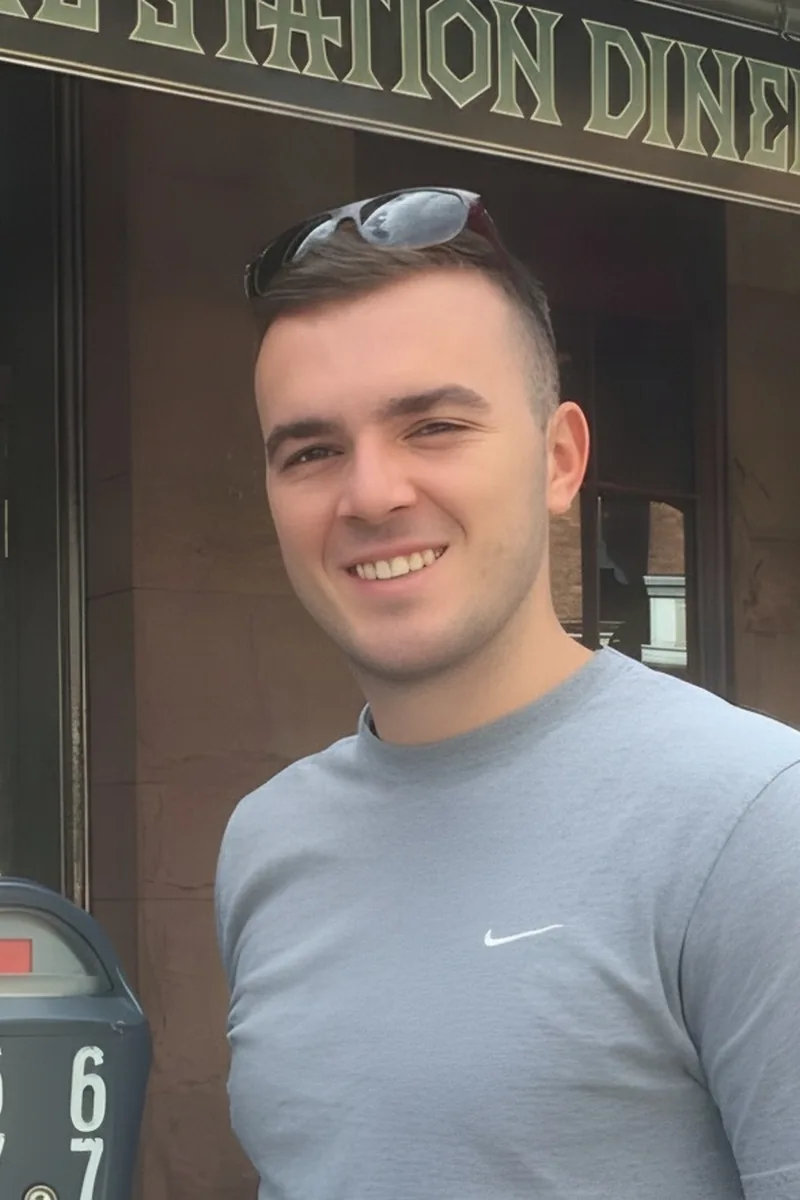
Enzyme kinetics, metabolic pathways, protein structure–function relationships — Biochemistry sits at the intersection of biology and chemistry, and it demands comfort in both. Hunter earned his undergraduate degree in Biochemistry at Boston College and is continuing into a PhD at Duke, so he teaches topics like Michaelis-Menten kinetics and amino acid chemistry from years of hands-on experience rather than surface-level familiarity.
Tutoring organic and general chemistry in Wake Forest's Chemistry Department — while earning an honors degree with a biochemistry concentration — meant Taylor was constantly connecting reaction mechanisms to the biological contexts where they matter. She breaks down topics like enzyme catalysis and metabolic pathway logic by building from the organic chemistry students already know, so each new intermediate or cofactor role slots into place instead of floating in isolation.
Genome editing at Rice and computational neuroscience at Hopkins meant Emmanuel had to internalize biochemistry at the molecular level — from CRISPR-associated enzyme mechanisms to the metabolic pathways fueling neural tissue. That hands-on lab fluency lets him teach topics like protein structure and nucleotide chemistry by grounding each concept in the experimental context where it actually matters. Holds a 5.0 rating.
I am a PhD student at SUNY Downstate Medical Center studying Molecular & Cellular Biology. I graduated from Columbia University with a Bachelor of Arts in Biochemistry. I love to teach, mostly because of the impact of great teachers throughout my academic career. I think learning can be really fun, if teachers think outside the box and really challenge themselves to find novel ways of conveying concepts to students. Tried and true methods are always great in the classroom, but to work one-on-one with students requires a different approach. It's also critical that learning be something students want, not grudgingly sit through, so that their academic success is tied to their ability to understand and engage the material, not to what score they get on an arbitrary test.
Teaching organic chemistry recitation at the University of Kentucky while simultaneously navigating medical school gives Jason an unusually current grasp of biochemistry — he's actively working through the same metabolic regulation, amino acid structures, and enzyme mechanisms his students encounter. His biology degree and MCAT preparation anchor the molecular details, while his med school training shows him how those details play out in living systems. Rated 5.0 by students.
Enzyme kinetics, metabolic pathways, protein structure — biochemistry asks students to think across chemistry and biology simultaneously, which is exactly what Saniya's neuroscience and chemistry training prepared her for. She unpacks complex topics like Michaelis-Menten kinetics or amino acid properties by linking molecular behavior to biological function, making dense material more intuitive. Her continued coursework in physiology and histology keeps these connections sharp.
Preparing for medical school at UT Houston while finishing a chemistry degree at Rice means Asad has been living in biochemistry from both sides — the rigorous organic and physical chemistry foundations and the biological systems they plug into. He's especially sharp on the MCAT-relevant intersections, like how enzyme mechanisms tie back to organic reaction logic or how metabolic pathway regulation connects to thermodynamic principles. Rated 4.7 by students.
I am most passionate about biology and chemistry. I am a firm proponent of education, believing it to be absolutely necessary for an improved quality of life, and I try to impart this appreciation to all of my students.
As a genetics major on the pre-med track, Jaya lives in the world of biochemistry — amino acid structures, enzyme kinetics, metabolic pathways, and the molecular logic connecting DNA to protein function. She's currently preparing for the MCAT's biological and chemical foundations sections, which means this material is fresh and actively in her working memory. She unpacks complex pathways like glycolysis and the citric acid cycle by emphasizing the *why* behind each step rather than demanding rote memorization.
As a biochemistry major at Stony Brook who also serves as a chemistry peer tutor and head teaching assistant for college biology, Natalie lives in the overlap between organic chemistry and cellular function that defines this subject. She breaks down topics like enzyme mechanisms and metabolic pathway logic by building from the reaction chemistry first, then layering in the biological context — so students can reason through an unfamiliar pathway instead of memorizing every intermediate. Rated 4.9 by students.
Lab research and patient care gave Sophie a dual perspective on biochemistry — she's traced metabolic pathways at the bench and seen what happens clinically when those pathways break down. Her biological and physical sciences degree means she teaches topics like enzyme mechanisms and pathway regulation by pulling in the organic chemistry and thermodynamics that explain *why* each step occurs, not just what comes next. Rated 4.9 by students.
Enzyme kinetics, metabolic pathways, and protein structure sit right at the intersection of Aimee's two degrees — chemical engineering and biosystems engineering. She unpacks topics like Michaelis-Menten kinetics and amino acid chemistry by tying them to the biomedical research context she works in at Georgia Tech, making dense material feel purposeful.
Enzyme kinetics, metabolic pathways, amino acid chemistry — biochemistry asks students to think like both a biologist and a chemist simultaneously. Ivan's background spanning cognitive science and the biological sciences, plus his MCAT teaching experience, means he can unpack reaction mechanisms and protein structure in ways that connect molecular detail to bigger physiological stories.
Claire's chemistry degree and incoming medical school training at the University of Illinois College of Medicine mean she's worked through biochemistry from both the bench and the clinical side — enzyme mechanisms, metabolic regulation, and the molecular logic connecting organic chemistry to living systems. She breaks down dense pathways like the citric acid cycle or amino acid catabolism by mapping each step back to the underlying reaction chemistry, so students can reconstruct a pathway from principles instead of flashcards. Rated 5.0 by students.
Testimonials
Because the right Biochemistry tutor makes all the difference.
Average Session Rating – Based on 3.4M Learner Ratings
Practice Biochemistry
Free practice tests, flashcards, and AI tutoring for Biochemistry
Other Charlotte Tutors
Related Science Tutors in Charlotte
Frequently Asked Questions
Biochemistry is the study of chemical processes within living organisms—how molecules like proteins, lipids, and carbohydrates interact to sustain life. It bridges chemistry and biology, making it essential for students pursuing careers in medicine, pharmacy, biotechnology, and research. Understanding biochemistry gives you insight into everything from how your cells produce energy to how diseases develop at the molecular level.
Many students struggle with visualizing abstract molecular structures and metabolic pathways that exist at scales we can't see directly. Balancing chemical equations, understanding enzyme kinetics, and connecting theoretical concepts to real-world applications—like how a drug works in your body—are also frequent pain points. The key is moving beyond memorization to truly understand the 'why' behind biochemical processes, which is where personalized instruction makes a real difference.
Personalized 1-on-1 instruction allows tutors to break down complex pathways and reactions into digestible pieces, use visual tools to help you see molecular structures, and connect abstract concepts to real applications in your body and in medicine. Tutors can also help you develop scientific reasoning skills—not just memorize facts—so you understand how to approach problems and think like a biochemist. This personalized approach is particularly effective for biochemistry, where understanding mechanisms is more valuable than rote memorization.
Your first session is about building a foundation for success. Tutors will assess your current understanding of biochemistry concepts, identify specific areas where you're struggling (whether it's metabolic pathways, enzyme function, or exam preparation), and learn your learning style. From there, they'll create a personalized plan that targets your goals—whether that's improving your grade, preparing for the MCAT, or mastering a specific unit before an exam.
Absolutely. Lab work is where biochemistry becomes tangible, and tutors can help you understand the purpose behind experiments, how to interpret results, and connect lab procedures to the underlying biochemical principles. Whether you're learning chromatography, spectrophotometry, or protein analysis, personalized instruction helps you see how theory translates into practice and prepares you to think critically about experimental design.
No—and that's actually the wrong approach. While you'll need to know key structures, pathways, and enzyme names, the real skill in biochemistry is understanding how and why these molecules interact. Tutors focus on helping you build conceptual frameworks so you can reason through problems and apply your knowledge to new situations, rather than just recalling facts. This deeper understanding also makes material stick longer and helps you perform better on exams that test application, not just recall.
Visualization is crucial in biochemistry, and tutors use multiple strategies: drawing molecular structures, using 3D models or software, creating pathway diagrams, and relating concepts to real-world examples you can picture (like how your muscles use ATP during exercise). With personalized instruction, tutors can tailor visual explanations to match how you learn best, whether you're a visual learner, kinesthetic learner, or someone who benefits from analogies and real-world connections.
Varsity Tutors connects you with expert tutors who have deep knowledge of biochemistry and experience helping students master the subject. You can share your specific needs—whether you're in a college biochemistry course, preparing for the MCAT, or working through a challenging unit—and get matched with a tutor whose expertise and teaching style align with your goals. The process is straightforward, and you can start personalized instruction on your timeline.
Let’s find your perfect tutor
Answer a few quick questions. We’ll recommend the right plan and match you with a top 5% tutor.