Award-Winning High School Biology Tutors
serving New York, NY
Award-Winning
High School Biology
Tutors in New York
Private 1-on-1 tutoring, weekly live classes for academic support, test prep & enrichment, practice tests and diagnostics, and more to elevate grades and test scores.
Based on 3.4M Learner Ratings
UniversitiesSchools & Universities
DeliveredHours Delivered
ProficiencyGrowth in Proficiency
Who needs tutoring?
No obligation. Takes ~1 minute.
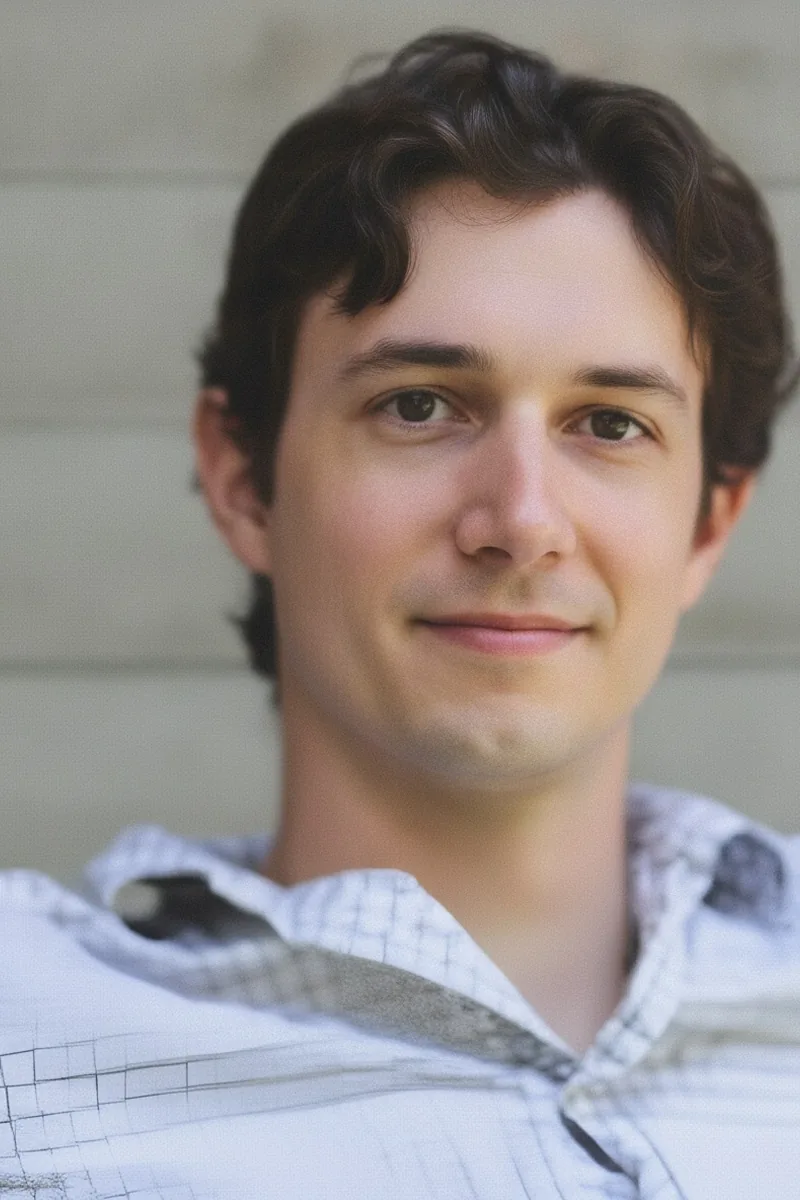
Most high school biology courses live or die on how well a student can connect the micro to the macro — DNA replication to inheritance patterns, cellular respiration to whole-organism metabolism. Josef spent his Cornell years immersed in exactly these connections through life sciences research, and he brings that depth to topics like genetics, evolution, and ecology without overcomplicating them for a high school audience.
Garrett holds three bachelor's degrees, including one in biology, which means he's covered the high school bio curriculum multiple times over — from photosynthesis and cell division to genetics and evolution. He leans heavily on physiology and anatomy knowledge to make topics like organ systems and homeostasis tangible, walking students through what's actually happening inside a living body rather than letting them skim definitions.
Yale's biology program forced Tony to connect the dots between molecular-level processes and big-picture concepts like evolution and ecology — exactly the kind of integration that high school bio exams test but textbooks rarely make explicit. Now headed to Columbia for medical school, he breaks down topics like cellular respiration and genetics with the clarity of someone who recently had to master them at a much higher level and knows which steps in a pathway students are most likely to lose track of.
An English major might seem like an unlikely biology tutor, but Ayako's well-rounded academic background and knack for breaking down dense material into clear language translate surprisingly well to units heavy on vocabulary and process-based reasoning — think cellular respiration chains or tracing the flow of genetic information from DNA to protein. She tackles biology the way she tackles a close reading: systematically, making sure every piece connects before moving on. Rated 5.0 by students.
As a biology major at Washington University in St. Louis with med school ambitions, Judah is deep in the weeds of the same material — genetics, cell energetics, ecological relationships — that high school bio students are seeing for the first time. That means he can pinpoint exactly where a concept like mitosis or DNA replication shifts from straightforward to confusing, and walk through the logic until it clicks. His 1580 SAT speaks to the kind of disciplined, detail-oriented thinking he brings to breaking down dense biological processes.
Conducting cancer and cell biology research at Memorial Sloan-Kettering meant Kelly wasn't just reading about mitosis and gene regulation — she was watching those processes go wrong in real tissue and figuring out why. That PhD-level understanding of how cells grow, divide, and communicate gives her an unusual ability to explain the mechanics behind textbook topics like DNA replication, cell cycle control, and protein synthesis in ways that actually make sense. Rated 5.0 by students.
As a pre-dental student at Vanderbilt, Sarah tackles biology from the applied side — she knows which cellular processes, enzyme pathways, and genetics concepts actually matter when the material builds toward higher-level science. Her approach to topics like mitosis, DNA replication, and ecological systems ties each mechanism back to real biological function so the details stick. Rated 5.0 by students.
Most high school biology tutors learned the subject from a textbook. Matthew learned it by managing a breast cancer research lab at Columbia, where concepts like cell signaling, immune response, and gene expression aren't abstract — they're daily work. He teaches topics like mitosis, genetics, and ecology by grounding them in how real biological systems actually behave.
Every biology concept Micah teaches — whether it's tracing energy through ATP synthesis or mapping out Mendelian inheritance — is grounded in the same material he mastered earning his own biology degree at Washington University in St. Louis. That formal training means he can connect the dots between units that often feel disconnected to students, like showing how the chemistry of photosynthesis feeds directly into the logic of ecosystem energy flow. His 34 ACT reflects the kind of precise, detail-oriented thinking he brings to breaking down lab data and diagram-heavy exam questions.
Before switching to history, Laura spent two years deep in Princeton's molecular biology track, covering everything from cellular respiration and genetics to ecology and evolutionary theory. She brings that college-level depth back down to the high school level, connecting AP-style questions to the underlying biological logic so students actually understand what's happening inside a cell instead of just labeling diagrams.
Rachelle earned her B.S. in Physiology from UCLA, which means she doesn't just teach biology vocabulary — she understands the underlying mechanics of how cells divide, how organ systems interact, and why homeostasis matters at every level. She's particularly strong at breaking down topics like cellular respiration and genetics into logical steps that make exam questions feel predictable. Rated 5.0 by students.
Neuroscience at Penn means Daniel has to understand biology at every scale — from how individual ion channels open and close to how entire organ systems maintain homeostasis — and that training translates directly when he's unpacking high school topics like cell structure, genetics, or nervous system function. He's particularly sharp at connecting the molecular details to the bigger biological picture, which is exactly where most students lose the thread. Rated 5.0 by students.
Three science degrees — biological sciences, nutritional sciences, and cognitive sciences — mean Anni has studied living systems from wildly different angles: how cells metabolize nutrients, how the brain processes information, and how organisms maintain equilibrium. That cross-disciplinary background is especially useful for units on cellular energy, the nervous system, and homeostasis, where she can explain the same process through multiple lenses until one clicks. Her biomedical sciences graduate work adds clinical depth that keeps the material grounded in how biology actually plays out in the body.
From Punnett squares to the intricacies of cell signaling pathways, high school biology covers an enormous range of material in a short time. Katherine zeroes in on the concepts students actually struggle with — distinguishing mitosis from meiosis, tracing energy through food webs, interpreting experimental data — and builds understanding through targeted practice rather than rote review.
From Punnett squares to the details of cellular respiration, high school biology covers an enormous range of material that often feels like pure memorization. Marcus reframes it by showing how each topic — DNA replication, mitosis, enzyme function — connects to a bigger biological story. His psychology and pre-med training at Yale means he can also bridge biology into neuroscience and human physiology when students are curious.
Biology clicks when students see the human body as an interconnected system rather than a list of vocabulary terms. Josh earned his B.S. in Biological Sciences from UC Santa Barbara and brings particular depth to cell biology, genetics, and human physiology — the topics that tend to dominate high school exams and AP free-response questions.
From mitosis to Mendelian genetics to ecological energy flow, high school biology demands that students hold many interconnected systems in their heads at once. Jamie tackles this by building analogies that link biological processes to everyday experiences — making DNA replication or enzyme function feel intuitive rather than abstract. Currently in medical school, he sees these topics through the lens of someone who depends on them professionally.
The jump from memorizing organelles to actually understanding gene expression, cellular respiration, and ecological interactions is where high school biology gets real. Brandon unpacks these systems by connecting molecular-level details to what's happening at the organism level — a perspective his biomedical engineering background made second nature.
Studying zoology as an undergrad and then pursuing a neuroscience PhD means Kaushambi has traced the arc from whole-organism biology down to individual neurons — so when she teaches topics like cell signaling, organ systems, or genetics, she can zoom in or out depending on what a student needs. She's particularly sharp on the endocrine and nervous system units, where her doctoral research gives her a depth that turns vague textbook diagrams into clear, mechanistic stories. Rated 5.0 by students.
Colin earned his biology degree from Washington University in St. Louis and is now pursuing a master's in epidemiology at Columbia, so he's deeply embedded in the life sciences. He tackles high school biology topics — from cellular respiration and mitosis to genetics and ecology — by connecting them to the real research questions he's encountered in immunology and genetics labs. That context makes processes like DNA replication and protein synthesis feel purposeful rather than abstract.
The jump from middle school science to high school biology can feel overwhelming — suddenly there's cellular respiration, DNA replication, and ecology models all in one semester. Daniel simplifies the overload by teaching students to see the recurring themes (energy flow, structure-function relationships, information transfer) that tie every unit together, drawing on his Columbia biology degree and current genetics research.
Morgan's strongest suit in biology is connecting the material to whatever a student already cares about — if a kid is into art, photosynthesis becomes a lesson in how plants capture light wavelengths, and if they're into sports, cellular respiration turns into a conversation about where muscle energy actually comes from. That approach, rooted in an International Development background where tying complex systems to real-world stakes was the whole point, makes vocabulary-heavy units like ecology and genetics easier to retain. Rated 4.7 by students.
Working in pediatric clinical research means Jeremy regularly reads and interprets studies grounded in genetics, cellular biology, and human physiology. He brings that fluency into high school biology sessions, especially when tackling topics like mitosis, Mendelian inheritance, and the structure-function relationships that dominate AP-level exams.
Environmental studies at Wesleyan required Kimberly to learn ecology, population dynamics, and organism-environment interactions from a systems perspective — the same concepts that anchor high school biology units on ecosystems, energy flow, and biodiversity. Her psychology training adds another layer, especially for units on the nervous system and behavior where the two fields directly overlap. She breaks down processes like nutrient cycling or natural selection by connecting them to real-world environmental case studies rather than isolated textbook definitions.
From mitosis to Mendelian genetics to cellular respiration, high school biology asks students to juggle a huge volume of interconnected concepts. Adam earned a degree in natural resources alongside his science training, giving him an ecological perspective that makes topics like population dynamics and evolution feel grounded in the real world. He tackles the memorization-heavy parts by teaching students how to build concept maps that link ideas together.
What makes biology click for many students is realizing it's fundamentally a story — evolution, ecology, genetics, cell theory all follow narrative arcs with causes, conflicts, and consequences. Miguel's background in comparative literature and history trained him to find structure in complex material, and he applies that same skill to breaking down processes like mitosis or energy flow through ecosystems into coherent sequences students can actually follow and retell. His broad science teaching range, from chemistry to microbiology, means he can pull in the chemical and molecular context that high school bio textbooks often gloss over.
AP Biology and microbiology are both on Hali's teaching roster, which means she approaches high school bio with more range than the course strictly requires — especially useful when units on cell structure, microbial ecology, or genetics need context beyond the textbook's surface treatment. Her arts background also gives her a visual edge when sketching out processes like mitosis or tracing energy flow through a food web, turning abstract diagrams into something students can actually reconstruct from memory. Rated 5.0 by students.
Alex taught as a TA for a Columbia biology lab course, which means he's walked dozens of students through the trickiest parts of high school–level bio — from cellular respiration pathways to Mendelian genetics crosses. He connects each topic to vivid examples from his own research in biochemistry, making processes like mitosis or protein synthesis easier to visualize and remember.
Biology clicks when students see systems instead of isolated vocabulary terms. David connects concepts like cellular respiration and photosynthesis to the underlying chemistry and physics, drawing on his science-heavy coursework at UCLA to make topics like genetics and ecology feel more intuitive than a wall of flashcards.
Caleigh graduated from Johns Hopkins with national neuroscience honors and published orthopedic research, so she teaches high school biology with the depth of someone who has actually done the science. Whether it's tracing signal transduction pathways, breaking down mitosis versus meiosis, or connecting DNA transcription to real protein function, she makes the material click by tying textbook concepts to how they play out in actual labs.
I am a physician in training, living in New York City. I was born and grew up in Minneapolis, Minnesota. I lived in both Israel and Denmark growing up. I went to the University of Pennsylvania for college, where I majored in history and completed the pre-med curriculum. I graduated from Penn cum laude and went on to medical school at Tufts University in Boston. I went on to complete my internship and residency in internal medicine at The Mount Sinai Hospital in New York City. I continue to live in New York and am now completing a fellowship (speciality training) in gastroenterology on Long Island.
Thomas earned his bachelor's in biochemistry and molecular biology and is completing a master's in biology, which means he teaches high school bio with the depth of someone who uses these concepts daily in advanced coursework. He breaks down topics like cellular respiration, DNA replication, and Mendelian genetics by connecting each process to real molecular events — making the "why" behind each mechanism click, not just the vocabulary.
Genetics problems, Punnett squares, and ecological modeling all have a mathematical backbone that many biology tutors gloss over. Shahnawaz digs into that quantitative side — whether it's calculating allele frequencies in Hardy-Weinberg problems or interpreting data from lab experiments — while still making sure students grasp the underlying biological concepts.
Tutoring college-level biology and organic chemistry at UC Berkeley while completing premedical coursework gave Chellam a layered understanding of the concepts that show up in high school bio — she's taught enzyme kinetics, ecological interactions, and cell energetics to students who were a few years ahead of where her current students are now. Her biology research background means she can ground abstract topics like gene expression or nutrient cycling in how scientists actually study them at the bench. Rated 5.0 by students.
Teaching biology well often comes down to showing how the pieces connect — why understanding cell membrane structure matters for grasping osmosis, or how Mendelian genetics leads into DNA replication. Leonard's math background from Columbia gives him an unusual edge here: he treats biological processes as logical sequences students can reason through, not just vocabulary lists to memorize. His additional coursework in molecular biology, anatomy, and physiology means he can move fluidly between the micro and macro when a topic demands it.
Medical school forced Rachel to rebuild every major biology topic — cell division, genetics, ecological relationships, energy pathways — at a level of detail that exposes exactly why the high school versions feel confusing when they're taught too fast. Her 5.0 rating and biology degree mean she can slow down on the specific mechanism or diagram a student is stuck on and explain the underlying logic until it holds up independently on a test.
A biopsychology degree from Tufts means Elizabeth studied biology through the lens of how living systems produce behavior — so when she teaches units on the nervous system, cellular signaling, or genetics, she's connecting each concept to a bigger picture of how organisms actually function. Now in her first year of medical school, she's rebuilding that same material at clinical depth, which sharpens her ability to explain processes like mitosis or membrane transport with the kind of precision that sticks on exams. Rated 5.0 by students.
I am a Junior studying biology and philosophy at NYU College of Arts and Sciences. I have always been interested in a fundamental understanding of how things work and my place in it and these two subjects are how I frame that understanding. I love teaching people new things and I hope to get the chance to help people in the process.
Biology isn't Daniel's core discipline — his degree is in Mass Communications — but years of tutoring K-12 students across both English and math gave him practice breaking down systematic processes like cell division, heredity, and ecological cycles into clear, sequential steps. His journalism training actually transfers well here: he teaches students to read dense textbook passages and lab procedures the way a writer dissects a source, pulling out the key claims and evidence rather than drowning in terminology.
Tarif's favorite subject to teach is biology, and it shows — he unpacks topics like Mendelian genetics, cellular transport, and protein synthesis using flow charts that turn sprawling processes into manageable steps. As a current medical student, he knows exactly which foundational biology concepts matter most for Regents prep and for students considering pre-med paths. Rated 5.0 by students.
Testimonials
Because the right High School Biology tutor makes all the difference.
Average Session Rating – Based on 3.4M Learner Ratings
Nearby High School Biology Tutors
Other New York Tutors
Related Science Tutors in New York
Frequently Asked Questions
New York high school biology typically covers cell structure and function, genetics and heredity, evolution, ecology, photosynthesis and cellular respiration, and human body systems. If you're preparing for the Regents Exam in Living Environment (required for graduation in New York), your course will emphasize these core topics plus lab skills and scientific inquiry. A tutor can help you master both the content and the experimental design skills that are critical for the exam.
Biology is fundamentally about understanding how living systems work, not just memorizing vocabulary. While you do need to know key terms and structures, the real skill is connecting those concepts—understanding why photosynthesis matters for energy flow, or how mutations drive evolution. Personalized tutoring helps you move beyond memorization to develop deeper comprehension and scientific reasoning, which is essential for exams and future science courses.
Labs are a crucial part of high school biology in New York, especially for the Regents Exam, which includes a practical component. Experiments teach you the scientific method, data analysis, and how to connect theory to real-world observations. If you struggle with lab work—whether it's designing experiments, interpreting results, or understanding what you're observing under a microscope—a tutor can walk you through the thinking process and help you develop stronger scientific skills.
Biology deals with scales and structures you can't see with your naked eye, which makes it genuinely challenging to build mental models. Concepts like DNA replication, enzyme function, or how ions move across cell membranes are abstract until someone helps you visualize them. Tutors use diagrams, animations, and analogies to make these invisible processes concrete, so you actually understand what's happening rather than just memorizing descriptions.
The Regents Exam tests both content knowledge and scientific reasoning across multiple question types—multiple choice, short answer, and practical lab skills. A tutor can help you identify gaps in understanding, practice with past exams, strengthen your lab analysis skills, and develop test-taking strategies specific to the Regents format. With New York's average student-teacher ratio of 11.3:1, personalized instruction can make a real difference in closing those gaps before exam day.
Students often struggle with three things: connecting abstract concepts (like cellular processes) to real-world examples, balancing chemical equations in photosynthesis and respiration, and understanding inheritance patterns in genetics. Many also find it difficult to interpret data from labs or apply the scientific method to unfamiliar problems. A tutor can target these specific pain points and help you develop the conceptual understanding and problem-solving skills you need to succeed.
Varsity Tutors connects you with expert tutors for high school biology in New York who understand both the subject matter and your learning style. When you get matched, you can discuss your specific goals—whether it's acing the Regents, improving your grade, or building confidence in labs—so the tutor can tailor their approach. Your first session is a great opportunity to see if the teaching style works for you.
Your first session is typically about building rapport and understanding where you stand. The tutor will ask about your current grade, which topics feel confusing, and what you want to accomplish. They might do a quick assessment to identify your strongest and weakest areas, then create a plan tailored to your needs—whether that's deep-diving into cell biology, prepping for the Regents, or building lab skills. Come ready to ask questions and be honest about what's challenging.
Let’s find your perfect tutor
Answer a few quick questions. We’ll recommend the right plan and match you with a top 5% tutor.