Award-Winning High School Biology Tutors
serving Brooklyn, NY
Award-Winning
High School Biology
Tutors in Brooklyn
Private 1-on-1 tutoring, weekly live classes for academic support, test prep & enrichment, practice tests and diagnostics, and more to elevate grades and test scores.
Based on 3.4M Learner Ratings
UniversitiesSchools & Universities
DeliveredHours Delivered
ProficiencyGrowth in Proficiency
Who needs tutoring?
No obligation. Takes ~1 minute.
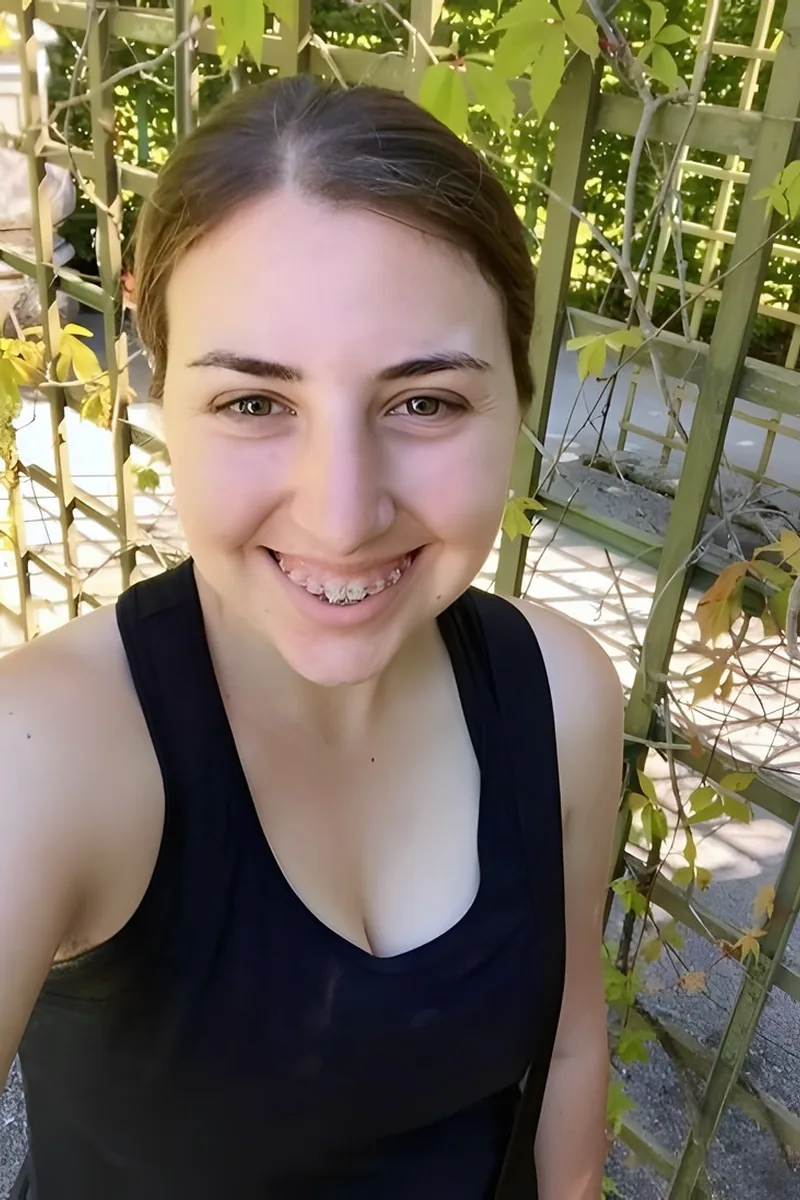
Most of Dana's tutoring subjects sit in the humanities — policy, economics, literature, writing — so she approaches biology the way a sharp student would: by organizing unfamiliar material into logical frameworks and building clear connections between concepts like energy flow, cell structure, and heredity. That study-skills backbone, refined through years of tutoring across dozens of subjects, turns out to be exactly what students need when biology feels like an overwhelming wall of vocabulary with no structure underneath. Her 36 ACT, including the science section, confirms she knows how to parse data-heavy material quickly and accurately.
As a biology major at Washington University in St. Louis, Laura is learning the same material her students are — genetics, cellular respiration, ecology — just at a deeper level, which means she can pinpoint exactly where a concept like mitosis or energy flow through an ecosystem starts to feel overwhelming. Her 35 ACT and 5.0 rating back up an approach that connects each topic to the bigger picture of how organisms actually function, turning isolated vocabulary into something that makes sense as a system.
The overlap between psychology and biology is bigger than most high school students realize — Jeanette's psychology degree at Penn covered neuroscience, brain structure, and the biological underpinnings of behavior, which maps directly onto units like the nervous system, endocrine regulation, and cellular signaling. She uses that behavioral angle to make processes like feedback loops and homeostasis click by tying them to how the body actually reacts to everyday experiences like stress or sleep deprivation.
Biology clicked for Elizabeth when she stopped memorizing diagrams and started asking why — why mitosis checkpoints fail in cancer cells, why natural selection favors certain alleles in specific environments. She taught high school biology with Teach for America and brings that classroom-tested ability to break down cell processes, genetics, and ecology into ideas students can reason through rather than just recall.
Cell division, genetics, and ecology can feel like three completely separate subjects crammed into one class. Emily unpacks each unit by tying it back to a central thread — how organisms maintain and pass on biological information — which makes topics like mitosis and Punnett squares feel connected instead of random. Her pre-med biology training at Cornell gives her the depth to answer the "but why?" questions that textbooks often skip.
At the Peter Westbrook Foundation, Timothy tutored high school students in biology, learning how to make topics like mitosis, DNA replication, and protein synthesis accessible to teenagers encountering them for the first time. His own biology training at Columbia gives him the depth to answer the "but why?" questions that go beyond the textbook.
Tamicka's biochemistry degree means she learned high school bio topics like enzyme kinetics, DNA replication, and metabolic pathways at the molecular level — then her master's in curriculum and instruction taught her how to actually teach them. That combination is particularly useful when students hit the genetics and cellular energy units, where knowing the underlying chemistry turns a wall of vocabulary into a logical sequence they can reason through instead of just memorize.
I am and have always been committed to education and helping students in any way I can to achieve their academic goals.
I am passionate about tutoring the ACT, high school math, biology, and English. My greatest ACT tutoring success story was increasing a student's overall score from a 23 to a 28 in a matter of 8 weeks during the summer of 2015. Ideally, I would like to tutor students preparing for the ACT and advise them as they prepare to apply to college.
Heading into medical school at Weill Cornell this fall, Elizabeth treats high school biology as the foundation it actually is — not just a class to get through. She digs into cellular respiration, genetics, and ecological systems with the kind of detail that prepares students for AP-level rigor or college science courses. Rated 4.9 by students.
I am a PhD student at SUNY Downstate Medical Center studying Molecular & Cellular Biology. I graduated from Columbia University with a Bachelor of Arts in Biochemistry. I love to teach, mostly because of the impact of great teachers throughout my academic career. I think learning can be really fun, if teachers think outside the box and really challenge themselves to find novel ways of conveying concepts to students. Tried and true methods are always great in the classroom, but to work one-on-one with students requires a different approach. It's also critical that learning be something students want, not grudgingly sit through, so that their academic success is tied to their ability to understand and engage the material, not to what score they get on an arbitrary test.
Brooklyn Tech's science-intensive curriculum gave Amena a head start in biology long before she declared it as her college major. She digs into the topics that trip up most high school students — cellular respiration vs. photosynthesis, Mendelian genetics, and the details of mitosis and meiosis — by connecting each process to a bigger biological story. Rated 5.0 by students, she adapts her explanations to match how each learner thinks.
Cancer research at Mount Sinai means Sima works with biological concepts daily that most high school students only encounter in textbook diagrams — cell proliferation, gene expression, and the molecular signals that control both. Her pre-med and epidemiology training gives her a knack for teaching students to spot patterns across units, like how the same principles governing cellular transport show up again in genetics and ecology.
Philosophy trains you to take a complicated argument apart and find the logic underneath — Adam applies that same skill to biology topics like cellular respiration, DNA replication, and ecological relationships, breaking multi-step processes into clear chains of cause and effect. He's genuinely enthusiastic about science (biology in particular), and that energy, combined with a humor-driven teaching style, tends to keep students engaged through the units where most eyes glaze over.
The pre-med track at Stony Brook's Honors College means Nicole is actively working through biology at a level just beyond her high school students — close enough to remember which concepts in genetics, cell energy, and ecology felt confusing the first time, but far enough ahead to explain why they actually make sense. She's especially effective at connecting the dots between chemistry and biology, showing how something like the electron transport chain isn't just a diagram to memorize but a logical sequence that follows from what students already know about molecules and energy. Rated 4.9 by students.
Economics and English might seem far from biology, but Dennis's dual-major training in reading dense material and building logical arguments translates well when students need to interpret data tables, diagram cellular processes, or write lab reports that actually explain what happened. His 5.0 rating speaks to a teaching style built around patience and clear communication — two things that matter most when a student is staring at the Krebs cycle for the first time and nothing on the page makes sense yet.
Being part of a BA-MD program at SUNY Downstate means Sonali is actively applying biology concepts — enzyme kinetics, metabolic pathways, organ system physiology — in her medical coursework right now. She brings that clinical lens into tutoring sessions, explaining processes like protein synthesis or immune response through real medical scenarios that make textbook diagrams suddenly make sense. Rated 5.0 by students.
Linguistics and biology don't seem related until you realize both are about systems — how components interact, how information gets encoded and transmitted, how small changes cascade through a larger structure. Justin applies that systems-level thinking to topics like genetics, cellular communication, and ecology, breaking down how each piece connects rather than treating chapters as isolated vocabulary lists. His SAT score of 1470 and broad science background across biology, chemistry, and physics give him the cross-disciplinary perspective to explain why a concept in one unit keeps showing up in another.
Biology at the high school level is deceptively broad — one week it's Mendelian genetics, the next it's cellular respiration pathways, then suddenly ecology. David's approach is to anchor each unit in a few core principles (energy flow, structure-function relationships, evolution) so new material clicks into a framework students already understand. His biochemistry degree from Columbia gives him the molecular-level depth to explain *why* DNA replicates the way it does, not just *that* it does.
A master's degree in biology means Chijioke doesn't just know the textbook answers — he understands how concepts like cellular respiration, Mendelian genetics, and ecological interactions fit into the larger story of how living systems work. He breaks down dense diagrams and vocabulary-heavy chapters into clear, logical sequences that actually stick.
When high school biology students hit genetics — Punnett squares, gene expression, DNA transcription and translation — the subject shifts from memorization to applied reasoning. Jay unpacks these molecular processes using the deeper understanding he built through medical school, connecting textbook diagrams to how genes actually behave in living organisms.
As a former high school biology teacher at a New Jersey public school, Sasha taught everything from cellular respiration and Mendelian genetics to ecology and evolution — and she did it for classrooms that included students with IEPs and 504 plans. That experience means she has a deep toolkit for explaining the same concept multiple ways until it lands. She also knows the SAT Biology Subject Test inside out for students aiming to showcase their bio skills for college admissions.
Lia earned her bachelor's in Physiology and Developmental Biology, which means she didn't just take biology — she lived in the details of cell signaling, gene expression, and organ system development for years. She breaks down tough topics like cellular respiration and mitosis by connecting each step to a bigger physiological story, so students remember the process rather than just the diagram.
Biology at the high school level often feels like pure memorization — organelles, mitosis phases, taxonomy charts. Charles flips that by teaching the logic underneath: why the mitochondria's double membrane matters for ATP synthesis, or how Mendelian genetics actually predicts real inheritance patterns. His neuroscience and biochemistry background means he can answer the 'but why?' questions most textbooks skip.
Biology clicks when students see how molecular processes connect to whole-organism behavior, and Laura's biomedical engineering training is built on exactly that chain — from DNA replication up through cellular respiration and homeostasis. She teaches students to trace cause and effect across biological systems rather than treating each chapter as an isolated set of facts.
Four years of medical school gave Lauren something most biology tutors lack — she's had to rebuild every high school bio concept (cell division, genetics, organ systems) at a clinical depth where getting it wrong has real consequences. That means when she explains something like how a mutation disrupts protein function or how feedback loops regulate blood sugar, she's pulling from a working, applied understanding of the science rather than a memorized textbook definition. Her biology degree provides the foundational layer, and her medical training adds the "here's why this actually matters in a living person" context that makes concepts stick.
Teaching gross anatomy to PA and PT students after his first year of medical school gave Jeffrey a hands-on grasp of how biological systems connect — from cellular structure up through tissues, organs, and full body systems — that he now brings back down to the high school level. His post-baccalaureate premedical training rebuilt biology from scratch as an adult, so he knows exactly where the gaps form when students first encounter topics like mitosis, membrane transport, or energy flow through ecosystems. Rated 5.0 by students.
A neuroscience major doesn't just study the brain — it requires deep fluency in cell biology, genetics, molecular signaling, and human physiology. Anna brings that background directly into high school biology, breaking down topics like DNA replication, cellular respiration, and ecological systems with the kind of detail that prepares students for AP-level rigor. She's especially strong at connecting abstract molecular processes to real examples students can visualize.
Between AP Bio's emphasis on cellular energetics and the sheer volume of ecology and evolution content, high school biology can feel overwhelming. Leticia approaches it by connecting each unit back to core principles — like how ATP synthesis ties together membrane transport, enzyme kinetics, and redox chemistry. Her biomedical engineering training keeps those connections sharp and specific.
The BA/MD pipeline at Brooklyn College and SUNY Downstate means Marianna is taking chemistry and biochemistry courses that run parallel to high school biology — she's working through enzyme kinetics, metabolic pathways, and cellular energetics at a college level while it's still fresh enough to remember what made those topics confusing the first time. That chemistry backbone is particularly useful for units on cellular respiration and photosynthesis, where students who can't follow the actual reactions often resort to memorizing diagrams they don't understand. Rated 4.9 by students.
Between memorizing organelle functions, tracing metabolic pathways, and decoding Punnett squares, high school biology can feel like three different subjects crammed into one. Veronica's neuroscience degree gave her deep fluency in the cellular and molecular biology that anchors most high school curricula, and she connects those topics to real biological questions — why certain traits are inherited the way they are, how cells actually use ATP — so the details have context. She's rated 5.0 across years of science tutoring.
An anthropology background might seem like an unusual path into biology, but Will's coursework in human evolution and physical anthropology means he's tackled genetics, natural selection, and population biology from an angle most tutors haven't — tracing how organisms adapt and diverge over deep time. He connects those evolutionary threads to standard high school units on heredity and ecology, giving students a narrative framework that makes isolated vocabulary and diagrams easier to retain.
Most high school biology courses ask students to absorb a staggering amount of vocabulary — from mitosis stages to taxonomic classifications — and then apply it on tests that reward understanding over recall. Rebecca teaches active study techniques alongside the content itself, showing students how to build concept maps that link photosynthesis to cellular respiration or connect Mendelian genetics to real inheritance patterns. Her background in the humanities makes her especially skilled at turning dense textbook chapters into clear, memorable explanations.
The trick with high school biology is that it covers an enormous range — from DNA replication to ecosystem dynamics — and exams often test whether you can connect ideas across units. Usama earned his B.S. in Biology and approaches the subject by building those cross-topic connections, so a lesson on cellular respiration naturally ties into metabolism, energy flow, and even evolution.
Prehealth coursework gave Priyanka a reason to learn biology the way it actually matters — understanding how cell signaling, metabolism, and genetic inheritance connect to real physiological outcomes, not just memorizing vocabulary for a test. She's particularly effective at breaking down ecology and energy flow topics, where her environmental science background lets her explain how individual organisms fit into larger systems. Her patient, methodical teaching style turns overwhelming diagrams into something students can actually reconstruct on their own.
The jump from memorizing vocabulary to actually understanding processes like meiosis, photosynthesis, and ecological energy flow is where most high school biology students struggle. Mikhail tackles each unit by connecting it to a bigger narrative — evolution, homeostasis, or cellular communication — so the details have a framework to stick to.
Testimonials
Because the right High School Biology tutor makes all the difference.
Average Session Rating – Based on 3.4M Learner Ratings
Nearby High School Biology Tutors
Other Brooklyn Tutors
Related Science Tutors in Brooklyn
Frequently Asked Questions
Brooklyn high schools generally follow New York State standards, covering cell structure and function, genetics, evolution, ecology, and human body systems. Most students take biology in 9th grade as a foundation for advanced sciences like chemistry and physics. The curriculum emphasizes both content knowledge and scientific reasoning skills, including lab work and data analysis that prepare students for Regents exams and college-level science.
True biology mastery comes from connecting concepts—understanding why mitochondria are called the "powerhouse of the cell" rather than just memorizing the phrase. Expert tutors help you visualize abstract structures like DNA replication and enzyme function, work through real problems, and ask questions that deepen your reasoning. When you understand the "why" behind biological processes, you retain information longer and perform better on exams that test application, not just recall.
Yes—tutors can help you understand the scientific method, design experiments, analyze data, and write lab reports that demonstrate your thinking. Whether you're struggling with microscopy, interpreting graphs, or understanding why an experiment produced unexpected results, personalized instruction helps you develop the hands-on and analytical skills that labs require. This support strengthens both your understanding of concepts and your ability to think like a scientist.
Many students struggle with visualizing microscopic structures and processes—it's hard to grasp photosynthesis or protein synthesis without seeing how molecules interact. Others find it difficult to connect isolated facts into larger systems, like understanding how cellular respiration links to ecology and energy flow. Additionally, the volume of vocabulary and the need to apply concepts to unfamiliar scenarios on exams can feel overwhelming. Personalized tutoring breaks these barriers by building conceptual understanding and teaching you how to approach unfamiliar problems.
The Regents exam tests both content knowledge and scientific reasoning—you'll need to know concepts, but also apply them to scenarios you've never seen before. Tutors help you master the core material, practice with released Regents questions, identify your weak areas, and develop test-taking strategies. With Brooklyn's 11.7:1 student-teacher ratio, personalized tutoring gives you the focused attention needed to close gaps and build confidence before exam day.
Your first session focuses on understanding your goals—whether you're aiming to improve your grade, prepare for the Regents, or build deeper understanding of specific topics. The tutor will assess your current knowledge, identify concepts that aren't clicking, and learn your learning style. From there, you'll develop a personalized plan that targets your needs and fits your schedule, so every session moves you closer to mastery.
Varsity Tutors connects you with tutors who have strong backgrounds in biology and experience teaching high school students. You can share your specific needs—whether it's Regents prep, lab support, or building conceptual understanding—and get matched with someone who fits your goals and schedule. The process is straightforward, and you can start personalized instruction quickly.
Biology tutoring pays off when it helps you move from struggling to confident, or from good grades to deep understanding that prepares you for college science. The cost varies based on your tutor's experience and your needs, but even a few focused sessions can clarify confusing concepts and boost your performance. Many students find that personalized instruction accelerates their progress far beyond what they'd achieve alone.
Let’s find your perfect tutor
Answer a few quick questions. We’ll recommend the right plan and match you with a top 5% tutor.