Award-Winning AP Calculus BC Tutors
serving Baton Rouge, LA
AP Calculus BC
Tutors in Baton Rouge
Private 1-on-1 tutoring, weekly live classes for academic support, test prep & enrichment, practice tests and diagnostics, and more to elevate grades and test scores.
Based on 3.4M Learner Ratings
UniversitiesSchools & Universities
DeliveredHours Delivered
ProficiencyGrowth in Proficiency
Who needs tutoring?
No obligation. Takes ~1 minute.

Series convergence, parametric equations, and polar curves make BC the course where strong calculus students finally have to slow down and think carefully. Anthony earned his BS in physics and math from Yale, where these concepts weren't just exercises — they were the language of electromagnetism and classical mechanics. He teaches BC topics by connecting each technique to why it exists and when it matters.
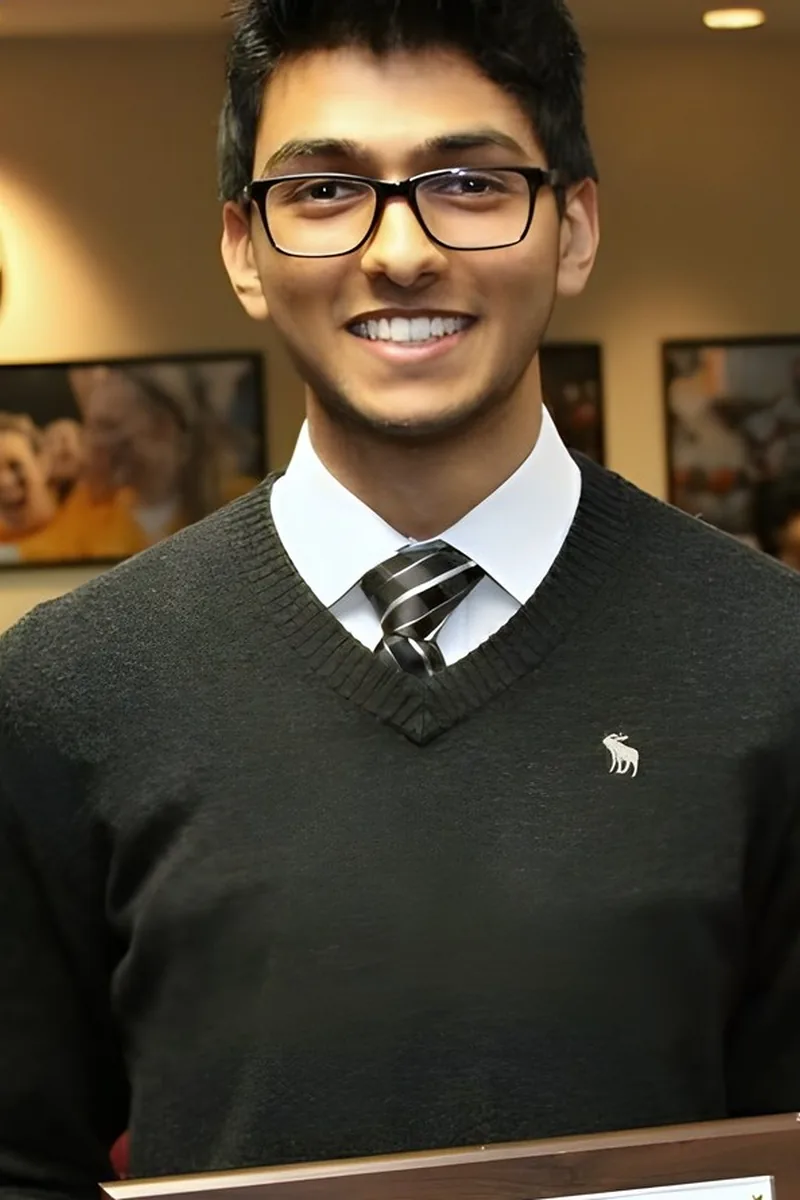
Molecular biophysics at Brown means Srini is constantly using series approximations and integration techniques to model protein folding dynamics and molecular interactions — BC Calculus isn't a prerequisite he passed, it's a toolkit he reaches for weekly. That active use sharpens how he teaches convergence tests and parametric problems, grounding each in the kind of quantitative reasoning his 1600 SAT and 35 ACT reflect. Rated 4.8 by students.
Environmental engineering graduate work is essentially applied calculus — Kate's thesis work required series approximations for modeling fluid dynamics and integration techniques for analyzing pollutant transport, so BC topics like Taylor polynomials and improper integrals are tools she's used professionally, not just academically. She's particularly good at showing how convergence tests follow a logical decision tree rather than feeling like a random grab bag of techniques. Rated 4.9 by students.
Rachel's 35 ACT and economics coursework at WashU mean she's comfortable with the quantitative reasoning BC demands, though her real edge is in how she breaks down the transition from AB material into BC-specific territory — particularly series convergence and polynomial approximations, where students often memorize tests without understanding what they're actually checking. She approaches each new BC tool by rebuilding the calculus logic underneath it, so topics like the ratio test or integration by parts hold up under exam pressure instead of falling apart.
Engineering physics at Cornell means Daniel is currently neck-deep in the math that BC Calculus builds toward — using series to model oscillating systems, applying integration techniques to energy problems, and solving differential equations that describe real physical behavior. That context gives him a clear picture of which BC skills actually matter and how to teach something like the ratio test or parametric arc length by grounding it in the AB intuition a student already carries. Rated 5.0 by students.
Teaching discrete math at Penn while finishing a CS master's means Keenan lives in the world of rigorous mathematical argument — the same mindset that separates students who survive BC from those who actually understand it, especially when series convergence proofs and error bound reasoning demand more than mechanical computation. His philosophy undergraduate training adds an unusual edge: he treats each BC concept like a logical claim that needs justification, which makes topics like the Lagrange remainder or comparison tests feel structured rather than arbitrary. Rated 5.0 by students.
Having worked as a teaching assistant for multiple engineering courses at Washington University in St. Louis, Ava spent hours breaking down the calculus that trips students up most — and BC's jump into series convergence, parametric derivatives, and advanced integration techniques is exactly the material she kept revisiting with struggling engineers. Her dual degree in mechanical and energy engineering means she's applied Taylor expansions and improper integrals to real thermodynamic and fluid systems, giving her a concrete vocabulary for explaining why these tools matter beyond the AP exam.
BC Calculus layers convergence tests, parametric equations, and polar curves on top of an already demanding AB foundation, and keeping all of it organized is half the battle. Tessa's approach is to unpack each new topic by tying it back to core ideas students already understand — showing, for instance, how Taylor series are really just an extension of local linearity. She's a math major at Yale with a 4.9 client rating.
Biomedical engineering at Yale means Jonathan lives in the calculus that comes after most students stop — modeling biological systems with differential equations, approximating nonlinear tissue behavior with series expansions, running convergence analysis on numerical simulations. That daily exposure makes him especially effective at teaching the logic behind the ratio and integral tests, because he's seen firsthand what happens when you pick the wrong one. Holds a 5.0 rating.
Kenan's mathematical economics training means he's comfortable with the kinds of series, parametric equations, and integration techniques that make BC a step up from AB. He walks through convergence tests and Taylor polynomials by connecting each tool to the problem it was invented to solve, which keeps the logic clear even when the notation gets dense.
Most BC students can mechanically apply a ratio test or crank out a Taylor expansion — where they get stuck is understanding *when* each tool is the right one and *why* it works. Alexander, an applied math major at Rice with a 1580 SAT, approaches BC as a problem-solving course rather than a formula catalog, building each new concept from the reasoning students already developed in AB. That mindset is especially useful for the trickier BC territory — convergence arguments, error bounds, and parametric integration — where intuition matters more than memorization.
Justin's PhD work in Computational and Applied Mathematics at the University of Chicago means he doesn't just teach Taylor series and convergence — he builds on them daily in research involving image processing and climate modeling, where approximation methods have to actually hold up under real conditions. That perspective sharpens how he explains error bounds and series manipulation, grounding each technique in why it matters rather than just how to execute it on an exam. Rated 5.0 by students.
Testimonials
Because the right AP Calculus BC tutor makes all the difference.
Average Session Rating – Based on 3.4M Learner Ratings
Practice AP Calculus BC
Free practice tests, flashcards, and AI tutoring for AP Calculus BC
Nearby AP Calculus BC Tutors
Other Baton Rouge Tutors
Related Math Tutors in Baton Rouge
Frequently Asked Questions
AP Calculus BC covers all topics from AP Calculus AB plus additional material on sequences, series, and parametric equations. The course focuses on limits, derivatives, integrals, differential equations, and applications of calculus. For students in Baton Rouge, understanding this broader scope is important since BC is considered the more advanced exam and opens doors to higher-level college mathematics courses.
Yes, AP Calculus BC is more challenging than AB because it covers additional topics and requires deeper conceptual understanding. The extra content on series and parametric equations often trips up students who haven't mastered the AB fundamentals. Personalized 1-on-1 instruction helps you identify gaps early and build a strong foundation before tackling the advanced topics, so you're not playing catch-up as the course progresses.
A score of 3 or higher is considered "passing" and earns college credit at most universities, though many selective schools prefer a 4 or 5. The national average hovers around 2.8, so aiming for a 3 puts you above average. Your realistic target depends on your current math level and college goals—tutors can help you set achievable milestones and track progress through practice tests throughout the year.
Students typically struggle most with understanding when to apply different techniques (derivatives vs. integrals, for example), managing time during the exam, and mastering series convergence tests. Many also find the transition from concrete algebra to abstract calculus concepts difficult. Working with a tutor lets you slow down on tricky concepts, practice problem-solving strategies, and build the confidence needed to handle unfamiliar question formats on test day.
Most students benefit from taking 4–6 full-length practice tests spaced throughout their preparation, starting several months before the May exam. This gives you time to identify weak areas, adjust your study plan, and build test-taking stamina. Tutors can help you analyze your practice test results to pinpoint exactly which topics or question types need more work, making your study time much more efficient.
The exam has two sections: a no-calculator portion (55 minutes for 30 questions) and a calculator portion (50 minutes for 15 questions). Pacing is critical—you need roughly 1.5–2 minutes per multiple-choice question and 10–15 minutes per free-response question. Practice tests help you develop a rhythm, and tutors can teach you to recognize which problems to tackle first, when to skip and return, and how to avoid time-wasting mistakes.
Look for tutors with strong mathematics backgrounds—ideally those who've taught or tutored AP Calculus, scored well on the exam themselves, or have advanced degrees in math or a related field. They should understand the College Board's curriculum framework and be familiar with how the exam is scored. Varsity Tutors connects you with expert tutors who have proven experience helping students master AP Calculus BC and improve their scores.
Your first session typically includes an assessment of your current calculus knowledge, a discussion of your goals (score target, college plans), and identification of your strongest and weakest areas. This diagnostic helps your tutor create a personalized study plan tailored to your needs. You'll also get a sense of the tutor's teaching style and can ask questions about pacing, resources, and how often you should meet to stay on track for exam day.
Let’s find your perfect tutor
Answer a few quick questions. We’ll recommend the right plan and match you with a top 5% tutor.