Award-Winning SAT Tutors
serving Jacksonville, FL
SAT
Tutors in Jacksonville
Private 1-on-1 tutoring, weekly live classes for academic support, test prep & enrichment, practice tests and diagnostics, and more to elevate grades and test scores.
Based on 3.4M Learner Ratings
UniversitiesSchools & Universities
DeliveredHours Delivered
ProficiencyGrowth in Proficiency
Who will be getting tutoring?
No obligation. Takes ~1 minute.
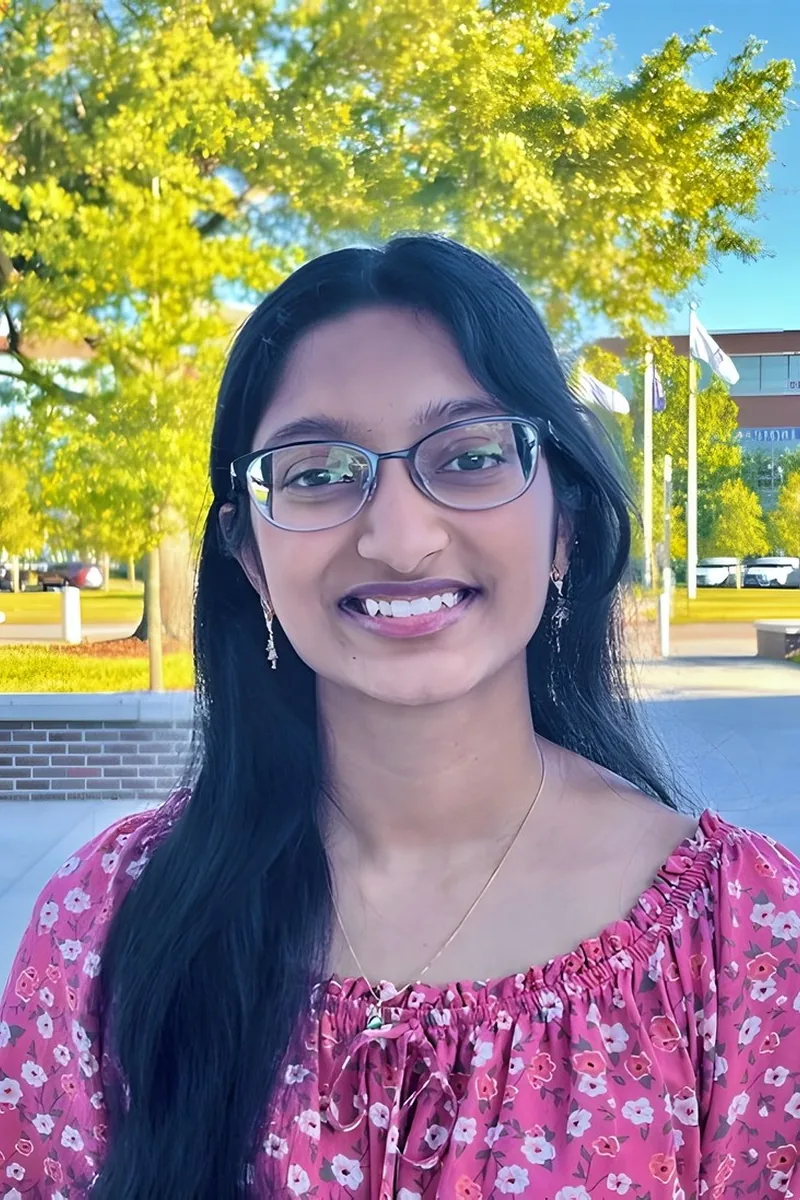
Chemical engineering coursework at Johns Hopkins means Joshitha lives in the kind of quantitative problem-solving the SAT Math section demands — from algebraic modeling to data interpretation under time pressure. But her 1580 composite also signals serious verbal chops: she teaches students to spot the structural logic behind evidence-based reading questions and grammar traps on the Writing section, not just guess by feel. Rated 5.0 by students.

The Burnett Medical Scholars Program at UCF demands the same kind of disciplined, high-stakes test performance that Priya now teaches for the SAT — she scored a 1500 and knows how to turn content knowledge into points under time pressure. Her science-heavy coursework in biotechnology gives her a natural advantage on the math and data-interpretation questions, while her breadth across literature and essay editing means the Reading and Writing sections get equal attention. Rated 4.8 by students.
Scoring a 1540 on the SAT means Anushree knows exactly where points hide — in the evidence-based reading passages that trip up strong readers and in the no-calculator math questions that reward algebraic fluency over brute-force computation. Her dual background in biology and economics at the University of Florida sharpened both the quantitative reasoning and close-reading skills the SAT tests across every section. She breaks down each question type with specific strategies so students stop second-guessing themselves and start finishing sections with time to spare.
UChicago's pre-med curriculum in biology and psychology trained Emerson to read dense, data-heavy passages quickly and extract exactly what matters — the same skill that drives the SAT's evidence-based reading questions. He scored a 1560 and teaches students to approach each section methodically, from identifying grammar patterns in Writing and Language to translating word problems into clean algebraic setups on the Math side. Rated 5.0 by students.
Daniel scored a 1480 on the SAT and breaks the exam into manageable systems — from pacing strategies on the Reading section to recognizing the grammar patterns that repeat across every Writing and Language passage. His dual background in accounting and finance means the Math section's data interpretation and word problems are second nature to him. Rated 4.9 by students, he brings a structured, methodical approach to test day preparation.
Danielle scored a 1460 on the SAT and tutors both the Reading and Math sections, giving her a cross-section view of how the test actually works — from evidence-based passage questions to algebra and data analysis problems. She breaks down each section's question patterns so students learn to recognize what the College Board is really asking before they even look at the answer choices.
Nicholas's genetics PhD required constant statistical analysis and data interpretation — exactly the quantitative reasoning skills that drive the harder SAT Math questions involving scatterplots, tables, and experimental design. His 1530 SAT score confirms he can also navigate the verbal side, where his scientific reading habits translate into efficient strategies for parsing dense evidence-based passages. Rated 4.8 by students.
Covering both the Math and Reading & Writing sections of the SAT requires a tutor comfortable shifting between quantitative reasoning and evidence-based reading strategies. Harshadha's science training at the University of Florida sharpens both skill sets — she regularly interprets dense texts and works through complex data. She teaches students to manage pacing and identify trap answers so test day feels more like a familiar routine than a high-pressure event.
Having recently navigated the SAT himself — scoring a 1510 — Harrison knows which question types eat up time and which shortcuts actually hold up under pressure. He covers both sides of the exam, drawing on his broad humanities and math background to coach students through evidence-based reading traps and the algebra-heavy math content alike. Rated 5.0 by students.
Daniel's chemistry degree from the Naval Academy built the kind of disciplined, systematic problem-solving that pays off on SAT Math — particularly on multi-step word problems and data analysis questions where sloppy setup costs easy points. He scored a 1420 on the SAT himself and uses that experience to teach pacing strategies across both sections, showing students how to identify which questions to attack first and which to flag and revisit. Rated 4.8 by students.
Scoring a 1430 on the SAT herself, Krina knows which question types trip students up most — from evidence-based reading pairs to no-calculator grid-ins that test number sense under pressure. She breaks down each section's timing strategy so students stop running out of clock on the last passage or rushing through word problems. Rated 5.0 by students, she pairs her own recent test-taking experience with a structured approach to practice that targets weak spots first.
I graduated from University of North Florida with a Bachelor's Degree in English and a minor in Creative Writing. My tutoring strengths are English/Writing, Math through Algebra 2, chemistry, and SAT/ACT Test Prep. I believe that students need one-on-one attention in order to succeed and would love to provide that for students to help them learn in the way that works best for them. I have been tutoring algebra/geometry, English, and chemistry for 8 years now. I pride myself in helping students to improve their grades in classes they are struggling with.
Leslie's Classics degree means she spent years doing exactly what the SAT's Evidence-Based Reading section demands — close reading of dense, argument-driven texts and picking apart how authors build their claims. That training, combined with her 1410 SAT score and strong command of grammar and rhetoric from studying Latin, gives her a practical toolkit for both the Reading and Writing sections. Rated 4.9 by students.
Perry's dual science degrees from Rice University built the exact quantitative reasoning and data interpretation skills that dominate the SAT Math section, while his medical humanities minor sharpened the close-reading habits needed for Evidence-Based Reading and Writing. He scored a 1570 on the SAT and knows which algebra shortcuts and passage-analysis techniques make the biggest difference under time pressure. Rated 5.0 by students.
Scoring a 1520 on the SAT takes more than content knowledge — it requires knowing when to slow down on tricky evidence-based reading questions and when to trust your instincts on the math no-calculator section. Vansh pairs that firsthand experience with an aerospace engineering background at Georgia Tech, which means the quantitative reasoning and data analysis portions are second nature to him. Rated 5.0 by students, he breaks each section into repeatable strategies that make test day feel predictable.
Six years of SAT prep at the Boys and Girls Club means Viraj has seen nearly every way a student can lose points — and built targeted strategies for each section to prevent it. His own 1560 composite came from the same systematic approach he teaches: breaking down Reading passages by argument structure, tackling Writing questions with grammar pattern recognition, and using back-solving techniques in Math to save time. He's currently a second-year medical student at the University of Miami, but standardized test strategy remains one of his longest-running specialties.
A 1550 SAT scorer, Ari breaks the exam into learnable systems — from identifying trap answers in Evidence-Based Reading to recognizing the handful of grammar rules that account for most Writing section questions. His dual background in philosophy and economics at Columbia means he's equally sharp on the logical reasoning behind reading passages and the quantitative problem-solving the Math section demands. He also spent the past year tutoring English and math near campus, so he knows how to translate test strategy into language that actually sticks.
Harvard's CS and Applied Math curriculum trains exactly the kind of structured problem-solving that the SAT rewards — and Derek applies that mindset across both sections, from algebraic modeling and data analysis on the Math side to logical elimination on Evidence-Based Reading questions. He scored a 1550 and knows where high-scorers still leave points on the table, particularly on no-calculator algebra traps and command-of-evidence pairs. Rated 4.9 by students.
What separates a 1400 from a 1530 on the SAT often comes down to avoiding the traps you don't realize you're falling into — and Lance, who scored a 1530 himself, knows exactly where those traps sit in both the math and verbal sections. His triple-major background in mathematics, computer science, and chemistry means the quantitative reasoning side is automatic, freeing him to spend most of his prep time on the reading and writing strategies that push scores from good to great. Years of leading classes independently as a TA also trained him to explain concepts multiple ways until the right one clicks.
What sets Michael apart for SAT prep is genuine fluency across both halves of the exam — his Fine Arts and Global Studies background built the close-reading and analytical writing skills that drive the verbal sections, while a 1590 SAT score confirms he's equally sharp on the math side. He teaches students to spot the recurring grammar traps in Writing & Language and to translate word problems into clean algebraic setups, connecting both skills into a unified test-day strategy.
Princeton's engineering curriculum demands the same kind of precise, efficient problem-solving that separates a good SAT score from a great one — Nicolas scored a 1580 and knows exactly where those last points hide, particularly in the math section's multi-step word problems and data analysis questions. He also coaches the verbal side by teaching students to trace argument structure through dense passages, a skill his literature and essay work keeps sharp. Rated 5.0 by students.
Scoring a 1550 on the SAT takes more than content knowledge — it takes knowing which wrong-answer traps the College Board loves to set and how to manage pacing across reading, writing, and math sections. Veena's science background sharpens her approach to the evidence-based reading questions, where she teaches students to treat passages like data and eliminate answers that aren't directly supported. Rated 5.0 by students, she brings the same precision to math strategy, especially on the no-calculator section where algebraic fluency matters most.
Penn's Critical Writing Department certified Jessica as a writing tutor before she'd finished freshman year — an unusual distinction that reflects how naturally she dissects argument structure, a skill that maps directly onto the SAT's Evidence-Based Reading and Writing sections. Her 1540 SAT score and medical school training add rigorous data interpretation chops for the math side, where she teaches students to translate word problems into solvable setups quickly. Rated 4.8 by students.
A 1590 SAT scorer, Siri knows the difference between understanding the test and understanding the content — and teaches both. She breaks down the reading section's evidence-pair questions and the math section's word-problem traps with repeatable strategies that turn guessing into confident elimination. Her biology-trained eye for detail carries over to catching the subtle grammar distinctions that separate a 700 from a 780 on the verbal side.
Most SAT prep treats math and verbal as two separate worlds, but Anthony's dual master's in math education and his philosophy training let him teach the whole exam as one connected reasoning exercise — algebraic problem-solving and evidence-based reading both come down to eliminating what doesn't follow logically. He scored a 1430 on the SAT himself and builds each session around the specific question types a student keeps missing, whether that's passport-to-advanced-math problems or command-of-evidence pairs. His state teaching certification means he knows how to structure a study plan that actually holds up under test-day pressure.
Most SAT points are lost not to hard questions but to predictable traps — and Max teaches students to spot those traps by drilling the specific patterns that repeat across both the Math and Reading sections. His 1550 SAT score came from treating the test as a strategy game, and his history teaching background means he's especially sharp at coaching students through the evidence-based reading questions where argument structure matters more than speed. Rated 4.7 by students.
Studying computer science and studio art simultaneously means Parker's brain toggles between logical precision and creative problem-solving — exactly the mental flexibility the SAT demands when shifting from algebraic reasoning to evidence-based reading within the same sitting. He scored a perfect 1600 and uses that experience to teach students how to spot the structural patterns behind both math and verbal questions, turning unfamiliar prompts into recognizable frameworks. Rated 5.0 by students.
Most SAT points are lost not on hard questions but on misread ones — and Olivia's American Studies training, which required pulling arguments from dense historical and cultural texts, built exactly the close-reading instincts the Evidence-Based Reading section rewards. She scored a 1560 on the SAT and uses that experience to teach students how to spot rhetorical traps in the Writing and Language section and translate word problems into solvable setups on the Math side.
Michelle's neuroscience studies at Duke trained her to read dense, argument-heavy passages quickly and extract key claims — exactly the skill that separates a good SAT Reading score from a great one. She scored a 1510 and knows the verbal side of the exam inside out, from evidence-based question pairs to the grammar and rhetoric traps in the Writing section. Her extensive work with college essays and IB Extended Essays also means she can teach the kind of precise, structured reading that transfers across every passage type on test day.
Civil engineering coursework at UF means Cavan lives in the kind of algebra, data analysis, and problem-solving that dominates SAT Math — he teaches students to translate word problems into equations quickly and avoid the calculation traps the College Board builds into no-calculator questions. His IB diploma background also sharpened the close-reading and evidence-evaluation skills that carry over to the Reading and Writing sections. Holds a 1500 SAT score and a 5.0 tutoring rating.
Medical school entrance exams demand the same core skills the SAT tests — fast, accurate reading under pressure and clean algebraic problem-solving — and Kaitlyn has been building both since scoring a 1500 on the SAT herself. Her biology background makes her especially sharp on the data interpretation and science-adjacent passages that appear in the Reading section, while her math fluency covers everything from heart-of-algebra questions to passport-to-advanced-math traps. Rated 4.8 by students.
Biology majors don't always seem like natural SAT tutors, but Michelle's science training built exactly the kind of precise reading and data interpretation skills that the SAT rewards — parsing dense passages, pulling meaning from graphs, and working through multi-step math without shortcuts. She scored a 1510 and knows how to translate that analytical rigor into repeatable strategies for both the Reading and Math sections. Rated 4.9 by students.
Studying both neuroscience and computer science at Duke trained Ankit to toggle between dense analytical reading and quantitative problem-solving — exactly the mental shift the SAT demands between its verbal and math sections. He scored a 1580 on the exam and uses that experience to teach students specific pacing tactics and pattern recognition for the question types that eat up the most time. Rated 4.8 by students.
What sets Karl apart in SAT prep is his dual comfort with both the verbal and math sides of the exam — his music education training sharpens the analytical reading and pattern recognition that drive the Evidence-Based Reading and Writing sections, while his math coursework covers the algebra and data analysis the test demands. He scored a 1550, so he knows firsthand how pacing and strategy decisions in each section add up to a strong composite. His approach emphasizes teaching students to spot the recurring question structures the SAT relies on rather than grinding through problems without a framework.
My tutoring sessions are interactive, patient, and highly personalized. I don't believe in a one-size-fits-all methodeach student learns differently, so I adapt my approach to match their individual pace, goals, and learning style. I focus on helping students truly understand the why behind each concept, not just memorize formulas or shortcuts. Together, we work step-by-step through problems, discussing reasoning, strategy, and underlying principles until everything clicks. My goal is to build lasting confidence and clarity. Whether a student is catching up, aiming to excel, or just trying to feel more comfortable with the material, I create a supportive environment where they can ask questions freely, think critically, and stay engaged. I also believe in strong communicationkeeping parents informed and helping students take ownership of their learning. Above all, I want my students to leave each session feeling capable, confident, and genuinely connected to what they're learning.
Studying human biology at Harvard sharpened the kind of dual-skill thinking the SAT demands — precise quantitative reasoning on the Math section and careful evidence-based reading on the verbal side. Destiny scored a 1480 on the SAT and uses that experience to teach students how to spot the structural patterns behind both grammar questions and multi-step algebra problems. Rated 5.0 by students.
Most SAT prep treats math and verbal as two separate worlds, but Dalila's math degree and her experience teaching Spanish, literature, and essay writing mean she coaches both sides of the exam with equal depth — from algebraic problem-solving and data analysis to passage structure and grammar rules. She scored a 1520 on the SAT herself and uses that familiarity to pinpoint the specific question patterns where students consistently leave points on the table.
I am a National Merit awardee, and a recent USF Graduate with a Dual B.A. with Honors in Philosophy and History, both of which I enjoy thoroughly. My job is to make the material as easy to understand for you as it is for me. I have done this by mastering conversational Socratic ask-and-answer methodology to ensure my students attain the capacity to come to the right answers on their own. Additionally, I have invented multiple general tactics and even detailed strategies pertinent to specific question types, with the ability to translate the above to all learning styles including neurodivergent ones -particularly ADHD and anxiety which I myself have- to radically and adaptably simplify the exam for students as per their personal learning aptitudes.
Computer engineering coursework at the University of Florida keeps Veronica sharp on the algebra, data analysis, and problem-solving that dominate the SAT Math section, and her 1500 SAT score shows she can execute under test-day pressure. On the verbal side, she draws on her strengths in literature and grammar to teach students how to spot rhetorical patterns and eliminate wrong answers efficiently across the Reading and Writing modules.
Scoring a 1470 on the SAT while coming from a social science background means Lia had to master both the verbal reasoning and the math sections independently — and she knows what it takes to grind out points in each. She breaks down the Reading section by question type (evidence pairs, vocabulary in context, data interpretation) and drills the Math section's most common traps around systems of equations and quadratic modeling. Rated 4.8 by students, she brings a certified math teacher's precision to the quantitative side and a sociology graduate's analytical eye to the evidence-based reading passages.
Testimonials
Because the right SAT tutor makes all the difference.
Average Session Rating – Based on 3.4M Learner Ratings
Practice SAT
Free practice tests, flashcards, and AI tutoring for SAT
Nearby SAT Tutors
Other Jacksonville Tutors
Related Test Prep Tutors in Jacksonville
Frequently Asked Questions
For students in Jacksonville aiming at Florida's flagship universities, score targets vary by school. University of Florida typically expects 1330-1470, Florida State around 1230-1370, and University of Miami 1310-1460. A score of 1200+ puts you in the top 25% nationally and opens doors to strong state schools, while 1350+ (top 10%) makes you competitive for UF and UM. Keep in mind that Bright Futures Scholarship eligibility in Florida also ties to SAT performance, so knowing your target score early helps you plan accordingly.
Most students see meaningful improvements of 100-200 points with structured tutoring and consistent practice, though the amount depends on your starting score and effort level. Students starting around 1000 often reach 1150-1200 with 8-12 weeks of targeted work, while those already at 1200+ may gain 50-150 points by addressing specific weak areas. The key is identifying which sections drain your score most—whether that's Reading comprehension speed, Writing grammar patterns, or Math problem-solving—and building targeted strategies around those challenges.
Ideally, students begin SAT prep during the spring of junior year, giving 4-6 months before taking the test in the fall of senior year. This timeline allows you to take a diagnostic test, identify weak areas, build skills gradually, and potentially retake if needed before college application deadlines. Starting earlier (winter of junior year) is beneficial if you're aiming for highly competitive schools or want multiple test attempts, while some students wait until summer before senior year if they're already strong test-takers.
The 65-minute Reading section with 52 questions requires strategic pacing—most students benefit from spending 12-13 minutes per passage and question set. Common time-drains include re-reading passages repeatedly and overthinking answer choices; instead, focus on active reading to identify main ideas on the first pass, then reference the text for evidence-based questions. Practicing with a timer and learning to skip difficult questions initially, then returning with fresh eyes, helps many students complete all questions without rushing through the final passage.
Multi-step problems on the SAT (especially in the 55-minute calculator section) require breaking complex scenarios into smaller, manageable pieces. Start by clearly identifying what the question asks for, write out your setup before calculating, and check that your answer makes logical sense in context—many students catch errors this way. Practicing data interpretation from graphs and tables separately, then combining those skills with algebra, helps you build confidence in problems that layer multiple concepts together.
Both tests are widely accepted by Florida colleges, though the SAT's evidence-based reading format aligns well with how Florida schools evaluate critical thinking. The SAT is slightly more common among top-tier Florida universities, but your choice should depend on your strengths: if you prefer grammar and punctuation patterns, SAT Writing & Language may suit you better, while the ACT's science reasoning section appeals to some students. Many Jacksonville students take both tests to see which score is stronger, since colleges typically consider your best result.
SAT vocabulary questions test your ability to understand word meaning from surrounding context, not memorize obscure words—the key is reading the full sentence and paragraph to determine how the word functions. Cover the answer choices first and predict what type of word (positive, negative, neutral) fits the blank, then match your prediction to the options. Practicing this skill with real SAT passages helps you recognize patterns in how the test uses context clues, and you'll find many questions become much easier once you stop overthinking and trust the text itself.
Most students benefit from taking the SAT 2-3 times: an initial attempt in fall of senior year to assess readiness, then a second attempt after targeted prep on weak areas. A third attempt is worthwhile if you're close to a target score or aiming for highly competitive schools, but diminishing returns typically set in after that. Space attempts at least 2-3 months apart to allow time for meaningful skill-building between tests, and remember that colleges see all your scores, so focus on genuine improvement rather than test-taking frequency.
Let’s find your perfect tutor
Answer a few quick questions. We’ll recommend the right plan and match you with a top 5% tutor.