Award-Winning Latin Tutors
serving Hartford, CT
Latin
Tutors in Hartford
Private 1-on-1 tutoring, weekly live classes for academic support, test prep & enrichment, practice tests and diagnostics, and more to elevate grades and test scores.
Based on 3.4M Learner Ratings
UniversitiesSchools & Universities
DeliveredHours Delivered
ProficiencyGrowth in Proficiency
Who needs tutoring?
No obligation. Takes ~1 minute.
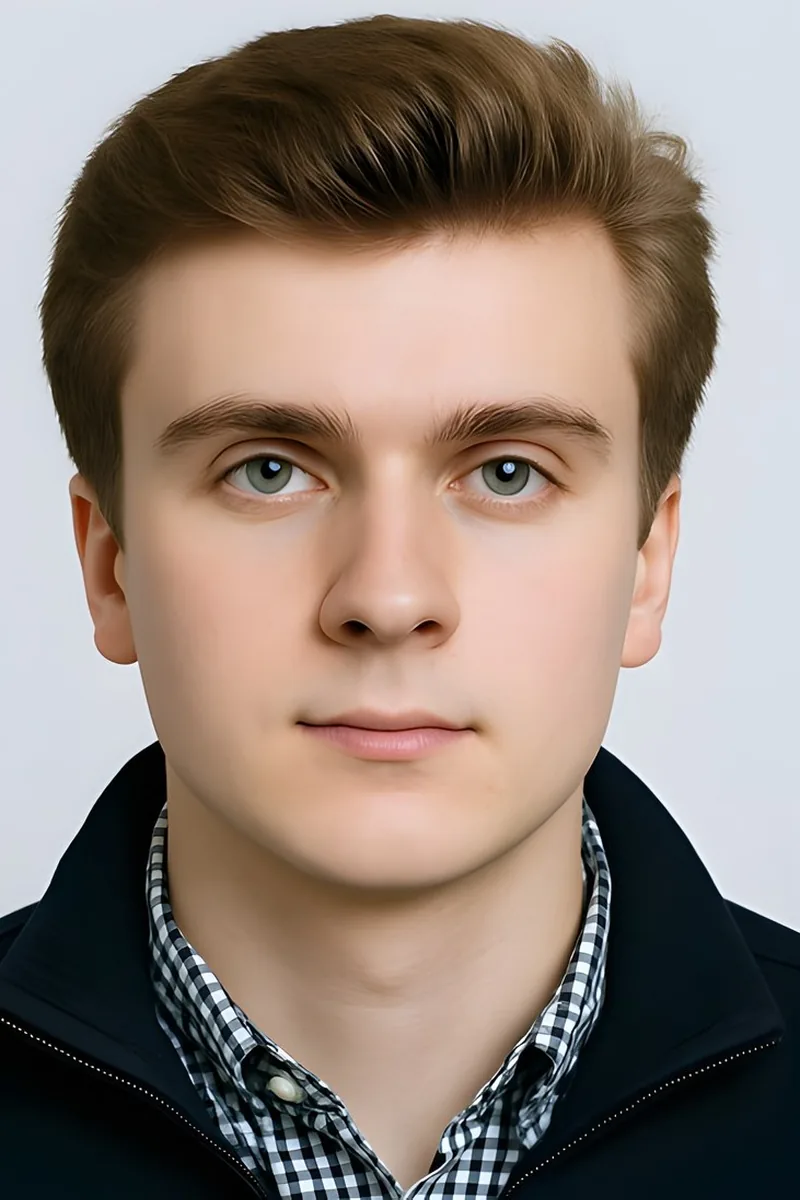
Reading original Latin manuscripts is central to James's paleography work at Yale, giving him a relationship with the language that goes well beyond grammar drills. He breaks down complex constructions — ablative absolutes, indirect discourse, purpose clauses — by connecting them to real passages from Vergil, Caesar, and Cicero so the syntax starts to feel intuitive.
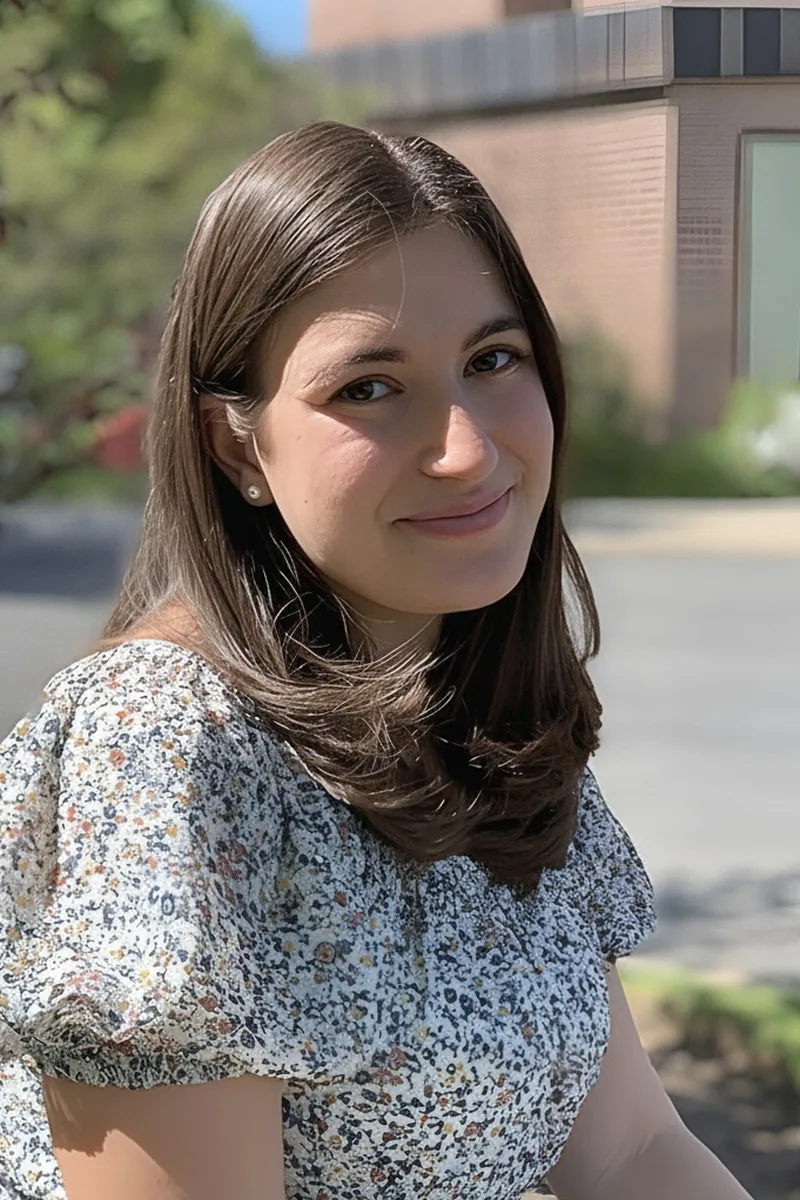
Studying Classics at Yale means Maddie doesn't just translate Latin — she lives inside the language, reading original Roman texts as part of her daily coursework across all four levels and beyond. Her Socratic instinct kicks in during translation work especially: rather than correcting a misidentified subjunctive or misread ablative, she asks targeted questions that lead students to catch the error themselves and internalize the grammar rule behind it.
Between his psychology studies at Yale and his German coursework through level four, Stephen has built the kind of cross-linguistic awareness that makes Latin's grammatical architecture feel less foreign — German's case system in particular maps closely onto Latin's noun declensions. He also prepared for the SAT Subject Test in Latin, which means he's drilled the vocabulary, syntax, and translation speed that classroom exams and standardized assessments both demand.
Having taught Latin across four levels, Joana knows exactly where students stumble — the ablative absolute feels impossible until you see it as a compressed clause, and subjunctive mood clicks once you connect it to specific trigger words. She digs into authors like Vergil and Caesar not just for grammar drills but to show how word order and case endings carry meaning that English translations flatten out.
Claire's Classics degree from Columbia means Latin wasn't a side requirement — it was central to her undergraduate work, from reading original texts to internalizing the grammar that holds them together. She teaches all four levels and brings particular strength to the transition point where students move from memorizing paradigm charts to actually reading connected prose, where recognizing subjunctive mood or an indirect statement in context matters more than reciting forms in isolation.
Biographical Profile: Joseph T Moller, M.A. Joseph Moller earned his B.A. from The Catholic University of America in Latin and Greek where he also studied German and French literature and was awarded a prize For Excellence in Latin. After building beach houses in Rhode Island, in partnership with two friends and starting the New Earth Wood and Stone Company, he began graduate studies at the University of Pennsylvania where he earned an M.A. in Classical Studies in 1977. The son of a mathematics professor and eldest of nine children, he grew up in Washington, DC benefiting from a rigorous Catholic education, first at his local parish school then from seventh grade on at St. Anselm's Abbey School, the city's premier college preparatory school for boys. There he studied Latin for six years, French for five, and Greek for four, and began a life-long love of language study, literature, and linguistics. Married in 1976, to Regina Paliotta, who holds a doctorate in French literature, the couple have five, now grown, children (and three grandchildren) who have continued their parents' dedication to service as teachers, social workers, and therapists. In 1979 after teaching in New England preparatory schools Joseph moved his family to Meriden, CT where he still resides. Together Joseph and Regina founded Transitus House, a family-based residential therapeutic program for adolescents. That center provided milieu therapy, counselling, intensive academic tutoring, experiences in carpentry, gardening and other manual work, and outdoor programs for thirty teenagers over a period of six years. As his own family grew, Joseph transitioned into a career in IT, and Regina into a teaching career at the Academy of Our Lady of Mercy Lauralton Hall that spanned thirty years. Joseph retired after a successful career in systems analysis and technology management in 2007 as an IT Director. He then returned to his first love: teaching, which he continues to this day as tutor in Latin, Greek and English and remedial reading tutor and writing coach. He is currently pursuing a second masters degree in English literature at CCSU, and he continues to enjoy hiking, backpacking and gardening. Statement of Teaching Philosophy Latin Instruction Everyone is capable of learning Latin, and every student can benefit from the study of Latin. Many and immense benefits accrue to students who learn Latin at least to the point of being able to read, if not speak it, with proficiency (I do believe that spoken Latin has its place). Since the unique benefits of Latin are well known through tradition, anecdote, and research, it is not necessary to discuss them here. It is my belief that the study of Latin is best approached as a cross-curricular subject. Because the Latin language and Roman culture have both had enormous influence on subsequent European and American language, literature, art, and political and social institutions, a full study of Latin requires investigation of all these areas. Learning and Teaching Each student at a given stage of development presents different needs, abilities, and experiences. It is clear then that all students do not learn in the same way and, therefore, teachers must be creative enough to meet each student individually using any of the available methods or styles and adapting them as necessary Although learning is ultimately an individual responsibility and accomplishment, it is best undertaken as an interactive, or in its fullest, as a community activity. Students learn from each other as well as from their teachers. The best model for this remains the question and answer dialogue introduced by Socrates in ancient Athens. There are many tools available to support the study of Latin. Textbooks are only one of them and should not be used in isolation. Visual presentations, dramatic dialogues, even games and crafts, as well as participation in intramural and extramural groups such as the Junior Classical League are all important in the Latin classroom. Assessment Although mastery of the language may be considered the primary standard, a variety of assessments must be used throughout a Latin course so that each student has the opportunity to succeed. In no case should a student be penalized in any way for not mastering material as fast as another. As with any skill, the point is that the skill has been mastered, not how long it took to get there or how many mistakes were made along the way. All assessments should reflect this. It is of the utmost importance that academic expectations be clearly set forth at the beginning of each course, that evaluations be scrupulously objective, frequent, and available to students for timely review. Responsibilities of Teachers The role of teachers is not only to provide knowledge. Teachers must also be facilitators of discussion through productive questioning and encouragement of students= own ideas. While encouraging them to learn from one another, teachers continually learn from their students. The classroom is a community of learners where students cooperate with one another, and willingly share ideas and suggestions Teachers must also ensure that their classroom is a supportive environment conducive to learning and governed by mutual respect. It is essential that behavioral and procedural expectations be set with input from students, clearly and in writing, so that students, parents and teachers can commit to meeting them. These expectations must also acknowledge that all school rules will apply without exception. These expectations set the stage for the expeditious, objective, and respectful handling in accordance with school policies of any disciplinary issues that may arise. It is also the responsibility of teachers to communicate freely and frequently with parents, counselors, and administrators so that all may contribute to building a learning alliance with the student.
As a Classics major at Carleton who aspires to teach high school Latin full-time, Emma has spent years immersed in the language — not just grammar drills, but reading original texts alongside Ancient Greek and the historical contexts that bring both languages to life. She covers all four levels plus AP Latin, and her weekly tutoring at a nearby high school means she's constantly refining how she explains everything from first-year noun declensions to the subjunctive constructions that trip up advanced students.
Few students realize how much Latin overlaps with engineering thinking — every sentence is a system of interlocking parts where case endings, verb forms, and clause boundaries have to be identified and assembled in the right order. June studied Latin through four levels and prepared for the SAT Subject Test in it, giving her fluency with everything from basic noun declensions to reading original texts. Her electrical engineering training at Brown reinforces the same methodical, structure-first approach that makes complex translations manageable.
Charles teaches both Latin 1 and Latin 2 alongside a full slate of English grammar and literature courses, which means he's constantly working at the intersection of Latin's grammatical structures and their echoes in modern English. That dual focus sharpens his ability to walk students through conjugation patterns and case endings by linking them to syntax rules they already use every day. His two years as a high school peer tutor built an instinct for spotting exactly where a translation starts to fall apart.
Studying Classics alongside Physics at Vanderbilt means Dylan reads Latin daily as part of his actual degree work — not as a side interest but as a core discipline. That dual training sharpens his ability to teach grammar as a logical system, walking students through subjunctive constructions, indirect statements, and the kinds of prose passages where precision with every case ending matters.
Spanning Latin through AP level alongside Spanish, Italian, and German, Jamie brings a polyglot's instinct for how Latin's grammar echoes across the language families it shaped — making case endings and conjugation patterns feel like familiar territory rather than abstract rules. His approach leans on comprehensible input and story-driven immersion, so students absorb vocabulary and syntax through context-rich reading rather than isolated memorization. A Master's in Special Education also means he's skilled at adapting pacing and methods to fit how each learner actually processes new material.
Trained in Latin and Italian philology at Palacký University in the Czech Republic, Petra brings a European classical education to a language most American students encounter only through textbooks — she learned Latin as a living system intertwined with Italian, tracing how derivatives and grammatical structures migrated from one language into the other. That dual-language fluency is especially useful for teaching vocabulary roots, verb conjugations, and the way Latin's case system laid the groundwork for Romance language grammar. Rated 4.9 by students.
Biomedical sciences coursework means Sam encounters Latin daily — anatomical nomenclature, pharmacological terms, and disease classifications all trace directly back to the language's vocabulary and word-formation rules. That constant exposure to Latin roots and prefixes in a scientific context gives him a practical angle on teaching vocabulary acquisition, while his SAT verbal preparation (1530 composite) sharpened the grammatical parsing skills that make declensions and sentence structure click.
While Latin isn't Tara's primary subject, her science and medical coursework has given her deep familiarity with Latin roots, prefixes, and terminology that form the backbone of the language. She approaches Latin grammar with the same systematic, pattern-based thinking she uses in her science studies — breaking declensions and conjugations into logical structures rather than rote memorization lists.
Between a history major at Oberlin, a semester at Trinity College Dublin, and time in a maritime studies program steeped in classical navigation texts, Bennett has encountered Latin in the places it actually lived — legal documents, church records, and the scholarly traditions that shaped European history. He brings that context into grammar lessons, connecting declension patterns and verb forms to the real texts where students can see the language doing actual work. Rated 5.0 by students.
Peter's history degree means he's spent years working with primary sources where Latin isn't decorative — it's the language of legal charters, church records, and the political documents that shaped Western civilization. That historical grounding gives him a concrete reason to teach case endings and verb forms: students learn to parse real inscriptions and texts, not just textbook exercises. Rated 4.8 by students.
Danny's music education background puts him in constant contact with Latin — choral repertoire from Renaissance masses to sacred motets is written in it, and understanding the text means understanding the grammar underneath. He teaches Latin 1 through 3 with a focus on how verb forms and noun cases shape meaning in real passages, not just fill-in-the-blank exercises. His 1450 SAT composite reflects the kind of close-reading precision that carries over into translating Latin prose.
Classics majors don't just study Latin — they live in it, and Sarah's undergraduate work means she's spent years translating original texts across genres from poetry to philosophy. She teaches all four levels with particular strength in helping students internalize the subjunctive mood and indirect discourse, two areas where rote memorization fails but understanding the underlying logic pays off.
Testimonials
Because the right Latin tutor makes all the difference.
Average Session Rating – Based on 3.4M Learner Ratings
Nearby Latin Tutors
Other Hartford Tutors
Related Languages Tutors in Hartford
Frequently Asked Questions
Latin builds a strong foundation for English vocabulary and grammar—over 60% of English words have Latin roots. Beyond language skills, Latin develops critical thinking and logical reasoning through translation and textual analysis. For students pursuing medicine, law, or classical studies, Latin proficiency opens doors to advanced coursework and competitive academic opportunities.
Verb conjugation and noun declension are typically the biggest hurdles—Latin's complex inflectional system requires systematic practice to master. Vocabulary retention can also be challenging without consistent reinforcement and contextual learning. Many students struggle with translating from English to Latin (composition) because it requires understanding grammatical relationships rather than just memorizing vocabulary.
Yes. While Latin is primarily a written language, personalized 1-on-1 instruction includes oral reading, pronunciation practice, and conversational Latin exercises that many classroom settings can't provide. Speaking Latin aloud strengthens comprehension and helps students internalize grammar patterns more effectively than silent study alone.
Most Hartford-area schools follow either the Cambridge Latin Course or Ecce Romani series, which emphasize reading comprehension and cultural context alongside grammar. Some advanced programs incorporate authentic Roman texts like Ovid, Cicero, or Livy. Tutors work with whatever curriculum your school uses and can supplement with additional materials to strengthen weak areas.
The first session focuses on understanding your current level, identifying specific challenges (whether it's verb forms, translation strategies, or test preparation), and learning your goals. The tutor will assess your strengths and create a personalized plan—whether you need foundational grammar review, help with upcoming exams, or preparation for advanced Latin coursework.
Absolutely. AP Latin preparation includes intensive work on sight translation, prose composition, and analysis of authentic texts from Virgil's Aeneid and Ovid's Metamorphoses. Tutors focus on time management strategies, common translation pitfalls, and the specific skills tested on the AP exam to help students build confidence and improve scores.
Understanding Roman history, mythology, daily life, and values makes Latin texts more meaningful and memorable. Tutors often weave cultural context into lessons—explaining why certain grammatical structures reflect Roman thinking, or how historical events shaped the literature students are reading. This approach transforms Latin from abstract grammar rules into a living window into an ancient civilization.
Varsity Tutors connects you with expert tutors who specialize in Latin and understand Hartford-area school curricula. Simply tell us your student's current level, specific needs (homework help, test prep, or fluency building), and preferred schedule. We'll match you with a tutor who fits your goals and learning style.
Let’s find your perfect tutor
Answer a few quick questions. We’ll recommend the right plan and match you with a top 5% tutor.