Award-Winning Physics Tutors
serving Chicago, IL
Physics
Tutors in Chicago
Private 1-on-1 tutoring, weekly live classes for academic support, test prep & enrichment, practice tests and diagnostics, and more to elevate grades and test scores.
Based on 3.4M Learner Ratings
UniversitiesSchools & Universities
DeliveredHours Delivered
ProficiencyGrowth in Proficiency
Who needs tutoring?
No obligation. Takes ~1 minute.
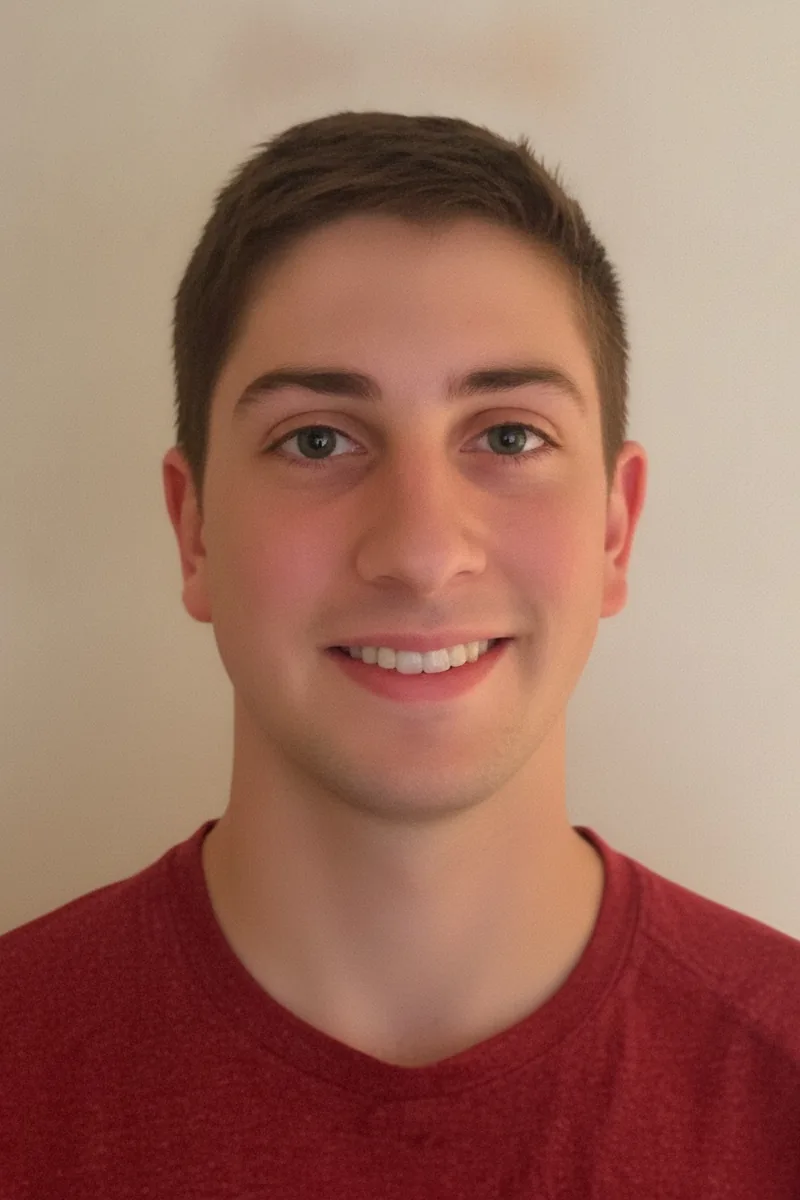
Benjamin's physics teaching goes beyond plugging values into kinematic equations. He digs into free-body diagrams, energy conservation, and vector decomposition by asking students to predict outcomes before calculating — a habit that builds the physical intuition textbooks often skip. His math fluency from studying economics at UChicago means the quantitative side never becomes a bottleneck.
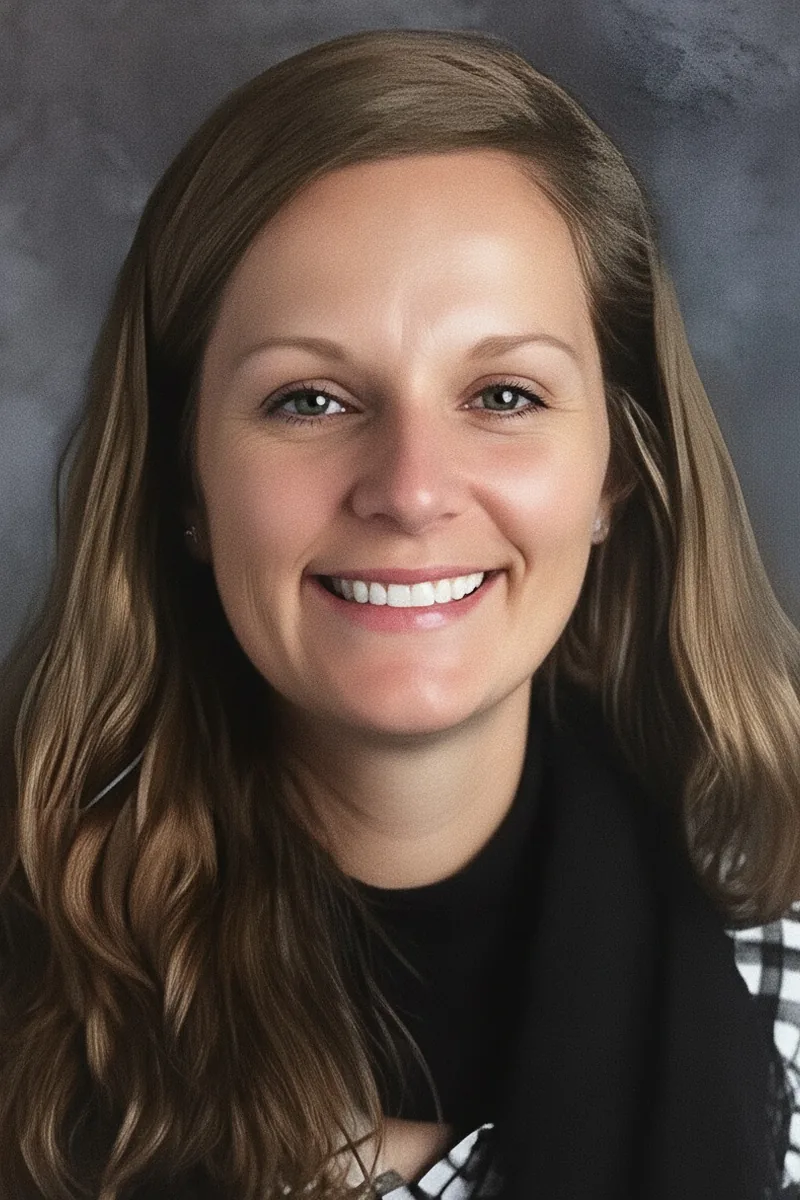
Teaching middle school math in Chicago Public Schools means Elizabeth tackles the foundational algebra and proportional reasoning that physics problems demand — and with a 34 ACT, her quantitative skills extend well beyond the middle school level. She breaks down force and motion problems by anchoring them in concrete, everyday scenarios, making the leap from intuition to equation feel natural for students who might otherwise freeze at the sight of a formula.
A PhD in Physics means Jonathan has spent years not just studying but actively doing physics — designing experiments, deriving equations from first principles, and connecting abstract theory to measurable phenomena. He unpacks topics like Newton's laws, energy conservation, and electromagnetism by building intuition for why the equations take the form they do. Students walk away understanding the physics, not just surviving the problem sets.
I am a student at the University of Chicago majoring in mathematics & comparative human development. I sing in an acapella group, play violin, and on weekends I love to go for bike rides or long runs, see local theater and music performances, and explore the city of Chicago. Through my studies and bike rides and runs, I enjoy working hard and building personalized, step-by-step plans for pursuing the goals I set. Nonetheless, I also believe in the importance of having fun and finding enjoyment in my day-to-day life, which I do through music and geographic exploration. I believe that this enthusiasm, curiosity, and steady work ethic are the keys to achieving goals once thought impossible, and I hope to inspire such a mindset in the people with whom I work.
Amber's biology concentration in genetics and genomics required serious fluency in the physics underlying molecular techniques — from the optics of fluorescence microscopy to the electrostatics driving gel electrophoresis — so she approaches physics as a set of principles with tangible applications rather than isolated formulas. She teaches students to map out what's physically happening in a problem before reaching for equations, building the kind of conceptual clarity that makes kinematics and energy questions feel manageable. Her 32 ACT composite reflects strong quantitative reasoning across subjects.
Engineering is applied physics, and Sparsh spent four years at Vanderbilt living inside force diagrams, energy conservation problems, and wave mechanics as part of his biomedical engineering coursework. He teaches physics by tying every equation to a physical situation students can picture — a ball on a ramp, a circuit in a hospital device, a satellite in orbit. That concrete-first approach turns intimidating formulas into tools that actually make sense.
I am a recent graduate of Princeton University's Mechanical and Aerospace Engineering Department. I am passionate about teaching and mentoring and have done so in multiple capacities over the last four years, including a fellowship during which I taught pre-algebraic math to a group of middle school students from traditionally underserved backgrounds in Saint Paul, MN. I love interacting with students and seeing them grow over the course of their studies. I'm ecstatic at the opportunity to learn alongside them as we venture into educational rabbit holes and uncover key concepts about math, science, and everything else.
I am a graduate of Cornell University's College of Arts and Sciences. I received my Bachelor of Arts in Chemistry with Distinction in 2015. Since graduation, I was a physics/chemistry teacher and soccer coach at a private school in Virginia for a year, where I led the soccer team to an undefeated season. Before teaching and coaching professionally, I was a Teaching Assistant for the Cornell Math and Physics Departments, where I taught many subjects including calculus, mechanics, electromagnetism. Throughout my time at Cornell and as a teacher, I tutored subjects ranging from the SAT to AP Physics and Algebra II, which is where my true talents lie: in small group or one-on-one settings where I can give students the full attention they deserve and tailor my approach specifically to their learning styles. This is why I am now pursuing tutoring as a part-time occupation at Varsity Tutors. I embrace teaching all math and science subjects, especially physics and calculus, at both the college and high school level and will go above and beyond to make sure all of my students succeed, according to their definition of success. In my spare time, I enjoy playing league soccer, basketball, tennis and guitar, and also like to travel and see as much of the world as I can.
Evan's statistics graduate work gives him a quantitative fluency that translates directly to physics — particularly in mechanics and electromagnetism, where setting up the right equation from a word problem is half the battle. He breaks down force diagrams and energy conservation problems into clear, repeatable steps so the logic behind each solution becomes obvious.
Pre-dental coursework at UIC puts Kheya through the same mechanics, energy, and wave problems that define introductory physics — and her 34 ACT confirms she handles the quantitative reasoning these topics demand. She slows problems down deliberately, diagramming each scenario and working through practice variations until the underlying logic sticks rather than just the formula.
Gabriel's philosophy training actually translates well to physics problem-solving — breaking a complex argument into premises and conclusions isn't far from decomposing a multi-step mechanics problem into free-body diagrams and conservation laws. He teaches both calculus and physics, so when a student's real stumbling block turns out to be the math underneath a torque or projectile problem, he catches it immediately. Rated 4.7 by students.
Three associates of science degrees mean Felix has taken the full introductory physics sequence — mechanics, electricity, and waves — multiple times across different programs, giving him an unusual familiarity with where students consistently get stuck on free-body diagrams and energy conservation setups. He pairs that repetition with a 1540 SAT-level quantitative instinct, breaking problems down to their core physical relationships before letting any math take over. Rated 5.0 by students.
Bioengineering grad school is essentially applied physics — fluid dynamics, biomechanics, thermodynamics — so Mark teaches physics concepts from the perspective of someone who solves real problems with them. He's particularly effective at connecting free-body diagrams and energy conservation to the math behind them, since students often understand the concept but freeze when setting up equations. That dual comfort with theory and calculation makes a noticeable difference in problem-solving speed.
Kinematics and free-body diagrams trip students up not because the math is impossibly hard, but because translating a physical scenario into equations requires a specific kind of thinking. Sofia tackles that translation step explicitly — teaching students to sketch the situation, identify forces, and set up equations before touching a calculator. Her biological and physical sciences coursework at UChicago keeps her sharp on everything from Newtonian mechanics to energy conservation.
Engineering is applied physics, and Lee spent two degrees applying it — from Newtonian mechanics and circuit analysis to thermodynamics and wave behavior. He breaks down complex problems by teaching students to draw free-body diagrams and identify which principles actually govern a given scenario before reaching for equations. That problem-solving framework transfers across every unit in a physics course.
Most physics struggles trace back to one thing: students memorize equations without understanding when each one applies. Masooma teaches problem-solving by having students sketch free-body diagrams, identify which forces or energy types are in play, and then choose the right equation — turning word problems into a repeatable process. She covers everything from kinematics and Newton's laws through electricity and waves across her tutoring practice.
Thomas earned his B.S. in Physics from Notre Dame and is heading into a PhD program in electrical engineering, so the mechanics, electromagnetism, and thermodynamics in introductory physics courses are second nature to him. He tackles problems by teaching students to build a clear physical picture first — drawing force diagrams, identifying conservation laws, choosing coordinate systems — so that the math step feels like a natural follow-through rather than a guessing game. Rated 5.0 by students.
Understanding physics means translating real-world motion, forces, and energy into mathematical language — and then back again. Pal's training in UIC's B.S./M.D. program required rigorous physics coursework, so he can walk through everything from free-body diagrams to wave mechanics with the kind of fluency that comes from applying these principles in a science-heavy curriculum.
Kiara treats physics problems as puzzles that combine reading comprehension with math — identifying what a question is really asking, sketching a diagram, and then choosing the right equation. She spends extra time on the conceptual setup behind topics like kinematics and energy conservation, since getting the logic right makes the calculations almost automatic.
James holds a bachelor's degree in physics and brings that depth to every concept he teaches — from free-body diagrams and Newton's laws through energy conservation and wave mechanics. His approach breaks complex problems into physical intuition first, then translates that intuition into the math, so equations actually mean something.
Morley's strengths are in writing and humanities, not physics — but teaching math, calculus, and science alongside those subjects means he can bridge the gap for students who struggle more with the reading-comprehension side of physics problems than the concepts themselves. He's particularly useful for students who freeze when a long word problem needs to be translated into a clear setup with labeled variables and a governing equation.
Because she tackles physics and chemistry side by side at Princeton, Martina sees the connections between the two that most students miss — how energy conservation in physics maps onto enthalpy in chemistry, or how vector math reappears in molecular geometry. She walks through kinematics, force diagrams, and wave behavior with that interdisciplinary lens, making formulas feel less like isolated recipes.
A neuroscience PhD student at Northwestern, May applies quantitative problem-solving daily in her research — the same skills that underpin kinematics, energy conservation, and electromagnetism in physics. She teaches students to translate word problems into free-body diagrams and equations systematically, so the math becomes a tool for reasoning rather than an obstacle.
A physics degree and a mechanical engineering master's gave Brian two different lenses on the same subject — one theoretical, one applied. He uses both when teaching, connecting Newton's laws or conservation of energy to tangible scenarios so that students internalize the reasoning behind each equation instead of just memorizing formulas. He's rated 5.0 by his students.
I am passionate for the sciences, specifically biology. Tutoring helps me directly engage with students in a way that is both fulfilling for the student and myself.
Kinematics equations, force diagrams, energy conservation — physics demands that students think in models, not just formulas. Ramkumar's science coursework at the University of Chicago gives him a strong handle on translating word problems into free-body diagrams and mathematical relationships that students can actually reason through.
Computer science at Illinois means Owen solves physics problems the way a programmer debugs code — isolating variables, testing edge cases, and building logic step by step through mechanics or electromagnetism scenarios. His 35 ACT and math minor give him the quantitative fluency to tackle the calculus-heavy parts without losing sight of the physical reasoning underneath. Rated 4.9 by students.
Every physics problem is really a modeling problem — translating a messy scenario into a free-body diagram or an energy equation. Kyle spent his civil engineering degree doing exactly that, turning real structures into solvable systems of forces, moments, and constraints. He teaches students to set up problems methodically so the math almost solves itself.
Edward earned his B.S. in Physics from Loyola Chicago and is heading into a chemistry PhD, so he lives at the intersection of theory and experiment. He digs into mechanics, electromagnetism, and thermodynamics by connecting equations to the physical situations they describe — showing students why F=ma isn't just a formula but a complete story about how forces produce motion.
A mechanical engineering degree is essentially a physics degree with applications — Kathryn spent four years solving problems in kinematics, rotational dynamics, energy conservation, and wave mechanics before ever touching an engineering elective. She teaches physics by connecting each principle to tangible, real-world systems so the math feels purposeful rather than abstract.
Kinematics, Newton's laws, energy conservation, and wave behavior all click faster when the person explaining them uses physics as a working language. As a mechanical engineering undergrad, Grant applies these principles in lab and coursework constantly, which means he can translate textbook formulas into intuitive explanations grounded in real systems. He's particularly sharp on connecting free-body diagrams to the math that follows.
Beth's degrees are in languages, not engineering — but her 32 ACT composite reflects genuine math and science fluency, and she tutors physics alongside calculus, trigonometry, and chemistry. She's strongest with students who need someone patient enough to slow down on kinematics or Newton's laws and connect the conceptual reasoning to the algebra step by step.
Having to reason through mechanics and thermodynamics independently — rather than absorbing them instantly in class — gave Julia a mental catalog of the exact spots where physics intuition breaks down, from misreading free-body diagrams to mixing up when to apply conservation of energy versus momentum. She also teaches calculus and engineering, so she can bridge the gap when the math itself becomes the obstacle in a physics problem. Her 34 ACT composite speaks to the kind of precise, cross-disciplinary reasoning that physics demands.
Free-body diagrams and conservation of energy problems become a lot more approachable when someone walks you through the logic step by step instead of jumping straight to equations. Kurt tackles physics by making sure students understand what's physically happening in a scenario before touching a formula — an approach rooted in the same problem-solving instincts he brings to everything from biomechanics to puzzle games.
Studying behavioral neuroscience meant Anastasia spent years applying physics principles — from electrical circuits in neural signaling to the mechanics of force and motion in biomechanics. She brings that applied perspective to Physics tutoring, unpacking kinematics, Newton's laws, and energy conservation through concrete examples that make the math feel purposeful. Students rated her 5.0 across subjects.
Holding a B.S. in Physics, Michael tackles the subject from the inside out — starting with the core principles of Newtonian mechanics, energy conservation, or Maxwell's equations and then showing how every homework problem is just a specific case of those ideas. He also draws on his finance background to make thermodynamics and statistical mechanics feel less abstract by connecting entropy and probability to decision-making models students already understand.
Engineering coursework at Michigan means Zain tackles mechanics, electromagnetism, and thermodynamics problems every semester — and his parallel study of computer science reinforces the structured, step-by-step reasoning that makes multi-concept physics problems manageable. He's especially sharp at connecting real-world scenarios to the underlying principles, so students learn to recognize whether they're dealing with a conservation of energy situation or a net-force problem before ever picking up a pencil. Rated 4.6 by students.
Nathan earned his PhD in Physics from the University of Notre Dame, which means he's spent years not just studying physics but doing it — designing experiments, solving complex problems, and thinking through physical systems from first principles. Whether the topic is kinematics, thermodynamics, or wave behavior, he connects the math to the physical intuition so both sides reinforce each other. That dual fluency makes a real difference when a problem requires more than just plugging into a formula.
My name is Anudeep Mangu, and I hold a Doctorate in Materials Science and Engineering from Stanford University. With almost a decade of tutoring and mentorship experience, I specialize in Physics, particularly in AP Physics C: Electricity and Magnetism. I am also comfortable teaching Algebra and Calculus. My teaching philosophy centers on fostering a deep understanding of concepts by starting with the foundational "why" behind each topic. I believe that connecting complex ideas to students' interests enhances their learning experience. My goal is to create a supportive learning environment where students feel comfortable asking questions and exploring challenging concepts. I am passionate about helping students grasp the principles that underpin our modern world, and I find joy in guiding them through the problem-solving process. In my spare time, I enjoy exploring new technologies and concepts in science, which continually enriches my tutoring approach.
I am also passionate about tutoring Algebra, Geometry, Trigonometry, and Calculus. My teaching style is not set in stone; I understand that everyone learns differently and will try to find a learning method that will suit the student. Next year, I will begin my pursuit of a PhD in Biological Engineering, and I aspire to be an undergraduate professor and researcher. In my free time, I love to play guitar, play pickup basketball, and spend time at the beach.
Testimonials
Because the right Physics tutor makes all the difference.
Average Session Rating – Based on 3.4M Learner Ratings
Practice Physics
Free practice tests, flashcards, and AI tutoring for Physics
Nearby Physics Tutors
Other Chicago Tutors
Related Science Tutors in Chicago
Frequently Asked Questions
Physics can feel disconnected from everyday life, but personalized tutoring helps bridge that gap by connecting theoretical concepts to real-world applications. A tutor can work through problems using concrete examples—like analyzing the physics behind a car collision or how electricity powers your phone—making abstract ideas tangible and memorable. This approach builds genuine understanding rather than memorization, which is essential for success in physics.
Physics curricula in Chicago's 12 school districts generally follow Illinois state standards, covering topics like mechanics (motion, forces, energy), waves and sound, electricity and magnetism, and often thermodynamics. The specific order and depth vary by grade level and school. Varsity Tutors connects you with tutors who understand Chicago's local curriculum requirements and can help you master these topics whether you're in a regular, honors, or AP Physics course.
Yes. Beyond helping with equations and problem sets, tutors work with you on the scientific method, experimental design, data analysis, and lab report writing. Whether you're struggling to interpret results, understand why an experiment worked (or didn't), or communicate your findings clearly, personalized instruction helps develop both your technical skills and scientific reasoning—skills that matter far beyond the classroom.
Chicago students often struggle with balancing equations, understanding vector concepts, converting between units, and visualizing how abstract forces and fields actually work. Many students also find it challenging to apply formulas to new problem types rather than just memorizing procedures. Personalized tutoring addresses these gaps by breaking down difficult concepts, building problem-solving strategies, and helping you recognize patterns across different topics—turning confusion into confidence.
Absolutely. Whether you're taking AP Physics 1, Physics 2, or Physics C, a tutor can help you master the content, develop strong problem-solving strategies, and practice the types of questions that appear on the exam. With Chicago's average student-teacher ratio of 17.7:1, many students benefit from the focused, personalized instruction a tutor provides to strengthen their understanding before the AP exam.
Look for someone with strong subject knowledge who can explain concepts clearly in multiple ways—not just show you how to plug numbers into formulas. The best physics tutors help you visualize abstract concepts, understand the 'why' behind equations, and develop critical thinking skills. Varsity Tutors connects you with tutors who have proven expertise in physics and experience working with students at your level, whether that's introductory physics or advanced coursework.
Start by identifying your specific pain points: Are you struggling with foundational math skills needed for physics? Do you understand concepts but can't apply them to problems? Or do certain topics like circuits or thermodynamics just not click? Once you know where you're stuck, a tutor can build a personalized plan that addresses your gaps. Many students find that even a few sessions focused on the 'why' behind key concepts can transform their entire approach to the subject.
Let’s find your perfect tutor
Answer a few quick questions. We’ll recommend the right plan and match you with a top 5% tutor.