Award-Winning Calculus Tutors
serving New York, NY
Calculus
Tutors in New York
Private 1-on-1 tutoring, weekly live classes for academic support, test prep & enrichment, practice tests and diagnostics, and more to elevate grades and test scores.
Based on 3.4M Learner Ratings
UniversitiesSchools & Universities
DeliveredHours Delivered
ProficiencyGrowth in Proficiency
Who needs tutoring?
No obligation. Takes ~1 minute.
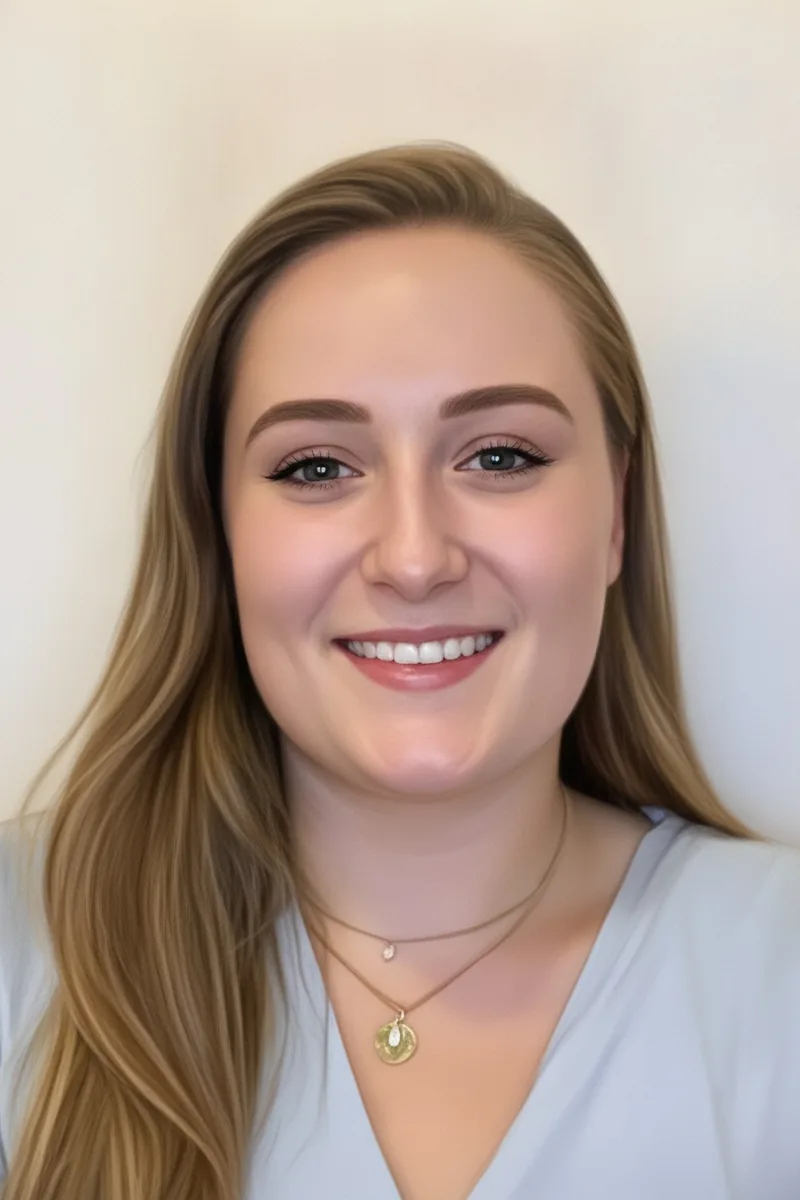
Art history and education aren't the usual path to calculus, and Mimi is straightforward about that — but her 1560 SAT demonstrates real quantitative strength, and her Masters in Education from Harvard means she knows how to design a learning sequence that actually builds understanding. She brings that inquiry-based instinct to early calculus, walking through what a derivative means conceptually before jumping to computation, so the rules feel like they follow logically rather than appearing out of nowhere.
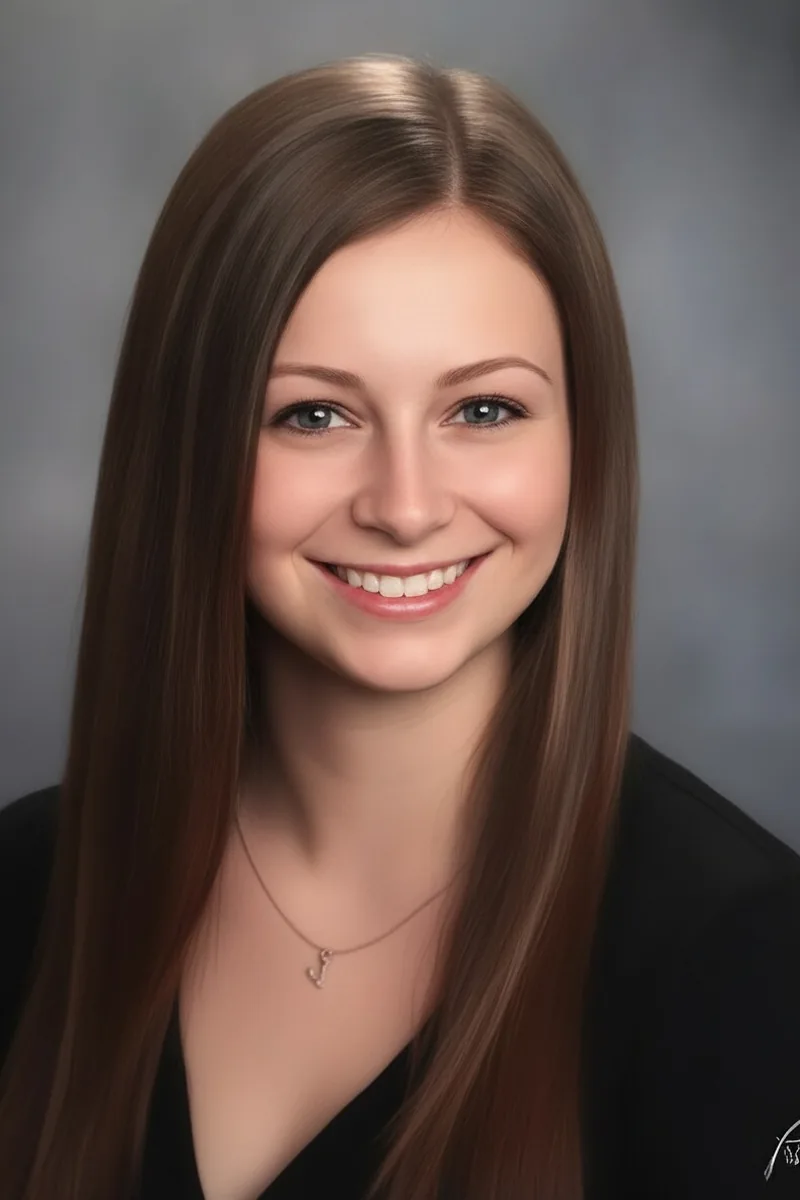
Biostatistics at the master's and doctoral level means Nina uses calculus constantly — integration for probability density functions, derivatives for maximum likelihood estimation, and multivariable chain rules that underpin regression models. That daily fluency lets her teach concepts like Riemann sums or related rates by connecting them to the statistical machinery they actually power. Rated 5.0 by students.
Whether a student is seeing derivatives for the first time or wrestling with integration by parts, Justin connects each calculus concept to a physical picture — velocity from position, area under a curve, rates of change in real systems. That instinct comes from studying both physics and mathematics at Washington University before pursuing a PhD in computational math at the University of Chicago.
From epsilon-delta definitions of limits to integration techniques like substitution and parts, calculus demands both conceptual understanding and mechanical skill. James has tutored college students through calculus courses at Harvard for years, often connecting abstract ideas — like why the chain rule works — back to tangible applications in chemistry and the physical sciences. That dual perspective makes dense material more intuitive.
Psychology and linguistics both lean heavily on statistical modeling — analyzing language acquisition curves, interpreting behavioral data over time — which gave Sherry real exposure to the calculus concepts underlying those methods during her University of Chicago coursework. Her 1600 SAT confirms she can handle rigorous quantitative reasoning, and she brings that same precision to unpacking limits and derivatives for students who need the 'why' explained clearly before the mechanics make sense. Rated 5.0 by students.
Journalism might not scream calculus, but Meghan's 1520 SAT demonstrates she can handle rigorous quantitative work, and her reporting career has trained her to take dense, unfamiliar material and make it clear and logical on deadline. She brings that same skill to early calculus — breaking down what a limit is actually saying or why a derivative describes a rate of change — so the reasoning lands before the formulas pile up.
Comparative literature at Princeton isn't a math degree, so Sash is straightforward that calculus sits outside his primary training. That said, a 1560 SAT demonstrates real quantitative ability, and his literary background — dissecting layered arguments, tracing how one idea builds on another — maps surprisingly well onto walking through the logic of limits and early derivative concepts where understanding the reasoning matters more than grinding through formulas.
An NYU MAT program built around secondary education sharpened Jennifer's ability to break down complex material into manageable steps — a skill that applies even outside her English specialization. Her 1510 SAT confirms solid quantitative reasoning, and she approaches early calculus topics like limits and continuity the way she'd approach a difficult text: slowing down, identifying what each piece means, and building understanding before moving forward.
Three science degrees — including one in chemistry — mean Zosia has actually used calculus the way it was designed to be used: modeling reaction rates, solving kinetics problems, and interpreting how systems change over time. That applied fluency lets her teach derivatives and integrals as tools with purpose, connecting the mechanics of differentiation to the physical and chemical processes where they originate. Rated 4.9 by students.
Biology at Cornell means Josef worked through calculus where it actually lives — modeling enzyme kinetics, analyzing growth curves, and interpreting the rates of change that govern biological systems. His 1530 SAT confirms the quantitative chops to back that up, and he teaches derivatives and integrals by anchoring each concept in the kind of applied problem where the math stops feeling abstract. Rated 5.0 by students.
Electrical engineering at Stanford means Jai didn't just take calculus — he used it daily, from analyzing circuit behavior with differential equations to applying Fourier transforms in signal processing. That depth turns him into someone who can explain not just how to evaluate an integral but why it models the physical quantity it does. His 1590 SAT confirms the quantitative precision he brings to every problem.
A biology degree means Garrett has worked through calculus in contexts like modeling enzyme kinetics and population growth curves, where derivatives and integrals describe how living systems actually behave. His 1530 SAT confirms strong quantitative reasoning, and he teaches the material by tying abstract rules back to the rate-of-change problems he encountered in his science coursework.
Vivian's academic background is in history and the arts, not mathematics, so calculus isn't her deepest subject — but a perfect 36 ACT composite signals serious quantitative ability, and her extensive test-prep experience means she's comfortable walking through the algebraic reasoning that underpins early calculus. She's especially effective at translating dense notation into plain, step-by-step logic, treating a derivative the way she'd treat a difficult passage: pulling it apart until every piece makes sense.
As a course assistant for introductory calculus at Harvard, Richard taught undergraduates how to tackle limits, derivatives, and integrals — not just mechanically, but with real understanding of what's happening graphically and conceptually. That classroom experience means he knows exactly where students get stuck, whether it's the chain rule, related rates, or the Fundamental Theorem of Calculus. He's found math tutoring to be his most rewarding teaching work, and it shows in his approach.
Economics at UChicago means Brian encounters calculus constantly — marginal utility, cost optimization, and elasticity are all derivative problems at their core, so the material isn't abstract theory for him but a daily working tool. His 1560 SAT confirms sharp quantitative reasoning, and his experience as an SAT math TA at Ivy Global gave him practice breaking down multi-step problems into pieces students can follow without losing the thread.
History of Science & Medicine at Yale isn't a typical path to calculus, but Christopher's program traced how mathematical tools like derivatives and integrals were actually developed — Newton's fluxions, Leibniz's notation debates, the slow formalization of limits over centuries. That historical lens gives him a unique way to unpack why calculus works the way it does, connecting each rule to the problem it was originally invented to solve. His 1550 SAT confirms the quantitative chops to back up the conceptual storytelling.
Pre-med coursework at Duke put Camille through the calculus gauntlet — rate-of-change problems in biology, concentration curves in chemistry, and the quantitative reasoning that underpins every science prerequisite. She teaches derivatives and integrals by connecting them back to those science contexts, making the abstraction feel purposeful rather than arbitrary. Rated 5.0 by students.
Pre-med biology at Yale means Tony didn't just take calculus — he used it, working through enzyme kinetics, growth rate models, and the quantitative reasoning that underpins biological research. With medical school ahead at Columbia, he teaches derivatives and integrals as tools with purpose, connecting each concept to the kinds of rate-of-change problems that show up in the sciences. His 1540 SAT confirms the quantitative chops to back it up.
Finance at WashU means Vansh has applied calculus to real problems — marginal revenue, cost optimization, and the derivative-driven reasoning behind portfolio risk models. That quantitative grounding, plus a 35 ACT composite, lets him teach concepts like the chain rule and integration techniques by connecting each step to a business scenario where the math actually drives decisions.
Bioinformatics at Stanford isn't possible without calculus — Matthew's coursework in computational modeling and stem cell dynamics meant living inside derivatives, integrals, and differential equations that describe how biological systems change over time. That background lets him teach calculus through the lens of real problems: growth rates, optimization of experimental parameters, and the math behind how data actually behaves. Rated 4.9 by students.
Limits, derivatives, and integrals each introduce a new way of thinking about change, and rushing past any one of them creates problems later. Ayako walks through each concept with careful attention to the algebra and trigonometry underneath — making sure, for instance, that a student can manipulate a rational expression before tackling its limit. She teaches across the full math sequence, so she knows where calculus students' gaps actually originate.
Michelle's academic background is in the arts and religious studies rather than mathematics, so calculus isn't her deepest subject — but her 35 ACT composite and experience tutoring math from middle school through calculus mean she's walked the full path students take to get there. She's particularly effective at untangling the conceptual shift from algebra to calculus, breaking down what a derivative actually represents before diving into the mechanics of computing one.
Economics at Stanford means Julia has used calculus as a working tool — consumer optimization, marginal analysis, and elasticity calculations all depend on derivatives and integrals applied to real decision-making models. That fluency lets her teach the mechanics of differentiation and integration alongside the intuition for what those operations actually represent. Her 1590 SAT and 4.8 rating confirm she can communicate quantitative ideas clearly.
As a biology major at WashU, Judah uses calculus constantly — modeling population dynamics, interpreting rate-of-change problems in physiology, analyzing area under pharmacokinetic curves. That applied fluency means he can explain limits, derivatives, and integrals through concrete examples that make abstract definitions feel intuitive.
Neurobiology at Harvard doesn't let you skip calculus — Emma's coursework meant working through derivatives and integrals in contexts like modeling action potential propagation, neural signal decay, and enzyme kinetics, so the material is second nature rather than abstract theory. Her economics minor added optimization and marginal analysis on top of that, giving her a practical, application-heavy way of teaching concepts like the chain rule or definite integrals that makes the math feel purposeful.
An MBA means Gerard has worked through the quantitative side of business — optimization problems, marginal analysis, and the derivative logic that underpins economic modeling — giving him a practical handle on core calculus concepts. He connects the mechanics of differentiation and integration back to decision-making frameworks, so the math feels like a tool with a purpose rather than an abstract exercise.
Studying neurobiology at Penn means Natalie has worked through the calculus that underpins computational neuroscience — modeling how action potentials propagate, how synaptic input summates over time, and how neural response curves behave as continuous functions. That coursework gives her a way to teach derivatives and integrals as tools that describe real biological dynamics, not just abstract symbol manipulation.
Philosophy, Politics & Economics as a triple major means Bina has spent serious time with the quantitative modeling side of economics — marginal analysis, optimization problems, and the derivative logic that underpins rational choice theory. She brings that PPE-trained precision to early calculus, walking through each concept as an argument to be constructed rather than a formula to be memorized. Rated 5.0 by students.
Engineering undergrad at Cornell plus a PhD in cancer and cell biology means Kelly didn't just take calculus — she used it daily, from modeling tumor growth kinetics to analyzing rate-dependent biological systems in her research at Memorial Sloan-Kettering. That applied fluency lets her teach derivatives and integrals as tools with real meaning, connecting each concept to the kinds of problems where calculus actually does something. Rated 5.0 by students.
Samantha's degrees are in English and the arts rather than mathematics, so she's honest that calculus isn't her deepest subject — but her 1480 SAT shows she can handle quantitative reasoning, and her broad math tutoring experience means she's comfortable with the algebraic scaffolding that makes or breaks a student's entry into calculus. She's particularly effective at slowing down the transition from pre-calc to calc, making sure concepts like continuity and instantaneous rate of change actually make sense before the notation piles up.
Working at a preparatory school, Moriah has spent years walking students through the quantitative reasoning that standardized tests demand — and that same skill for breaking multi-step problems into manageable pieces applies directly to tackling limits, continuity, and early derivative concepts. Her 1550 SAT confirms she's comfortable with rigorous math, and her teaching instinct is to slow down at the exact moment a new idea (like instantaneous rate of change) starts to feel abstract, making sure the logic lands before moving on. Rated 5.0 by students.
Scoring a 1550 on the SAT proves Lyall can handle rigorous quantitative reasoning, even though his Brown degree is in political science rather than math. His approach to unfamiliar problems — breaking them into logical steps and interrogating each piece before moving forward — comes directly from debate coaching, where building an argument mirrors the sequential logic of working through limits and derivative rules. Rated 5.0 by students.
Economics at Penn means Katherine spent semesters immersed in the calculus that drives the discipline — optimization problems, marginal analysis, and the integral-based reasoning behind consumer and producer surplus. That coursework gives her a fluency with derivatives and their applications that's grounded in solving actual economic models, not just textbook exercises. Her 1550 SAT confirms the quantitative horsepower behind it.
Biology at WashU meant Micah spent semesters applying calculus to real systems — modeling bacterial growth rates, analyzing enzyme kinetics curves, and interpreting the differential equations behind population dynamics. That hands-on scientific context makes him effective at teaching derivatives and integrals as tools that describe how things actually change, not just abstract rules to memorize. His 34 ACT composite confirms the quantitative chops to back it up.
Chelsey's degrees are in Theatre, not mathematics, so she's straightforward that calculus isn't her primary area — but a 35 ACT composite shows she can handle rigorous quantitative reasoning when it counts. She approaches early calculus the way she'd approach a complex script: methodically, breaking each new idea like limits or derivative rules into logical steps that build on what a student already knows from algebra and pre-calc.
Philosophy trains you to follow a chain of logic until it breaks — which is exactly what working through epsilon-delta proofs and limit arguments demands. Nicolas's three philosophy degrees gave him that precision, and his 35 ACT confirms the quantitative chops to back it up. He teaches early calculus by treating each definition as an argument to be understood and tested, not just a formula to accept.
Limits, derivatives, and integrals each layer on top of the last, so a shaky grasp of one concept can snowball quickly. Matthew tackles calculus by making sure students understand the underlying logic — why the chain rule works, what an integral actually represents — so that applying formulas feels like reasoning, not guessing.
Honestly, calculus sits well outside Sarah's core training in English, jazz, and ethnomusicology — but her PhD work at Harvard demands the kind of rigorous analytical thinking that makes early calculus concepts like limits and continuity approachable. She breaks down intimidating notation the same way she'd break down a dense academic text: piece by piece, making sure each logical step is clear before moving forward.
Film and philosophy at Cornell didn't require heavy calculus, so Christian is straightforward that this isn't his deepest subject — but a 1520 SAT confirms he can reason quantitatively, and his philosophy training built the kind of precise, logical thinking that makes unpacking limits and early derivative concepts more intuitive. He treats each new rule like an argument to be understood step by step, not a formula to accept on faith.
Sam's Labor and Industrial Relations program at Cornell involves quantitative coursework — workforce trend modeling, statistical analysis, and the kind of rate-of-change reasoning that underpins derivatives and integrals. That background, paired with a 35 ACT composite, means he can walk through early calculus concepts like limits and differentiation rules with both mathematical fluency and practical context. Rated 5.0 by students.
Testimonials
Because the right Calculus tutor makes all the difference.
Average Session Rating – Based on 3.4M Learner Ratings
Other New York Tutors
Related Math Tutors in New York
Frequently Asked Questions
Students in New York often find limits, derivatives, and related rates problems particularly challenging because they require shifting from purely procedural thinking to understanding the concepts underlying the mathematics. Word problems involving optimization and applications of calculus can also trip up students who haven't yet connected the abstract rules to real-world scenarios. Personalized tutoring helps break down these conceptual barriers by showing how each topic connects to the others and to practical applications.
Varsity Tutors connects you with expert tutors who understand the calculus standards taught across New York's 64 school districts and know how to work with different textbooks and approaches—whether your school uses AP Calculus, IB, or standard honors curriculum. When you reach out, you can specify your school's textbook and the particular topics you're working on, ensuring a good match with a tutor who can support your exact needs.
One-on-one instruction allows tutors to move at your pace, celebrate progress on smaller steps, and help you understand why methods work rather than just memorizing procedures—which reduces anxiety by replacing confusion with clarity. Having a dedicated tutor also means you can ask questions without worrying about keeping up with a class, and you get immediate feedback on your work so mistakes become learning opportunities rather than sources of frustration.
In calculus, showing your work reveals your understanding of each step—not just the final answer—which is essential for partial credit on exams and for catching errors in your reasoning. A tutor can teach you how to organize and present your solutions clearly, explain your reasoning at each stage, and identify where your process breaks down, so you develop stronger problem-solving habits for both homework and tests.
Most students begin seeing meaningful progress within 3–4 weeks of consistent weekly sessions, though this depends on the specific topics, your starting point, and your practice between sessions. If you're working toward an AP or IB exam, starting tutoring 2–3 months in advance gives you time to build conceptual understanding and practice application problems at exam pace.
Memorized formulas work for familiar problems but fall apart on novel applications and word problems—which is where most exam challenges lie. Expert tutors help you see patterns in why certain formulas work, when to apply them, and how to adapt your approach when a problem looks different, building the flexible thinking that leads to stronger performance.
Let’s find your perfect tutor
Answer a few quick questions. We’ll recommend the right plan and match you with a top 5% tutor.