Award-Winning Biostatistics Tutors
serving Louisville, KY
Who needs tutoring?
FEATURED BY


TUTORS FROM
- YaleUniversity
- PrincetonUniversity
- StanfordUniversity
- CornellUniversity
Award-Winning Biostatistics Tutors serving Louisville, KY
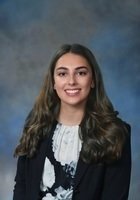
Certified Tutor
8+ years
Amanda
Most biostatistics struggles come down to not knowing which test to use or why — is this a chi-square situation or a t-test, and what does the p-value actually mean? Amanda's Master of Public Health training required heavy coursework in epidemiological statistics, so she teaches biostatistics with t...
The University of Alabama
Bachelor of Science, Biology, General
Baylor College of Medicine
Doctor of Medicine, Public Health
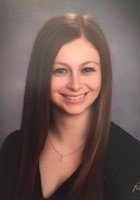
Certified Tutor
10+ years
Nina
Nina is finishing a doctorate in biostatistics at NYU after completing her master's at Columbia, which means she lives and breathes this subject — logistic regression for clinical outcomes, survival curves, study design for epidemiological research. She was a teaching assistant in Columbia's biostat...
Columbia University
Masters in biostatistics
Northwestern University
Bachelor of Arts in biological sciences (focus in neurobiology)
Columbia University in the City of New York
Current Grad Student, Biostatistics
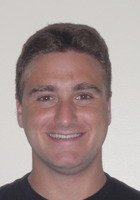
Certified Tutor
14+ years
Jason
Having completed pre-med coursework at Bryn Mawr and then medical school at Penn, Jason encountered biostatistics where it matters most — evaluating clinical trial designs, interpreting odds ratios in journal articles, and assessing whether a study's methodology actually supports its conclusions. Hi...
University of Pennsylvania
PHD, Medicine and Education
University of Pennsylvania
Master's degree in Education
Yale University
Bachelor's degree in History
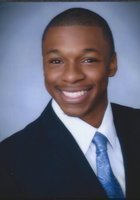
Certified Tutor
Applying to medical school while pursuing a Master's in Public Health means Jakobi is knee-deep in the kind of data analysis biostatistics courses demand — study design, hypothesis testing, and interpreting results in health contexts. His biology degree gives him the scientific grounding to explain ...
Princeton University
Bachelors

Certified Tutor
Natasha
Engineering coursework at MIT forced Natasha to build statistical models from biological and chemical datasets — the kind where understanding variance, distributions, and experimental design isn't optional but essential to getting meaningful results. Her chemical and biomolecular engineering backgro...
Johns Hopkins University
Bachelor of Science, Chemical and Biomolecular Engineering

Certified Tutor
8+ years
Ruth
Three years as an ESL instructor and a summa cum laude biology degree taught Ruth something most tutors learn the hard way — explaining quantitative concepts clearly matters as much as understanding them. Now in medical school, she breaks down biostatistics topics like study design, sensitivity and ...
The University of Alabama
Bachelor of Science, Biology, General
The University of Michigan
Doctor of Medicine, Alternative and Complementary Medicine and Medical Systems, General
Certified Tutor
8+ years
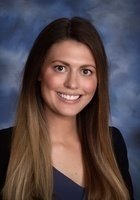
Emily
Between her biology major, math minor, and four years of medical school coursework in community health and preventive medicine, Emily has encountered biostatistics from every angle — interpreting clinical studies, running analyses on biological datasets, and applying concepts like sensitivity, speci...
Indiana University-Bloomington
Bachelor of Science, Biology, General
Indiana University-Purdue University-Indianapolis
Doctor of Medicine, Community Health and Preventive Medicine
Certified Tutor
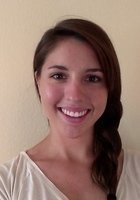
Courtney
Courtney's graduate research in aquatic ecology means she's wrestled with the messy, real-world datasets that make biostatistics click — figuring out which test to run when sample sizes are uneven, or whether a correlation in field data actually holds up under regression. That experience analyzing e...
Arizona State University
Master of Science, Biology, General
University of Notre Dame
Bachelor of Science, Environmental Sciences

Certified Tutor
8+ years
Sanjul
Medical school trains you to read studies critically — picking apart odds ratios, questioning sample sizes, and spotting when a confidence interval undermines a paper's bold conclusion. Sanjul, now in his final year of osteopathic medical training with a biology foundation, brings that clinical lens...
Cleveland State University
Bachelor of Science, Biology, General
University of Medicine and Health Sciences
Doctor of Medicine, Osteopathic Medicine (DO)
Certified Tutor
6+ years
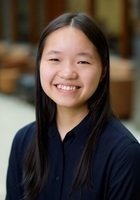
Ingrid
Ingrid's biomedical engineering coursework at Northwestern — including undergraduate research in the John Rogers Lab — gave her hands-on experience designing experiments and interpreting the statistical methods that underpin clinical and biological research. She breaks down concepts like survival an...
Northwestern University
Bachelor of Science, Biomedical Engineering
Nearby Biostatistics Tutors
Other Louisville Tutors
Related Science Tutors in Louisville
Frequently Asked Questions
Biostatistics applies statistical methods to biological and medical data—from clinical trials and epidemiology to genetics and public health research. It's essential for anyone pursuing healthcare, medical research, or public health careers because it teaches you how to design studies, analyze data responsibly, and draw valid conclusions from evidence. Understanding biostatistics helps you evaluate medical claims critically and contribute meaningfully to real-world health problems.
Many students struggle with translating real-world health scenarios into statistical models, interpreting p-values and confidence intervals correctly, and understanding when to use specific tests (t-tests, chi-square, regression, etc.). The conceptual leap from "doing calculations" to "understanding what the numbers mean" trips up a lot of learners. Personalized tutoring helps you move beyond memorizing formulas to seeing the logic behind each statistical method and how it applies to actual research questions.
Your first session focuses on understanding where you are right now—what topics feel solid, which concepts are fuzzy, and what specific challenges brought you to tutoring. The tutor will likely review your course materials, recent assignments, or exams to identify patterns in your thinking and pinpoint exactly where to start. This diagnostic conversation ensures your personalized instruction targets your actual needs rather than generic review.
In biostatistics, showing work means clearly documenting your assumptions, explaining why you chose a particular test, and interpreting results in context—not just writing down answers. Expert tutors teach you how to structure your solutions logically, ask you to explain your thinking out loud, and give you feedback on clarity and reasoning. This builds the communication skills you'll need for research papers, lab reports, and professional settings.
Yes. Biostatistics courses vary—some emphasize frequentist methods, others introduce Bayesian approaches; some use R or Python, others focus on conceptual understanding without heavy coding. Tutors working with students in Louisville are familiar with different curricula and can adapt their explanations to match your course materials and instructor's approach. Whether your class uses Pagano & Gauvreau, Daniel's Biostatistics, or another standard text, personalized instruction aligns with what you're actually learning.
Word problems in biostatistics require you to identify the research question, recognize the type of data (categorical vs. continuous), determine sample size and design, and select the right test—which feels overwhelming at first. Tutors break this down into a repeatable framework: read carefully, annotate what you know, name the variables, and match the scenario to statistical methods you've learned. With guided practice on problems similar to your assignments, you'll develop the pattern-recognition skills to tackle new scenarios confidently.
Absolutely. Math anxiety often stems from feeling lost or rushing through concepts without truly understanding them—personalized instruction addresses both. Working one-on-one with a tutor at your own pace, asking questions without judgment, and building small wins gradually rebuilds confidence. Many students discover that biostatistics makes sense when explained clearly and connected to real health questions, turning anxiety into genuine interest in the subject.
Biostatistics can feel like a collection of disconnected tests and formulas, but they're actually built on common principles—comparing groups, measuring relationships, estimating population parameters. Expert tutors help you see these underlying patterns by showing how t-tests, ANOVA, and regression are related, or how chi-square tests connect to probability concepts you've learned. When you understand the "why" behind each method, you remember it longer and apply it more flexibly to new problems.
Connect with Biostatistics Tutors in Louisville
Get matched with local expert tutors