Award-Winning AP Environmental Science Tutors
serving Louisville, KY
AP Environmental Science
Tutors in Louisville
Private 1-on-1 tutoring, weekly live classes for academic support, test prep & enrichment, practice tests and diagnostics, and more to elevate grades and test scores.
Based on 3.4M Learner Ratings
UniversitiesSchools & Universities
DeliveredHours Delivered
ProficiencyGrowth in Proficiency
Who needs tutoring?
No obligation. Takes ~1 minute.
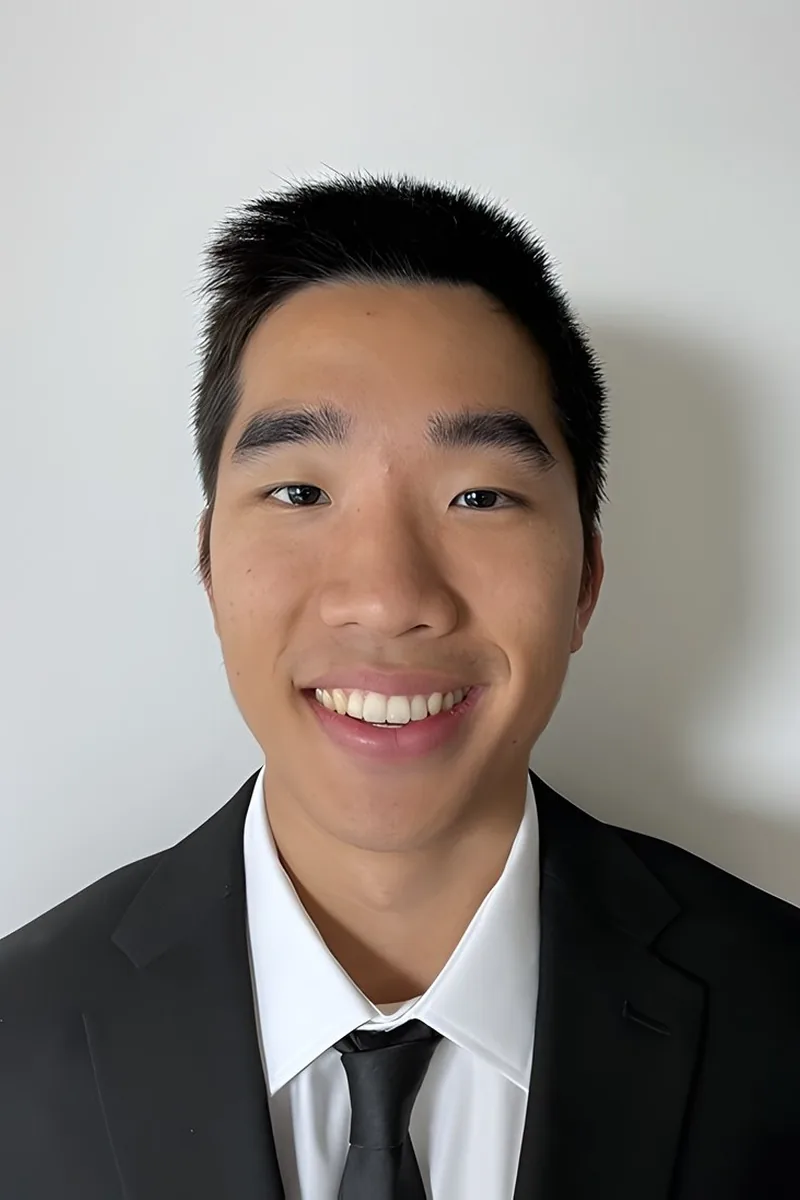
Organismal physiology — Steven's concentration at Drexel — is essentially the study of how living systems respond to their environments, which maps directly onto APES topics like how pollutants move through organisms, how species adapt to habitat changes, and why bioaccumulation works the way it does. That biological depth, paired with a 34 ACT and 5.0 tutoring rating, means he can teach both the conceptual ecology and the math-heavy questions on energy calculations and resource analysis that the exam increasingly emphasizes.

Sofia's ecology concentration at the University of Chicago means AP Environmental Science isn't a subject she just studied — it's her field. She unpacks FRQ-heavy topics like biogeochemical cycles, biodiversity loss, and energy resource tradeoffs with the depth of someone who does research in a neurobiology lab and thinks about ecosystems professionally. That firsthand scientific context makes the difference between memorizing vocabulary and actually understanding environmental systems.
Primary care medicine means Kellyann sees the downstream effects of environmental problems daily — asthma exacerbated by air quality, waterborne pathogens, the health toll of industrial pollutants — which gives her a clinical lens on APES units covering pollution, toxicology, and human impact that pure ecology tutors often lack. She pairs that real-world perspective with nine years of science tutoring experience and a 4.9 rating, teaching students to trace environmental causes through biological systems the way a clinician would during a differential diagnosis.
Scott earned his Master's in Ecology studying exactly the systems the AP Environmental Science exam tests — biogeochemical cycles, biodiversity loss, population dynamics, and resource management. He breaks down free-response questions by teaching students to connect data interpretation with the underlying ecological principles, which is where most points are won or lost on exam day.
Hello, students! My name is Pranav, and I'm so excited to be tutoring with Varsity Tutors. I have vast experience tutoring both personally and professionally; I've held officer positions in several nonprofit organizations, including STEMpals and The Do Re Mi Project, teaching courses ranging from biology to music theory. I took 16 AP courses throughout high school with all 5s, and I earned a 1570 on my SAT, so I'm pretty familiar with the majority of academic subjects! I have experience tutoring any and all skill levels, and I'm always open to expanding my horizons, so please don't hesitate to book your first lesson. I'm looking forward to meeting with you!
Medical training reshapes how you think about environmental health — Amanda's MD/MPH work means she understands toxicology pathways, epidemiological data, and the public health consequences of pollution at a clinical level, which gives her a distinctive angle on APES units covering air and water quality, disease vectors, and human impact. She teaches students to read dose-response data and environmental risk assessments the way a physician would, building the analytical reasoning the free-response section rewards.
Eileen's neuroscience coursework at Vanderbilt — tracing how disruptions propagate through biological systems — gives her a useful lens for APES topics like bioaccumulation, feedback loops in climate systems, and how environmental toxins affect organisms at multiple scales. She scored a 36 on the ACT and brings that same precision to the data-interpretation and calculation questions that catch students off guard on exam day.
Biology majors have an advantage in APES that's easy to overlook — Krisha's coursework in cellular biology and ecology means topics like biogeochemical cycles, trophic levels, and population growth models aren't abstract vocabulary terms but concepts she's studied with real depth. She also scored a 36 on the ACT, so the data-interpretation and calculation questions that blindside students expecting a soft science course are squarely in her wheelhouse. Rated 5.0 by students.
Pharmacy students spend semesters on toxicology, chemical fate in biological systems, and dose-response relationships — concepts Amy applies directly to APES units on pollution, bioaccumulation, and human health impacts. Her biology minor at Northeastern reinforces the ecological side, from nutrient cycling to population dynamics, and a 1550 SAT signals the quantitative precision needed for the exam's calculation-heavy free-response questions. Rated 4.9 by students.
Studying Human Biology at Stanford with a concentration in health policy gives Jake a direct line into the APES units on public health, pollution, and environmental legislation — he understands how ecological disruptions translate into real human consequences, which is exactly the kind of reasoning the free-response section rewards. His 34 ACT and 5.0 tutoring rating back up an approach that emphasizes connecting biological systems to their policy implications rather than treating each unit as isolated material.
Most APES students can memorize vocabulary lists but freeze when a free-response question asks them to explain how a neurotoxin moves through a food web or why bioaccumulation affects top predators disproportionately — Jhonatan's neuroscience specialization means he actually understands those biological mechanisms at the molecular level. He teaches students to trace environmental disruptions through living systems rather than treating each unit as isolated content, which is the connective thinking the exam scores highest. Rated 5.0 by students.
Having earned her bachelor's in Environmental Science, Patricia didn't just survey APES topics — she studied biogeochemical cycles, soil science, and ecosystem dynamics at the college level they're drawn from. She zeroes in on the quantitative side students often underestimate, like calculating energy transfer efficiency or interpreting species diversity indices, while also sharpening the cause-and-effect reasoning the free-response section demands.
Testimonials
Because the right AP Environmental Science tutor makes all the difference.
Average Session Rating – Based on 3.4M Learner Ratings
Practice AP Environmental Science
Free practice tests, flashcards, and AI tutoring for AP Environmental Science
Nearby AP Environmental Science Tutors
Other Louisville Tutors
Related Science Tutors in Louisville
Frequently Asked Questions
AP Environmental Science covers eight major units: energy resources and consumption, ecosystems and biodiversity, populations and sustainability, land and water use, pollution and human impacts, global change, and environmental policy and economics. The course emphasizes real-world environmental problems and scientific inquiry, requiring students to understand both the science behind environmental issues and their social, political, and economic dimensions. Many students find the breadth of content challenging, which is why personalized tutoring can help you focus on the areas where you need the most support.
The exam consists of two sections: a 90-minute multiple-choice section with 80 questions (50% of your score) and a 90-minute free-response section with 3 essays (50% of your score). The multiple-choice questions test factual knowledge and data interpretation, while the free-response section requires you to analyze environmental problems, propose solutions, and support your arguments with evidence. Many students struggle with pacing on the multiple-choice section or organizing their thoughts under time pressure on the essays—areas where targeted practice and feedback make a real difference.
Students often find energy calculations, population dynamics, and biogeochemical cycles particularly difficult because they require both conceptual understanding and quantitative skills. Additionally, the free-response section demands the ability to synthesize information across multiple units and communicate complex environmental systems clearly. Personalized tutoring helps you break down these challenging topics into manageable pieces, work through practice problems at your own pace, and develop strategies for explaining complex concepts in your essays.
Score improvement depends on your starting point, consistency with practice, and how much time you dedicate to studying. Students who work with tutors typically see the most gains by focusing on their weakest units, practicing with released exam questions, and receiving feedback on their free-response essays. Many students improve by 1-2 score points (from a 3 to a 4, or a 4 to a 5) when they combine targeted tutoring with regular practice over several months. The key is identifying your specific weak areas early and addressing them systematically.
Ideally, you should begin serious exam preparation 2-3 months before the May test date, though this depends on your current understanding of the material. If you're struggling with foundational concepts, starting earlier (4-6 months out) gives you time to build a solid base before diving into practice exams. Tutors can help you assess where you stand, create a realistic study schedule, and prioritize the topics that will have the biggest impact on your score. Even if the exam is closer than you'd like, focused tutoring can still help you make meaningful progress.
Practice tests are essential—they help you get comfortable with the exam format, identify your weak areas, and build test-taking stamina for the full 3-hour exam. Taking practice tests under timed conditions reveals whether you're struggling with content knowledge, pacing, or question interpretation. Tutors can review your practice test results with you, pinpoint patterns in your mistakes, and help you develop strategies to avoid repeating them on test day. Aim to take at least 3-4 full practice tests in the weeks leading up to the exam.
Data interpretation questions require you to extract information from graphs, tables, and charts, then apply environmental science concepts to answer the question. The best approach is to practice reading different types of graphs (line graphs, bar charts, scatter plots) and asking yourself what the data shows, what trends are present, and what they mean in an environmental context. Tutors can walk you through the process of breaking down complex data visualizations, teach you to spot common answer trap choices, and help you develop a systematic approach to these questions. Regular practice with real AP questions builds both speed and accuracy.
During your first session, a tutor will assess your current understanding of AP Environmental Science, discuss your goals (whether you're aiming for a 3, 4, or 5), and identify which topics are causing you the most difficulty. You'll work through a sample problem or question together to see how the tutor explains concepts and what their teaching style is like. From there, you'll develop a personalized study plan that focuses on your weak areas while reinforcing your strengths. Varsity Tutors connects you with tutors who have expertise in AP Environmental Science and can tailor their approach to your learning style and timeline.
Let’s find your perfect tutor
Answer a few quick questions. We’ll recommend the right plan and match you with a top 5% tutor.