Award-Winning Anatomy Tutors
serving Jacksonville, FL
Anatomy
Tutors in Jacksonville
Private 1-on-1 tutoring, weekly live classes for academic support, test prep & enrichment, practice tests and diagnostics, and more to elevate grades and test scores.
Based on 3.4M Learner Ratings
UniversitiesSchools & Universities
DeliveredHours Delivered
ProficiencyGrowth in Proficiency
Who needs tutoring?
No obligation. Takes ~1 minute.

Genetics research at the PhD level requires knowing exactly which tissues express which genes — so Nicholas built his anatomy knowledge not from flashcards but from tracing gene expression patterns across organ systems and developmental stages. That molecular-to-macro perspective is especially useful for students struggling with histology or embryological origins, where understanding why a tissue looks and behaves the way it does makes the structural details far easier to retain. Rated 4.8 by students.
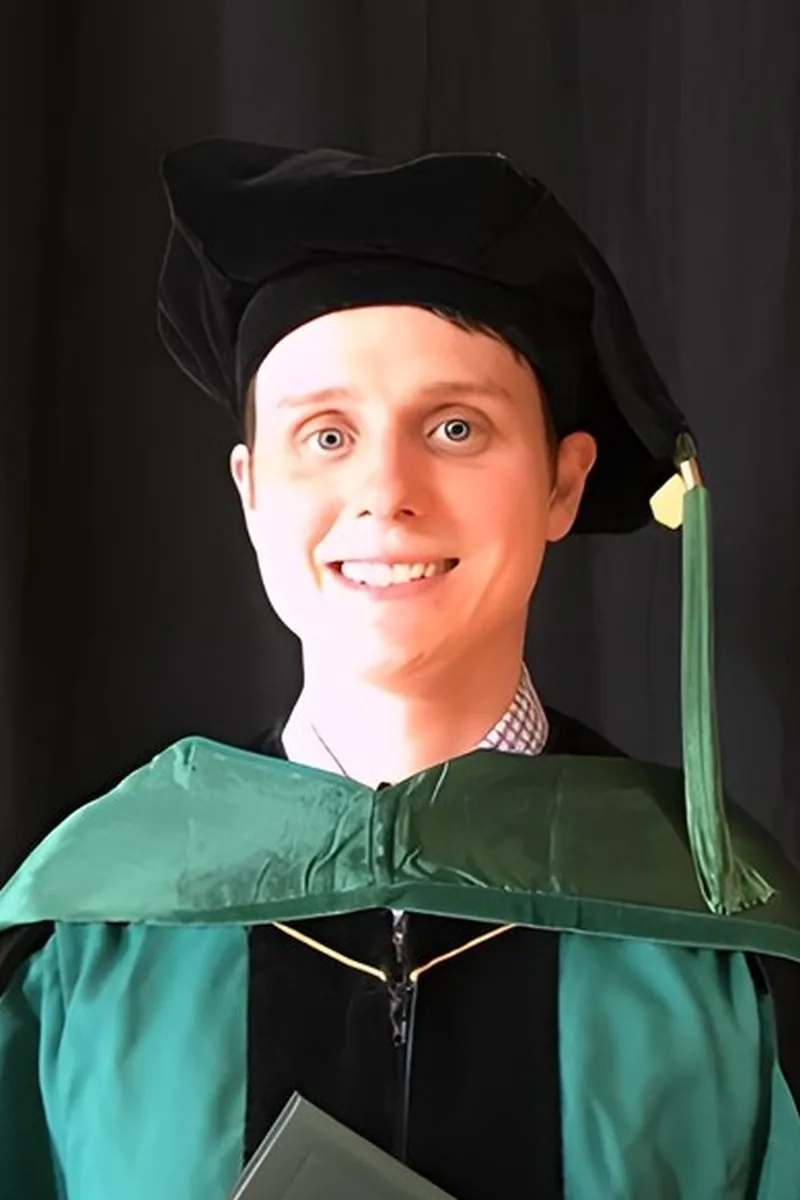
As a doctoral physical therapy student at Washington University, James studies human anatomy with a level of detail that goes well beyond introductory courses — from musculoskeletal origins and insertions to the brachial plexus and cranial nerves. He teaches anatomy by organizing structures into functional groups rather than isolated facts, which makes large volumes of material far more manageable. His 4.9 rating speaks to how well that approach lands with students.
Medical school anatomy is relentless — cadaver labs, spatial reasoning, thousands of structures with Latin names. Felix went through that gauntlet and developed memorization strategies tied to clinical relevance: knowing the brachial plexus not just as a diagram but as the reason a patient can't extend their wrist. He walks students through regional and systems-based anatomy with that same emphasis on function over rote labeling.
Memorizing every muscle origin, insertion, and nerve innervation can feel overwhelming without a framework. Brett tackles anatomy by teaching structures in functional groups — explaining how the brachial plexus organizes upper-limb movement, for instance — so that students build a mental map instead of a disconnected list. His graduate biology training gives him the depth to answer the 'why' behind every structure.
I am passionate about learning and assisting others with the intention of becoming an excellent physician in the future. I am eager to apply the knowledge and skills that I have learned along the way to improve the lives of those looking to better themselves.
Currently in medical school at UCF, Kevin teaches anatomy the way he learned it — by connecting structures to clinical function, so terms like "brachial plexus" and "foramen magnum" stop being random vocabulary and start telling a story about the body. His human biology degree from UCSD and his ongoing cadaver-based coursework give him a layered understanding of musculoskeletal, nervous, and organ system anatomy. Rated 4.9 by students.
I am a law student, but I took an unusual route to get there. I used to attend medical school but had a change of heart in my career path. Part of this was due to my political science major (double major with biology) in college as well as a number of Spanish and other courses that I took. Tutoring is something, I feel, that has come naturally to me, even back to my high school days. My goal is to help you learn as much as you can and reach your true potential. I will work hard to make sure that this happens, as long as you put in the work, too! We will work together to tailor your learning experience to your needs.
I am currently studying Medicinal and Biological Chemistry at Palm Beach Atlantic University in West Palm Beach, Florida, where I have just finished my sophomore year. After graduation, I hope to attend medical school, and one day become a physician. For over a year, I have been tutoring my peers in chemistry and anatomy & physiology through a peer tutoring program at my university. My favorite subject to tutor is by far chemistry, because it is extremely rewarding to help a student understand a difficult concept and then watch them be able to work though problems and apply those concepts on their own. I believe that students can only succeed if they understand the purpose of what they are learning, so I always make it a point to explain the "why" behind important concepts and ideas. This way, the student can develop a strong foundation of knowledge and can become more confident in their understanding of the subject. In my free time, I enjoy working out, reading exciting novels, and exploring my home city of Miami, Florida.
I am very interested in a career in the medical field, so I am apart of some pre-medical organizations. I really enjoy playing all different sports, from soccer to volleyball to tennis.
I am now pursuing a B.S. in computer science as well as a B.A. in studio art, with minors in mathematics and public health. I feel that my artistic practice has shaped my teaching, pushing me to take a creative, non-rigid approach to education -- I believe in working closely with my students to create individualized plans that cater to their specific learning needs.
I'm currently an undergraduate student at Nova Southeastern University and will be starting medical school next year. My two all time favorite subjects are math and science. Not only do I enjoy learning about those subjects, but I also love helping others understand and find their own passion for learning those kinds of subjects. I also love working with kids and helping them in areas in which they may struggle in. I look forward to working with you in the near future! :)
I am currently a senior in the Honors program, on track to graduate summa cum laude, and approaching completion of an undergraduate thesis on my work in the university's nanotechnology lab.
Learning primate skeletal and muscular anatomy firsthand at Duke's Lemur Center gave Benjamin a tactile understanding of the structures most anatomy courses cover — bones, joints, muscle origins and insertions, and organ placement. He teaches by building spatial maps of the body region by region, linking each structure's name to its function so the terminology sticks.
Andrew doesn't have a clinical or lab science background, but his history training at Northwestern built the kind of systematic categorization skills that translate surprisingly well to anatomy — organizing body systems, tracing relationships between structures, and retaining dense terminology. He approaches the subject by turning anatomical vocabulary into logical groupings, connecting muscle origins and insertions to their actions so students can reason through questions rather than relying on flashcard recall alone.
Preparing for medical school meant Enstin had to internalize body systems, organ relationships, and musculoskeletal structures at a level that went well beyond introductory coursework — and his psychology training adds a practical edge when it comes to teaching effective study and retention strategies for terminology-heavy material. He breaks anatomy down by connecting Latin and Greek roots to the structures they describe, so students can reason through unfamiliar terms instead of memorizing each one cold.
Jacob doesn't just know anatomy from a textbook — he's worked hands-on with the skeletal archives at the American Museum of Natural History, cataloging and studying actual specimens. That experience makes him especially effective at teaching musculoskeletal structures, bone landmarks, and organ systems in a way that connects memorization to real physical context.
Medical school means Timothy is learning anatomy at the most rigorous level right now, which keeps every muscle origin, nerve pathway, and organ system fresh in his mind. He tackles the memorization challenge head-on with spatial reasoning tricks and mnemonic strategies that make structures like the brachial plexus or cranial nerves far more manageable.
Learning anatomy means building a three-dimensional mental map of the body, and Muhammad's MBBS training included the kind of intensive dissection-based study that makes structural relationships intuitive. He walks through brachial plexus branches, abdominal cavity layers, and musculoskeletal attachments with clinical context that turns rote memorization into spatial understanding.
Memorizing every muscle origin and insertion or cranial nerve pathway can feel impossible without a system. Nishad, currently in medical school where anatomy is a cornerstone of the curriculum, teaches structural relationships and functional groupings that turn rote memorization into something closer to storytelling — following a nerve from the brainstem to the tissue it innervates, for example.
Memorizing every bone, muscle, and nerve pathway in anatomy can feel like learning a foreign language — because it essentially is one, rooted in Latin and Greek terminology. Amanda's anthropology and archaeology training gave her years of hands-on experience with skeletal and muscular systems in ways most tutors never encounter. She teaches students mnemonic strategies and spatial reasoning techniques that turn rote memorization into durable understanding of structural relationships.
Having studied anatomy through her nursing education, Sarah knows the subject from the inside — not just labeling structures on a diagram but understanding how organ systems interact functionally. She tackles tough topics like the brachial plexus or cardiac conduction pathways by linking structure to clinical purpose, which makes dense material far easier to retain.
Memorizing every bone, muscle, and organ system in anatomy can feel overwhelming without a strategy. Karishma's psychology background gives her insight into how memory actually works, and she teaches students to use spatial relationships and functional groupings — like linking muscle attachments to their actions — so the material organizes itself rather than piling up.
Memorizing every bone, muscle, and nerve pathway in anatomy can feel overwhelming without a framework to organize it all. Justin tackles the subject regionally and functionally — connecting the brachial plexus to actual arm movements, or tracing blood flow through the heart to explain why valve defects produce specific symptoms. His Human Science background keeps the focus on how structures serve the living body, not just their Latin names.
Jennifer's biological sciences degree means she studied anatomy alongside physiology, microbiology, and chemistry — so she naturally teaches structures in the context of the larger systems they belong to, which is especially useful for topics like cardiovascular or respiratory anatomy where form and function are inseparable. Her current path toward PA studies keeps her actively reviewing organ systems and tissue-level detail at a clinical depth that matches what university anatomy courses demand.
Testimonials
Because the right Anatomy tutor makes all the difference.
Average Session Rating – Based on 3.4M Learner Ratings
Practice Anatomy
Free practice tests, flashcards, and AI tutoring for Anatomy
Nearby Anatomy Tutors
Other Jacksonville Tutors
Related Science Tutors in Jacksonville
Frequently Asked Questions
Students in Jacksonville often struggle with understanding how body systems interconnect—like how the nervous system controls the muscular system, or how the circulatory system supports every organ. Beyond memorizing bone names and muscle locations, anatomy requires visualizing 3D structures and grasping functional relationships. Tutors help students move past rote memorization to develop a deeper understanding of how the body actually works, which is essential for success in anatomy courses and future science studies.
Anatomy is inherently visual, and many students benefit from working with models, diagrams, and interactive tools to build mental images of complex structures. A tutor can guide you through systematic approaches—like breaking down a system into smaller components, using analogies to familiar objects, and practicing with labeled diagrams and 3D models. Personalized instruction helps you develop visualization strategies that work for your learning style, making abstract structures feel concrete and memorable.
The best approach combines both: understanding how structures function helps you retain terminology naturally, while accurate terminology ensures you can communicate precisely in science and healthcare contexts. Rather than rote memorization, effective anatomy learning involves connecting names to functions and locations—understanding that the deltoid muscle is named for its triangular shape and learning where it attaches helps you remember it far better than flashcards alone. Tutors help you build these meaningful connections so terminology sticks without feeling like pure memorization.
Lab work and dissections are where anatomy becomes tangible—you're seeing real structures and understanding spatial relationships in ways diagrams can't fully capture. Tutors help you prepare for labs by reviewing relevant anatomy beforehand, develop observation skills during hands-on work, and deepen your understanding afterward by connecting what you saw to broader concepts. This preparation and reflection transforms lab time from a stressful experience into a powerful learning opportunity that reinforces classroom concepts.
Your first session focuses on understanding your current knowledge, identifying specific challenges, and learning how you best absorb anatomical information. A tutor will assess whether you're struggling with visualization, terminology, system relationships, or exam preparation, then tailor an approach to your needs. You'll leave with a clear sense of how personalized instruction can help and concrete strategies to start applying right away.
Anatomy exams often combine multiple question types—from identifying structures on unlabeled diagrams to explaining functional relationships between systems. Tutors help you practice with past exams or sample questions, identify weak areas, and develop strategies for tackling different question formats. They also help you organize information in ways that make it retrievable during tests, transforming scattered knowledge into a coherent, interconnected understanding of human anatomy.
Look for tutors with strong backgrounds in biology, anatomy, or healthcare fields who understand both the content and how to teach it effectively. Ideally, they've taken anatomy courses themselves and have experience explaining complex systems clearly. Varsity Tutors connects you with tutors who combine subject expertise with proven teaching skills, ensuring you get instruction from someone who understands anatomy deeply and knows how to help students overcome common challenges.
Jacksonville's schools serve over 120,000 students across two districts, and class sizes can make it difficult for teachers to address individual learning gaps in a visual, hands-on subject like anatomy. Personalized 1-on-1 instruction lets you work at your own pace, ask questions without hesitation, and get explanations tailored to how you learn best. Whether you're preparing for AP Biology, a college anatomy course, or healthcare program prerequisites, a tutor can provide the focused support that helps you master this foundational science.
Let’s find your perfect tutor
Answer a few quick questions. We’ll recommend the right plan and match you with a top 5% tutor.