Award-Winning Trigonometry Tutors
serving Syracuse, NY
Trigonometry
Tutors in Syracuse
Private 1-on-1 tutoring, weekly live classes for academic support, test prep & enrichment, practice tests and diagnostics, and more to elevate grades and test scores.
Based on 3.4M Learner Ratings
UniversitiesSchools & Universities
DeliveredHours Delivered
ProficiencyGrowth in Proficiency
Who needs tutoring?
No obligation. Takes ~1 minute.

Trig identities start making sense once a student sees the unit circle not as something to memorize but as a geometric machine that generates every sine, cosine, and tangent value. Justin teaches trigonometry by connecting it back to the geometry and physics where it originated — an approach that comes naturally from his dual degrees in physics and mathematics. His 5.0 rating speaks to how well that perspective lands with students.
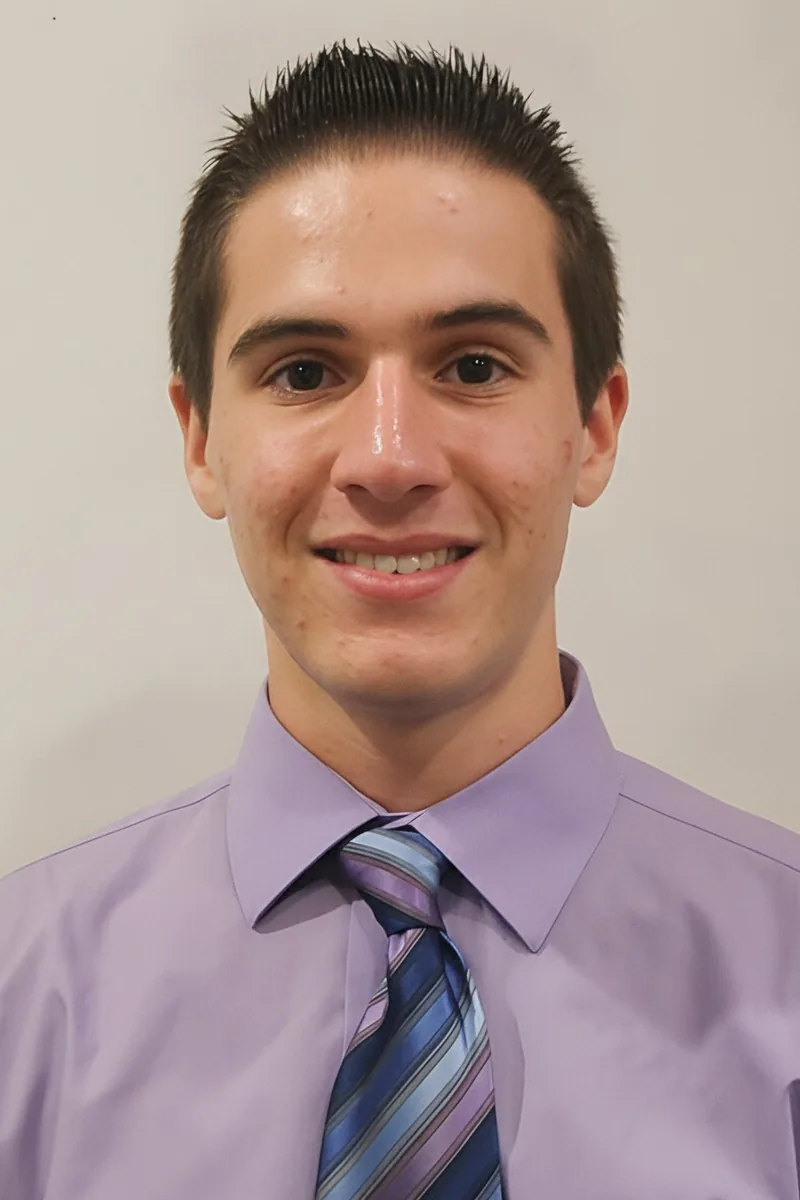
Trig identities, the unit circle, and the Law of Sines aren't just abstract exercises for Matthew — they're tools he applies constantly in his Mechanical and Aerospace Engineering program at Princeton. He identifies which specific trig concepts a student is shaky on and drills those through worked examples and targeted practice problems until the reasoning clicks.
The unit circle is where most students either click with trigonometry or start drowning in formulas. Julie teaches trig identities, inverse functions, and angle relationships by showing the geometric logic underneath them, so students can reconstruct what they need instead of relying on memorized sheets. Rated 4.9 by students.
A year as a course assistant in Harvard's math department meant Richard taught calculus daily — and calculus lives and dies on trig fluency, from evaluating limits of sinusoidal functions to integrating with trig substitutions. That constant reinforcement gives him a sharp sense of exactly where students get tripped up on identities, graphing transformations, and radian-degree conversions. His perfect 1600 SAT and 36 ACT confirm the foundational math chops behind that teaching experience.
The unit circle, sine and cosine graphs, and identity proofs all click faster when a student sees how they connect instead of treating each as a separate formula to memorize. Vansh approaches trig by grounding every new identity in the geometric intuition behind it, so students can reconstruct what they need even under test pressure.
Trig can feel like a wall of formulas unless someone connects the unit circle back to the triangles it came from. Ayako teaches students to see sine, cosine, and tangent as relationships rather than buttons on a calculator, then builds from there into identities and graphing transformations. Her 5.0 client rating speaks to how clearly she makes those connections land.
Trig can feel like a completely different language — unit circles, identities, inverse functions — and most students struggle because they never built strong intuition for what sine and cosine actually represent geometrically. Brian's math background through calculus at UChicago means he teaches trig concepts with an eye toward why they matter, connecting each identity back to the triangle or circle it describes.
Trig is where many students first encounter math that feels genuinely spatial — unit circles, radian measure, sinusoidal graphs that actually describe physical phenomena. Allen breaks down identities and transformations by tying them back to their geometric origins, making it easier to see why an identity holds instead of just memorizing the formula.
Trig identities can feel like an endless list of formulas to memorize, but Judah breaks them down by showing how each one derives from the unit circle. His strong math background — including a 1580 SAT — means he can walk through everything from law of sines applications to graphing phase shifts with clarity and precision.
Trig identities can feel like an endless list of formulas until someone shows you the handful of core relationships everything else derives from. Daniel teaches the unit circle and identity proofs by connecting them to the wave equations and rotational problems he encounters in his Cornell physics courses, giving each identity a concrete reason to exist.
The jump from memorizing SOH-CAH-TOA to actually applying trig identities and solving equations on the unit circle is where most students lose the thread. Moriah teaches trigonometry by connecting each identity back to its geometric meaning, so that simplifying expressions and verifying identities becomes logical rather than mechanical. She holds a 5.0 rating from students.
Trig clicks once you stop memorizing the unit circle as a list and start seeing it as a pattern. Sarah connects sine, cosine, and tangent back to the geometry students already know, then builds outward to identities and graphing transformations so each new concept feels like an extension rather than a brand-new topic.
Most students hit trig after a comfortable run through algebra and geometry, then suddenly face a subject that feels like a different language. Matthew's approach is to slow down at that transition point — grounding right-triangle ratios and angle measurement in concrete problems before moving into graphing and identities. His 1500 SAT and broad math teaching background mean the algebraic foundations students need for trig are always within easy reach.
The unit circle, identities, and inverse trig functions trip students up because they feel like arbitrary rules disconnected from anything visual. Rahi teaches trigonometry by anchoring every identity and equation back to the geometry it came from, so that relationships like the double-angle formulas become intuitive rather than something to cram. Three engineering degrees gave him years of applying trig in real contexts.
Most students hit trig after a solid run through algebra and geometry, then suddenly feel lost — Nicole bridges that gap by grounding new concepts like sine, cosine, and angle relationships in the geometric reasoning students already have. Her psychology training also gives her a sharp read on where confusion actually starts, so she can untangle a graphing or identity problem at the specific step where things went sideways.
The jump from memorizing the unit circle to actually applying sine, cosine, and tangent in identities and equations trips up a lot of students. Tameem approaches trig by building intuition around what the functions represent graphically and geometrically, which makes solving problems with the law of sines or verifying identities far less mechanical.
The unit circle tends to be the make-or-break moment in trigonometry — once it clicks, identities and inverse functions follow naturally. Violet teaches it as a visual tool rather than a memorization exercise, linking each angle to its geometric meaning. Her approach turns sinusoidal graphing and identity proofs into pattern recognition instead of guesswork.
Three years teaching elementary math through Teach for America gave Victoria something uncommon for a trig tutor — deep practice in breaking abstract ideas into concrete, visual steps that actually land. She applies that skill to graphing sinusoidal functions, working through amplitude, period, and phase shifts as transformations students can see rather than formulas they have to memorize. Her Yale math coursework and experience tutoring calculus mean the underlying concepts stay rigorous even when the explanations stay simple.
Trig identities and unit circle values can feel like arbitrary things to memorize, but Samantha approaches them visually — sketching triangles, drawing reference angles, and connecting each identity back to geometric intuition. Her Cornell chemistry background required constant use of trigonometric relationships in spectroscopy and molecular geometry, giving her a practical fluency that translates well to teaching.
Trig identities and the unit circle tend to feel like a wall of disconnected formulas until someone shows you the geometry underneath them. Shun connects sine, cosine, and tangent back to the triangles and circles students already know, then builds outward to inverse functions, the law of cosines, and radian measure. His engineering-oriented materials science background means he's used trig in applied contexts most tutors haven't.
Sine, cosine, and tangent can feel like arbitrary definitions until someone shows you what they actually mean on the unit circle. Joey teaches trig by grounding identities and angle relationships in visual, intuitive reasoning — making it easier to recall formulas under pressure instead of relying on rote memorization.
The jump from memorizing the unit circle to actually applying sine, cosine, and tangent in identities and equations trips up a lot of students. Rachelle breaks trig down by connecting each identity back to the geometry students already know, making the relationships between functions feel logical instead of arbitrary.
Trig often frustrates students because it feels like memorizing a wall of identities with no logic behind them. Luke approaches it differently, showing how the unit circle connects sine, cosine, and tangent to actual geometric relationships so that identities become derivable rather than just memorizable. His math background spans algebra through calculus, giving him a clear picture of where trig fits in the larger sequence.
The unit circle tends to be the moment trigonometry either makes sense or falls apart. Daniel approaches trig identities and sinusoidal functions by building intuition around what's actually happening geometrically, rather than handing students a formula sheet to memorize. His science background means he can show where these relationships appear in real applications like wave behavior and signal analysis.
Katherine's music background gives her an unusual edge in trigonometry — sine and cosine aren't abstract when you've studied sound waves, harmonics, and the math behind pitch and frequency. She teaches the unit circle and identities by grounding them in these periodic patterns, making concepts like phase shifts and amplitude click visually. Her 1500 SAT score reflects the quantitative chops she brings to the algebra-heavy side of trig as well.
The unit circle tends to be the make-or-break moment in trigonometry, and everything from identities to inverse functions builds on whether a student truly internalizes it. Elaine approaches trig through visualization and pattern recognition rather than rote memorization of formulas. Her applied math and biomedical engineering studies at Harvard keep her working with sinusoidal models and periodic functions regularly.
The unit circle trips up most trigonometry students because they try to memorize values instead of understanding the geometry behind them. Katharine breaks down identities, inverse functions, and angle relationships by tying each one back to visual reasoning — an approach rooted in her mathematics training. Once students see the patterns, problems involving law of sines or cosine simplification start clicking.
Trig identities and unit circle values tend to feel like arbitrary memorization until someone shows you the geometry underneath them. Kelsey teaches students to derive identities from a few core relationships, which makes solving equations and graphing sinusoidal functions far more intuitive than flashcard drilling.
Trig is where algebra meets visual thinking — unit circle values, sinusoidal graphs, and identities like double-angle and sum-to-product can feel like a wall of formulas without the right framework. Daniel's math degree means he teaches the geometric intuition behind each identity so students can derive what they need instead of relying on memorization sheets.
Trig identities can feel like an endless list of formulas to memorize, but Victor teaches students to derive most of them from the unit circle and a handful of core relationships. That approach cuts the memorization load dramatically and makes verifying identities and solving equations far more systematic. He's rated 5.0 by his students.
Trig identities and the unit circle can feel like arbitrary memorization until someone shows you the underlying logic. Frank teaches students to derive identities from a handful of core relationships, turning a wall of formulas into a manageable system. His experience tutoring SAT Subject Test math means he's seen every common mistake students make with sine, cosine, and tangent — and knows how to fix them quickly.
Trig identities can feel like an endless list of formulas to memorize, but most of them derive from just a few core relationships on the unit circle. Drishti teaches students to see those connections so they can reconstruct identities on the fly rather than relying on a cheat sheet — a skill that pays off immediately in pre-calc and calculus.
The unit circle tends to be where trigonometry either clicks or collapses for students. Sam teaches trig identities and angle relationships as interconnected ideas rather than isolated formulas, showing how sine, cosine, and tangent relate geometrically before diving into proofs or equations. His quantitative training in molecular biophysics at Yale gave him years of practice applying trig in real scientific contexts.
Trig identities can feel like an endless list to memorize, but Jonathan teaches students to derive them from a handful of core relationships so they stick. Studying Chemical Engineering at Cornell, he regularly applies sine, cosine, and tangent functions to wave analysis and vector problems, which means he can show students where these ideas actually land outside the textbook.
The jump from memorizing SOH-CAH-TOA to actually reasoning with identities, inverse functions, and the unit circle trips up a lot of students. Romeo approaches trig by building visual intuition — showing why the double-angle formulas exist and how sinusoidal models describe real periodic behavior. His math degree and PhD-track background mean he can handle the subject at any depth a student needs.
A neuroscience background might seem unrelated to trigonometry, but Jenny's science training means she can connect sine, cosine, and unit circle concepts to real applications in wave behavior and signal processing. She approaches trig identities and proofs as logical arguments to understand, not strings of symbols to memorize.
The jump from memorizing SOH-CAH-TOA to actually applying sine, cosine, and tangent in proofs and real-world problems is where most trig students stall. Susan's graduate training in adolescent math education means she's studied how teenagers process abstract relationships like the unit circle and periodic functions — and she builds lessons around making those connections visual and intuitive.
Trig identities can feel like an endless list of formulas to memorize, but Michael teaches them as consequences of the unit circle — once a student sees why sin²θ + cos²θ = 1, the double-angle and half-angle identities start to derive themselves. His physics background at Cornell means he also connects trig to wave motion, oscillations, and vector components, giving each concept a concrete anchor.
The unit circle tends to be the moment trigonometry either makes sense or falls apart, and Varun tackles it by showing students the geometric logic underneath sine, cosine, and tangent rather than asking them to memorize coordinates. He also digs into identities and inverse functions with an emphasis on recognizing patterns across problems. His broad math teaching background means he can trace trig concepts back to the algebra and geometry students already know.
The unit circle, identities, and inverse trig functions trip students up when they're presented as formulas to memorize instead of relationships to visualize. Drisana approaches trigonometry geometrically first, showing why sin²θ + cos²θ = 1 is obvious once you see it on a circle, then builds toward the algebraic manipulation that courses demand. Rated 5.0 by students.
Testimonials
Because the right Trigonometry tutor makes all the difference.
Average Session Rating – Based on 3.4M Learner Ratings
Practice Trigonometry
Free practice tests, flashcards, and AI tutoring for Trigonometry
Nearby Trigonometry Tutors
Other Syracuse Tutors
Related Math Tutors in Syracuse
Frequently Asked Questions
Varsity Tutors matches Syracuse students with expert Trigonometry tutors for 1-on-1 instruction. We pair each student with a tutor based on their specific needs, learning style, and goals.
Whether you need homework help, exam prep, or want to get ahead, our Trigonometry tutors are ready to help.
Common challenges include gaps from earlier material, difficulty with specific concepts, and trouble applying learning to new problems. These issues can snowball quickly in Trigonometry.
A tutor identifies where you're stuck, fills in gaps, and provides targeted practice. The 1-on-1 format means you get help exactly where you need it.
Tutors work with your student's actual coursework—homework assignments, class notes, and upcoming tests. This keeps tutoring directly relevant to what's happening in the classroom.
When you share information about your student's school and curriculum, we can match you with a tutor who has relevant experience.
All tutors complete background checks, credential verification, and teaching evaluation. Many of our Trigonometry tutors hold advanced degrees or have years of teaching experience.
You can review tutor profiles to find someone with the right background for your student's level and needs.
Many students see improved grades within a few weeks, along with better understanding of Trigonometry concepts and more confidence tackling challenging material.
Tutors track progress and adjust their approach to ensure continued improvement.
Most students benefit from 1-2 sessions per week. More frequent sessions help if your student is significantly behind or has an important exam coming up.
Your tutor can recommend a schedule based on your student's specific situation and goals.
Tutoring is purchased in packages of hours, with rates varying by tutor experience. Varsity Tutors offers several options to fit different budgets and needs.
You can discuss pricing during your consultation to find what works best.
Your tutor will assess where your student is, discuss goals, and start working on priority areas. Most students bring current homework or upcoming test material to focus on.
By the end, you'll have a clear sense of how the tutor can help and a plan for moving forward.
Let’s find your perfect tutor
Answer a few quick questions. We’ll recommend the right plan and match you with a top 5% tutor.