Award-Winning Trigonometry Tutors
serving Sarasota, FL
Trigonometry
Tutors in Sarasota
Private 1-on-1 tutoring, weekly live classes for academic support, test prep & enrichment, practice tests and diagnostics, and more to elevate grades and test scores.
Based on 3.4M Learner Ratings
UniversitiesSchools & Universities
DeliveredHours Delivered
ProficiencyGrowth in Proficiency
Who needs tutoring?
No obligation. Takes ~1 minute.
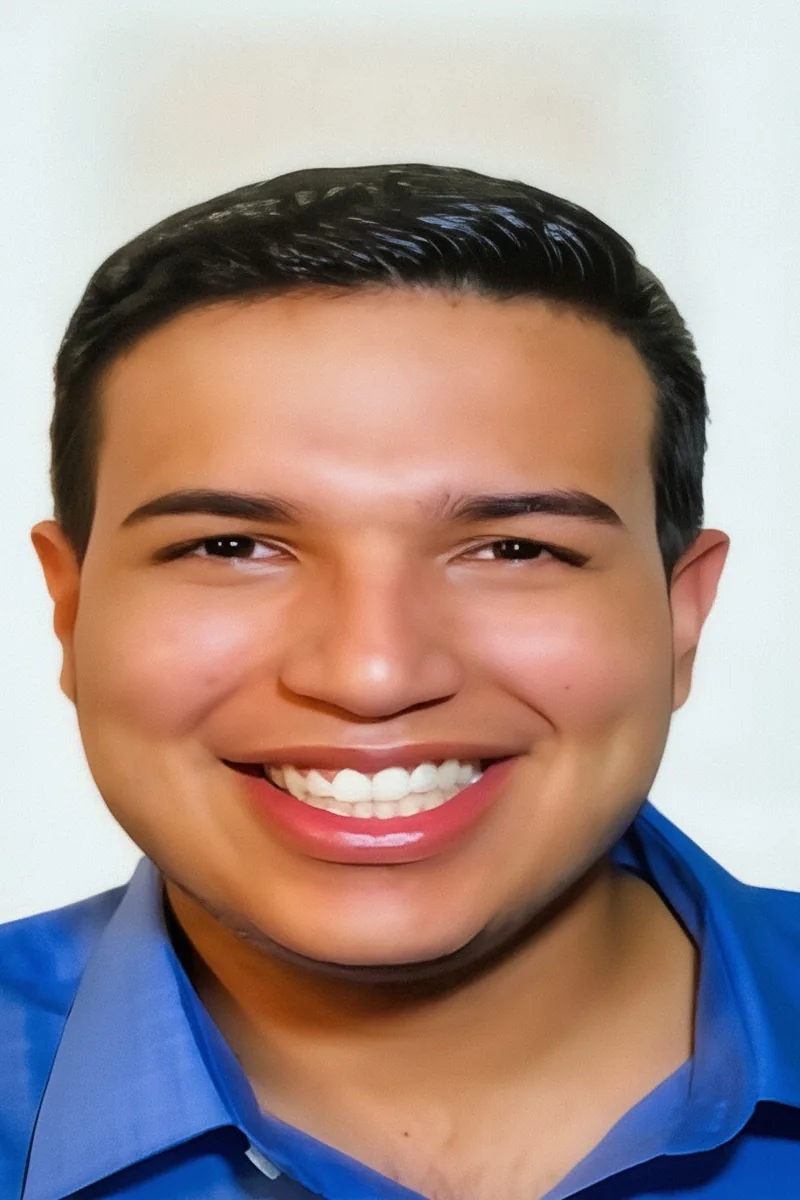
Trig identities and unit circle values tend to feel like random facts until someone shows you the structure underneath them. Derek approaches trigonometry by connecting sine, cosine, and tangent to their geometric origins, then building up to graphing transformations and solving equations — the same progression that prepared him for advanced math at Harvard.
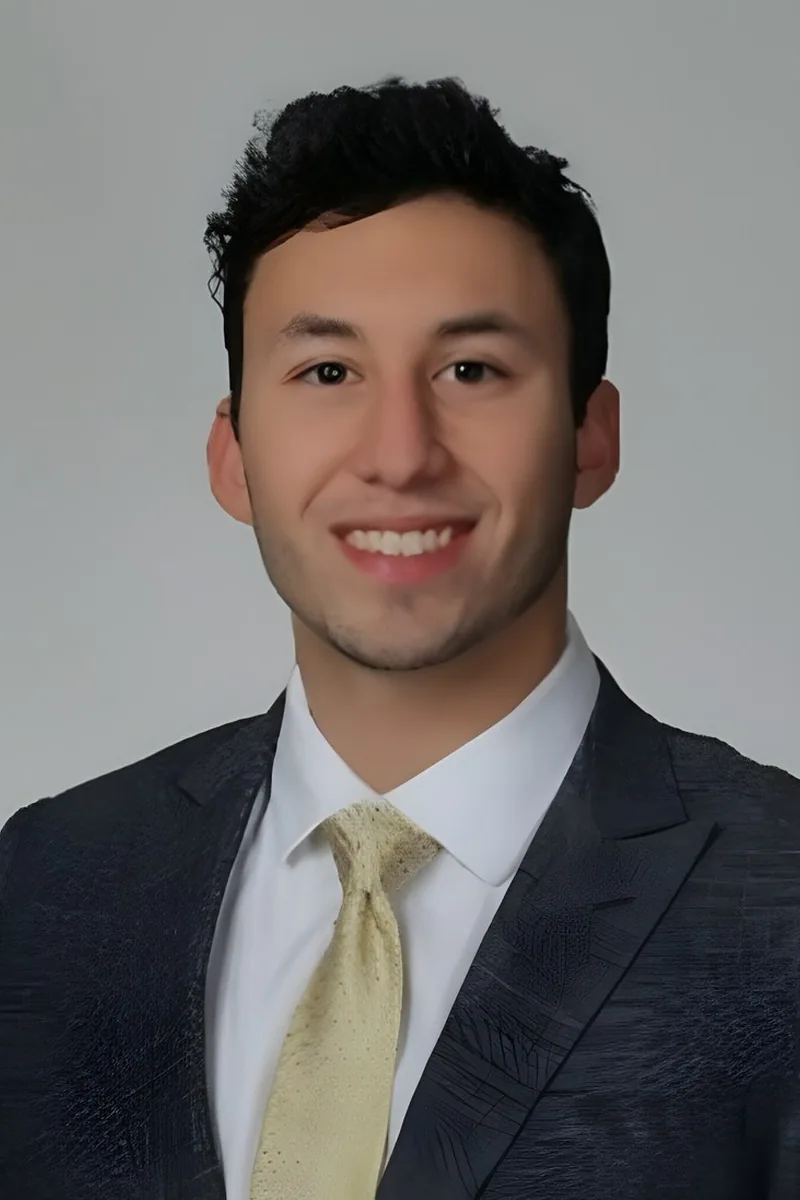
Trig identities and the unit circle tend to feel like arbitrary rules until someone shows you the geometry underneath them. Andrea breaks down concepts like sinusoidal modeling, inverse trig functions, and the Law of Cosines by connecting them to the physics and engineering problems where they naturally appear.
The unit circle, sine and cosine graphs, and trigonometric identities all become more intuitive when a student understands the geometry underneath them. James connects trig concepts back to spatial reasoning and real-world applications — something his current doctoral work in physical therapy, where biomechanics relies on angular measurement and force vectors, keeps fresh in his mind.
I am graduated from Penn State University in Industrial Engineering in 2017. I've tutored ever since I was in high school, and I love helping people! I like to help my students understand math (and other topics) instead of just doing it blindly. My goal is to help my students improve their math (and other topics) and build skills that will help them find learning easier in the future! Fun fact, I used to work for Disney and I like to salsa dance!
The unit circle is where most Trigonometry students either click or check out — and the difference usually comes down to whether someone explains the *why* behind sine, cosine, and their identities. Manuela teaches trig functions as relationships between angles and coordinates, which makes graphing transformations and solving equations feel like extensions of the same idea instead of disconnected formulas.
Licensed to teach middle and high school math, Jacob has spent years building students' algebraic reasoning before they ever encounter trigonometry — which means he knows exactly where the gaps are when sine, cosine, and tangent start feeling overwhelming. He teaches trig identities and graphing by tying them back to the algebra and geometry skills students already have, making new material feel like a natural next step. Rated 5.0 by students, with a 34 ACT backing up the fundamentals.
The unit circle doesn't have to be a memorization nightmare. Destiny teaches trig by anchoring sine, cosine, and tangent in geometric intuition first, so identities and inverse functions feel like logical extensions rather than random formulas. Her 5.0 rating speaks to how well that approach clicks with students.
Trig identities can feel like an endless list of formulas to memorize, but Dalila teaches students to derive them from the unit circle so they actually stick. She digs into the connections between sine, cosine, and their graphs — showing how transformations, inverse functions, and the Law of Sines all trace back to the same geometric intuition. Her mathematics degree gives her the depth to explain not just the how but the why behind each identity.
Trig identities can feel like an endless list of formulas to memorize, but Apoorva teaches students to derive most of them from the unit circle and a few core relationships. Her engineering work at UC Berkeley relies heavily on trigonometric functions — from signal analysis to modeling periodic systems — so she can ground each identity in something tangible rather than leaving it as abstract algebra.
The unit circle is where most trigonometry students either gain confidence or start memorizing without understanding. Daniel teaches the underlying geometry — why sine and cosine behave the way they do as angles rotate — so that identities and equations feel logical instead of arbitrary. His applied math training means he can also show how trig functions model real oscillating systems.
The jump from memorizing SOH-CAH-TOA to actually applying trig identities and graphing sinusoidal functions trips up a lot of students. Marissa approaches trig by building each identity from the unit circle outward, so students see the logic connecting sine, cosine, and tangent rather than treating each formula as something to memorize in isolation.
Most trig struggles come down to one thing: students memorize the unit circle and identities without understanding where they come from, then can't apply them in unfamiliar contexts. Anthony breaks down how sine, cosine, and tangent relate geometrically before moving into identity verification and equation solving, giving students a framework that holds up through inverse functions and polar coordinates.
The unit circle tends to be the make-or-break moment in trigonometry — either it becomes an intuitive tool or a wall of memorized values. Michael teaches students to derive sine, cosine, and tangent relationships from geometry they already understand, turning identities and angle formulas into logical extensions rather than disconnected rules. His science background also means he can show where trig actually appears in wave mechanics and vector analysis.
Trig identities often feel like a memorization exercise until someone shows you the geometry underneath them. Kaitlyn approaches trigonometry through the unit circle first, letting students derive identities and solve equations from understanding rather than flashcards. Her science background means she also connects sinusoidal functions to real applications in physics and biology.
Trig identities and the unit circle are the two places where most students either build real understanding or start memorizing blindly — and the difference matters once calculus arrives. Ari connects trigonometric functions back to their geometric origins, making identities like the Pythagorean and double-angle formulas feel logical instead of arbitrary. Studying philosophy at Columbia trained him to explain why something is true, not just that it is.
In computer science, trig shows up constantly — rotation logic in graphics programs, calculating angles in game physics, generating waveforms in audio processing — so Samuel's CS degree at Florida Tech means he's been applying sine, cosine, and tangent in code long before tutoring them on paper. He breaks down the unit circle and identity manipulation by showing students the logic underneath, the same way he'd debug a function: step by step until the output makes sense. Rated 5.0 by students.
Trig identities are where most students lose the thread, because they look like arbitrary formulas unless someone shows you the geometry underneath them. Sidra unpacks the unit circle first and uses it as a visual anchor for everything from sine and cosine graphs to inverse functions and the law of cosines.
Trig is where math turns spatial, and students who've relied on purely algebraic thinking often struggle with unit circles, identities, and graphing sinusoidal functions. As a visual artist with a photography MFA, Emily has an unusual advantage: she genuinely thinks in terms of angles, rotations, and periodic patterns. That perspective makes her explanations of concepts like phase shifts and inverse trig functions feel grounded rather than abstract.
The unit circle doesn't have to be a memorization nightmare. Priya teaches trig identities, inverse functions, and sinusoidal graphs by connecting them to the geometry students already understand, turning what feels like a wall of formulas into a handful of core ideas that extend naturally.
I am a current student at the University of Florida pursuing an Accounting degree and Entrepreneurship minor. Math has always been my passion, and I hope to show fellow students the fun in it!
I am very interested in a career in the medical field, so I am apart of some pre-medical organizations. I really enjoy playing all different sports, from soccer to volleyball to tennis.
Trig can feel like a wall of disconnected formulas — unit circle values, identities, inverse functions — until someone shows you the geometry underneath all of it. Stephanie's neuroscience training gave her deep comfort with the mathematical modeling that trigonometry feeds into, and she teaches students to see the logic linking sine, cosine, and tangent rather than treating each as a separate thing to memorize.
Trig clicks once you stop memorizing the unit circle and start seeing why sine and cosine behave the way they do on a coordinate plane. Nikhil connects identities, angle relationships, and graph transformations back to that core visual logic. His science-heavy coursework at the University of Miami means he regularly uses trig in applied contexts, which keeps his explanations grounded.
I am listening to and learning about him or her as an individual. I can also discover what motivates the student during this conversation and plan for how to frame future tutoring sessions in terms of what the student already knows and enjoys.
I am a law student, but I took an unusual route to get there. I used to attend medical school but had a change of heart in my career path. Part of this was due to my political science major (double major with biology) in college as well as a number of Spanish and other courses that I took. Tutoring is something, I feel, that has come naturally to me, even back to my high school days. My goal is to help you learn as much as you can and reach your true potential. I will work hard to make sure that this happens, as long as you put in the work, too! We will work together to tailor your learning experience to your needs.
Trig identities and unit circle values feel like pure memorization until someone shows you the geometric intuition underneath. Joscelyn approaches trigonometry the way she learned it in engineering — as a toolkit for describing rotation, waves, and angles — which gives each identity a purpose students can actually visualize.
Unit circles, identities, and inverse trig functions trip students up because they require a different kind of thinking than earlier math courses. Nathan tackles trig by tying each identity back to geometric intuition — showing why sin²θ + cos²θ = 1 instead of just asking students to memorize it. His 4.9 rating speaks to how well that approach clicks.
Trig is the subject where memorizing identities without understanding the unit circle turns into a disaster by midterms. Michael tackles it differently: he starts with why sine and cosine behave the way they do on the circle, then builds outward to identities, inverse functions, and graphing transformations. His applied math degree from Florida State means he can also show how trig shows up in real modeling problems, not just textbook exercises.
I am a college student studying data science. Empathy and equity are essential in our world and for students' success. I have spent the last few years helping students learn complex subjects such as Statistics, Calculus, and General Biology. Not every student learns the same way. My goal in tutoring is to find a student's learning style and optimize their success. I believe that anyone can learn anything under the right conditions!
Trig identities and the unit circle tend to feel like arbitrary rules until someone connects them to the wave functions and periodic relationships they actually describe. Nicholas unpacks trigonometric concepts by showing how sine, cosine, and tangent relate to real patterns in science and data — an approach grounded in years of quantitative research.
Trig identities stop feeling like random formulas to memorize once you see them on the unit circle. Noelle breaks down the connections between sine, cosine, and tangent graphically and algebraically, building the kind of intuition that carries into calculus and physics.
The unit circle clicks differently when someone explains why sine and cosine are defined the way they are, not just where to find them on a chart. Jiwen's four years tutoring trigonometry through the Tufts Literacy Corps means she's seen every common misconception around identities, inverse functions, and radian measure — and she knows how to untangle each one.
The unit circle tends to feel like arbitrary memorization until someone shows you the geometry underneath it. Payal unpacks identities like the double-angle and sum-to-product formulas by connecting them back to the triangles and rotations they actually describe, turning trig from a symbol-shuffling exercise into something visual and intuitive.
Trig identities and unit circle values tend to feel like arbitrary lists to memorize, but Viral teaches them as patterns that connect back to right-triangle geometry. As a biology major comfortable with the math behind waveforms and periodic functions, he shows students how sine, cosine, and tangent actually relate to each other rather than treating them as isolated formulas.
Trig identities can feel like an endless list of formulas to memorize — but Hassan teaches students to derive them from the unit circle so they stick. His approach connects sine, cosine, and tangent to their geometric origins, which makes solving equations and verifying identities far more intuitive than brute-force memorization.
Trig identities and unit circle values stop feeling like random memorization once a student sees how they connect — and that's exactly how Tyler teaches them. His engineering coursework at the University of Miami requires constant use of sine, cosine, and their applications in wave functions and vector analysis, so he brings a practical fluency to topics like law of sines, inverse trig functions, and radian measure.
As a soon-to-be graduate of the University of Florida and incoming medical student at Alabama COM, I am passionate about fostering academic growth in others. I am National Merit Scholar with over 5 years of tutoring experience, specializing in SAT/PSAT Prep. I have helped countless students increase their score by hundreds of points by employing a student-centered approach that emphasizes understanding and engagement. My teaching philosophy revolves around creating a supportive environment where students feel comfortable asking questions and exploring concepts deeply. I am motivated by the joy of helping students achieve their academic goals, and I find fulfillment in witnessing their progress. Alongside my tutoring, I am involved in brain cancer research and volunteer at a local food pantry, which reflects my commitment to both education and community service. As I prepare for medical school in the fall, I am eager to continue my journey in education and mentorship.
Trig identities and the unit circle start clicking once a student sees them as patterns rather than formulas to memorize. Jake connects trigonometric concepts back to their geometric roots, walking through how sine, cosine, and tangent actually relate to triangles and circular motion. His broad math background means he can also bridge trig into the calculus and physics applications where students will eventually need it.
Trig identities and unit circle values tend to feel like arbitrary memorization until someone shows you the geometry underneath them. Conrad approaches trigonometry through its connections to physics and wave behavior, drawing on his biophysics background to make sine, cosine, and tangent functions feel intuitive rather than abstract.
Trig identities can feel like an endless list of formulas to memorize, but Gabriel approaches them as logical relationships that unlock each other — once a student really understands the unit circle, identities like double-angle and sum-to-product start to make sense on their own. His IB Mathematics background covered trigonometry at an advanced level, and his CS work at UCF keeps those skills sharp through applications in algorithms and signal processing.
Testimonials
Because the right Trigonometry tutor makes all the difference.
Average Session Rating – Based on 3.4M Learner Ratings
Practice Trigonometry
Free practice tests, flashcards, and AI tutoring for Trigonometry
Nearby Trigonometry Tutors
Other Sarasota Tutors
Related Math Tutors in Sarasota
Frequently Asked Questions
Many students find the transition from basic geometry to trigonometry challenging because it requires understanding both abstract concepts and practical applications. The most common pain points include mastering the unit circle, applying trigonometric ratios to word problems, understanding the connection between angles and their sine/cosine/tangent values, and working with trigonometric identities. Personalized 1-on-1 instruction helps students slow down on these specific areas and build the conceptual foundation that makes everything else click into place.
Word problems require students to translate real-world scenarios into trigonometric equations—a skill that takes practice and strategic thinking. Tutors help students develop a problem-solving framework: identifying what information is given, determining which trigonometric ratio or function applies, setting up the equation correctly, and checking if the answer makes sense in context. With personalized guidance, students learn to recognize patterns in different problem types and build confidence tackling unfamiliar scenarios.
Graphing sine, cosine, and tangent functions requires understanding amplitude, period, phase shift, and vertical translation—multiple concepts working together. Many students memorize these terms without truly understanding how each parameter transforms the parent function. Personalized tutoring breaks this down visually and conceptually, helping students see how changing a coefficient affects the graph and why, rather than just following procedural steps. This deeper understanding makes it easier to work with transformations and solve graphing problems independently.
Trigonometric proofs require both algebraic manipulation skills and knowledge of fundamental identities—and knowing which strategy to use when. Students often get stuck because they don't see the connection between an identity and the tools available to prove it. Tutors help students develop a strategic approach: recognizing which identities are most useful, understanding why certain algebraic moves work, and building a mental toolkit of proof techniques. With guided practice, students develop intuition for tackling new proofs confidently.
The first session focuses on understanding where you are right now—what trigonometry concepts you've mastered, where you're struggling, and what your specific goals are (improving a grade, preparing for the AP exam, building confidence for college-level math). The tutor will likely review foundational concepts like right triangle ratios and the unit circle to identify any gaps. From there, you'll work together to create a personalized plan that targets your biggest challenges and builds momentum through focused, strategic practice.
Yes. Varsity Tutors connects you with tutors who understand trigonometry as it's taught in Sarasota-area schools and can align their instruction with your specific textbook, pacing, and curriculum approach. Whether your course emphasizes the unit circle approach, right triangle trigonometry, or applications, tutors adapt their explanations and problem sets to match what you're learning in class. This alignment helps you apply tutoring insights directly to your homework and exams.
Trigonometry is much more powerful when you understand *why* formulas work, not just how to use them. Personalized instruction focuses on building conceptual understanding by connecting formulas to the unit circle, visual representations, and real-world applications. When you see the reasoning behind a formula—like why sin²θ + cos²θ = 1—you can apply that knowledge flexibly to new problems instead of relying on memorization. This deeper understanding also reduces math anxiety because you're building genuine confidence, not just hoping you remember the right steps.
Showing work in trigonometry isn't just about getting the right answer—it demonstrates your reasoning and makes it easier to catch mistakes. When you write out each step, you're reinforcing the logic of the problem and building stronger neural connections. Tutors help students develop clear, organized work habits that not only improve grades but also make it easier to review and learn from errors. This skill also prepares you for standardized tests and college math courses where partial credit depends on showing your process.
Let’s find your perfect tutor
Answer a few quick questions. We’ll recommend the right plan and match you with a top 5% tutor.