Award-Winning Trigonometry Tutors
serving Miami, FL
Trigonometry
Tutors in Miami
Private 1-on-1 tutoring, weekly live classes for academic support, test prep & enrichment, practice tests and diagnostics, and more to elevate grades and test scores.
Based on 3.4M Learner Ratings
UniversitiesSchools & Universities
DeliveredHours Delivered
ProficiencyGrowth in Proficiency
Who needs tutoring?
No obligation. Takes ~1 minute.

Trig identities and unit circle values tend to feel like random facts until someone shows you the structure underneath them. Derek approaches trigonometry by connecting sine, cosine, and tangent to their geometric origins, then building up to graphing transformations and solving equations — the same progression that prepared him for advanced math at Harvard.
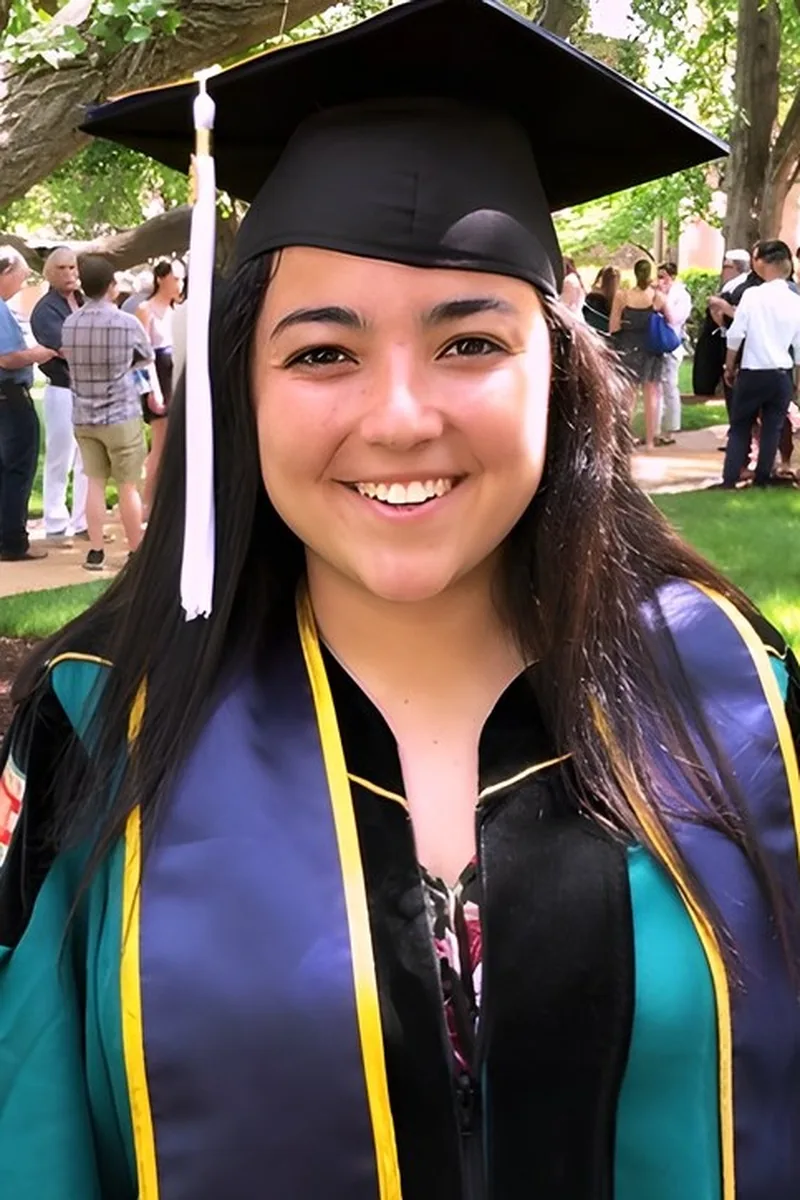
The unit circle is where most Trigonometry students either click or check out — and the difference usually comes down to whether someone explains the *why* behind sine, cosine, and their identities. Manuela teaches trig functions as relationships between angles and coordinates, which makes graphing transformations and solving equations feel like extensions of the same idea instead of disconnected formulas.
Trig identities can feel like an endless list of formulas to memorize, but Dalila teaches students to derive them from the unit circle so they actually stick. She digs into the connections between sine, cosine, and their graphs — showing how transformations, inverse functions, and the Law of Sines all trace back to the same geometric intuition. Her mathematics degree gives her the depth to explain not just the how but the why behind each identity.
Trig identities can feel like an endless list of formulas to memorize, but Apoorva teaches students to derive most of them from the unit circle and a few core relationships. Her engineering work at UC Berkeley relies heavily on trigonometric functions — from signal analysis to modeling periodic systems — so she can ground each identity in something tangible rather than leaving it as abstract algebra.
The jump from memorizing SOH-CAH-TOA to actually applying trig identities and graphing sinusoidal functions trips up a lot of students. Marissa approaches trig by building each identity from the unit circle outward, so students see the logic connecting sine, cosine, and tangent rather than treating each formula as something to memorize in isolation.
Trig can feel like a wall of disconnected formulas — unit circle values, identities, inverse functions — until someone shows you the geometry underneath all of it. Stephanie's neuroscience training gave her deep comfort with the mathematical modeling that trigonometry feeds into, and she teaches students to see the logic linking sine, cosine, and tangent rather than treating each as a separate thing to memorize.
I am a law student, but I took an unusual route to get there. I used to attend medical school but had a change of heart in my career path. Part of this was due to my political science major (double major with biology) in college as well as a number of Spanish and other courses that I took. Tutoring is something, I feel, that has come naturally to me, even back to my high school days. My goal is to help you learn as much as you can and reach your true potential. I will work hard to make sure that this happens, as long as you put in the work, too! We will work together to tailor your learning experience to your needs.
Trig is the subject where memorizing identities without understanding the unit circle turns into a disaster by midterms. Michael tackles it differently: he starts with why sine and cosine behave the way they do on the circle, then builds outward to identities, inverse functions, and graphing transformations. His applied math degree from Florida State means he can also show how trig shows up in real modeling problems, not just textbook exercises.
The unit circle tends to feel like arbitrary memorization until someone shows you the geometry underneath it. Payal unpacks identities like the double-angle and sum-to-product formulas by connecting them back to the triangles and rotations they actually describe, turning trig from a symbol-shuffling exercise into something visual and intuitive.
The unit circle clicks differently when someone explains why sine and cosine are defined the way they are, not just where to find them on a chart. Jiwen's four years tutoring trigonometry through the Tufts Literacy Corps means she's seen every common misconception around identities, inverse functions, and radian measure — and she knows how to untangle each one.
Trig identities and unit circle values stop feeling like random memorization once a student sees how they connect — and that's exactly how Tyler teaches them. His engineering coursework at the University of Miami requires constant use of sine, cosine, and their applications in wave functions and vector analysis, so he brings a practical fluency to topics like law of sines, inverse trig functions, and radian measure.
Trig identities and unit circle values tend to feel like arbitrary lists to memorize, but Viral teaches them as patterns that connect back to right-triangle geometry. As a biology major comfortable with the math behind waveforms and periodic functions, he shows students how sine, cosine, and tangent actually relate to each other rather than treating them as isolated formulas.
Trig identities and unit circle values tend to feel like arbitrary memorization until someone shows you the geometry underneath them. Conrad approaches trigonometry through its connections to physics and wave behavior, drawing on his biophysics background to make sine, cosine, and tangent functions feel intuitive rather than abstract.
Two things that have always been embedded in my soul has been my desire to learn and my desire to share that knowledge with those around me. Throughout my undergraduate, I squeezed in as many extra curriculum classes and worked in several research labs alongside working as a lead STEM tutor at my university's learning center while obtaining my Biomedical Engineering degree. Despite being done with school, I continue my pursuit of knowledge working in different labs and spending free time continuing to read, and I know it'll be a continual lifelong pleasure to help others connect with their own intrinsic knowledge as well! Looking forward to helping you succeed in your academic endeavors!
Testimonials
Because the right Trigonometry tutor makes all the difference.
Average Session Rating – Based on 3.4M Learner Ratings
Practice Trigonometry
Free practice tests, flashcards, and AI tutoring for Trigonometry
Nearby Trigonometry Tutors
Other Miami Tutors
Related Math Tutors in Miami
Frequently Asked Questions
Trigonometry is taught with various approaches across Miami's three school districts, and tutors understand these differences. Whether your student is working with a traditional textbook, an honors curriculum, or a more conceptual-based program, tutors can align their instruction with what's being taught in the classroom while filling in gaps. This ensures consistency and reinforces what students are learning without creating confusion between different methods.
Word problems require students to translate real-world scenarios into trigonometric equations—a skill that combines reading comprehension, visualization, and mathematical reasoning. Many students can solve isolated trig problems but struggle when they have to identify which function (sine, cosine, tangent) applies to a specific situation. Personalized tutoring helps students develop systematic strategies for breaking down word problems and recognizing patterns in different problem types.
Memorizing that sin²θ + cos²θ = 1 is different from understanding why this relationship exists—and that difference matters for long-term success. When students grasp the conceptual foundation (like the unit circle and how sine and cosine relate to coordinates), they can solve unfamiliar problems and remember formulas naturally. Tutors help students move beyond procedural steps to see the underlying patterns and connections, building confidence and deeper retention.
Graphing sine, cosine, and tangent functions requires understanding amplitude, period, phase shift, and vertical shift—concepts that are often taught quickly in classrooms with high student-teacher ratios like Miami's 18.6:1 average. Tutors can slow down this process, using visual tools and real-world examples to help students see how each parameter transforms the graph. This hands-on approach helps students move from confusion to confidence when tackling function transformations.
During an initial session, a tutor will assess your student's current understanding—identifying which concepts are solid and where gaps exist. They'll ask about specific challenges (whether it's angle conversions, right triangle problems, or graphing), review recent homework or tests, and discuss learning goals. This foundation allows the tutor to create a personalized plan that targets your student's needs rather than starting from scratch.
Math anxiety is real, and Trigonometry—with its unfamiliar functions and abstract concepts—can intensify it. Working with a patient tutor in a low-pressure, one-on-one setting helps students rebuild confidence by breaking material into manageable pieces and celebrating small wins. When students understand the 'why' behind concepts rather than just memorizing steps, anxiety often decreases and they feel more in control of the material.
Teachers and standardized tests require shown work because it reveals your student's reasoning and makes it easier to identify where errors occur. In Trigonometry, showing work also helps students catch mistakes in angle conversions, unit choices, or formula application. Tutors can coach students on organizing their work clearly, explaining their steps, and developing problem-solving strategies that naturally lead to complete, logical solutions.
Varsity Tutors connects students with expert tutors who specialize in Trigonometry and understand the specific curricula used across Miami's schools. You can share your student's current level, goals, and scheduling preferences, and we'll match them with a tutor who's a good fit. The process is straightforward—you'll get personalized 1-on-1 instruction tailored to your student's pace and learning style.
Let’s find your perfect tutor
Answer a few quick questions. We’ll recommend the right plan and match you with a top 5% tutor.