Award-Winning AP Calculus AB Tutors
serving Sarasota, FL
AP Calculus AB
Tutors in Sarasota
Private 1-on-1 tutoring, weekly live classes for academic support, test prep & enrichment, practice tests and diagnostics, and more to elevate grades and test scores.
Based on 3.4M Learner Ratings
UniversitiesSchools & Universities
DeliveredHours Delivered
ProficiencyGrowth in Proficiency
Who needs tutoring?
No obligation. Takes ~1 minute.
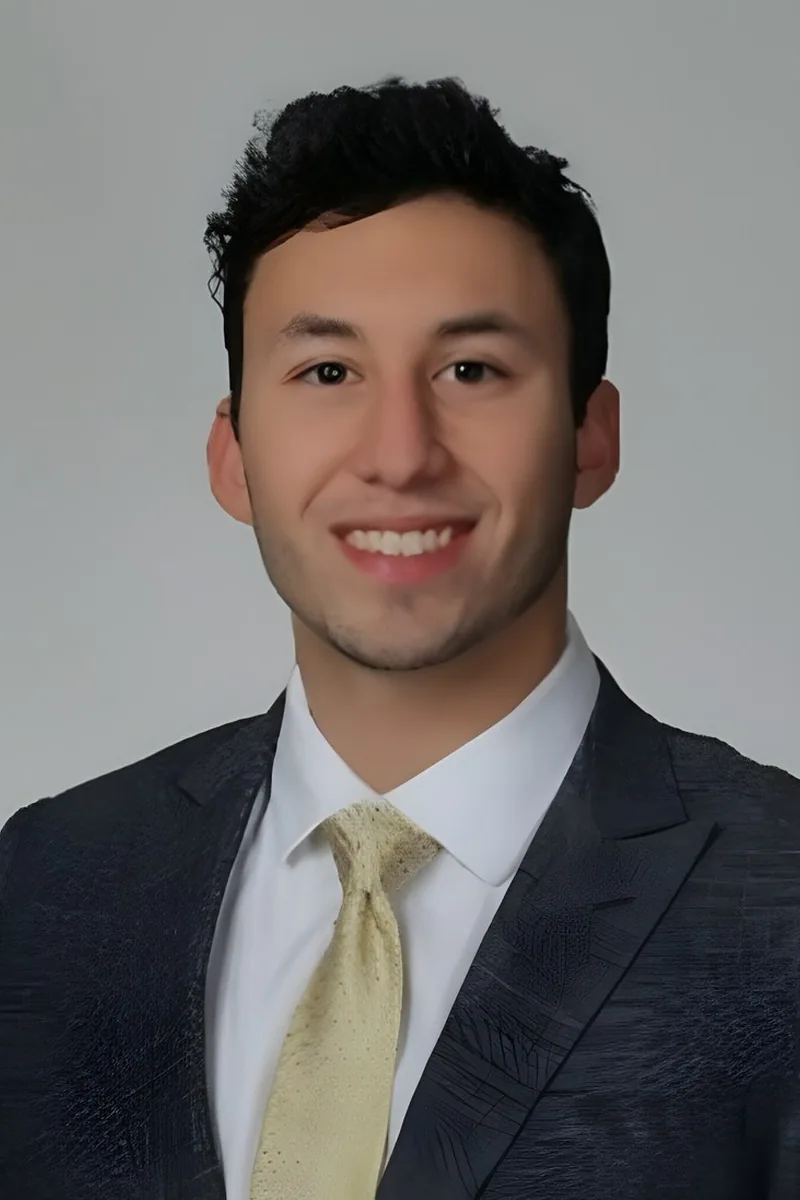
Three engineering degrees mean Andrea has spent years where calculus isn't a course but a daily language — computing derivatives to analyze mechanical stress, integrating to find volumes and energy transfers across systems. That fluency shows up most when she teaches limits and continuity, building the conceptual scaffolding that keeps students from hitting a wall once the AB curriculum reaches the Fundamental Theorem. Her 32 ACT and 4.8 rating back up an approach grounded in genuine mechanical intuition.
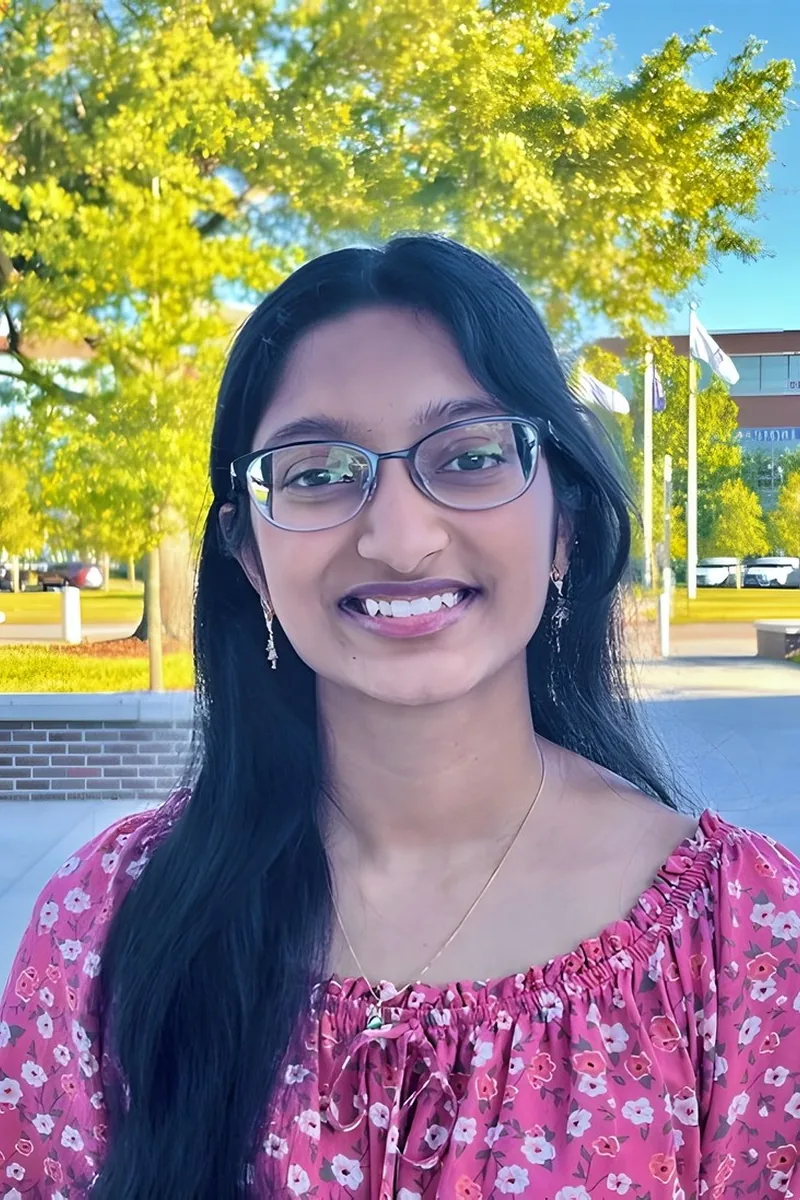
The jump from memorizing derivative rules to actually applying them — related rates, optimization, accumulation functions — is where most AP Calc AB students stall. Joshitha teaches problem-solving frameworks that make it clear which technique fits which scenario, so students aren't guessing on free-response questions. Rated 5.0 by her students.
Founding and running Mu Alpha Theta for four years built Gabriel the kind of deep mathematical fluency that makes him effective at teaching the trickiest parts of the AB curriculum — particularly limits, continuity arguments, and the conceptual leap into integration. His economics coursework at Penn means he routinely uses derivatives to analyze marginal behavior and integrals to compute surplus, so he teaches these tools with a sense of purpose that makes free-response setups feel logical rather than mysterious. His 35 ACT and 4.9 rating back that up.
Pre-med coursework means Manuela regularly applies calculus to model biological processes — dosage curves, growth rates, enzyme kinetics — giving her a practical handle on derivatives and integrals that pure math classes sometimes skip. She's especially good at walking students through the free-response setup process, where translating a word problem into the right integral is often harder than evaluating it. Rated 5.0 by students, with a 1520 SAT backing up her quantitative chops.
Human biology at Harvard means Destiny regularly uses calculus to model everything from population growth curves to pharmacokinetics — contexts where understanding what a derivative or integral represents matters more than cranking through algebra. She brings that biological lens to the AB curriculum's trickiest conceptual moments, like interpreting accumulation functions or explaining why the Fundamental Theorem connects two ideas that initially seem unrelated. Her 35 ACT and 5.0 rating back up the quantitative instincts behind her teaching.
The jump into AP Calculus AB is often less about the calculus itself and more about whether a student truly owns the algebra and function behavior underneath it. Jacob tackles limits, derivatives, and integrals by constantly tying them back to graphical and numerical reasoning, not just symbolic manipulation. His math degree and years of classroom teaching make that translation second nature.
Limits, continuity, and the formal definition of the derivative aren't just early-chapter warmups — they're the ideas that make or break a student's ability to handle everything else in the AB curriculum. Dalila's math degree means she can teach those foundations with real precision, connecting each concept forward to integration techniques and the Fundamental Theorem so nothing feels like an isolated trick. Her 1520 SAT underscores the kind of careful, structured reasoning she brings to exam preparation.
The jump from Pre-Calculus to AP Calculus AB is where many students first encounter limits, derivatives, and the formal reasoning behind instantaneous rates of change. Wanqi breaks these ideas down by connecting them to real-world applications from her civil engineering studies — slope becomes stress on a beam, area under a curve becomes total displacement. That concrete framing makes the abstraction click.
Limits, derivatives, and integrals each build on the last — lose the thread at any point and the rest of AP Calculus AB feels impossible. Benjamin earned both a bachelor's and master's degree in mathematics, giving him a deep understanding of how to unpack the chain rule, related rates, and the Fundamental Theorem so each concept clicks before moving on. He's especially good at connecting the graphical, numerical, and analytical perspectives the AP exam demands.
Limits, derivatives, and the Fundamental Theorem of Calculus all build on each other in AP Calc AB, so a shaky understanding of one concept snowballs quickly. Ankit breaks each idea down to its graphical and algebraic roots, connecting related rates and accumulation problems back to the core intuition. His 1580 SAT and 36 ACT reflect the kind of mathematical precision he brings to every session.
The jump from Pre-Calculus to AP Calculus AB is where many students first encounter ideas that can't be solved by pattern-matching alone — limits, the formal definition of a derivative, and the connection between a function and its accumulation function. Anthony's graduate training in math education means he unpacks these concepts at the reasoning level, building the kind of understanding that transfers to related rate problems, optimization, and the FTC.
Limits, derivatives, and integrals each build on the last, so one shaky concept can snowball fast in AP Calculus AB. Juan breaks the chain-rule and related-rates problems down into repeatable steps, drawing on the deep calculus foundation his industrial engineering and statistics studies at UF demand daily.
The jump from memorizing derivative rules to applying them — related rates, optimization, area under a curve — is where most AP Calc AB students stall. Cavan tackles these problems by connecting each concept back to its graphical and physical meaning, drawing on the calculus-heavy foundation of his civil engineering program at UF. His 5.0 rating speaks to how well that approach translates for students preparing for the exam.
Computer engineering at UF means Veronica writes code that depends on calculus working correctly — discrete summations, rate-of-change models, signal analysis — so she teaches AB concepts with the precision her own coursework demands. Her time at Mathnasium tutoring students across every math level sharpened her ability to trace a student's confusion back to the exact step where understanding broke down, which is critical for topics like the chain rule and definite integral applications. Her 1500 SAT confirms the quantitative instincts behind her explanations.
The jump from pre-calc to AP Calculus AB trips up a lot of students right around limits and the formal definition of the derivative — concepts that feel abstract until someone explains the intuition behind them. Ari breaks these ideas down by connecting them to the algebra and graphing skills students already have, building toward the chain rule, related rates, and the Fundamental Theorem. His year of math tutoring near Columbia keeps him sharp on exactly where students tend to get stuck.
Having earned multiple mathematics awards through high school and a 1430 SAT, Krina knows exactly where AP Calculus AB problems trip students up — especially the shift from straightforward derivative computation to interpreting what a rate of change means inside a word problem. She tackles limits, continuity, and integration by breaking each concept into small, concrete steps, drawing on her own recent experience navigating these topics as a student herself. Rated 5.0 by students.
Completing 12 AP classes and the full IB program — including IB Mathematics: Analysis and Approaches — means Rithika worked through limits, derivatives, and integration techniques under two rigorous frameworks before most students finish one. That dual exposure is especially useful for teaching the AB exam's conceptual multiple-choice questions, where understanding why L'Hôpital's Rule or the Mean Value Theorem applies matters more than just executing the steps. She's now on the pre-med track at Stanford, where calculus continues to underpin her science coursework.
Biotechnology at UCF's Burnett Medical Scholars Program means Priya regularly models enzyme kinetics and population growth curves — applications where understanding what a derivative or integral represents biologically is the whole point. That instinct for connecting calculus to measurable change pays off on the AB exam's free-response questions, where setting up the problem correctly matters more than grinding through algebra. Her 35 ACT and 4.8 rating back up the quantitative clarity she brings to limits, continuity, and the Fundamental Theorem.
I am working towards a Bachelor of Arts in Pure and Applied Mathematics as well as a Bachelor of Arts in Astronomy and Physics. I have enjoyed studying math and science since I was in elementary school. I would always help my friends out by answering their questions about the material. For about the last five years, I have had my own tutoring business where I have tutored a wide variety of math courses from elementary school math to pre-calculus and calculus. I like to make sure my students have a complete understanding of the core concepts before going into practice questions. I have also had experience helping my peers with physics and computer science courses.
I am very interested in a career in the medical field, so I am apart of some pre-medical organizations. I really enjoy playing all different sports, from soccer to volleyball to tennis.
Scoring a 1550 on the SAT means Karl's quantitative reasoning is sharp enough to handle the AB curriculum's trickiest moments — limits involving indeterminate forms, interpreting the meaning of a definite integral in context, and connecting a function's behavior to its derivative's graph. His tutoring background in both math and music education gives him an unusual knack for breaking complex ideas into smaller, sequential steps, much like teaching someone to master a difficult passage measure by measure.
I am listening to and learning about him or her as an individual. I can also discover what motivates the student during this conversation and plan for how to frame future tutoring sessions in terms of what the student already knows and enjoys.
I am looking to help you with your math and physics questions. I am a graduate student studying hurricane physics and enjoy using my deep understanding of material to help others. Hope to meet you soon!
Majoring in both Mathematics and Economics at the University of Miami means Christine encounters derivatives twice over — once as formal theory, once as the language of marginal analysis and optimization in economic models. That double exposure sharpens how she teaches the AB curriculum's trickiest conceptual jumps, particularly connecting the limit definition of a derivative to the practical shortcuts students rely on during timed free-response questions. Her 32 ACT and hands-on experience tutoring Calculus II students round out a quantitative toolkit that runs deeper than the AP syllabus requires.
Limits, the chain rule, and related rates each represent a different way of thinking about change, and Harrison breaks each one down on its own terms before connecting them into the bigger AB framework. His interdisciplinary science background means he can pull examples from physics, biology, and engineering to make abstract derivative and integral concepts click.
Pursuing a chemistry degree at UCF means Qiwei regularly uses derivatives to describe reaction rates and integrals to calculate thermodynamic quantities — skills that map directly onto the AB curriculum's core concepts. She's particularly comfortable teaching limits and continuity, the building blocks that make later topics like the chain rule and the Fundamental Theorem feel logical rather than arbitrary. Her 1360 SAT reflects solid quantitative instincts that carry through into how she breaks down multi-step problems.
Limits, derivatives, and the fundamental theorem of calculus can feel abstract until someone connects them to what's actually happening on a graph. Nathan earned a strong AP exam score in calculus and continues using these tools daily in his computer science program at UCF. He's especially good at walking through related rates and optimization problems where students tend to get stuck.
As a passionate tutor with experience in subjects ranging from Algebra to AP Calculus and Biology, I am dedicated to creating a supportive learning environment that empowers students to excel. Currently pursuing my bachelor's degree in biomedical engineering at the University of Florida, I employ a hands-on approach to tailor my tutoring methods to each student's unique learning style. I believe that establishing a strong rapport is vital for success, and I strive to make complex concepts both accessible and engaging. Witnessing my students' growth and newfound confidence fuels my commitment to continuously refine my teaching strategies. Outside of tutoring, I enjoy exploring advancements in technology and their applications in medicine, which enhances my understanding of the subjects I teach and inspires my students.
I'm currently an undergraduate student at Georgia Institute of Technology pursuing a degree in Electrical Engineering. I mostly tutor subjects that reside in the STEM field as those subjects are my strong points. I have been a tutor in the past back in high school. During that time, I realized that helping students understand difficult material can be very awarding. In my free time, when I'm not studying for school or practicing sports, I like to play video games and hangout with friends. Every once in a while I'll pick up my violin and play songs that I've learned in the past; I find it very relaxing.
Industrial engineering at Miami trains you to optimize systems — minimizing cost functions, maximizing throughput — which means Tyler's calculus instincts are rooted in knowing what a derivative or integral is actually for, not just how to evaluate one. That optimization mindset maps directly onto the AB exam's trickiest free-response territory, where setting up the problem correctly is the whole battle. His 1470 SAT and 5.0 tutoring rating back up the quantitative precision behind his teaching.
When students can actually read an f'(x) graph and explain what it says about f(x) — not just differentiate polynomials — that's when the AB exam stops feeling impossible. Noelle's computer science training at the undergraduate level built her calculus chops through algorithm analysis and continuous modeling, and she applies that precision to teaching limits, derivative interpretation, and integral setup. Rated 5.0 by students, with a 34 ACT backing up the quantitative instincts behind her explanations.
When limits and continuity stop being intuitive — usually right around the epsilon-delta definitions or piecewise functions — that's where Hassan's CS training actually pays off. Programming in Java and C++ builds the same logical precision that AP Calculus AB demands: breaking a problem into cases, tracing how a function behaves step by step, and knowing exactly where an argument falls apart. Rated 5.0 by students.
The jump from memorizing derivative rules to applying them in related rates and accumulation problems is where most AP Calc AB students stall out. Elizabeth completed the IB math track in high school and now connects each calculus concept back to the graphical and algebraic intuition that makes problems solvable rather than intimidating.
Two things that have always been embedded in my soul has been my desire to learn and my desire to share that knowledge with those around me. Throughout my undergraduate, I squeezed in as many extra curriculum classes and worked in several research labs alongside working as a lead STEM tutor at my university's learning center while obtaining my Biomedical Engineering degree. Despite being done with school, I continue my pursuit of knowledge working in different labs and spending free time continuing to read, and I know it'll be a continual lifelong pleasure to help others connect with their own intrinsic knowledge as well! Looking forward to helping you succeed in your academic endeavors!
The jump from memorizing derivative rules to actually applying them — related rates, optimization, the Mean Value Theorem — is where most AB students get stuck. Gabriel tackled this material through the IB Mathematics program and revisits it constantly in his Computer Science studies at UCF. He walks through each problem type with an emphasis on setting up the logic before touching any formulas.
Limits, derivatives, and the FTC aren't just abstract rules to memorize — they describe how real systems change, something Abigail encounters constantly in her mechanical engineering program at The University of Alabama. She breaks down each AP Calculus AB concept by building intuition first (what does the derivative actually mean here?) before drilling the procedural steps needed to earn exam credit.
I am a current student at the University of Florida pursuing a dual degree in public relations and business administration. i have been teaching others since I was 15 years old and believe that every subject can be interesting with a different perspective. As a younger tutor, I draw from my own student experience to communicate effectively with learners and make even the most complicated subjects easy to grasp. I am most passionate about teaching English, Music, Grammar, Writing and Calculus, and am fascinated by the power of the written word. Outside of school, I love fashion design, journalism, photography, music, and any opportunity to blog about the adventures I'm currently on.
Limits, derivatives, and integrals each build on the one before, so a shaky understanding of one topic tends to snowball through the rest of AB. Sharif teaches each concept by tying it to something visual — slope fields, area accumulation, rate-of-change graphs — so the reasoning sticks before the formulas come out. His approach turns the FRQ section from a guessing game into a structured problem-solving process.
Limits, derivatives, and integrals clicked for Nicholas during his own AP Calc AB course and stayed sharp through the heavy calculus requirements of his Computer Science program at the University of Florida. He breaks down problems like related rates and area between curves by connecting the visual intuition to the algebra, so students understand what they're computing and why.
Limits, derivatives, and integrals each build on the last — so one shaky concept can snowball fast in AP Calculus AB. Brandon's approach is to diagnose exactly where the confusion starts, whether it's the chain rule or related rates, and rebuild understanding from that point forward. His engineering background at Miami means he can also show students why these tools matter beyond the exam.
Testimonials
Because the right AP Calculus AB tutor makes all the difference.
Average Session Rating – Based on 3.4M Learner Ratings
Practice AP Calculus AB
Free practice tests, flashcards, and AI tutoring for AP Calculus AB
Nearby AP Calculus AB Tutors
Other Sarasota Tutors
Related Math Tutors in Sarasota
Frequently Asked Questions
AP Calculus AB covers limits, continuity, derivatives, and integrals—the foundational concepts of single-variable calculus. The course emphasizes both computational skills and conceptual understanding, including applications like optimization, related rates, and area/volume problems. Most students spend the year building from limits through the Fundamental Theorem of Calculus, with significant practice on problem-solving and exam-style questions.
Score improvement depends on your starting point and consistency with tutoring. Students who work with tutors typically gain clarity on challenging concepts like derivatives and integrals, which translates to better performance on the exam. Many students improve by 1-2 score points (on the 1-5 scale) when they address specific weak areas and develop stronger problem-solving strategies—but consistent practice between sessions is key.
Students often struggle with the transition from algebra to calculus thinking—particularly understanding what a derivative represents conceptually versus just computing it mechanically. Pacing is another challenge; many students fall behind when they don't fully grasp limits or early derivative rules. Integration, related rates problems, and connecting multiple concepts on the free-response section also trip up many test-takers.
Starting tutoring early in the school year—ideally in September or October—gives you time to build a strong foundation in limits and derivatives before tackling harder integration and application topics. If you're struggling midway through the year, starting immediately still helps, as tutors can identify gaps and create a focused study plan. For exam prep in spring, tutors can help with practice tests, timing strategies, and targeted review of weak areas.
The AP Calculus AB exam has a multiple-choice section (45 minutes, no calculator; 45 minutes, with calculator) and a free-response section (30 minutes, no calculator; 60 minutes, with calculator). Tutors help you practice under timed conditions, identify which question types you solve fastest, and develop strategies like tackling easier problems first and knowing when to skip and return. Understanding the calculator's strengths and limitations is also crucial for maximizing your score.
Your first session focuses on understanding your current level, learning goals, and specific challenges. The tutor will likely review some calculus concepts to identify gaps, ask about your course progress, and discuss your target score and timeline. From there, you'll develop a personalized plan that might include concept review, practice problem strategies, or exam preparation depending on where you are in the school year.
Sarasota has 72 schools across the area, and many offer AP Calculus AB courses with dedicated teachers and resources. Varsity Tutors connects you with expert tutors who understand the AP curriculum and can supplement your classroom learning with personalized instruction. Whether you're at a public or private school in Sarasota, a tutor can help reinforce what you're learning in class and fill any gaps.
Practice tests are essential—they help you understand the exam format, identify weak topics, and build timing skills. Taking full-length practice exams under timed conditions reveals which concepts need more work and which sections consume too much time. Tutors use practice test results to guide focused review and strategy adjustments, so you're not just practicing but learning from each attempt.
Let’s find your perfect tutor
Answer a few quick questions. We’ll recommend the right plan and match you with a top 5% tutor.