Award-Winning Reading Tutors
serving Virginia Beach, VA
Reading
Tutors in Virginia Beach
Private 1-on-1 tutoring, weekly live classes for academic support, test prep & enrichment, practice tests and diagnostics, and more to elevate grades and test scores.
Based on 3.4M Learner Ratings
UniversitiesSchools & Universities
DeliveredHours Delivered
ProficiencyGrowth in Proficiency
Who needs tutoring?
No obligation. Takes ~1 minute.
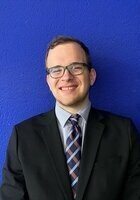
I'm passionate about being able to help educate future generations and instill a lifelong love for learning. I like to think that I'm able to make difficult and novel concepts appear both relevant and fun for students.
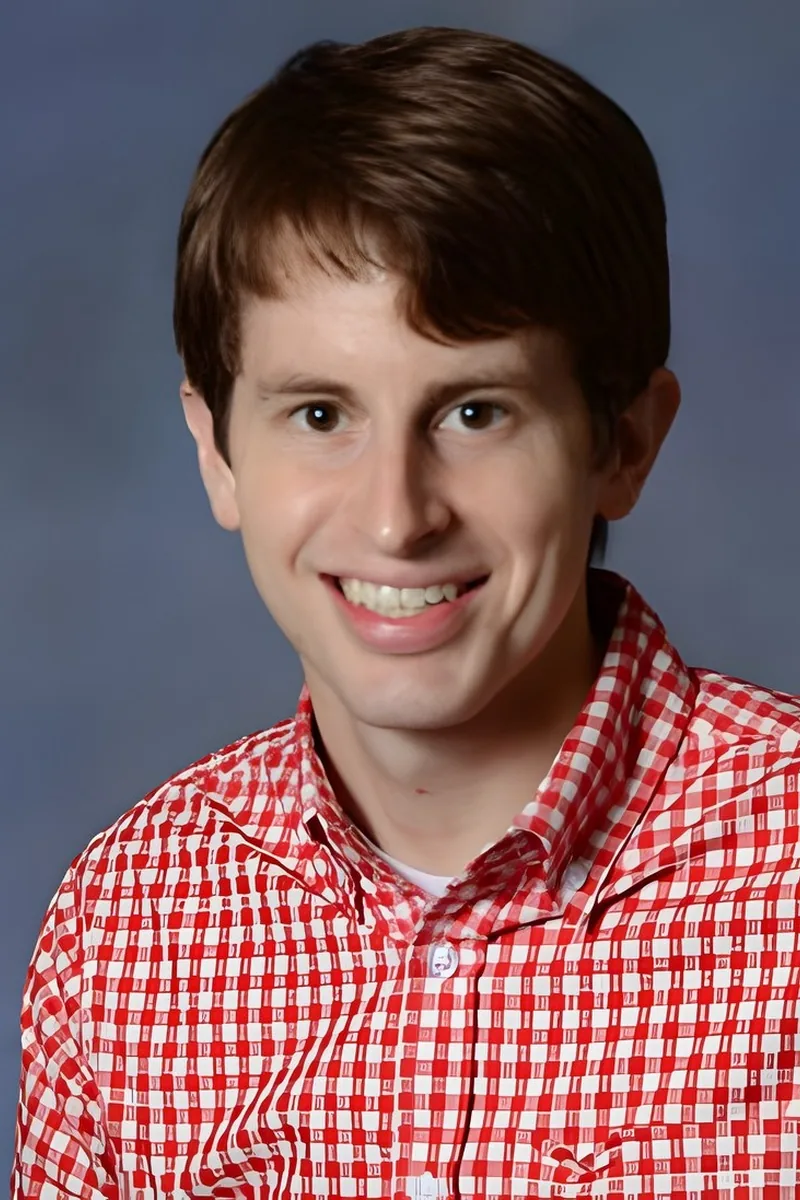
Law school trains you to read dense, complex texts and extract the argument buried inside — a skill Gary applies directly when teaching reading comprehension. He breaks down strategies for identifying an author's purpose, tracking how claims develop across paragraphs, and distinguishing evidence from opinion in any genre.
Strong readers don't just decode words — they track arguments, question assumptions, and notice when an author is leading them somewhere specific. Molly's Global Affairs degree at Yale required consuming dense, complex texts daily and extracting the core claims quickly, a skill she now teaches to students at every level. Whether it's building vocabulary in context or learning to annotate effectively, she brings a practical, structured approach to reading comprehension.
Law school at Harvard demands a particular kind of reading — pulling apart dense legal opinions, tracking multi-layered arguments across dozens of pages, and spotting the one sentence that shifts an entire case's reasoning. Marin brings that same analytical discipline to reading sessions, teaching students how to identify an author's core claim and follow the thread of evidence supporting it. Her 1530 SAT reflects the kind of precise, strategic reading she's been doing since well before law school.
As a biology major who also studies public health and humanities at UVA, Kara reads dense, varied material daily — from peer-reviewed journal articles to literary criticism. She applies that range to teaching reading skills like identifying an author's purpose, making inferences from context clues, and distinguishing main ideas from supporting details. Students build the kind of active reading habits that transfer across every subject they'll encounter.
Bioinformatics training at VCU means Shahad spends her days reading across two very different registers — molecular biology papers loaded with technical vocabulary and programming documentation where misreading one line breaks everything. She brings that precision to reading sessions, teaching students how to slow down, pull apart a sentence's structure, and figure out unfamiliar words from context clues instead of skipping past them. Rated 4.9 by students.
Strong reading comprehension starts with knowing what to do when a passage doesn't click on the first pass — how to identify a main argument, track supporting details, and distinguish fact from inference. Julia's English training makes her especially effective at teaching students to slow down and interrogate a text rather than skimming for surface-level answers.
When a passage feels like a wall of text, the problem usually isn't vocabulary — it's not knowing where to anchor your attention. Lauren teaches active reading strategies like annotation, identifying paragraph function, and distinguishing main claims from supporting details. These are skills she honed through her English coursework and now applies across fiction, nonfiction, and standardized test passages alike.
A French literature degree means Courtney spent years reading texts where every word choice carries cultural and linguistic weight — translating nuance, not just vocabulary. That habit of precise, attentive reading carries over when she teaches English comprehension: she shows students how to slow down and track what a sentence is actually doing, from identifying tone to catching the argument buried inside a complex paragraph. Holds a 5.0 rating.
Economics textbooks at UVA don't read like novels — they're packed with dense arguments, data-heavy paragraphs, and vocabulary that shifts meaning depending on context, so Azam learned early how to break a passage apart and extract exactly what matters. He brings that same analytical approach to reading sessions, teaching students to identify what an author is actually claiming, track how evidence builds across paragraphs, and stop re-reading the same lines hoping meaning will appear on its own.
Years of teaching ESL students and working with children of immigrants gave Andrea a deep understanding of how reading comprehension actually develops — from decoding vocabulary in context to making inferences across paragraphs. She tailors her approach based on where a student's comprehension breaks down, whether that's unfamiliar text structures, figurative language, or simply building the stamina to engage with longer passages.
Biology textbooks and Spanish literature assign very different kinds of reading — one demands precise vocabulary recall, the other requires picking up meaning from context and tone. Amanda toggles between both as a college student majoring in those fields, and she brings that flexibility to reading sessions, teaching students how to adjust their approach depending on what's actually on the page. It's a practical skill that clicks especially well for younger readers still learning that not every text gets read the same way.
Strong reading comprehension isn't just about understanding what a passage says — it's about recognizing tone, identifying an author's purpose, and making inferences from limited information. Katie uses interactive strategies like annotation techniques and targeted questioning to build those skills actively during sessions. She's tutored readers ranging from age six to sixteen, so she adapts her methods to match each student's level.
I am a recent cum laude graduate of the University of Amsterdam's Masters in Economics Program where I specialized in Monetary Policy and Banking. While there, I worked as a teaching assistant and tutored in economics and mathematics. Prior to that, I worked as an ESL teacher for two years in Russia and China.
I am very excited to have the chance to work with students preparing for the PSAT, the SAT, or the LSAT! While I'm originally from Connecticut, I attended college and law school in Buffalo, New York. While there, I worked for a test prep agency helping students prepare for the SAT and the LSAT. In 2003, I moved to Richmond. I worked with the Virginia Department of Taxation for 7 years doing policy work and assisting with the legislative process. In 2011, I began working for Bryant and Stratton College, where I taught students in the Paralegal Studies program. I loved helping my students prepare for new careers. I can't wait to work with you and help you succeed as well!
I am most interested in improving the critical thinking and critical writing skills of students who will comprise the next generation of college graduates and working professionals. The ability to express oneself clearly through writing is an invaluable skill both within academia and the professional workforce. I believe it is my job to provide students with the necessary preparation and skills they will need to succeed in a college environment and beyond. When I am not tutoring, I enjoy reading fiction (with a special soft spot for sci-fi/fantasy), running and training for my next marathon, and experimenting with new recipes in my kitchen.
I am a lifelong francophile who has lived in Paris, France for almost a year. I am also an avid NCAA men's and women's basketball fan! Go Rams! Go Terps!
I am a current third-year student at Virginia Commonwealth University. I am in the BS/MD Guaranteed Admissions program for Medicine at VCU, and I am majoring in Biology with a minor in Business and a minor in Dance. I am originally from Phoenix, Arizona and I have a passion for teaching. I have had lots of experience with tutoring and also in a large variety of subjects. I worked at a place called "The Tutoring Center" for 8 months where I had the opportunity to teach students aged 5 through 18 in varying levels of Math, English, and Writing. I have also been now tutoring with Varsity for nearly 2 years. While I tutor in a large variety of subjects, I am especially passionate about teaching Math, Chemistry, Biology, and also tutoring in Standardized Test prep such as for the SAT, PSAT, and ACT.
I am currently preparing to begin a Master's of Teaching program at VCU this fall and have continued to excel in the math and history courses I need to round out my teaching endorsements. Because my future career path focuses on teaching at the high school level, I have a preference for tutoring math (especially algebra through calculus) and history, along with writing and my current subject of philosophy. Besides my career motivations, I find that I stand out the most as a tutor in these areas because of my capability in clearly presenting complex material and my ability to grasp the diverse perspectives of my students.
I am passionate about helping others and would love to help you to achieve your academic goals! Writing and language are my strongest suits, and I have plenty of experience working with kids and communicating with individuals of all age groups. You will gain a source of encouragement as well as practical help from my tutoring services.
I'm Kendra, a professional ESL and Curriculum Development professional. I graduated with a Bachelor's degree from the University of California Los Angeles (UCLA). I have worked both abroad and domestically, online and in the classroom teaching students of all ages, backgrounds and skill levels. I focus heavily on proper pronunciation, grammar and building your confidence as an English speaker. I look forward to seeing you in class!
I am an expert writer and communicator in both English and Spanish, and my thorough knowledge of linguistics (phonetics and syntax) makes me especially qualified to help second language learners. While I am an effective and capable tutor for a broad range of subjects, I am most passionate about English, Spanish, and ESL, for I believe that strong communication skills are the foundation for success.
I am currently a lead preschool teacher. I received my Bachelor's in Psychology from VCU and am looking to return to school to further my education. While in college, I worked as a Supplemental Instruction leader, teaching general biology and anatomy. I have also worked in an after school program with elementary age children, but I have my fondest memories volunteering as a counselor for Camp Kesem. In my own experience, I loved school and now I love teaching even more at all age levels! I especially enjoy the challenge of getting creative to discover what approach and mediums work best for each student. I am available for in person as well as online tutoring.
I am a graduate of Tufts University. I received my Bachelor of Arts in English as well as a minor in History. Since graduation, I have worked as a 7th grade Reading Language Arts teacher in Dallas Texas at a newly formed public all boys school. This has provided me with great experience and insight into how students best learn and how to create culturally responsive lessons that students will engage with. I am most passionate about English, Literature, History, and Spanish. In my experience, working to prepare students for state standardized tests has had the additional benefit of helping students to discover what they enjoy reading about. This increase in intrinsic motivation to read has had an important impact on struggling students. I am dedicated towards ensuring that students are provided with an education that increases their quality of life.
I am fourth-year medical student seeking to use some flexible time before I graduate to work with students interested in learning and growing to new heights.
I am currently applying to medical schools in hopes of attending in the Fall of 2015. Helping my younger brother manage his genetic disorder, in addition to years of teaching special needs students at summer camp, has inspired me to pursue a career as a Pediatrician with a focus in Medical Genetics.
I am a recent Economics graduate from the University of Virginia who also has personal experience in taking 12+ AP tests, fancy calculus and SAT/ACT prep. Consider me as someone who has maybe been in your position and who is also very sympathetic to the gruel of standardized testing. What I might lack in absolute tutoring experience, I make up for with effort and a genuine desire to help motivated students.
I am a lawyer in the Washington, D.C. area. I tutor in the test prep space - primarily for the SAT, ACT, and LSAT. I graduated from the University of Alabama in 2013, where I was a National Merit Scholar. I then spent one year in the Washington, D.C. area as a SAT/ACT instructor for a testing company, where I taught at four different area high schools and marketed company services to area high school students. I then attended the University of Virginia School of Law, where I was awarded a full tuition scholarship in part from my LSAT score. I also taught an SAT course for the same testing company during my time in law school. My teaching philosophy is simple: figure out what works for you and assisting you in achieving your best score. I'm pretty much always available to answer questions even outside of our tutoring time.
I'm currently a junior studying Computer Science at Virginia Polytechnic Institute and State University.
Years of teaching high school English in a rural Virginia district gave Andrew a sharp eye for the specific moment students stop reading passively and start noticing how a text is built — the shift in tone between paragraphs, the argument buried under narrative, the vocabulary that unlocks itself once you learn to lean on context. He brings that same close-reading discipline to standardized test prep, where knowing how to dissect a passage under time pressure is half the battle. Rated 5.0 by students.
I'm currently a Junior at VCU. My major is Biology and I'm minoring in Chemistry and Mathematics. In addition, I'm also on the pre-med track, so I have taken many science classes!
Hey, I'm Ryan, I specialize in micro and macro economics, math through Calc 3, Spanish, and SAT prep. I've been tutoring for years throughout middle school and high school, and I'm happy to help with whatever you might need!
I'm passionate about helping middle school students build confidence in reading, writing, and grammar. As a licensed teacher with 5 years of classroom experience, I specialize in breaking down complex conceptsfrom essay structure and textual analysis to core grammar mechanicsinto clear, manageable steps. Whether we are unpacking literary themes in novels like The Outsiders and The Giver, mastering the 8th-grade thesis formula, or polishing writing mechanics, my goal is to support each learner
Hello there! I offer a no-stress, judgment-free environment, and I want to work with you in the ways that fit you best. When it comes to explaining the fundamentals, I'll support you in math and psychology; when it comes to biology, I'll help you conquer the nitty-gritty; and when it comes to reading analysis and writing skills, I'll help you shine. I'd be happy to work with you, regardless of age or background. Thanks for passing by, and have a nice day!
I am especially familiar with critical analysis of film and theater, but have studied a variety of literary traditions.
I am a student at the University of Virginia pursuing a degree in computer science through the college of engineering. I have been tutoring since my 10th grade of high school through volunteering as well self employed tutoring. I mainly tutor in math, specifically subjects from algebra to calculus. I am passionate about helping students grasp concepts in mathematics and excel in their courses. In my free time I enjoy playing sports, reading, and spending time with friends.
I am a recent college graduate from Columbia University with a lot of experience in research and writing. My major was Human Rights and I am passionate about the issues that I engage with. I received my associate's degree from Bergen Community College in 2014 and my Bachelors from Columbia in 2017. At Bergen Community, I worked in the tutoring center focusing on assisting students with writing in any subject. I also tutor English and the SAT.
I'm Jess, and I graduated from the University of Richmond in December 2018 with a degree in International Studies and minors in Economics and Latin American and Iberian Studies. During my time in college, I was able to study and work in Spain and Brazil, respectively.
I am a graduate of Cambridge College in June 2012. I received a Master's in Special Education K-12. I lived in Italy prior to graduating college. A Senior Chief needed a tutor for her son who was struggling. I tutored the young man in reading and math. While my degree is for kindergarten through 12th grade, I enjoy working with kindergarten through 4th grade. I am passionate about reading, writing and math in grades kindergarten to 3rd. I believe education is a necessity for an improved quality of life and try to incorporate daily life within lessons.
I am a 4th-year student at Georgia Tech studying Computer Science. I am excited to help students learn and hope to provide the best tutoring I can.
Testimonials
Because the right Reading tutor makes all the difference.
Average Session Rating – Based on 3.4M Learner Ratings
Other Virginia Beach Tutors
Related English Tutors in Virginia Beach
Frequently Asked Questions
Many students struggle with reading comprehension, particularly when analyzing complex texts or identifying main ideas versus supporting details. Others find it difficult to engage with different genres, manage their reading pace, or retain information from longer passages. Personalized 1-on-1 instruction helps address these specific challenges by allowing tutors to diagnose exactly where a student is getting stuck and build targeted strategies to improve fluency and understanding.
Varsity Tutors connects you with expert tutors who assess your current reading level and identify areas for improvement during your first session. From there, tutors create a personalized plan that may include guided reading practice, comprehension strategies, vocabulary building, and literary analysis techniques tailored to your goals. Sessions are flexible and adapt based on your progress and the specific texts or skills you're working on.
Yes. Tutors help students develop strong thesis statements, organize their ideas into clear essay structures, and support claims with evidence from the text. They also provide feedback on your writing process—from brainstorming and outlining through revision—so you can learn to write more persuasive literary analysis essays on your own. This personalized approach is especially valuable for students preparing for AP Literature or advanced English courses.
Personalized tutoring is highly effective for struggling readers because tutors can slow down, break concepts into manageable steps, and use multiple strategies to build confidence and skills. Rather than keeping pace with a classroom of 14+ students, your child gets individualized attention focused on their specific reading gaps—whether that's phonics, decoding, fluency, or comprehension. Many students see significant progress when working with a tutor who understands their learning style.
Tutors teach vocabulary in context by connecting new words to the texts students are reading, which helps words stick better than memorization alone. They also introduce strategies like using context clues, understanding word roots and prefixes, and practicing retrieval through spaced repetition. Building a stronger vocabulary directly improves reading comprehension and writing quality, and tutors tailor the approach to match your grade level and academic goals.
During the first session, tutors typically have students read passages at different levels, ask comprehension questions, and discuss their reading habits and challenges. This helps establish a baseline understanding of fluency, vocabulary, comprehension, and analytical skills. Tutors then use this assessment to design instruction that builds on strengths and addresses gaps, ensuring your child is appropriately challenged without becoming frustrated.
Absolutely. Tutors help students master the specific question types and time management strategies needed for standardized tests like the SAT, ACT, or state assessments. They teach you how to approach different passage types, identify key information quickly, and avoid common traps. With personalized practice and feedback, students build both the skills and confidence needed to perform well on test day.
Your first session is an opportunity for the tutor to get to know you, understand your reading goals, and assess your current skills. Expect to discuss what you find challenging about reading, what you enjoy, and what you're working toward—whether that's improving grades, preparing for a test, or building confidence. The tutor will likely have you read something and ask questions to understand your strengths, then outline a personalized plan moving forward.
Let’s find your perfect tutor
Answer a few quick questions. We’ll recommend the right plan and match you with a top 5% tutor.