Award-Winning AP Psychology Tutors
serving Provo, UT
Who needs tutoring?
FEATURED BY


TUTORS FROM
- YaleUniversity
- PrincetonUniversity
- StanfordUniversity
- CornellUniversity
Award-Winning AP Psychology Tutors serving Provo, UT

Certified Tutor
9+ years
Having studied psychology alongside microbiology and the biological sciences, Felix brings a dual lens to AP Psych — particularly in units like biological bases of behavior and sensation-perception, where his science training makes neurotransmitter pathways and neural signaling click rather than fee...
University of Chicago
Associate in Science

Certified Tutor
10+ years
Sherry
A psychology and linguistics degree from the University of Chicago means Sherry didn't just survey the AP Psych curriculum — she studied the underlying science of language, cognition, and behavior at a research university where the field's foundational theories were developed. That linguistics train...
University of Chicago
Bachelor's degree in psychology and linguistics

Certified Tutor
6+ years
Matthew
Matthew's pre-med track at Yale pairs biochemistry with philosophy — a combination that pays off in AP Psychology, where the biological bases of behavior unit demands real science fluency and the free-response section rewards precise, logically structured arguments. His hands-on work with tools like...
Yale University
Bachelor of Science, Biochemistry and Molecular Biology

Certified Tutor
9+ years
Todd
Todd's Master of Social Work gives him direct clinical exposure to concepts that dominate AP Psychology's abnormal psychology and social psychology units — diagnostic frameworks, group dynamics, cognitive-behavioral models — all material he's applied in practice, not just studied in a textbook. His ...
University of Chicago
Master of Social Work, Social Work
University of Illinois at Urbana-Champaign
Bachelor of Science, Biology, General
University of Chicago
graduate

Certified Tutor
Tashina
Tashina earned her PhD in Psychological and Brain Sciences, so the AP Psych curriculum — from operant conditioning to the intricacies of the DSM — is territory she's navigated at the research level, not just the introductory one. Her statistics expertise is particularly useful for the research metho...
Johns Hopkins University
PHD, Psychological and Brain Sciences
Barnard College
Bachelor in Arts, Psychology

Certified Tutor
Martha
Martha's PhD research at Michigan sits at the intersection of culture and self-concept — the exact territory AP Psychology's social psychology and personality units cover, except she's generating original data on it, not just reviewing textbook summaries. That active research background, built on a ...
Duke University
Bachelors, Psychology
Duke University
Current Grad Student, Global Health
Duke University
BS in psychology
Certified Tutor
6+ years
Adam
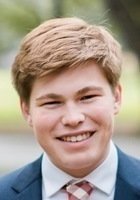
Cognitive science at Rice meant Adam studied the AP Psych curriculum from the inside out — perception, memory, language processing, and the neural underpinnings of behavior were core coursework, not elective reading. That training makes him especially sharp on the cognition and biological bases unit...
Rice University
Bachelor of Arts in Cognitive Sciences (minor in Spanish)

Certified Tutor
Emerson
A psychology major at the University of Chicago with a neuroscience specialization, Emerson lives and breathes the material that shows up on the AP Psychology exam — from Piaget's developmental stages to action potentials and neurotransmitter pathways. He connects textbook concepts to the actual res...
University of Chicago
Bachelor of Science, Biology and Psychology

Certified Tutor
6+ years
William
Linguistics at Yale trains you to analyze how language shapes thought, perception, and social interaction — concepts that map directly onto AP Psychology units like cognition, memory, and social psychology, where understanding how people process and communicate information is half the battle. Willia...
Yale University
Bachelor in Arts, Linguistics
Certified Tutor
5+ years
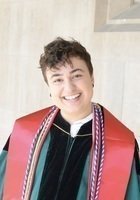
Dental school requires mastering the same biological foundations that underpin AP Psychology's toughest unit — Nik knows neurotransmitter pathways, neural signaling, and brain anatomy from his predentistry and biology training, not from flashcards. His 32 ACT also means he's familiar with the kind o...
Washington University in St. Louis
Bachelor in Arts, Biology, General
University of Missouri-Kansas City
Doctor of Dental Science, Predentistry
Practice AP Psychology
Free practice tests, flashcards, and AI tutoring for AP Psychology
Nearby AP Psychology Tutors
Other Provo Tutors
Related Social Sciences Tutors in Provo
Frequently Asked Questions
The AP Psychology exam is a 2-hour test consisting of 100 multiple-choice questions and a free-response section. The multiple-choice questions cover the entire AP Psychology curriculum—units on scientific foundations, sensation and perception, learning, cognition, motivation and emotion, personality, testing and individual differences, abnormal psychology, treatment of abnormal behavior, and social psychology. Your score ranges from 1 to 5, with a 3 or higher typically considered passing. Most colleges grant credit or advanced placement for scores of 3 or higher.
Many students struggle with memorizing the extensive vocabulary and key psychologists/studies—AP Psychology requires understanding dozens of theories, experiments, and researchers across 9 units. Another common challenge is distinguishing between similar concepts (like classical conditioning vs. operant conditioning, or different therapy approaches) and applying them to real-world scenarios on the exam. Time management during the multiple-choice section is also critical, as students often spend too long on individual questions and rush through the free-response portion.
Most students benefit from consistent preparation throughout the school year, but if you're starting later, aim for at least 4-6 weeks of focused study before the exam in May. This typically means 5-7 hours per week reviewing units, taking practice tests, and drilling vocabulary. The key is spacing out your studying rather than cramming—research on spaced repetition shows that reviewing material over time leads to stronger retention than last-minute studying, which is especially important for a content-heavy exam like AP Psychology.
Practice tests are essential for AP Psychology success. They help you identify which units and question types challenge you most, get comfortable with the exam format and pacing, and build confidence before test day. Start taking full-length practice tests 3-4 weeks before the exam, then review your mistakes carefully to understand why you missed each question. This targeted practice is far more effective than simply re-reading notes, since it mimics the actual testing experience and reveals gaps in your understanding.
Varsity Tutors connects you with expert tutors who can create a personalized study plan based on your strengths and weaknesses, help you master difficult concepts like operant conditioning or statistical analysis, and teach you effective test-taking strategies for both the multiple-choice and free-response sections. A tutor can also provide timed practice sessions to build your pacing skills and give you detailed feedback on your responses, which helps you avoid common mistakes on exam day. For students in Provo preparing for AP Psychology, personalized instruction can be especially valuable given the breadth of material and the importance of understanding connections between units.
Your first session will typically focus on understanding where you currently stand—your tutor may ask about which units you've covered, review your recent test scores or quizzes, and identify your biggest challenges. This helps your tutor create a customized plan tailored to your goals and timeline. You'll also discuss your preferred learning style and establish how frequently you'll meet, so the tutoring experience is designed to fit your needs and schedule.
Test anxiety is common, but strategies like deep breathing, positive self-talk, and familiarizing yourself with the exam format through practice tests can significantly reduce stress. A tutor can help you build confidence by working through challenging questions repeatedly until they feel manageable, and by teaching you how to pace yourself so you're not rushed. Additionally, getting plenty of sleep the night before the exam and reviewing your study notes briefly (not cramming new material) helps you feel prepared and calm when you sit down to test.
Score improvement depends on where you're starting and how consistently you engage with tutoring and practice. Students who work with a tutor for 4-8 weeks and actively use practice tests often see improvements of 1-2 score points, though individual results vary based on your starting score, effort, and the specific areas you focus on. The most important factor is consistent, targeted practice—tutoring is most effective when combined with your own regular study and practice test work between sessions.
Connect with AP Psychology Tutors in Provo
Get matched with local expert tutors