Award-Winning Essay Editing Tutors
serving Dallas, TX
Essay Editing
Tutors in Dallas
Private 1-on-1 tutoring, weekly live classes for academic support, test prep & enrichment, practice tests and diagnostics, and more to elevate grades and test scores.
Based on 3.4M Learner Ratings
UniversitiesSchools & Universities
DeliveredHours Delivered
ProficiencyGrowth in Proficiency
Who needs tutoring?
No obligation. Takes ~1 minute.
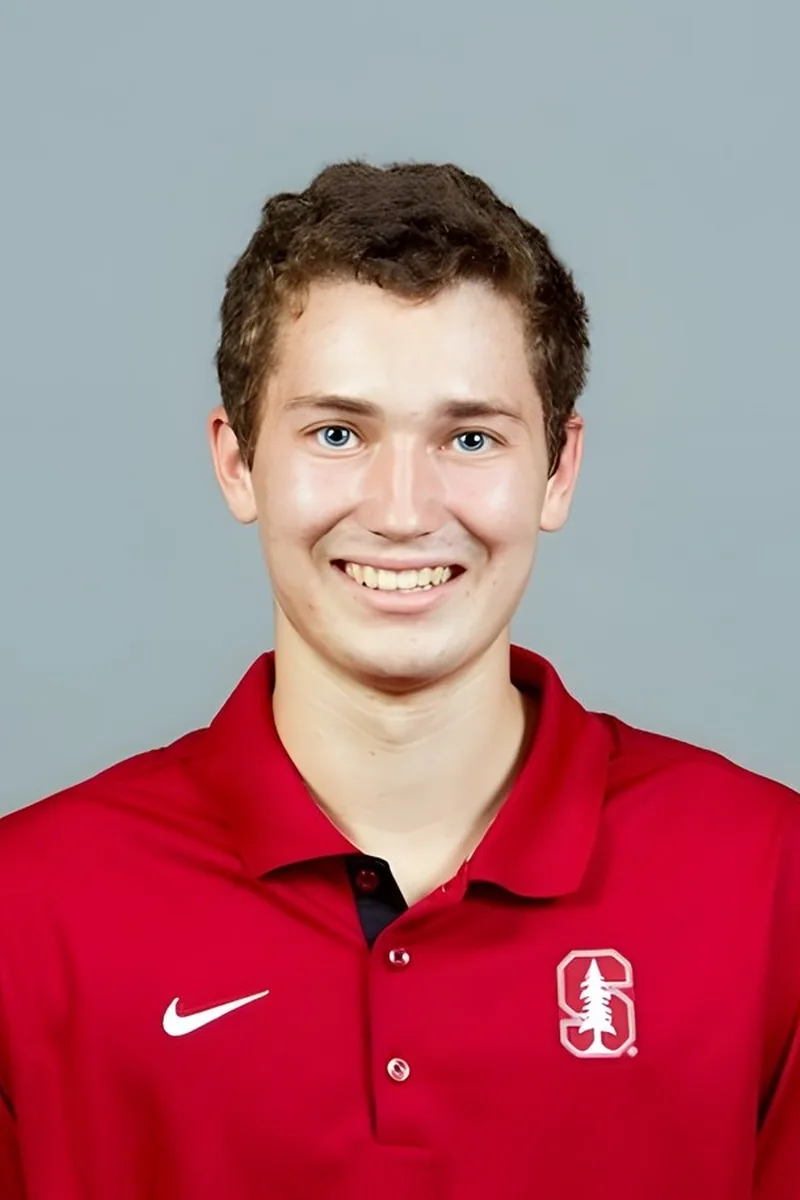
Good essay editing goes beyond fixing commas — it means restructuring an argument so every paragraph earns its place. Jake sharpens thesis statements, tightens transitions, and cuts filler, drawing on his own writing experience at Stanford and his background in crafting college-level papers across the humanities and sciences.
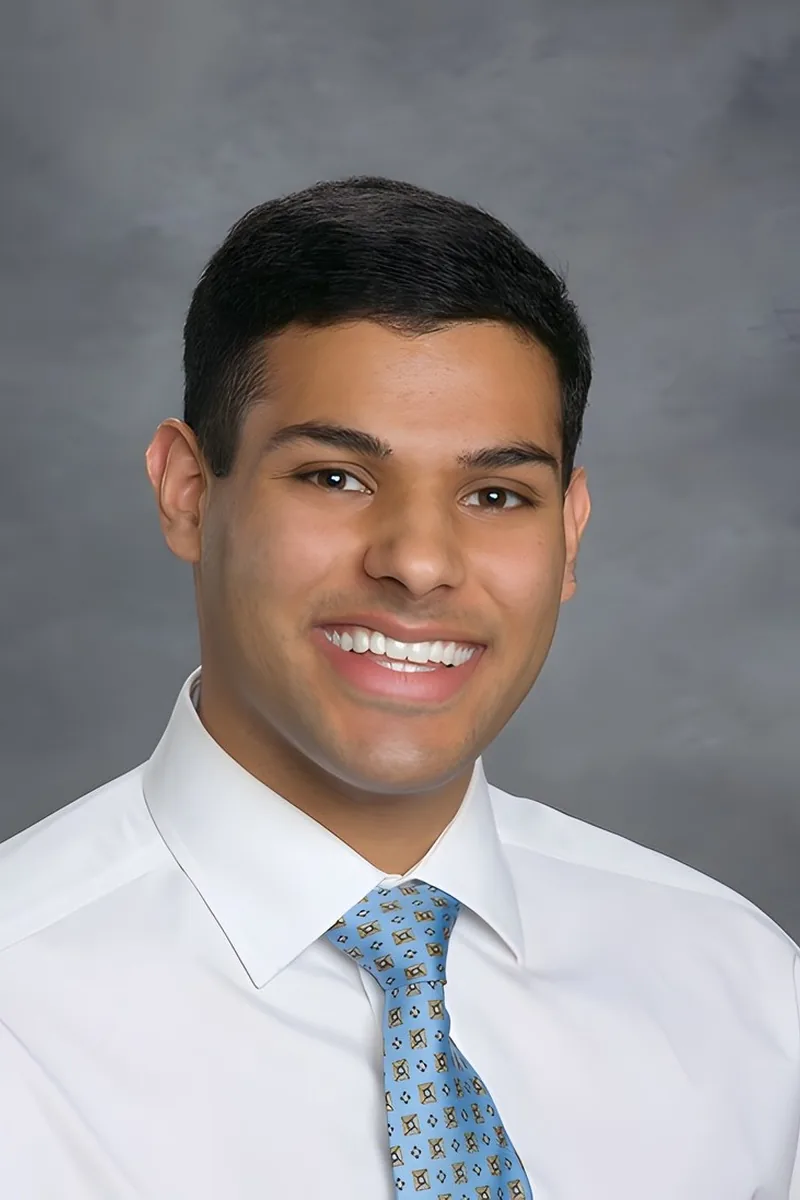
Good editing goes beyond fixing commas — it means tightening argument structure, cutting filler, and making sure every paragraph earns its place. Sanjay brings the precision of a science writer and the narrative instinct of someone who has drafted medical curricula, personal statements, and bilingual materials, so he can spot where an essay loses clarity or momentum.
I am an Atlanta native. I hold an undergraduate degree in Business from Tennessee State University and graduated degree in Education from Cambridge College. I am a Georgia and Texas certified teacher. I have always enjoyed working with kids. I have taught kindergarten, first, second and fourth grade. I am a hard-worker, team player and passionate about my students succeeding in whatever they set their minds too. I currently hold endorsements in K-5 Mathematics, Teacher Support Specialist, and ESOL (English for Speakers of Other Languages). I am able to provide instruction that meets the needs of all students. I have the ability to differentiate instruction so that I cater to all learning styles and levels.
Editing isn't just catching comma splices — it's rethinking whether each paragraph actually advances the argument. Misael reads drafts at both the sentence level and the structural level, flagging where logic gaps or weak transitions undermine otherwise solid ideas. His experience with college essays and academic writing across multiple disciplines gives him a sharp eye for what different audiences expect.
Good essay editing goes beyond fixing comma splices — it means restructuring an argument so each paragraph earns its place. Si reads drafts with an eye for logical flow, weak thesis statements, and evidence that doesn't actually support the claim it's attached to. He writes detailed annotations directly on student work so revisions have clear direction.
Years of writing and revising academic papers taught Brian that good editing isn't about catching typos — it's about restructuring arguments so each paragraph earns its place. He walks through drafts with students sentence by sentence, tightening thesis statements, eliminating filler, and strengthening transitions. His 5.0 rating speaks to how much cleaner student writing gets after working with him.
A good editor doesn't just fix commas — they identify where an argument loses its reader, where a paragraph buries its own point, and where stronger evidence would change everything. Toni brings her experience as a college English professor to essay editing, zeroing in on structural problems like weak thesis statements and disorganized body paragraphs before polishing sentence-level clarity.
Good editing isn't just catching comma splices — it's recognizing where an argument loses its thread or where a paragraph earns more space. Kevin's 5.0 rating comes from his ability to diagnose structural problems in a draft and then teach the writer how to fix them, whether the piece is a research paper, personal statement, or AP exam response.
A strong draft and a polished essay are separated by revision skills most students were never explicitly taught: tightening thesis statements, cutting filler sentences, restructuring paragraphs so each one earns its place. Alyssa walks through essays line by line, showing students how to self-edit for clarity, flow, and argument strength. Rated 5.0 by students.
Good editing goes beyond fixing commas; it means questioning whether each paragraph actually advances the argument. Angela reads drafts at two levels — first for logic and structure, then for sentence-level clarity and grammar — so students walk away understanding not just what to change but why the revision is stronger.
Editing an essay well means knowing what a sentence is trying to do and whether it's actually doing it. John's background in linguistics and writing lets him pinpoint issues at every level — from awkward syntax and weak thesis statements to paragraph-level coherence — and explain the fix in terms the writer can reuse on their own.
Shreya approaches essay editing as structural problem-solving, not just grammar cleanup. She walks through argument logic paragraph by paragraph — checking whether each claim has evidence, whether transitions actually connect ideas, and whether the thesis does real work — then addresses sentence-level clarity once the architecture is sound.
I am a graduate of UC San Diego with a Bachelors in Neuroscience through the Psychology department. After graduating, I went to Michigan Technological University and did some graduate work, before moving to Texas to be closer to my parents. I did my alternative certification program through Texas Teachers and am highly qualified to teach Science for grades 7-12. I have been a teacher in public and charter schools for the last four years, and have tutoring experience extending over ten years behind me as well.
A rough draft with good ideas buried under unclear structure is one of the most common things Sarah sees. She approaches editing as a layered process — first tightening the argument or narrative arc, then reworking transitions and paragraph flow, and finally polishing sentence-level grammar and word choice. Her experience writing college-level research papers in psychology at Duke keeps her feedback specific and actionable rather than vague.
Good essay editing isn't just catching comma splices — it's asking whether each paragraph earns its place and whether the argument actually moves forward. Julia reads drafts at both the structural and sentence level, flagging weak transitions, vague thesis statements, and spots where evidence doesn't match the claim. She then walks through revisions collaboratively so students internalize the editing instinct for next time.
A strong first draft and a polished final essay are separated by the kind of editing most students have never been taught — restructuring arguments, tightening transitions, and cutting sentences that sound smart but say nothing. Kari walks through each revision with a clear editorial eye, showing students how to evaluate their own writing critically.
I am a graduate of Georgetown University where I earned my Bachelor of Science degree in International Politics with a concentration on Foreign Policy. I also earned a Certificate in Latin American Studies and am a member of Pi Sigma Alpha, The National Political Science Honor Society. I have experience tutoring students in both the SAT and the SSAT. Additionally, my time as an 8th Grade Science teacher here in Dallas has prepared me for the curriculum and challenges facing students in the area. While I offer tutoring in a broad range of subjects from foreign languages to grammar and writing to math and science, I find Physics to be the most enjoyable subject to teach. I see Physics as the science that allows all the other sciences to occur, and I find it helpful to use Physics demonstrations when studying the subject. When it comes to tutoring, I believe that whoever is doing the talking is doing the learning, so my students will be doing the leg work when it comes to their learning. I believe that every student can achieve success in school; each student just learns at their own pace and in their own way. When I have free time, I enjoy reading a good book, playing a game of tennis, or participating in or watching theatrical events.
Editing an essay isn't just fixing commas — it's rethinking whether each paragraph earns its place in the argument. Scott reads drafts out loud with students, flagging weak transitions, vague thesis statements, and spots where evidence doesn't quite support the claim. His feedback comes in real time during the session, so students leave with a revised draft rather than a marked-up document to decode alone.
Editing an essay isn't just fixing commas — it's asking whether each paragraph actually earns its place in the argument. Del reads drafts the way his drama training taught him to read scripts: checking that every section serves a clear purpose, that transitions carry momentum, and that the writer's authentic voice comes through in the final product.
Good essay editing goes beyond fixing commas — it's about tightening an argument so every paragraph earns its place. Cameron reads drafts with an eye for thesis clarity, paragraph-level logic, and whether the evidence actually supports the claim being made. He then explains each suggested change so the writer understands the reasoning, not just the correction.
Editing is where Mary's tutoring comes alive. She treats each draft as a conversation, showing students how to tighten thesis statements, restructure paragraphs for logical flow, and cut the filler that buries their real argument. Her PhD work at SMU means she edits academic prose daily and knows exactly where most essays lose their reader.
Editing an essay well means more than fixing commas — it means tightening arguments, cutting filler, and making sure every paragraph earns its place. Shyon applies the same structured thinking he uses in engineering coursework at UT-Austin to help students reshape drafts into polished, cohesive writing. Rated 5.0 by students.
Editing an essay isn't just about catching comma splices — it's about identifying where an argument loses its thread or where a paragraph buries its strongest point. Daniel treats revision as a structural exercise, walking through drafts to tighten logic, sharpen transitions, and cut filler. His 5.0 student rating speaks to his ability to give feedback that's specific and actionable, not just "make this clearer."
Editing someone else's essay requires spotting what the writer can't see — weak transitions, buried thesis statements, evidence that doesn't quite land. Snipta approaches revision the way she approaches debugging code: systematically, checking structure first, then argument flow, then sentence-level clarity, so students learn a repeatable process they can apply on their own.
Good essay editing goes beyond fixing commas — it means tightening arguments, cutting filler, and making sure every paragraph earns its place. Erin reads drafts with an eye for both structure and clarity, showing students exactly where their logic drifts or their evidence falls short so the next draft is genuinely stronger.
Editing isn't just fixing errors — it's learning to hear where a sentence loses momentum or where an argument quietly contradicts itself. Alexandra's Creative Writing workshops at UNT trained her in the kind of revision that restructures paragraphs, tightens transitions, and sharpens thesis statements until every sentence earns its place. She marks up drafts with specific, actionable feedback rather than vague comments like "clarify" or "awkward."
Engineering writing demands precision — every sentence needs to carry its weight and say exactly what it means. Muhammad applies that same discipline to essay editing, zeroing in on thesis clarity, paragraph transitions, and argument structure so each draft gets tighter and more persuasive.
A good essay edit isn't just about fixing commas — it's about reshaping an argument so every paragraph earns its place. Binny's graduate-level training in English means she can diagnose structural problems quickly, tighten thesis statements, and show students how to revise for clarity and flow rather than just surface-level correctness.
Editing an essay well means more than catching comma splices — it means evaluating whether each paragraph actually earns its place in the argument. Zach breaks the revision process into layers: first structure and logic, then clarity at the sentence level, then grammar and polish. His accounting training gives him an unusually systematic eye for whether the pieces of an argument add up.
A rough draft isn't a failure — it's raw material. Clairemarie walks students through revision at every level, from restructuring a muddled argument down to tightening individual sentences for clarity and rhythm. She treats editing as a teachable skill, not just a red-pen exercise.
A sharp essay needs more than a spell-check — it needs someone who can spot where an argument loses momentum or where a paragraph buries its own point. Devon edits for structure, clarity, and voice, walking students through each revision so they learn to self-edit over time. Rated 4.9 by students.
Good editing isn't just catching typos — it's asking whether each paragraph earns its place and whether the argument actually holds together. Brianna approaches essay editing by first addressing big-picture issues like thesis clarity and logical flow, then tightening sentence-level problems like awkward phrasing and redundancy.
Good essay editing goes beyond fixing commas — it means restructuring paragraphs so each one advances a single clear claim, tightening wordy sentences, and making sure transitions actually connect ideas. Maria reads drafts at both the structural and sentence level, giving students concrete revision strategies they can apply independently on future papers. She's rated 5.0 by the students she's worked with.
Good essay editing goes beyond catching comma splices — it's about tightening arguments, cutting filler, and making sure each paragraph earns its place. Maleah reads drafts with a scientist's eye for logical flow, flagging where claims need stronger evidence or where transitions lose the reader. She teaches students to self-edit systematically so the skill carries forward to every future paper.
I am a seasoned educator and tutor with a Ph.D. in Literature, an M.A. in Literature, and an M.B.A. in international business. I have taught many, many students to write, read, speak, and think academically. Since 2005, I have worked taught in universities in China, Bosnia, the UAE, Afghanistan and Bahrain (teaching our troops!) and Cambodia. I recently returned to the USA. If you are feeling uncertain about your writing assignments, your English or Literature courses, public speaking, or standardized testing, I believe I can help! No one is born with the ability to read, think critically, and write an essay that will get people to stand up and take notice. These are skills that everyone must be taught to become successful, and they can be learned. Students often think they 'just aren't capable' of improving their skills, but as a professional who specializes in English and Writing, I know they are wrong. Every student, with the right motivation, systems, and tools can improve their skills. I have been teaching and tutoring students for over 20 years. As a professor, I know what steps students need to take to become better in writing, reading, literature, critical thinking, and public speaking. As a faculty member at universities and colleges for over 20 years, I know what will be expected of students both in educational settings, and in the professional world after they graduate. I love to work with students, and I have had a great deal of success in helping them to improve. I have developed proven methods to give students the help they need to write better essays, read with greater comprehension, and test more effectively. Most students tell me that I am funny, and that my lessons are far less 'painful than they expect them to be! I look forward to working with you-
Editing someone else's essay is straightforward; teaching a student to edit their own writing is the harder, more valuable skill. Gabriele walks through drafts at two levels — first the architecture of argument and paragraph flow, then the sentence-level mechanics like transitions, redundancy, and word choice — so students internalize what strong revision actually looks like.
Strong writing isn't about eliminating every error — it's about making each sentence do real work. Bryan approaches essay editing by first addressing structure and argument clarity, then moving into sentence-level revisions like tightening transitions and fixing comma splices. His pre-med application writing sharpened his ability to cut unnecessary words and make a point land quickly.
Good editing goes beyond fixing commas — it means evaluating whether each paragraph earns its place and whether the argument actually builds. Adeyemi reads drafts with an eye for logical structure, clarity, and flow, drawing on his experience writing at the graduate level in science where every sentence must do real work. He gives concrete, actionable feedback that sharpens both the writing and the writer's instincts.
Medical school means writing under intense scrutiny — every word in a case report or research summary has to earn its place. Samantha applies that same precision to essay editing, zeroing in on thesis clarity, paragraph transitions, and whether each piece of evidence actually supports the argument. Rated 4.9 by students.
Good essay editing goes beyond fixing commas — it means tightening arguments, cutting filler, and making sure each paragraph earns its place. Maruka approaches revision structurally, examining thesis clarity and evidence flow before moving into sentence-level polish, so the final draft is both sharper and more persuasive.
Testimonials
Because the right Essay Editing tutor makes all the difference.
Average Session Rating – Based on 3.4M Learner Ratings
Nearby Essay Editing Tutors
Other Dallas Tutors
Related English Tutors in Dallas
Frequently Asked Questions
Essay editing tutoring goes beyond proofreading—it focuses on strengthening your argument, improving organization, developing a compelling thesis, and refining your writing voice. A tutor will work with you to identify structural issues, strengthen weak sections, and help you understand the principles behind effective writing so you can apply them to future essays.
Your first session typically involves reviewing your essay and discussing your assignment goals. From there, a tutor will provide targeted feedback on areas like thesis clarity, paragraph organization, evidence integration, and argumentation. You'll work together through revisions, learning techniques you can use independently on future writing assignments.
Many students struggle with organizing ideas into a logical flow, developing a strong thesis statement, or supporting claims with solid evidence. Others find it difficult to maintain their voice while meeting academic standards, or they're unsure how to properly integrate citations in MLA or APA format. Essay editing tutoring addresses each of these challenges with personalized strategies.
It's both, but the focus is on the bigger picture. While a tutor will address grammar errors, the real value comes from improving your essay's structure, argument strength, and overall clarity. Grammar is important, but a well-organized essay with a compelling argument is what truly makes your writing stand out to teachers and admissions officers.
Absolutely. Writer's block often stems from unclear thinking about your topic or uncertainty about how to structure your ideas. A tutor can help you brainstorm, organize your thoughts, and break the writing process into manageable steps. Many students find that talking through their ideas with someone helps unlock their writing.
Yes. Literary analysis requires strong skills in evidence selection, textual interpretation, and argumentation. Tutors can help you develop a clear analytical thesis, support your interpretations with specific examples from the text, and explain the significance of your analysis—all essential components of a strong literary essay.
Bring the essay you'd like to work on, along with any assignment guidelines or rubric from your teacher. If you're working on a new essay, bring your brainstorm notes or outline. Having the assignment context helps a tutor give you feedback that directly addresses what your teacher is looking for.
Varsity Tutors connects you with expert tutors who understand essay writing and can provide personalized feedback on your work. You'll share your specific needs—whether it's thesis development, organization, citations, or overall revision—and get matched with someone who fits your learning style and goals.
Let’s find your perfect tutor
Answer a few quick questions. We’ll recommend the right plan and match you with a top 5% tutor.