Award-Winning AP Microeconomics Tutors
serving Charleston, SC
Who needs tutoring?
FEATURED BY


TUTORS FROM
- YaleUniversity
- PrincetonUniversity
- StanfordUniversity
- CornellUniversity
Award-Winning AP Microeconomics Tutors serving Charleston, SC
Certified Tutor
9+ years
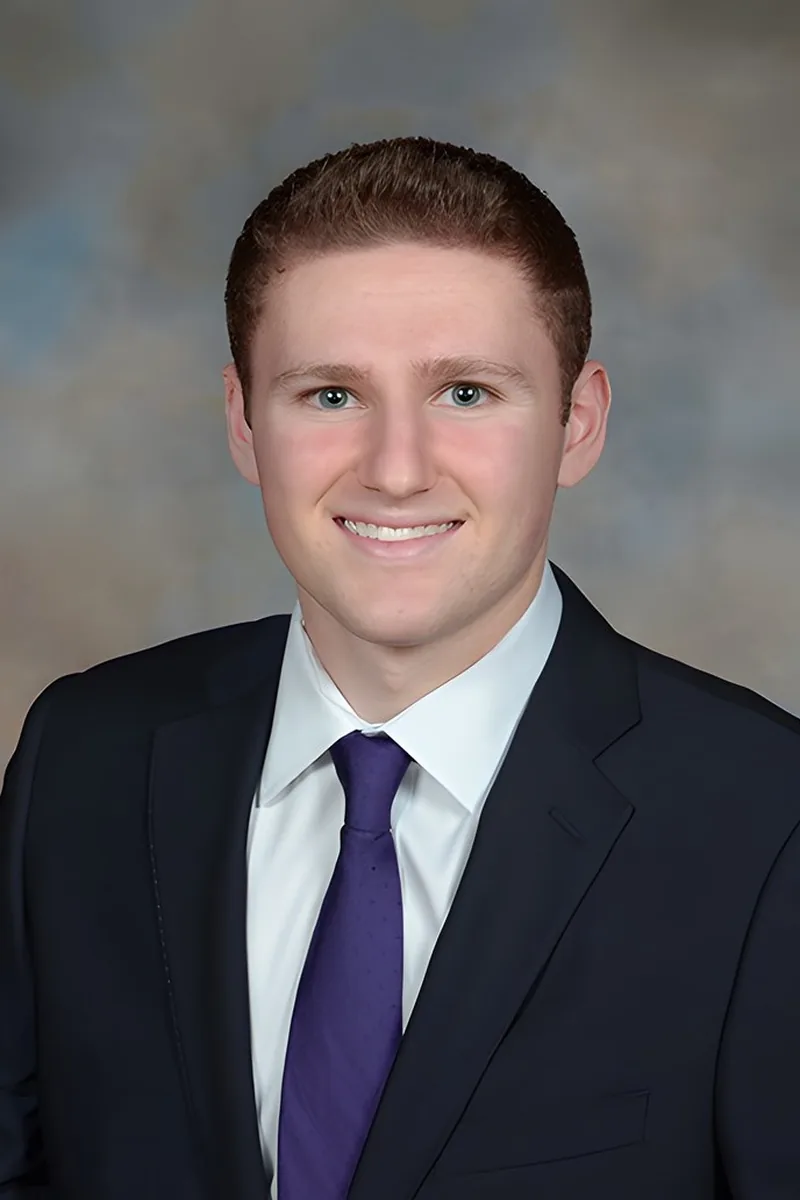
Matt
AP Micro lives and dies on graphs — supply and demand shifts, cost curves, market structures — and knowing which model applies to which question under exam pressure. Matt teaches students to read these diagrams like a language, connecting each curve back to the economic intuition behind it. His fina...
University of Pennsylvania
Bachelor of Science

Certified Tutor
6+ years
JF
Supply-and-demand graphs are easy until the AP exam asks you to explain deadweight loss from a price ceiling in two minutes flat. JF unpacks micro concepts like elasticity, market structures, and game theory through the quantitative lens his math background provides, making the graphical analysis cl...
Stanford University
Bachelor of Science, Mathematics and Computer Science
Certified Tutor
Mosab
AP Micro lives and dies on graphs — supply and demand shifts, cost curves for firms in different market structures, and the deadweight loss triangles that show up on every free-response section. Mosab's approach is to make sure students can draw and interpret each graph from scratch rather than just...
Tufts University
Bachelors, International Relations and Arabic
Harvard University
Current Grad Student, Health Sciences
Certified Tutor
8+ years
Benjamin
Studying economics at the University of Chicago means living and breathing the microeconomic theory that AP Micro tests — consumer and producer surplus, market structures, game theory, and the efficiency conditions that tie it all together. Benjamin unpacks each graph and model so students understan...
University of Chicago
Current Undergrad Student, Economics
Certified Tutor
6+ years
Anthony
AP Micro lives and dies on whether a student can apply models — not just sketch a supply-and-demand graph, but reason through what happens to consumer surplus when a price ceiling binds, or why a monopolist's marginal revenue curve sits below demand. Anthony is a Yale economics PhD student who teach...
Yale University
Bachelor of Science, Physics
Yale University
Doctor of Philosophy, Economics
Yale University
BS in physics and math
Certified Tutor
6+ years
Sanjana
Harvard's Applied Math curriculum builds exactly the kind of quantitative thinking that AP Micro rewards — optimizing functions, interpreting graphs, reasoning through marginal changes. Sanjana applies that mathematical fluency to microeconomic models, teaching students to see profit maximization an...
Harvard University
Bachelor in Arts, Applied Mathematics
Certified Tutor
Dana
AP Micro's free-response questions reward students who can draw accurate graphs and explain them in precise economic language, not just identify the right multiple-choice answer. Dana's public policy training sharpened her ability to analyze market structures, externalities, and efficiency — exactly...
Brown University
Bachelor in Arts, Public Policy and American Institutions
Certified Tutor
10+ years
Daniel
Supply and demand curves are just the beginning — AP Micro gets tricky when students hit market structures, game theory, and the nuances of producer surplus versus consumer surplus. Daniel's applied mathematics background means he can walk through the graphical and algebraic reasoning behind each mo...
Yale University
Current Undergrad, Applied Mathematics
Certified Tutor
Hari
AP Micro lives and dies on whether a student can move fluidly between graphs, equations, and written explanations — drawing a firm's cost curves is one thing, but explaining why MC intersects ATC at its minimum on a free-response question is another. Hari tackles both the quantitative and analytical...
University of South Florida-Main Campus
Masters, MBA (Finance and Management)
Washington University in St. Louis
Bachelors
Certified Tutor
Gerard
Gerard's MBA and government degree give him two lenses on microeconomics — the theoretical models and the real-world policy decisions they inform. He digs into how firms actually respond to incentive structures and market conditions, making topics like price discrimination and market failure feel li...
Yale School of Management
Masters in Business Administration, Business
Harvard University
Bachelor in Arts
Certified Tutor
6+ years
Amanda
Amanda's cognitive science training at Northwestern built the kind of decision-making and incentive-reasoning skills that sit at the heart of AP Micro — understanding how individuals and firms weigh costs against benefits is as much about how people think as it is about economics. She teaches concep...
Northwestern University
Master of Science, Organizational Leadership
Northwestern University
Bachelor in Arts, Cognitive Science
Northwestern University
BA in Cognitive Science and Linguistics
Certified Tutor
7+ years
Studying public policy at the University of Chicago meant grappling daily with microeconomic reasoning — how incentives shape behavior, why markets fail, and when government intervention improves outcomes. Noel unpacks AP Micro concepts like elasticity, market structures, and deadweight loss by conn...
University of Chicago
Bachelor in Arts
Certified Tutor
10+ years
Nima
Microeconomics is built on models — supply and demand curves, elasticity calculations, cost structures — that behave a lot like the mathematical systems Nima studied in his physics degree. He teaches students to read graphs precisely and reason through market equilibrium problems with the same rigor...
Duke University
Bachelors, Physics
Certified Tutor
6+ years
Natalie
Natalie is pursuing economics alongside civil engineering at Duke, which means she thinks about microeconomic concepts like marginal analysis and market efficiency in both theoretical and applied contexts. She unpacks tricky AP Micro topics — game theory, cost curves, deadweight loss — by connecting...
Duke University
Current Undergrad Student, Civil Engineering
Certified Tutor
9+ years
Dylan
Supply and demand curves are straightforward until the AP exam asks students to analyze deadweight loss from a price ceiling or calculate consumer surplus on a graph they've never seen. Dylan studied microeconomic theory as part of his policy analysis degree, where he learned to apply these models t...
Cornell University
Bachelors, Policy Analysis and Management
Practice AP Microeconomics
Free practice tests, flashcards, and AI tutoring for AP Microeconomics
Nearby AP Microeconomics Tutors
Other Charleston Tutors
Related Business Tutors in Charleston
Frequently Asked Questions
AP Microeconomics covers six main units: basic economic concepts, supply and demand, production choices and behavior, factor markets, market failure and the role of government, and international economics. The exam emphasizes understanding how individual consumers and firms make decisions, how markets function, and how government policies affect economic outcomes. Tutors can help you master each unit's core concepts and their real-world applications.
AP Microeconomics scores range from 1 to 5, with a 3 typically considered passing and earning college credit at most institutions. Many colleges grant credit for scores of 4 or 5. Your target score depends on your college goals and major—business, economics, and engineering programs often prefer 4s or 5s. Personalized tutoring can help you identify your current level and create a realistic improvement plan based on your starting point and available study time.
Students often struggle with graphing and interpreting supply-and-demand curves, understanding elasticity and its applications, and analyzing market structures (perfect competition, monopoly, oligopoly). The factor markets unit—covering labor markets and income distribution—also trips up many test-takers. Tutors can break down these abstract concepts with visual explanations, worked examples, and practice problems tailored to your learning style.
The exam has two sections: 60 multiple-choice questions (70 minutes) and 3 free-response questions (50 minutes). For multiple-choice, pace yourself at about one minute per question and eliminate obviously wrong answers before guessing. Free-response questions require labeled graphs and clear explanations—practice drawing accurate supply-and-demand diagrams and articulating your reasoning. Tutors can help you develop timing strategies, teach you how to read tricky question wording, and build confidence through full-length practice tests.
Most students benefit from 2–3 months of consistent preparation, especially if they're taking the course alongside tutoring. If you're starting closer to exam day, intensive weekly sessions can help you prioritize high-yield topics and practice test-taking strategies. Tutors can assess where you stand now and create a customized study plan that fits your timeline and identifies areas needing the most focus.
Practice tests reveal your weak spots, build familiarity with question formats, and help you develop pacing strategies under timed conditions. Taking full-length practice exams every 2–3 weeks lets you track improvement and adjust your study focus. Tutors use practice test results to pinpoint which units or question types need more work, then target those areas with focused instruction and additional practice problems.
Expert tutors for students in Charleston can clarify difficult concepts like elasticity and market structures, teach you how to draw and interpret graphs accurately, and help you understand what exam questions are really asking. They'll work with you on problem-solving strategies, review your practice test mistakes, and build your confidence so test anxiety doesn't hold you back. Personalized 1-on-1 instruction lets you learn at your own pace and focus on your specific challenges.
Your first session is typically a diagnostic—the tutor will assess your current understanding of key AP Microeconomics concepts, identify your strongest and weakest areas, and learn about your learning style and goals. They'll ask about your course progress, any practice test scores, and how much time you have to prepare. From there, you'll work together to create a personalized study plan that targets your needs and maximizes your score improvement.
Connect with AP Microeconomics Tutors in Charleston
Get matched with local expert tutors