Award-Winning College Physics Tutors
serving Providence, RI
College Physics
Tutors in Providence
Private 1-on-1 tutoring, weekly live classes for academic support, test prep & enrichment, practice tests and diagnostics, and more to elevate grades and test scores.
Based on 3.4M Learner Ratings
UniversitiesSchools & Universities
DeliveredHours Delivered
ProficiencyGrowth in Proficiency
Who needs tutoring?
No obligation. Takes ~1 minute.
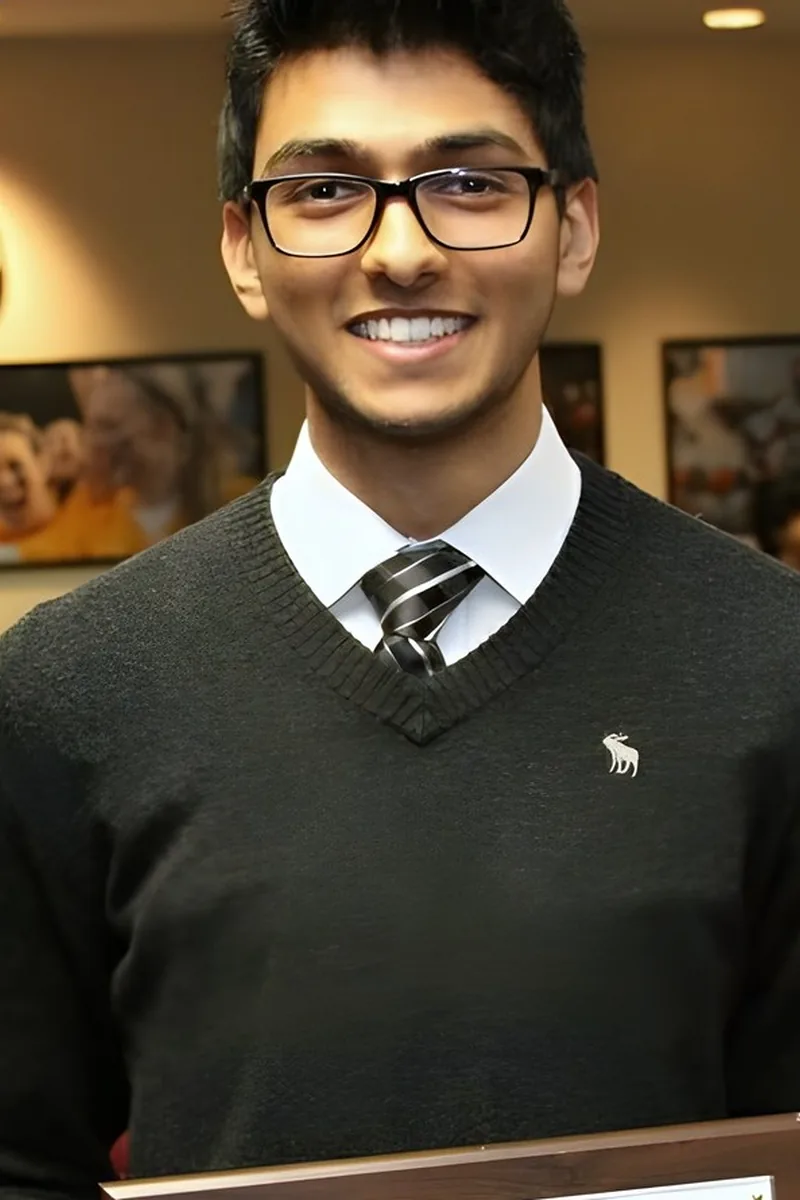
Studying molecular biophysics at Brown means Srini lives at the intersection of physics and biology — applying thermodynamics, electromagnetism, and wave mechanics to understand how molecules actually behave in living systems. That dual perspective makes him especially effective at unpacking the conceptual reasoning behind problems in mechanics, circuits, and optics that trip up so many college students.
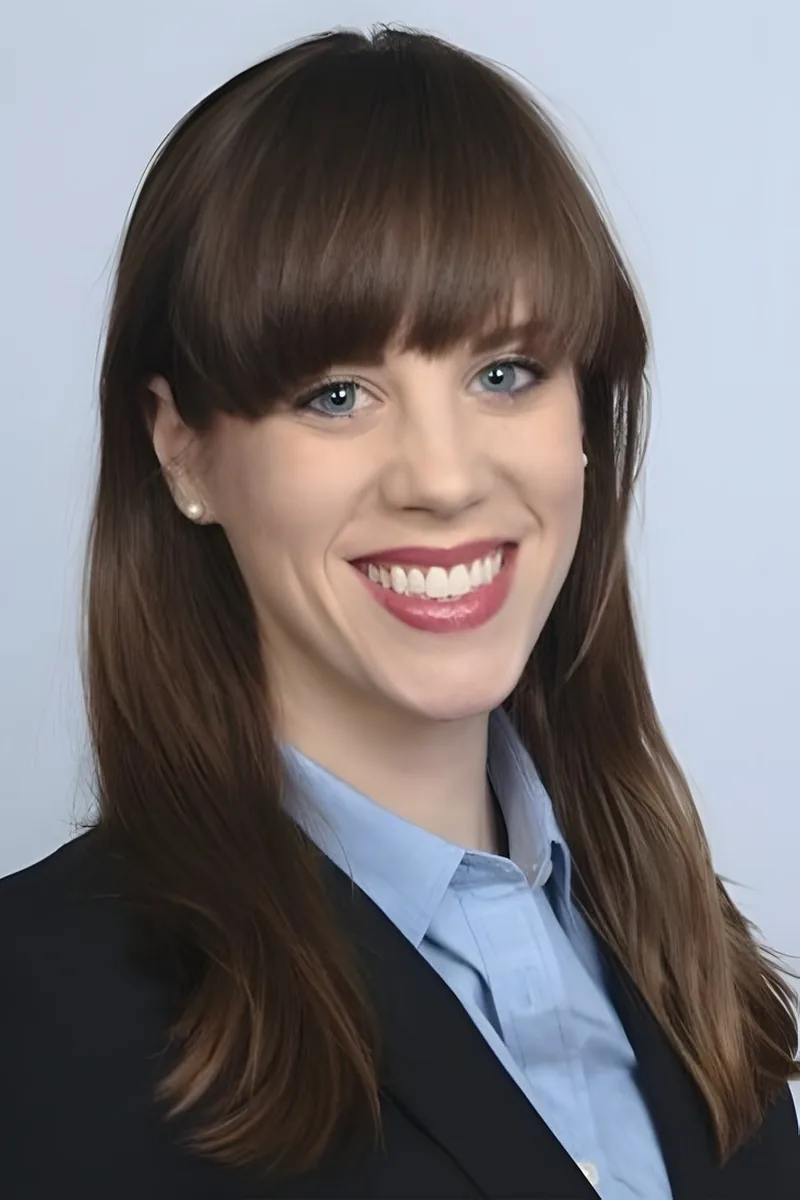
Emergency medicine training at Boston University means Victoria thinks about physics every day — projectile trajectories in trauma mechanics, fluid dynamics in IV flow rates, pressure differentials in ventilation — which keeps her explanations grounded in how these principles actually behave in real systems. She zeroes in on the problem-setup phase, teaching students to sketch force diagrams and identify conservation laws before touching an equation, because that's the step where most college physics mistakes happen.
Studying molecular medicine in an MD program means Orlando regularly encounters physics in disguise — pressure gradients driving blood flow, electrical potentials across cell membranes, and the optics behind diagnostic imaging all trace back to core college physics principles. His neuroscience background adds another layer, since understanding action potentials requires genuine fluency with capacitance, resistance, and current flow. Rated 4.8 by students.
Richard Feynman's teaching philosophy — if you truly understand something, you can explain it to anyone — shaped how Dale approached his own physics degree at the University of Rhode Island, and it's the standard he holds himself to when breaking down topics like angular momentum, electric fields, or wave interference. He builds each explanation from the physical intuition first, then layers in the math, so students aren't just surviving problem sets but actually seeing why the physics works the way it does.
A physics degree means Nima didn't just pass college physics — he built his entire undergraduate education on top of it, from classical mechanics through electromagnetism and modern physics. He breaks down multi-step problems by teaching students to identify the governing principle first, then translate it into math, which is where a 1580 SAT and deep comfort with calculus-based reasoning pay off.
Studying applied physics at Cornell means Ritesh isn't just teaching college physics concepts — he's actively using them in coursework and research. He digs into the areas that trip up most introductory students, like applying Newton's laws to rotational systems, working through Gauss's law problems, or connecting energy conservation to real circuits. His 4.6 rating speaks to his ability to make those connections click.
Working at an ExxonMobil refinery before MIT Sloan meant Caroline spent years applying thermodynamics, fluid mechanics, and force analysis to real industrial systems — the same physics that fills college problem sets, except with actual consequences for getting the math wrong. Her mechanical engineering M.S. from WashU (magna cum laude) gave her deep fluency with calculus-based derivations, so she can walk through everything from torque problems to heat transfer without skipping the steps that textbooks gloss over. Rated 5.0 by students.
Studying mechanical engineering at Harvard means Christopher applies physics daily — from free-body diagrams and torque calculations to thermodynamic cycles and fluid dynamics. He breaks down multi-step problems by identifying which conservation law applies and walking through the math from there, so the problem-solving process becomes repeatable rather than mysterious.
College-level physics ramps up fast, especially when courses introduce calculus-based mechanics or electromagnetism for the first time. Charles works through these topics as part of his mechanical engineering curriculum at Yale, so he can walk through derivations of torque, moment of inertia, or Gauss's law with the fluency of someone who applies them in lab and design projects regularly.
Between earning a mechanical engineering bachelor's and pursuing his master's, Aaron has taken calculus-based physics from every angle — statics, dynamics, thermodynamics, fluid mechanics — and now applies those principles daily in graduate-level research and coursework. He breaks down problems by teaching students to sketch the physical situation first, identify constraints, and only then select the right conservation law or force equation. Holds a 5.0 rating.
Between simulating supernova shock fronts at Princeton and building optical filters at Norfolk State, Dennis has applied college-level physics across mechanics, electromagnetism, thermodynamics, and wave optics in real research settings. He unpacks difficult problem sets by connecting each concept to the physical scenario it describes — an approach that's especially effective for students transitioning from plug-and-chug to genuine problem-solving.
Three physics-related bachelor's degrees give Avram an unusually deep undergraduate perspective on the subject — he's worked through mechanics, electromagnetism, and modern physics multiple times across different programs, which means he knows exactly where the conceptual gaps tend to hide. He breaks down wave phenomena and optics problems by connecting the math back to physical intuition, so equations feel like descriptions of real behavior rather than symbols to manipulate. His 1520 SAT reflects the quantitative precision he brings to problem solving.
College-level physics demands comfort with calculus-based reasoning — deriving equations of motion, integrating force over a path for work, or applying differential equations to oscillations. Kathleen's math degree from Washington University and her experience teaching through multivariable calculus mean she can unpack both the physics intuition and the mathematical machinery simultaneously.
Princeton's mechanical and aerospace engineering program is essentially a four-year immersion in applied physics — Fred spent it solving problems in fluid dynamics, thermodynamics, structural mechanics, and orbital motion, which maps directly onto the topics that fill college physics syllabi. He breaks down force diagrams and energy methods by connecting them to the engineering contexts where those concepts actually get used, making abstract problem sets feel more concrete. His 1550 SAT reflects the quantitative precision he brings to calculus-heavy coursework.
Three science-focused bachelor's degrees — including biology — meant Garrett sat through the full calculus-based physics sequence and kept coming back to it in physiology and physical chemistry, where concepts like fluid dynamics, pressure gradients, and energy transfer show up again and again. That repeated exposure across disciplines gives him an intuitive feel for when to apply conservation of energy versus momentum, or how to reason through a thermodynamics problem without getting lost in the formalism. His 1530 SAT speaks to the quantitative sharpness he brings to each session.
Premed coursework and a computing degree at Notre Dame meant Aidan sat through the full sequence of calculus-based physics — mechanics, E&M, waves — while simultaneously learning to think algorithmically about complex problems. That combination is particularly useful when students hit the wall where physics stops being plug-and-chug and starts requiring multi-step reasoning, like connecting free-body diagrams to energy methods or translating a word problem into the right integral. His 35 ACT speaks to the quantitative fluency he brings to those tougher setups.
Testimonials
Because the right College Physics tutor makes all the difference.
Average Session Rating – Based on 3.4M Learner Ratings
Other Providence Tutors
Related Science Tutors in Providence
Frequently Asked Questions
College Physics usually covers mechanics (motion, forces, energy), waves and sound, electricity and magnetism, optics, and thermodynamics. The course emphasizes understanding fundamental principles and applying them to real-world scenarios rather than just memorizing formulas. Many students find that connecting these abstract concepts to tangible applications—like how electromagnetic forces work in everyday devices—makes the material stick much better.
Students often struggle with visualizing abstract concepts like electric fields, wave behavior, and vector forces that can't be seen directly. Additionally, many find it difficult to translate word problems into mathematical equations, manage unit conversions, and understand when to apply different formulas. Personalized 1-on-1 instruction helps break down these conceptual barriers by working through problems step-by-step and building intuition for how physics principles actually work.
Tutors can help you understand the scientific method behind your experiments, explain what your data means, and guide you through error analysis and calculations. They can also clarify the theory behind each lab before you conduct it, so you know what to expect and why you're measuring what you're measuring. This deeper understanding makes lab reports clearer and helps you connect hands-on work back to classroom concepts.
College Physics requires stronger mathematical skills, more complex multi-step problems, and deeper conceptual understanding beyond plugging numbers into formulas. Problems often require you to identify which principles apply, set up equations from scratch, and interpret results in context. Personalized tutoring helps you develop systematic problem-solving strategies and the reasoning skills needed to tackle unfamiliar problems confidently.
Your first session is about understanding where you're struggling—whether it's specific topics, problem-solving strategies, or exam preparation. A tutor will likely review recent assignments or exams, ask diagnostic questions to identify knowledge gaps, and work through a problem or concept together to establish a baseline. From there, you'll develop a personalized plan that targets your biggest challenges and builds toward your goals.
Look for tutors with a strong background in physics—ideally a degree in physics, engineering, or a related field—and experience teaching at the college level. They should be able to explain concepts clearly, work through problems methodically, and help you understand the "why" behind formulas, not just the "how." Varsity Tutors connects you with expert tutors in Providence who have proven experience helping students master College Physics content and build problem-solving confidence.
Tutors can help you review key concepts, work through practice problems similar to what you'll see on the exam, and identify patterns in the types of questions your instructor asks. They can also teach you test-taking strategies specific to physics—like checking units, estimating answers to catch errors, and managing your time across different problem types. Regular practice with feedback from a tutor builds both your content knowledge and your confidence walking into exam day.
Simply connect with Varsity Tutors to describe your College Physics course, current challenges, and goals. You'll get matched with a tutor whose expertise and teaching style fit your needs. From there, you can schedule sessions around your availability and start working through the material in a way that makes sense for you—whether that's tackling a specific unit, preparing for an upcoming exam, or building foundational understanding from the ground up.
Let’s find your perfect tutor
Answer a few quick questions. We’ll recommend the right plan and match you with a top 5% tutor.