Award-Winning AP Calculus BC Tutors
serving Tulsa, OK
AP Calculus BC
Tutors in Tulsa
Private 1-on-1 tutoring, weekly live classes for academic support, test prep & enrichment, practice tests and diagnostics, and more to elevate grades and test scores.
Based on 3.4M Learner Ratings
UniversitiesSchools & Universities
DeliveredHours Delivered
ProficiencyGrowth in Proficiency
Who needs tutoring?
No obligation. Takes ~1 minute.

Chemical engineering coursework front-loads exactly the BC toolkit — improper integrals in heat transfer, series approximations in reaction kinetics, parametric models in fluid dynamics — so Cory learned these concepts under pressure and knows which steps trip people up. He's especially sharp at breaking down convergence tests into a decision-making framework instead of a memorization exercise, connecting each test back to the limit and comparison reasoning from AB. Rated 4.9 by students.
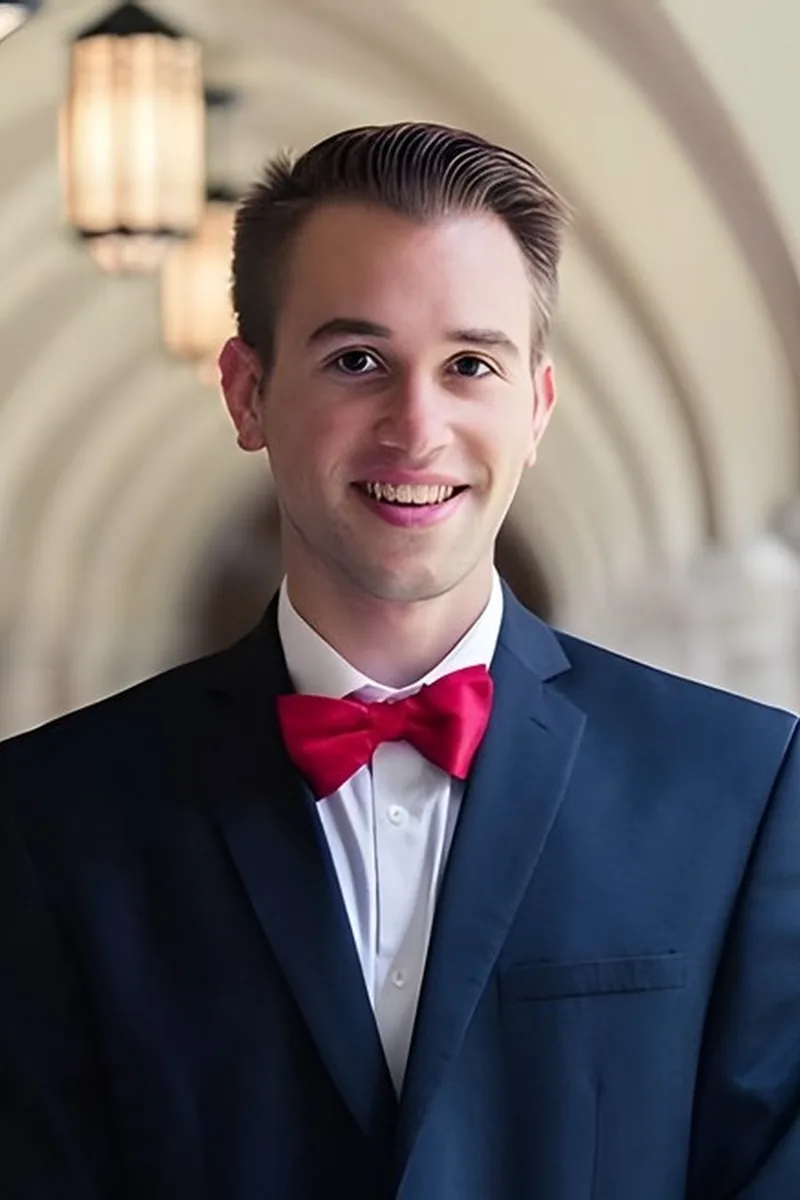
Biochemistry lab work at Columbia demands comfort with the calculus that models reaction kinetics and molecular behavior — Andrew has spent years using integration techniques and series approximations in that context, which gives his BC teaching a practical edge when students ask "why does this matter?" He's especially effective at breaking down the transition from AB to BC, tracing topics like Taylor polynomial construction and convergence criteria back to the derivative and integral logic students already trust. Rated 4.9 by students.
Series convergence, parametric equations, and polar curves make BC the course where strong calculus students finally have to slow down and think carefully. Anthony earned his BS in physics and math from Yale, where these concepts weren't just exercises — they were the language of electromagnetism and classical mechanics. He teaches BC topics by connecting each technique to why it exists and when it matters.
Scoring a 36 on the ACT while studying economics at Vanderbilt means Kerr lives comfortably in the quantitative reasoning that BC Calculus demands — and his computer science focus sharpens the algorithmic thinking behind recursive sequences and series convergence. He teaches BC's trickiest leaps, like moving from basic integration to constructing Taylor polynomials, by grounding each new idea in the conceptual logic rather than just the procedural steps. Rated 4.9 by students.
Most BC students can follow a convergence test step by step but freeze when asked to choose which test to apply — that decision-making is where Nima, a physics major heading to Duke on a full merit scholarship, spends most of his teaching energy. His physics training means he treats series and parametric equations as descriptions of real motion and real forces, which gives students an intuitive anchor when the abstraction piles up. A 1580 SAT and 4.7 rating back up his ability to make that AB-to-BC jump feel manageable.
BC Calculus piles on series convergence, parametric equations, and polar coordinates on top of an already demanding AB curriculum. Julie's Princeton training in statistics and machine learning means she regularly uses advanced calculus as a tool, giving her an intuitive sense for which techniques apply where. She tackles integration strategies and Taylor series by connecting each method back to the core idea it extends.
BC Calculus layers convergence tests, parametric equations, and polar curves on top of an already demanding AB foundation, and the pacing leaves little room to fall behind. Vinson earned a 36 ACT and National AP Scholar distinction while building the kind of deep mathematical fluency that makes series analysis and integration techniques click. He breaks each new BC topic into the AB concept it extends, so the jump never feels arbitrary.
Physics majors don't just take BC Calculus — they breathe it, using series expansions to model wave behavior, integration techniques to solve equations of motion, and parametric equations to describe trajectories. Kiran is finishing a physics and computer science double major at Stony Brook, which means topics like Taylor polynomials and convergence aren't abstract to him; they're tools he reaches for in his own coursework daily. His 34 ACT and 4.7 rating speak to an ability to make that applied intuition accessible to students still building their BC toolkit.
BC Calculus throws students into deep water fast — Taylor and Maclaurin series, parametric equations, and convergence tests all pile up in a single semester. Rahi's applied mathematics engineering background means he can unpack these topics by connecting them to the real-world modeling problems they were designed to solve. He builds each concept from its AB foundation so students see how the BC extensions actually work.
Most people who breeze through math can't explain it — Daniel learned BC Calculus by grinding through the logic of every convergence test, every parametric derivative, every series expansion until it genuinely made sense, and that's exactly how he teaches it. As an applied mathematics undergrad, he's currently using these tools in upper-level coursework, so he knows which BC concepts tend to feel arbitrary and how to make the reasoning behind them stick.
Having TA'd Calculus I and II at Rice while pursuing a graduate degree in computational and applied mathematics, Sakibul knows exactly where the AB-to-BC transition trips students up — particularly when series convergence and parametric differentiation demand a sharper kind of reasoning than anything before. He breaks down topics like interval of convergence arguments and integration techniques by rebuilding the logic from scratch rather than handing over shortcuts. His applied math background means he treats Taylor approximations and error bounds as precision tools, not abstract busywork.
Studying applied mathematics at Stanford means Alex isn't just recalling BC topics from a past exam — he's actively using series, parametric equations, and advanced integration in his current coursework, which keeps his explanations sharp and grounded in how the math actually behaves. He's especially good at tracing a tricky convergence test or Lagrange error bound back to the core AB reasoning that makes it click. Rated 4.8 by students.
Derek scored a 5 on the AP Calculus BC exam and now studies applied mathematics at Harvard, which means series convergence tests, parametric equations, and polar area problems are still part of his daily toolkit. He breaks down intimidating topics like Taylor series error bounds and integration by parts into repeatable strategies that click on exam day. Rated 4.9 by students.
Testimonials
Because the right AP Calculus BC tutor makes all the difference.
Average Session Rating – Based on 3.4M Learner Ratings
Practice AP Calculus BC
Free practice tests, flashcards, and AI tutoring for AP Calculus BC
Nearby AP Calculus BC Tutors
Other Tulsa Tutors
Related Math Tutors in Tulsa
Frequently Asked Questions
AP Calculus BC builds on Calculus AB fundamentals and covers limits, derivatives, integrals, differential equations, and sequences/series. The course emphasizes parametric equations, polar coordinates, and vector-valued functions—topics that distinguish BC from AB. You'll also study convergence tests, Taylor series, and applications like optimization and related rates. A strong foundation in these areas is essential for scoring well on the May exam.
Score improvement depends on your starting point and consistency. Students who work with a tutor typically see gains of 1-2 points on the 1-5 AP scale, though this varies based on initial preparation level and time invested. The most significant improvements come from targeted practice on weak topics—like series convergence or parametric differentiation—combined with strategic exam review. Regular practice tests and focused feedback are key to identifying gaps early.
Students for students in Tulsa commonly struggle with series convergence tests (especially determining which test to apply), parametric and polar calculus, and understanding the conceptual differences between related rates and optimization problems. Many also find the free-response section challenging because it requires both computational accuracy and clear mathematical communication. Tutors can break these topics into manageable pieces and provide targeted practice to build confidence.
The AP Calculus BC exam is 3 hours and 15 minutes total: 1 hour 45 minutes for the multiple-choice section and 1 hour 30 minutes for free-response. On multiple-choice, aim to spend about 1.5-2 minutes per question; if stuck, skip and return later. For free-response, allocate roughly 20-25 minutes per question. Practice full-length exams under timed conditions to develop pacing strategies and identify which question types slow you down most.
Your first session typically involves a diagnostic conversation about your current understanding, specific weak areas, and your target score. Varsity Tutors connects you with a tutor who will assess your comfort level with foundational topics like derivatives and integrals, then outline a personalized study plan. This might include identifying which AP Calculus BC topics need the most work and scheduling focused practice sessions before the exam.
Most students benefit from taking 3-5 full-length, timed practice tests in the weeks leading up to the exam. Start with one early to establish a baseline, then take others as you complete major topic units. After each test, review every mistake carefully—not just to get the right answer, but to understand why you missed it. This retrieval practice and error analysis is far more valuable than taking tests without reflection.
Look for tutors with strong backgrounds in calculus—ideally with a degree in mathematics, physics, or engineering, or proven teaching experience with AP Calculus courses. They should be familiar with the current AP Calculus BC curriculum and exam format, and able to explain both computational methods and underlying concepts. Varsity Tutors connects you with expert tutors who understand how to build confidence and target the specific skills the AP exam assesses.
Test anxiety often stems from feeling unprepared or unfamiliar with question formats. Combat this by taking multiple practice exams under realistic conditions—this builds familiarity and confidence. Work with a tutor to identify your strongest and weakest topics, so you know where to focus effort and can approach the exam with a clear strategy. Deep preparation and a solid study plan are the most effective antidotes to exam day stress.
Let’s find your perfect tutor
Answer a few quick questions. We’ll recommend the right plan and match you with a top 5% tutor.