Award-Winning IB Mathematics: Analysis and Approaches Tutors
serving Tulsa, OK
IB Mathematics: Analysis and Approaches
Tutors in Tulsa
Private 1-on-1 tutoring, weekly live classes for academic support, test prep & enrichment, practice tests and diagnostics, and more to elevate grades and test scores.
Based on 3.4M Learner Ratings
UniversitiesSchools & Universities
DeliveredHours Delivered
ProficiencyGrowth in Proficiency
Who needs tutoring?
No obligation. Takes ~1 minute.
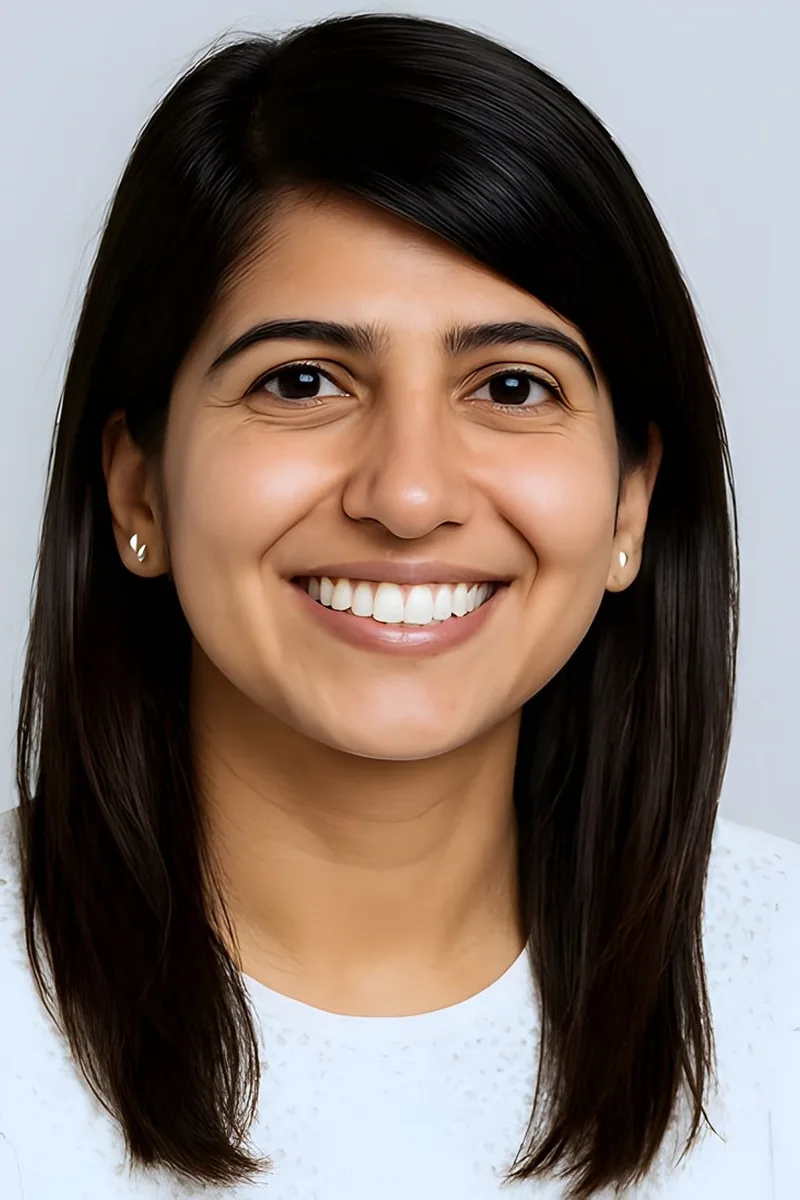
Analysis and Approaches is the IB's most proof-heavy math course, demanding comfort with algebraic manipulation, calculus, and formal reasoning all at once. Eshita zeroes in on the areas that tend to sink exam scores — series convergence, optimization problems, and the Paper 3 investigation — and teaches students to structure their written solutions the way examiners want to read them.
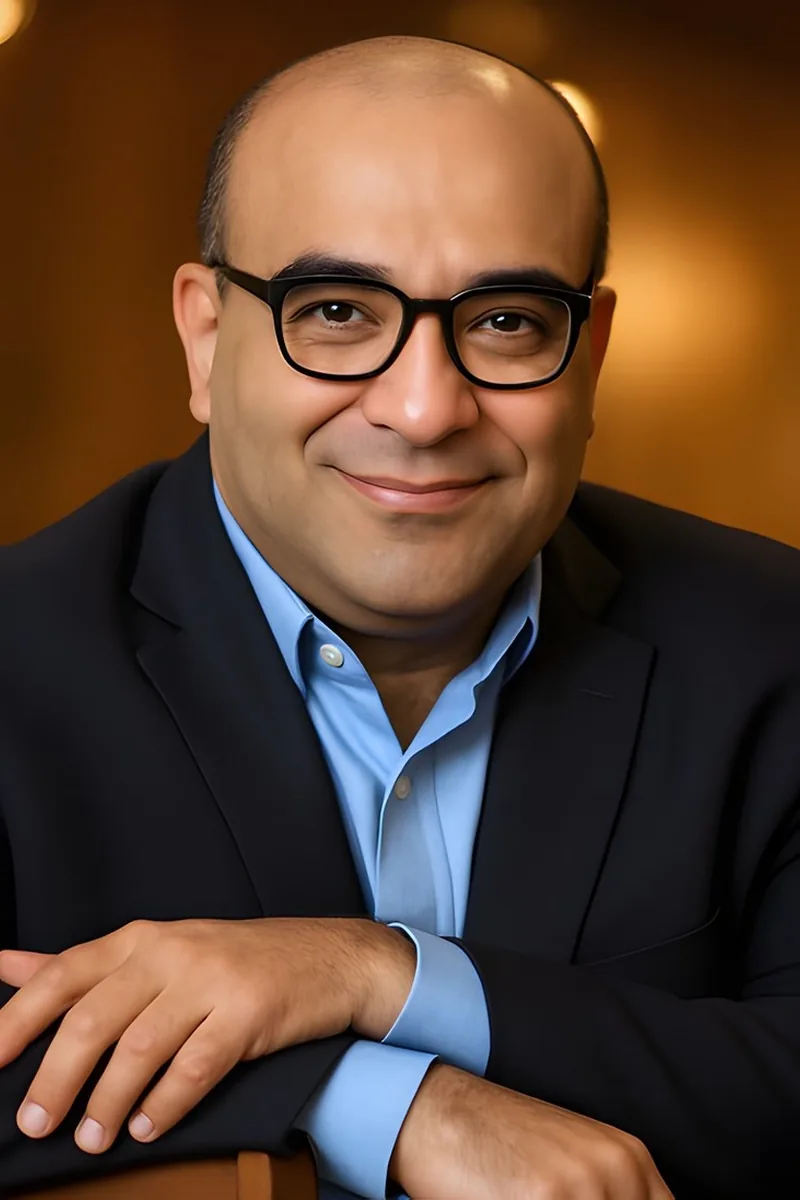
IB Analysis and Approaches blends pure math rigor with applied problem-solving — from differential calculus and series convergence to the statistics and probability options that many students underestimate. Bahaeddine's PhD in Statistics and bachelor's in Mathematics mean he can tackle both the calculus-heavy and data-analysis strands with equal depth. His years teaching at the college level translate into clear explanations of proof-based questions and the internal assessment's mathematical exploration.
IB Analysis and Approaches is one of the most demanding high school math curricula out there, blending proof-based reasoning with heavy calculus and statistics content. Kaitlyn's strength is connecting the course's abstract topics — sequences and series, complex differentiation, probability distributions — to the scientific modeling she does as a medical student. She also knows how to structure study around IB's specific exam format, including the paper 3 investigation component.
During my Bachelor's studies at the University of Michigan-Dearborn, I was a mathematics and statistics tutor for a year, which I greatly enjoyed. I am currently a fourth-year Ph.D. student studying mathematics at the University of Florida. During my Ph.D. at the University of Florida, I was a teaching assistant for Calculus I, Calculus II, and Precalculus, and I was an instructor for a section of Calculus I. These experiences helped me develop my tutoring skills. Many students see math as a set of formulas that they can apply to the problems on their exams and homework. However, I feel that this way of thinking not only stifles true understanding, but also makes students' lives harder. My teaching philosophy is that if a strong conceptual understanding is built, then students will be well-equipped to answer any question that they can be asked. When I tutor, I make sure that students develop this foundation first and foremost.
I am applying to medical schools to attend Fall 2016 and I like to play basketball, go backpacking and volunteer with youth in my free time.
Analysis and Approaches leans heavily on proof-style thinking and algebraic manipulation, especially at HL, but even SL students need to be comfortable with sequences, calculus concepts, and function transformations. Lindsey's double major in biology and maritime studies gave her daily practice applying these exact tools to data analysis and modeling, so she teaches them with that practical lens intact.
Having completed the full IB programme at the highest level — earning 39 out of 45 points — Brad knows the specific demands of Analysis and Approaches, from the paper structure to the depth expected in calculus and probability topics. He unpacks the exam's emphasis on multi-step justification, teaching students to write solutions that earn full marks on show-that and proof-style questions.
IB Math: Analysis and Approaches demands comfort with proof-style reasoning and multi-step problem solving that goes well beyond a standard curriculum. Karen's education training at Vanderbilt, combined with her own strong math background, means she can unpack topics like sequences, differential calculus, and probability distributions in ways that align with IB's emphasis on mathematical thinking. She knows how to bridge the gap between understanding a concept and performing under exam conditions.
IB Analysis and Approaches demands comfort with proof-style thinking, from limits and continuity through differential equations. Rithi's neuroscience and biostatistics background means she's spent years applying calculus and probability in research contexts, so she can show students how HL-level concepts like Maclaurin series or hypothesis testing actually function outside the exam. Rated 4.9 by students.
IB Analysis and Approaches rewards the kind of rigorous, proof-oriented thinking that Ezra developed through his philosophy degree. He digs into the "why" behind calculus concepts, trigonometric identities, and the paper-specific problem styles that distinguish SL from HL. Rated 4.8 by students.
Having completed the full IB diploma at Bergen County Academies' Academy for Business and Finance, Toni knows the Analysis and Approaches curriculum from the inside — the exploration, the emphasis on proof, and the way Paper 1 and Paper 2 test different skills. She's especially strong on functions, sequences, and the probability and statistics units that often catch HL students off guard.
IB Analysis and Approaches covers a demanding range — from proof by induction and complex numbers in HL to the integration techniques and differential equations that trip up even strong math students. David holds a mathematics degree from Vanderbilt and has applied advanced quantitative methods professionally as an actuary, so the IA's expectation of mathematical exploration and real-world application is territory he knows well.
Testimonials
Because the right IB Mathematics: Analysis and Approaches tutor makes all the difference.
Average Session Rating – Based on 3.4M Learner Ratings
Nearby IB Mathematics: Analysis and Approaches Tutors
Other Tulsa Tutors
Related Math Tutors in Tulsa
Frequently Asked Questions
IB Mathematics: Analysis and Approaches is a rigorous IB Diploma Programme course that emphasizes deep conceptual understanding alongside procedural fluency. Unlike standard math courses that focus primarily on calculations, this course requires students to prove theorems, model real-world situations, and explain the reasoning behind mathematical concepts. The curriculum covers calculus, functions, trigonometry, and statistics with an emphasis on analytical thinking—skills that prepare students for university-level mathematics and STEM fields.
Many students struggle with the transition from procedural math to proof-based reasoning, where simply getting the right answer isn't enough—they must justify every step. Word problems and modeling questions require translating real-world scenarios into mathematical language, which students often find abstract. Additionally, the course's breadth (calculus, vectors, statistics, and more) means students need to see connections between topics rather than treating them as isolated units. Building confidence with these conceptual leaps is crucial for success.
Personalized 1-on-1 instruction allows tutors to identify exactly where your understanding breaks down—whether it's in foundational concepts, proof techniques, or multi-step problem-solving. Tutors can slow down on challenging topics like calculus applications or vector geometry, show you multiple problem-solving strategies, and help you develop the habit of explaining your reasoning clearly. This targeted approach builds both mathematical confidence and the communication skills the IB exam demands.
Your first session will focus on understanding your current level, learning goals, and specific pain points. Tutors will likely review recent coursework or exams to identify gaps in conceptual understanding, then work through a problem together to see how you approach mathematical reasoning. This diagnostic helps tutors create a personalized plan—whether you need help with foundational concepts, proof-writing strategies, or exam preparation—so every subsequent session builds directly on your needs.
Varsity Tutors connects you with tutors who have deep experience teaching IB Mathematics: Analysis and Approaches and understand the specific demands of the IB curriculum. When you reach out, you can specify your goals—whether it's strengthening conceptual understanding, mastering proofs, or preparing for the final exam—and tutors are matched based on their expertise in those areas. This personalized matching ensures you work with someone who understands both the content and the IB assessment style.
Proof-writing is a skill that requires practice and feedback, which personalized tutoring provides perfectly. Tutors can show you different proof techniques (direct proof, proof by contradiction, induction), help you recognize which approach fits a given problem, and coach you through the logical reasoning process. They'll also help you develop clear mathematical communication—explaining not just what you did, but why each step follows logically from the previous one, which is essential for IB success.
Word problems require translating everyday language into mathematical notation and deciding which concepts apply—a skill that's very different from solving equations directly. Many students see the math but struggle with the interpretation phase. Tutors help by teaching you to break down word problems systematically: identifying what's given, what you're solving for, and which mathematical tools fit the situation. With practice and guidance, you'll start seeing patterns in how problems are structured and gain confidence tackling unfamiliar scenarios.
Effective exam prep involves more than reviewing formulas—it requires practicing under timed conditions, analyzing past paper questions, and identifying your weak areas early. Tutors can help you work through released IB exam questions, teach you time-management strategies for the different paper formats, and ensure you understand not just how to solve problems but how to communicate your reasoning clearly in exam conditions. Starting this focused preparation several months before the exam gives you time to build mastery rather than just memorize.
Let’s find your perfect tutor
Answer a few quick questions. We’ll recommend the right plan and match you with a top 5% tutor.