Award-Winning AP Physics C: Electricity and Magnetism Tutors
serving Oklahoma City, OK
AP Physics C: Electricity and Magnetism
Tutors in Oklahoma City
Private 1-on-1 tutoring, weekly live classes for academic support, test prep & enrichment, practice tests and diagnostics, and more to elevate grades and test scores.
Based on 3.4M Learner Ratings
UniversitiesSchools & Universities
DeliveredHours Delivered
ProficiencyGrowth in Proficiency
Who needs tutoring?
No obligation. Takes ~1 minute.

Gauss's law, Ampère's law, Faraday's law — AP Physics C: E&M asks students to wield vector calculus inside electromagnetic theory, which is a steep jump from mechanics. Richard's electrical and computer engineering background at the University of Tulsa means he's worked through these derivations extensively and can connect abstract field equations to tangible circuits and real devices. He breaks down each Maxwell equation into physical intuition first, then builds toward the math.
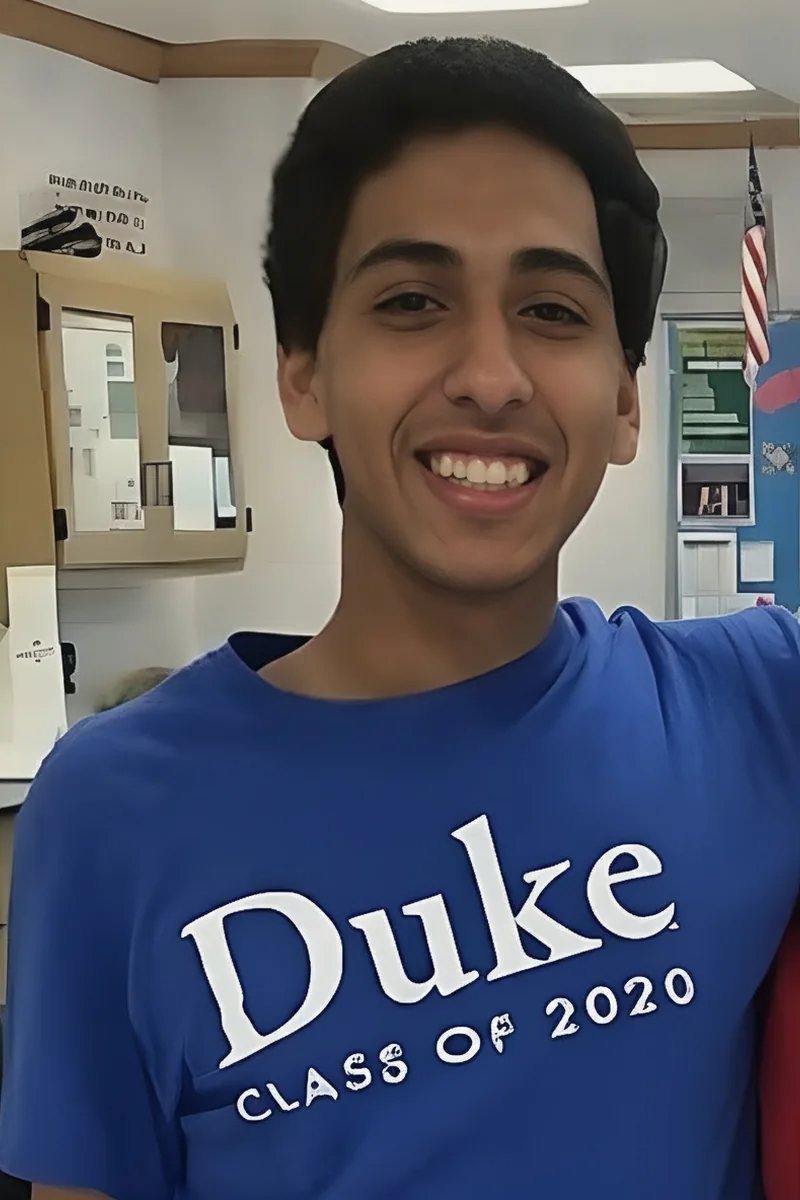
AP Physics C: E&M is widely considered the hardest AP science exam, demanding fluency with vector calculus, Gauss's law, Faraday's law, and RC/RL circuit analysis under serious time pressure. Nima is a physics major at Duke who earned a 1580 SAT, and he unpacks these topics by deriving results from Maxwell's equations so students understand the structure behind each problem type rather than pattern-matching from examples.
Gauss's law, Ampère's law, Faraday's law — AP Physics C: E&M asks students to think in vector fields and surface integrals, which is a major leap from mechanics. As an astrophysics and chemistry double major at CU Boulder, Graham works with electromagnetic theory as a core part of his studies and breaks down each law into the physical picture behind the math. He holds a 5.0 rating from students.
Gauss's law, Ampère's law, Faraday's law — AP Physics C: E&M asks students to think in three dimensions about invisible fields, which is a fundamentally different challenge than Mechanics. Charles breaks down each law by connecting the integral expressions to physical setups students can visualize, like charged shells and solenoid cross-sections. His 5.0 rating speaks to how clearly he makes these abstractions click.
I am a graduate of Cornell University's College of Arts and Sciences. I received my Bachelor of Arts in Chemistry with Distinction in 2015. Since graduation, I was a physics/chemistry teacher and soccer coach at a private school in Virginia for a year, where I led the soccer team to an undefeated season. Before teaching and coaching professionally, I was a Teaching Assistant for the Cornell Math and Physics Departments, where I taught many subjects including calculus, mechanics, electromagnetism. Throughout my time at Cornell and as a teacher, I tutored subjects ranging from the SAT to AP Physics and Algebra II, which is where my true talents lie: in small group or one-on-one settings where I can give students the full attention they deserve and tailor my approach specifically to their learning styles. This is why I am now pursuing tutoring as a part-time occupation at Varsity Tutors. I embrace teaching all math and science subjects, especially physics and calculus, at both the college and high school level and will go above and beyond to make sure all of my students succeed, according to their definition of success. In my spare time, I enjoy playing league soccer, basketball, tennis and guitar, and also like to travel and see as much of the world as I can.
I am working towards a Bachelor of Arts in Pure and Applied Mathematics as well as a Bachelor of Arts in Astronomy and Physics. I have enjoyed studying math and science since I was in elementary school. I would always help my friends out by answering their questions about the material. For about the last five years, I have had my own tutoring business where I have tutored a wide variety of math courses from elementary school math to pre-calculus and calculus. I like to make sure my students have a complete understanding of the core concepts before going into practice questions. I have also had experience helping my peers with physics and computer science courses.
Electricity and Magnetism trips students up because it layers vector calculus onto already-abstract concepts like electric flux, Gauss's law, and electromagnetic induction. Rachel's calculus expertise gives her a solid handle on the integral and differential equations that drive E&M problem-solving. She's upfront that this is one of the toughest AP courses offered, and she approaches it by making sure the math never becomes the bottleneck.
Gauss's law, Ampère's law, Faraday's law — AP Physics C: E&M asks students to wield vector calculus in physical contexts that feel genuinely abstract at first. Jacques tackles this by grounding each law in a concrete setup (a charged sphere, a solenoid, a changing magnetic flux) before layering in the integral formulations. His engineering training at Princeton and decades of classroom physics teaching make him unusually comfortable in this territory.
Gauss's law, Ampère's law, Faraday's law — E&M asks students to visualize invisible fields and then describe them with surface and line integrals. Bryan breaks each problem into two stages: building geometric intuition about what the field looks like, then choosing the right mathematical tool to exploit symmetry. His physics degree and 5.0 student rating back up that structured approach.
AP Physics C: E&M is where calculus and physics genuinely merge — Gauss's law, Ampère's law, and Faraday's law all require setting up and evaluating integrals that many students haven't encountered outside a math class. Maxwell's dual degree in mathematics and physics means he tackles both the vector calculus and the physical intuition simultaneously, so concepts like electric flux and induced EMF actually click. Rated 5.0 by students.
Gauss's law, Ampère's law, Faraday's law — AP Physics C: E&M asks students to wield vector calculus inside electromagnetic theory, which is a steep jump from most prior coursework. Steven approaches each topic by first explaining the physical picture, then showing the mathematical framework, then working through a practical example that ties both together. His PhD in chemical engineering required deep work with electromagnetic principles and multivariable calculus alike.
Electromagnetism was the centerpiece of Michael's teaching at the University of Michigan, where he designed and led undergraduate lab courses on circuits, fields, and waves. AP Physics C: E&M demands comfort with Gauss's law, Ampère's law, Faraday's law, and RC/RL circuit analysis — all topics he's taught extensively at the college level. He knows exactly where the conceptual gaps tend to open up, especially around flux integrals and the superposition of electric fields.
AP Physics C: E&M is where calculus and electromagnetism collide — Gauss's law in integral form, Faraday's law, RC and RL circuits all demand comfort with both the physics and the math simultaneously. Serdar's physics teaching degree paired with his current nuclear engineering graduate work means he lives in the calculus-heavy side of physics daily. Rated 5.0 by students, he breaks down intimidating vector calculus applications into step-by-step reasoning.
Testimonials
Because the right AP Physics C: Electricity and Magnetism tutor makes all the difference.
Average Session Rating – Based on 3.4M Learner Ratings
Practice AP Physics C: Electricity and Magnetism
Free practice tests, flashcards, and AI tutoring for AP Physics C: Electricity and Magnetism
Nearby AP Physics C: Electricity and Magnetism Tutors
Other Oklahoma City Tutors
Related Science Tutors in Oklahoma City
Frequently Asked Questions
AP Physics C: E&M requires strong calculus skills combined with conceptual physics understanding—you're not just solving problems, you're deriving relationships using derivatives and integrals. The exam tests both computational ability and deep conceptual reasoning, which means students need to master complex topics like Gauss's law, Ampere's law, and electromagnetic induction at a rigorous level. Many students struggle with the transition from algebra-based physics to calculus-based analysis, making personalized instruction particularly valuable for building confidence in both the math and physics.
Score improvement depends on your starting point and consistency with practice, but students typically see 2-4 point gains (on the 1-5 scale) when they work with a tutor to identify weak concepts, master problem-solving strategies, and complete targeted practice tests. The key is addressing specific gaps—whether that's struggling with vector calculus, circuit analysis, or magnetic field problems—rather than trying to study everything at once. Starting tutoring 3-4 months before the exam gives you enough time to build conceptual understanding and develop test-taking rhythm.
The biggest obstacles are: (1) applying calculus to physics concepts—students know calculus but struggle to see when to use derivatives vs. integrals; (2) visualizing electromagnetic fields and flux, which are abstract; and (3) time management on the exam, since the free-response section requires both setup and calculation. Many students also mix up similar concepts like electric potential vs. electric field, or confuse Gauss's law with Coulomb's law. A tutor can help you build mental models for these abstract ideas and practice efficient problem-solving strategies.
Your first session focuses on assessment and planning. A tutor will review which topics you've covered, work through a sample problem with you to identify your problem-solving approach, and pinpoint where conceptual gaps or calculation errors occur. From there, the tutor creates a personalized study plan targeting your specific weaknesses—whether that's Gauss's law, circuit problems, or exam pacing—and establishes a schedule that gets you exam-ready by test day.
Practice tests are essential—they're the best way to identify weak topics, get comfortable with exam format and timing, and build test-day confidence. Rather than taking full practice tests early on, it's more effective to focus on topic-specific practice (like 20 minutes on Gauss's law problems) until you're solid, then move to full-length exams in the final 4-6 weeks before the AP exam. Your tutor can help you review practice test mistakes to spot patterns—like whether you're making conceptual errors or just rushing through calculations—so you can target your studying effectively.
You don't need to be a calculus expert, but you do need to be comfortable with derivatives and integrals and understand when to apply them. Many students who've taken AP Calculus or are currently enrolled can succeed with tutoring that explicitly connects calculus techniques to physics problems. If calculus is a weak spot, your tutor can review the specific calculus skills you need (like taking derivatives of vector fields or setting up integrals) so you can focus your energy on the physics concepts rather than struggling with the math.
The exam has 45 minutes for multiple choice (35 questions) and 45 minutes for free response (3 questions), so pacing is critical. A smart strategy is to spend about 1 minute per multiple-choice question, skip any that seem overly complex, and come back to them if time allows. For free response, spend 2-3 minutes reading and planning your approach before diving into calculations. Tutors can help you practice this pacing with timed problem sets and full practice exams, so you develop a rhythm that feels natural and reduces test-day anxiety.
Look for tutors with a strong background in physics or engineering, ideally with AP Physics C teaching or tutoring experience. They should be able to explain both the "why" behind concepts (conceptual understanding) and the "how" of problem-solving (calculation techniques). For Oklahoma City students, Varsity Tutors connects you with expert tutors who understand the AP curriculum deeply and can adapt their teaching to your learning style—whether you learn best through derivations, visual models, or working through practice problems together.
Let’s find your perfect tutor
Answer a few quick questions. We’ll recommend the right plan and match you with a top 5% tutor.