Award-Winning AP Environmental Science Tutors
serving Manhattan, NY
AP Environmental Science
Tutors in Manhattan
Private 1-on-1 tutoring, weekly live classes for academic support, test prep & enrichment, practice tests and diagnostics, and more to elevate grades and test scores.
Based on 3.4M Learner Ratings
UniversitiesSchools & Universities
DeliveredHours Delivered
ProficiencyGrowth in Proficiency
Who needs tutoring?
No obligation. Takes ~1 minute.
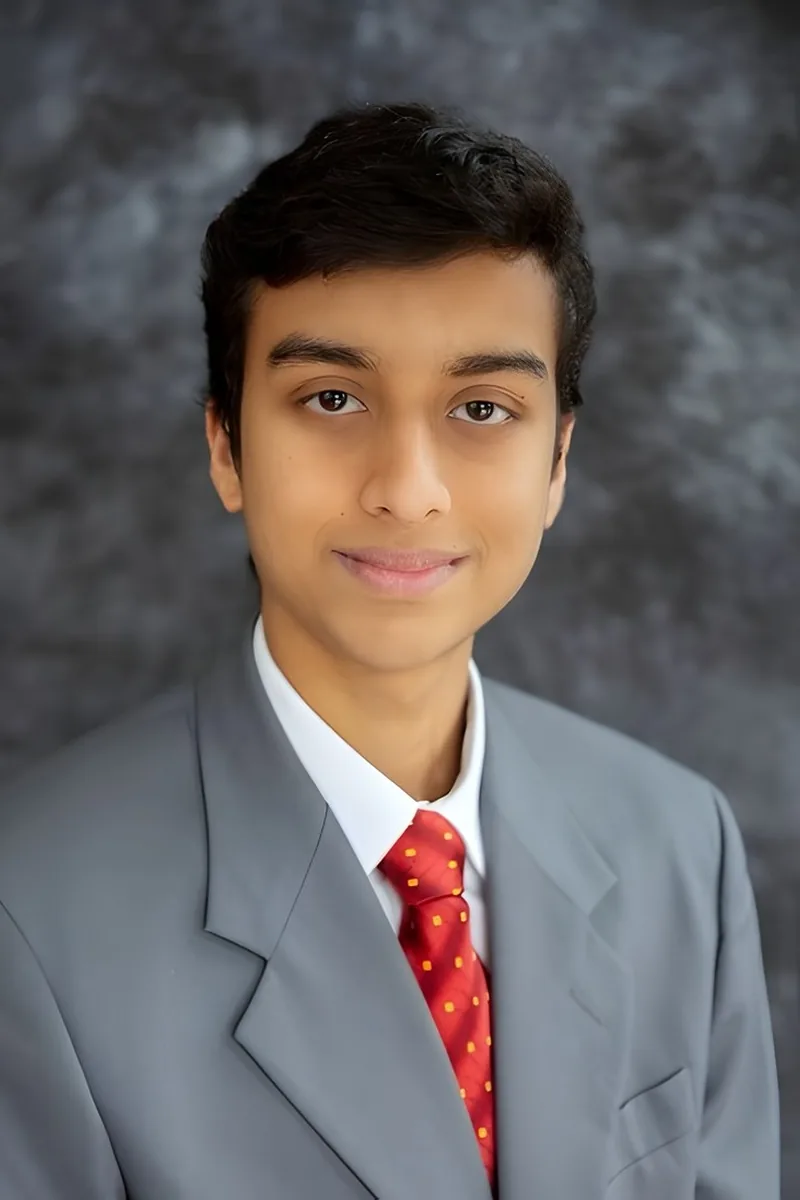
Premed coursework in human biology builds an intuitive grasp of the biological systems that APES questions test — nutrient cycling, population growth models, and the health consequences of environmental degradation aren't abstract concepts for Sharan, they're threads running through his own studies at Cornell. He scored a 36 on the ACT, and that same precision with data shows up in how he teaches students to work through the math-based questions on ecological footprints and resource consumption that the exam buries between the conceptual material. Rated 5.0 by students.

Eric's degree in Ecology & Evolutionary Biology means he studied the actual science behind APES — population ecology, species interactions, and ecosystem-level processes — not just the survey-course version. He teaches students to think about environmental problems the way an ecologist would, tracing how a disturbance like deforestation or nutrient loading ripples through trophic levels and feedback loops until the full picture clicks.
Cognitive science trains you to think in systems — how inputs, feedback loops, and cascading effects connect across complex networks — which maps surprisingly well onto APES topics like biogeochemical cycles, ecosystem disruption, and human-environment feedback. Zachary applies that systems-thinking lens to help students trace cause-and-effect chains across units, which is the skill that separates 3s from 5s on the free-response section. He scored a 32 on the ACT and carries a 4.8 tutoring rating.
What sets APES apart from most AP exams is how much it rewards interdisciplinary thinking — linking ecology to policy, economics to resource depletion, human behavior to environmental degradation. Rachel's background spans history, writing, and the humanities, which makes her particularly effective at coaching the argument-style free-response questions where students must weave evidence into structured, persuasive explanations of environmental trade-offs. Rated 5.0 by students.
Kiera is majoring in Ecology and Evolutionary Biology at Dartmouth, which means she's studying biodiversity, population dynamics, and ecosystem interactions at a level well beyond what the APES exam requires — and her engineering modification adds the quantitative rigor needed for calculations like energy transfer efficiency and ecological footprint math. She scored a 35 on the ACT and holds a 5.0 tutoring rating, bringing that same precision to the data-analysis and experimental-design questions that make up the bulk of the free-response section.
Computer science at UCLA might not scream environmental science, but David's training in modeling complex systems and analyzing large datasets maps directly onto APES topics like climate feedback loops, population modeling, and resource depletion calculations. He tackles the quantitative side of the exam — unit conversions, energy math, experimental design — with the algorithmic precision of a software engineer, which is exactly what the data-heavy free-response questions demand. Rated 4.8 by students.
Chellam earned her Environmental Science degree from UC Berkeley with a biological science concentration, which means AP Environmental Science isn't a subject she studied once — it was her entire academic focus. She breaks down everything from biogeochemical cycles to environmental policy analysis with the depth of someone who's done the fieldwork and the lab work behind the textbook diagrams.
Primary care medicine means Kellyann sees the downstream effects of environmental problems daily — asthma exacerbated by air quality, waterborne pathogens, the health toll of industrial pollutants — which gives her a clinical lens on APES units covering pollution, toxicology, and human impact that pure ecology tutors often lack. She pairs that real-world perspective with nine years of science tutoring experience and a 4.9 rating, teaching students to trace environmental causes through biological systems the way a clinician would during a differential diagnosis.
Three years teaching high school biology in New Jersey gave Sasha firsthand experience with how students struggle to connect classroom ecology — food webs, nutrient cycles, population growth models — to the real-world environmental issues APES actually tests. Her science education master's means she designs lessons around those sticking points, breaking down how a concept like eutrophication links biological mechanisms to human causes to policy solutions in exactly the layered way the exam's free-response rubrics demand. She scored a 1550 on the SAT, so the data-interpretation and quantitative reasoning portions of the exam are well within her wheelhouse too.
Most students walk into APES expecting pure memorization and get blindsided by free-response questions that demand structured, argumentative writing — and that's where Jennifer's journalism master's and rhetoric training give her an edge few science tutors can match. She coaches students to build clear, evidence-driven FRQ answers that connect environmental causes to consequences in the precise format the rubric rewards. Rated 5.0 by students.
Alexandra's Penn State degree is literally in Environmental Resource Management, with additional training in watershed science and wildlife ecology — the exact content tested on the AP Environmental Science exam. She digs into FRQ strategies for topics like biogeochemical cycles, biodiversity loss, and water pollution, connecting each concept to fieldwork and case studies she encountered firsthand during her program.
Theater training builds an unexpected skill for APES: the ability to trace how one action ripples outward through an entire system — a narrative instinct Savannah applies to teaching cause-and-effect chains like how agricultural runoff triggers eutrophication or how deforestation feeds back into regional climate shifts. Her 34 ACT reflects sharp analytical reading skills she brings to the data-interpretation and graph-heavy questions that dominate the exam. Rated 4.9 by students.
Brett earned three bachelor's degrees and a master's in biology, which means topics like biogeochemical cycles, ecosystem energy flow, and population ecology aren't just APES vocabulary for him — they're concepts he studied repeatedly across multiple degree programs. He brings that layered understanding to the lab-design and data-analysis questions where students need to explain mechanisms, not just label diagrams. Rated 5.0 by students.
Before she ever tutored APES, Jenna was on the other side — she used tutoring herself in high school to push through tough coursework and earned a 31 ACT and full-tuition scholarship along the way. That experience gives her a sharp read on where students get stuck, especially on the policy and legislation units where environmental science intersects with the kind of big-picture cause-and-effect reasoning she sharpened across her humanities and writing coursework. Rated 4.9 by students.
Between his Biology Honors program at UIUC and his time hiking and studying ecosystems firsthand, Ian tackles AP Environmental Science with both academic rigor and genuine enthusiasm for the material. He breaks down FRQ-heavy topics like biogeochemical cycles, biodiversity loss, and environmental legislation so students can construct the kind of evidence-based arguments the exam rewards.
Todd's biology degree from UIUC gives him the ecological and cellular foundations that underpin APES topics like nutrient cycling, energy flow through trophic levels, and ecosystem disruption — and his social work training adds a surprisingly useful lens for the policy and human-impact questions that dominate the free-response section. He teaches students to trace cause-and-effect across units, which is the skill the exam actually scores on. Rated 5.0 by students.
Studying biological sciences means Liana is learning the underlying mechanisms — cellular respiration, nutrient cycling, population growth models — that APES questions are built on, rather than encountering them as isolated vocabulary terms. She breaks down topics like energy flow and species interactions using the same biological logic her college coursework demands, which pays off on free-response questions that ask students to explain processes rather than just name them. Rated 4.9 by students.
Eileen's neuroscience coursework at Vanderbilt — tracing how disruptions propagate through biological systems — gives her a useful lens for APES topics like bioaccumulation, feedback loops in climate systems, and how environmental toxins affect organisms at multiple scales. She scored a 36 on the ACT and brings that same precision to the data-interpretation and calculation questions that catch students off guard on exam day.
An anthropology degree might seem like an unusual background for APES, but it's surprisingly relevant — Libby understands human-environment interactions, resource use patterns, and cultural dimensions of environmental policy, which are exactly the themes the exam's free-response questions probe. She teaches students to think about ecological problems through the lens of human systems, connecting topics like land use, pollution, and sustainability to the societal forces driving them. Rated 5.0 by students.
Stanford's Science, Technology, and Society major sits at the exact intersection APES lives in — where ecological science meets human systems, policy decisions, and technological trade-offs. Rithika's IB and National AP Scholar background means she's already navigated the kind of interdisciplinary, essay-heavy exams that APES models itself on, and she uses that experience to teach students how to connect scientific evidence to real-world environmental consequences in their free-response answers.
Having earned her degree in Environmental Studies from Temple, Annie knows AP Environmental Science inside and out — from biogeochemical cycles and ecosystem energy flow to the policy and human-impact questions that dominate the free-response section. She also spent a gap year working on organic farms in New Zealand, which means topics like soil science, sustainable agriculture, and biodiversity loss come with firsthand context that sticks.
Katie holds a master's in science education and a bachelor's in natural resources and conservation — meaning she didn't just study APES topics like land use, biodiversity, and resource management as exam content; they were her actual field of study. She teaches students to think in cause-and-effect chains across units, connecting deforestation to soil erosion to water quality decline, which is exactly the kind of multi-step reasoning the free-response rubrics reward. Rated 5.0 by students.
Kelsey earned her Master of Science in Environmental Sciences and Policy from Johns Hopkins, which means she doesn't just know the APES curriculum — she's done the fieldwork and data analysis behind it. From biogeochemical cycles to environmental legislation and ecological footprint calculations, she teaches students to think like environmental scientists, not just memorize vocabulary for the exam. Rated 4.9 by students.
Chemical and biomolecular engineering coursework covers thermodynamics, mass balances, and reaction kinetics — the same principles underlying APES topics like energy transfer through trophic levels, pollutant fate in water systems, and carbon cycle calculations. Akshaya uses that engineering lens to demystify the quantitative free-response problems where students need to set up unit conversions and efficiency calculations under time pressure. Rated 4.8 by students.
Testimonials
Because the right AP Environmental Science tutor makes all the difference.
Average Session Rating – Based on 3.4M Learner Ratings
Practice AP Environmental Science
Free practice tests, flashcards, and AI tutoring for AP Environmental Science
Nearby AP Environmental Science Tutors
Other Manhattan Tutors
Related Science Tutors in Manhattan
Frequently Asked Questions
AP Environmental Science spans eight major units: Earth Systems and Resources, The Living World, Population, Earth Systems and Resources, Land and Water Use, Energy Resources and Consumption, Atmospheric Composition and Weather, Global Change, and Human Impacts. The exam tests your understanding of environmental concepts through multiple-choice questions and free-response questions that require you to analyze data, interpret graphs, and apply environmental principles to real-world scenarios.
Score improvement depends on your starting point and how consistently you engage with tutoring. Students who work with expert tutors typically see gains of 1-2 score points on the 1-5 scale, especially when they focus on their weakest units and practice with released exams. The key is identifying which content areas need the most work—whether that's biogeochemical cycles, energy flow, or data analysis—and building targeted practice around those gaps.
Many students struggle with the quantitative aspects of the course, particularly calculations involving population growth, energy conversions, and environmental impact assessments. Others find it difficult to connect abstract concepts like nutrient cycling or climate feedback loops to real-world applications. Additionally, the free-response section requires students to think critically and explain their reasoning clearly—skills that benefit greatly from guided practice and feedback.
Start by managing your time: you have 3 hours for 80 multiple-choice questions and 3 free-response questions, so aim to spend about 90 minutes on the multiple-choice section. For the free-response questions, read the prompt carefully and organize your answer before writing—these questions reward clear reasoning and evidence-based explanations. Practice with released exams to get comfortable with question formats, and learn to quickly identify what type of analysis each question requires (data interpretation, calculation, conceptual explanation).
A solid study plan typically spans 3-4 months leading up to the exam in May. Break the eight units into manageable chunks—study 1-2 units per month, complete practice problems for each unit, and review released exam questions. In the final 4-6 weeks, shift to full-length practice tests and focus on your weakest areas. Tutors can help you identify which units need the most attention and create a personalized schedule that fits your learning pace.
Data analysis is a core skill tested throughout the exam, so regular practice is essential. Start by learning to identify what each graph shows, what variables are being compared, and what the trends tell you about environmental systems. Work through practice problems that ask you to calculate rates of change, compare datasets, and draw conclusions from visual information. Expert tutors can guide you through the most common graph types you'll encounter—population curves, energy pyramids, climate data—and teach you how to explain your interpretations clearly in free-response answers.
Your first session is about establishing a baseline and creating a personalized plan. Expect to discuss which units you find most challenging, review your current understanding of key concepts, and take a diagnostic assessment or practice problem set to identify specific gaps. From there, Varsity Tutors connects you with a tutor who can tailor lessons to your needs—whether you need deep conceptual review, help with calculations, or practice with free-response writing.
Varsity Tutors connects you with experienced tutors who specialize in AP Environmental Science and understand the specific demands of the exam. When you work with us, you'll get matched with a tutor whose expertise aligns with your needs—whether you need help mastering the full curriculum or focusing on specific units before the May exam. We handle the matching process so you can focus on studying.
Let’s find your perfect tutor
Answer a few quick questions. We’ll recommend the right plan and match you with a top 5% tutor.