Award-Winning Writing Tutors
serving Brooklyn, NY
Writing
Tutors in Brooklyn
Private 1-on-1 tutoring, weekly live classes for academic support, test prep & enrichment, practice tests and diagnostics, and more to elevate grades and test scores.
Based on 3.4M Learner Ratings
UniversitiesSchools & Universities
DeliveredHours Delivered
ProficiencyGrowth in Proficiency
Who needs tutoring?
No obligation. Takes ~1 minute.

The gap between having an idea and expressing it clearly on the page is where most students get stuck. Reid tackles that gap by teaching concrete techniques — thesis construction, paragraph transitions, evidence integration — rather than vague advice like "be more specific." His sociology and education background means he's equally comfortable coaching a persuasive essay or a research paper.
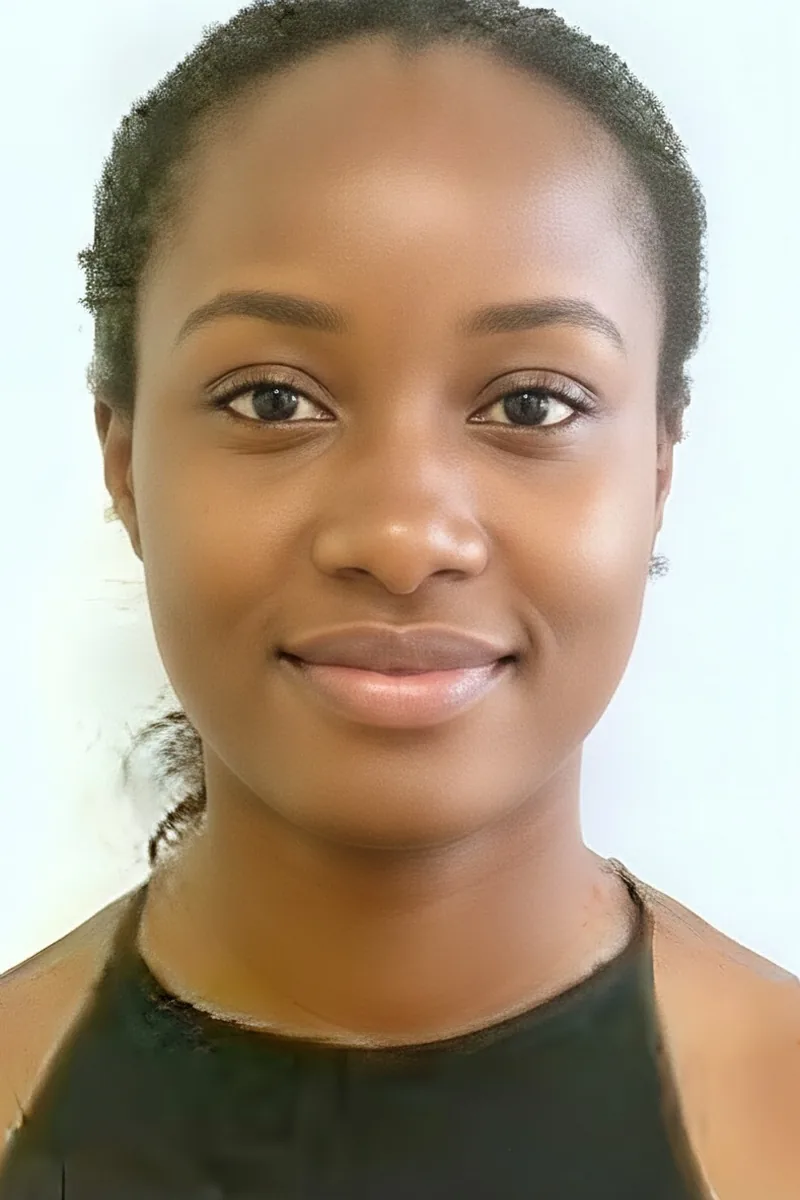
Every writing problem is really a thinking problem — a muddled thesis usually means the idea isn't clear yet. Solange walks students through the full arc from brainstorming to polished draft, teaching them to outline arguments, vary sentence structure, and revise with purpose. Her sociology training at Harvard made her especially sharp at building evidence-based written arguments.
Turning a vague idea into a structured, compelling piece of writing is a skill most students never get explicitly taught — they're just told to "write a five-paragraph essay" and figure it out. Sabira breaks the process into concrete steps: narrowing a topic, building an outline with real claims, drafting body paragraphs around evidence, and revising for clarity. Her 5.0 rating speaks to how well that structured approach works.
A philosophy major at Princeton spends most of her time writing: constructing arguments, anticipating counterpoints, and making every sentence earn its place. Julie applies that training to teach students how to build clear thesis statements, organize evidence logically, and develop a voice that carries authority without sounding stiff.
Getting ideas out of your head and onto the page in a coherent, compelling way is a learnable craft, not an innate talent. Maya treats writing as a process — brainstorming, outlining, drafting, revising — and teaches specific techniques for each stage, from building a thesis that actually argues something to cutting filler that weakens a paragraph. She's a working writer herself, which keeps her feedback practical and current.
Strong writing starts with having something specific to say and then organizing it so a reader can follow without effort. Rachel's history and political science training at the college level was essentially an education in argumentative writing — constructing thesis-driven essays backed by evidence and structured around clear transitions. She tackles everything from five-paragraph essays to research papers, teaching students to outline before they draft and revise with purpose.
Clear writing starts with clear thinking, which is something Ian's Yale physics training reinforced in every lab report and research paper. He teaches students to outline arguments before drafting, vary sentence structure deliberately, and revise with purpose — skills that transfer from a five-paragraph essay to a research paper. His emphasis on logical flow makes even reluctant writers more confident in organizing their ideas.
Most writing struggles aren't about grammar — they're about not knowing what you're trying to say until the third paragraph. Moon teaches students to identify their core argument early, build each section around a single clear point, and revise with purpose. His philosophy background means he's particularly effective at turning muddled thinking into sharp prose.
Most students learn the five-paragraph essay and then struggle when college-level writing demands something more flexible. Noah teaches writing as argument construction: how to build a claim that's worth defending, organize evidence so it does real work, and revise with purpose. His philosophy background means every session emphasizes clarity of thought before polish of prose.
Good writing isn't about following a formula — it's about learning to think on the page and then revise until the thinking is clear. Michelle's Columbia MA in American Studies required constant analytical writing across disciplines, and she breaks down the drafting process into manageable stages: brainstorming, outlining, drafting for ideas first, then polishing for style and mechanics.
Three years studying philosophy taught Lucas that clear writing is really clear thinking put on paper. He tackles everything from thesis development to paragraph-level organization, showing students how to pin down a vague idea, commit to a specific claim, and support it with evidence that actually does the work.
Getting ideas onto the page is one problem; organizing them into something a reader can follow is a completely different one. Dana tackles both by teaching students to outline with a thesis-first approach — nail down the argument, then build each paragraph around a single piece of evidence. Her public policy training made structured, persuasive writing second nature, and she applies those same principles whether the assignment is a five-paragraph essay or a research paper.
Good writing starts with a clear argument, and Sarah treats every essay as an exercise in building one — from a precise thesis statement through evidence selection to a conclusion that actually lands. Her Classics training means she learned to write by dissecting some of the most influential rhetorical models in Western literature, and she brings that structural awareness to everything from personal narratives to research papers.
Most writing problems aren't about grammar — they're about organization. Ben's approach starts with helping a student articulate what they're actually trying to argue, then builds outward to paragraph structure, transitions, and sentence-level revision. His Dartmouth English training and year teaching abroad gave him practice adapting that process for writers at every level.
Straddling the sciences and humanities throughout college gave Anna an unusual versatility as a writing tutor — she's equally comfortable coaching an argumentative essay on Hamlet and a lab report on neural plasticity. She teaches students to outline with intention, develop claims through layered evidence, and revise with a reader's eye rather than a writer's attachment.
Every piece of writing has an architecture — a thesis that anchors it, paragraphs that build on each other, transitions that keep a reader moving forward. Harry teaches students to see that structure before they start drafting, drawing on his own experience writing and producing theatrical works in New York City. His Northwestern communications degree sharpened his ability to break down argument, voice, and audience in ways that translate directly to essays and research papers.
Every paper Miranda wrote at Pomona — whether analyzing Kierkegaard or comparing sacred texts across traditions — demanded a clear thesis, tight organization, and precise language. She breaks the writing process into concrete stages: brainstorming a real argument, building an outline that supports it, drafting with purpose, and revising with fresh eyes. Rated 5.0 by students.
Earning departmental honors in both German and Philosophy at UCLA required Willow to produce rigorous, thesis-driven writing across very different disciplines — from close textual analysis to formal logical argumentation. That range means she can teach structure, clarity, and persuasive technique whether someone is drafting a personal narrative or a research paper. She's especially sharp at helping writers tighten their arguments and eliminate vague claims.
Most students know what they want to say but struggle to organize it on the page. Samantha breaks the writing process into concrete steps — outlining an argument, building transitions between paragraphs, and revising for voice — so that a blank document stops feeling overwhelming. Her experience writing for Northwestern's fashion magazine sharpened her ability to adapt tone and style across genres.
Tim treats writing as structured argumentation: before students worry about word choice or style, he walks them through building a thesis that actually says something and organizing paragraphs that each do real work. His philosophy training at the undergraduate level and his master's in education give him a rare combination — he thinks rigorously about ideas and knows how to teach the craft of putting them on paper. Rated 5.0 by students.
Getting ideas onto the page is one challenge; organizing them into something a reader can follow is another entirely. Jeanette teaches writing as a process — outlining, drafting, revising — and pays particular attention to thesis development, paragraph transitions, and how to support claims with concrete evidence. Her own research writing at Penn's Positive Psychology Center keeps these skills sharp and practical.
Whether it's a personal essay, a research paper, or a creative piece, Katarah approaches writing as a craft with learnable moves — how to open with tension, how to build an argument paragraph by paragraph, how to revise without losing your voice. Her Literary Arts degree from Brown and her own practice as a performer and essayist give her range across genres. Rated 5.0 by students.
Clear writing requires clear thinking, and Robert's engineering and economics background trained him to construct logical arguments under tight constraints. He teaches writing as a process of organizing ideas before polishing prose, spending real time on outlining, claim development, and paragraph structure. His classroom experience means he adapts quickly to whether a student needs help generating ideas or tightening a near-final draft.
Most writing problems aren't about grammar; they're about a writer not yet knowing what they're arguing. Matt approaches early drafts by asking pointed questions that sharpen a student's central claim, then teaches them to build paragraphs where every sentence earns its place. His MFA background means he's been through countless revision cycles himself and knows how to make feedback actionable.
Studying both computer science and English at Stanford, Winton brings an unusual precision to writing instruction — he treats thesis development and paragraph structure as problems to solve, not formulas to memorize. He's particularly sharp at teaching students how to revise their own drafts by identifying where arguments lose clarity or evidence runs thin.
Good writing is really good thinking made visible, and that's how Martin teaches it. Drawing on his experience as an Ivy League professor who assigned and graded countless papers, he tackles the planning stage first — thesis construction, evidence selection, logical flow — so that the actual drafting becomes far less painful.
Sarah treats writing as a craft with movable parts — thesis placement, sentence rhythm, transitions that actually do work instead of just taking up space. Her background in audio documentary and performance means she understands how to structure an argument for a real audience, not just a rubric. Rated 5.0 by students.
Teaching high school science with Teach for America meant Elizabeth spent as much time coaching students through lab reports and evidence-based arguments as she did teaching biology — writing was the skill that made the science stick. Her Harvard training in Women, Gender, and Sexuality Studies added a different dimension, requiring her to craft analytical essays where every claim had to be defended with nuanced textual evidence. She brings both lenses to writing sessions, whether a student is structuring a research paper or learning to tighten a rambling first draft.
Strong writing starts with a clear claim and evidence that actually proves it — a principle Mona internalized through years of scientific writing in pharmaceutical sciences and epidemiology. She teaches students to outline before they draft, build paragraphs around single controlling ideas, and revise with an eye for unnecessary filler. The result is prose that's tighter and more persuasive across any genre, from research papers to personal narratives.
Most students know what they want to say but struggle to organize it on the page. Elena tackles that gap by teaching concrete techniques — outlining by argument rather than topic, writing thesis statements that actually commit to a claim, and revising for rhythm and clarity. Her own writing practice spans academic essays, creative nonfiction, and dance criticism.
The hardest part of writing is usually the twenty minutes before any words appear on the page. Megan tackles that blank-page paralysis by teaching students specific prewriting strategies — mapping claims, generating counterarguments, building outlines that actually function as thinking tools. Her interdisciplinary training at Washington University means she's comfortable coaching writing across subjects, from history research papers to personal narratives.
Peter treats writing as structured argumentation: before a single sentence gets drafted, he walks through how to build a claim, select evidence, and organize ideas so the reader never gets lost. His background in historical research papers translates directly into teaching persuasive, analytical, and expository writing at any level.
Clear writing starts with clear thinking, and Emily's anthropology training at Cornell demanded both — constructing evidence-based arguments across research papers, policy briefs, and ethnographic analyses. She teaches students to outline before they draft, build paragraphs around single claims, and revise with an eye toward precision rather than word count.
A clear thesis, logical paragraph structure, and evidence that actually supports the claim — these are the mechanics Timothy tackles first when a student's writing isn't landing. His B.A. in English gave him deep practice in argumentative and analytical writing, and his experience teaching middle- and high-school students means he knows how to break down the craft without making it feel abstract.
Getting ideas onto the page is only half the battle; organizing them into something a reader can follow is where most students struggle. Colin breaks the writing process into concrete, repeatable steps — brainstorming, outlining, drafting, revising — and adapts each step to whether a student thinks best visually, verbally, or by talking it out. His K–12 teaching background means he's coached writers at every level, from first paragraphs to five-page essays.
Strong writing starts with knowing what you're actually trying to say — and Delon spends real time on that pre-writing stage before a student types a single sentence. He teaches outlining, thesis construction, and paragraph development as interconnected skills, so a finished draft has genuine momentum from introduction to conclusion. Whether the assignment is a personal narrative or a research paper, he adapts his feedback to the genre's demands.
Rachel is a writer herself — fiction, personal essays, creative nonfiction — and she knows that the hardest part is usually not the polishing but the getting-something-onto-the-page. She teaches brainstorming and outlining techniques that unstick even the most blocked writers, then moves into revision strategies for voice, structure, and clarity.
Published in outlets ranging from GlobalPost to Nashville Review, Tracy treats writing as a craft with learnable moves — controlling tone, building paragraphs around a single claim, choosing evidence that does real work. She walks students through drafting and revision as distinct stages, so each pass through a piece sharpens it in a specific way.
Good writing is really rewriting, and Alison treats every assignment — from a five-paragraph essay to a research paper — as a process with distinct, teachable stages: brainstorming, outlining, drafting, and revising for clarity and evidence. Her six years teaching English in Brooklyn public schools mean she's seen every kind of writing challenge, from students who can't start a first sentence to those who write fluently but lack structure. She's particularly skilled at teaching thesis development and paragraph-level organization.
Most writing struggles aren't about vocabulary or grammar — they're about not knowing what you're actually trying to say. Emily starts by teaching students to articulate a clear claim, then walks through how to organize supporting evidence and craft transitions that move a reader forward. Her two graduate-level degrees required constant, high-stakes writing across disciplines.
Testimonials
Because the right Writing tutor makes all the difference.
Average Session Rating – Based on 3.4M Learner Ratings
Other Brooklyn Tutors
Related English Tutors in Brooklyn
Frequently Asked Questions
Working with a writing tutor provides something traditional classroom settings often can't offer: detailed, personalized feedback on your actual writing. With 11.7 students per teacher on average across Brooklyn schools, most students don't get enough individual attention on their essays. A tutor reviews your work, identifies specific strengths and areas to strengthen, and helps you understand the "why" behind revisions—not just the "what." This personalized approach accelerates improvement in essay structure, argument development, and voice.
A thesis is your claim—the main idea your essay proves. An argument is the evidence and reasoning that supports that claim. Many students confuse these, leading to essays that state an idea without actually proving it. A tutor helps you craft a thesis that's specific enough to defend (not too broad), then guides you in selecting and organizing evidence that builds toward your main point. This distinction is critical for everything from high school essays to college entrance applications, where admissions officers specifically look for strong argumentation.
Many students edit only for grammar and spelling, missing the bigger picture: clarity, organization, and impact. Effective revision happens in layers. First, check if your ideas are clearly explained and well-organized (revision). Then, refine word choices and sentence flow (editing). Finally, fix grammar and mechanics (proofreading). A tutor helps you approach revision strategically, asking questions like "Does this paragraph support your thesis?" and "Will your reader understand this sentence?" rather than just circling errors. This process-focused approach builds skills you'll use for every writing assignment.
A strong literary analysis essay moves beyond plot summary to examine how an author creates meaning through specific techniques—word choice, imagery, dialogue, structure, and symbolism. Many students struggle because they describe what happens in a text rather than analyzing why the author made those choices. A tutor teaches you to close-read passages, identify patterns, and build arguments about an author's purpose or a character's development. You'll learn how to support literary interpretations with direct evidence from the text, which is a skill that matters whether you're in high school English or college humanities courses.
Different academic fields have different citation standards: MLA is common in high school and humanities, APA in social sciences and some STEM fields, and Chicago in history and humanities courses. Learning the "right" format for your assignment matters because it shows you understand academic conventions and helps readers find your sources. Beyond mechanics, understanding why you cite—to give credit, show your research, and help readers verify your claims—makes the process less tedious. A tutor can teach you citation rules specific to your assignment and help you avoid common mistakes like missing in-text citations or incomplete source information.
Voice is the unique personality and perspective you bring to your writing—it's what makes your essay sound like you. Developing voice while writing academically can feel contradictory, especially when teachers emphasize formal tone and thesis-driven structure. The truth is these aren't opposites: strong academic writing has a voice. A tutor helps you understand the conventions of your assignment (essay structure, tone expectations, audience), then shows you how to work within those constraints while still writing with confidence and clarity. This balance is especially valuable for college entrance essays, where admissions officers want to hear your voice while seeing that you can write with sophistication.
The outline method works well for some writers, but not everyone. Some students benefit from mapping relationships between ideas visually, others from drafting and then reorganizing. The key is having a structure before you write that shows how each paragraph connects to your thesis. A tutor helps you find the planning method that works for your brain, whether that's a traditional outline, a concept map, or reverse-outlining from a rough draft. Strong organization means your reader can follow your argument without confusion, and each paragraph has a clear purpose. This skill matters across all writing assignments, from persuasive essays to research papers to college applications.
Let’s find your perfect tutor
Answer a few quick questions. We’ll recommend the right plan and match you with a top 5% tutor.