Award-Winning AP Human Geography Tutors
serving Bronx, NY
AP Human Geography
Tutors in Bronx
Private 1-on-1 tutoring, weekly live classes for academic support, test prep & enrichment, practice tests and diagnostics, and more to elevate grades and test scores.
Based on 3.4M Learner Ratings
UniversitiesSchools & Universities
DeliveredHours Delivered
ProficiencyGrowth in Proficiency
Who needs tutoring?
No obligation. Takes ~1 minute.
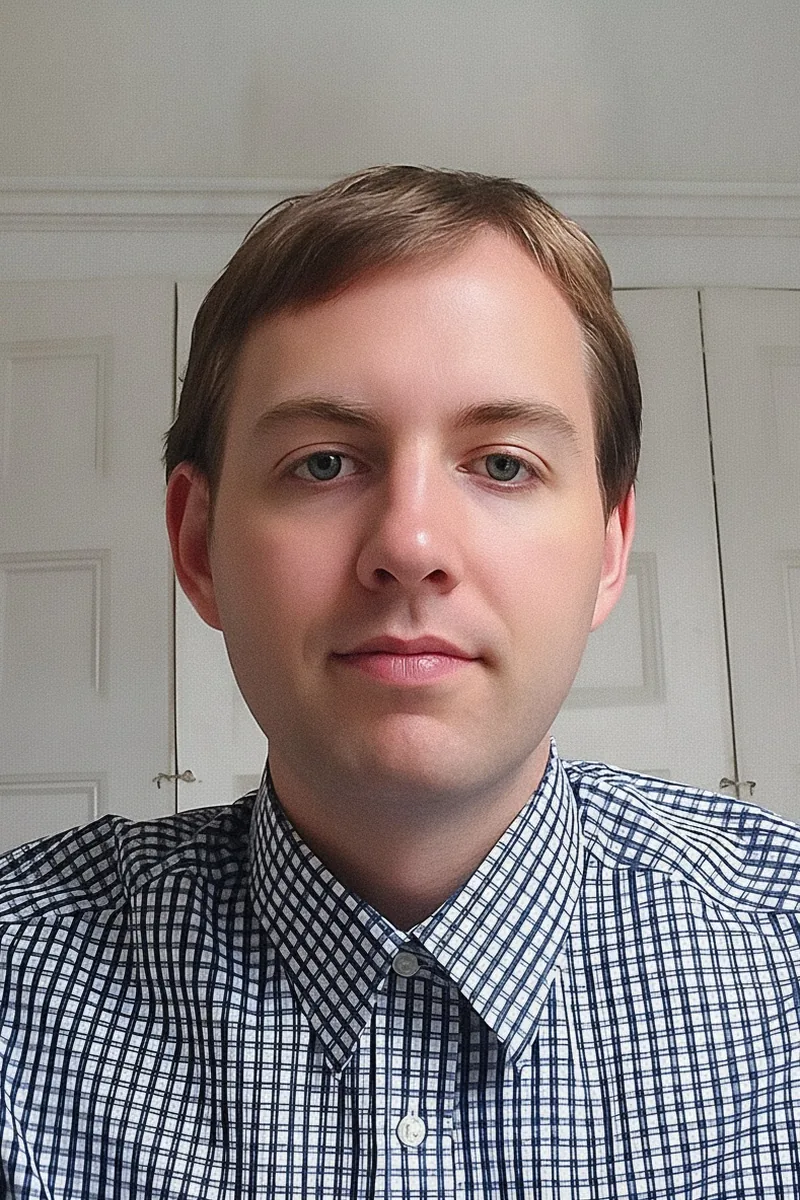
A UChicago BA and UBC master's degree — both in geography — plus a Fulbright research fellowship in Bulgaria mean Duncan has lived the discipline AP Human Geography introduces: migration, cultural landscapes, political boundaries, and spatial organization aren't abstract textbook units for him but the actual substance of his academic career. He teaches students to apply models like the von Thünen or demographic transition not as vocabulary to memorize but as tools for interpreting the stimulus maps and data sets the exam puts in front of them. Rated 5.0 by students.
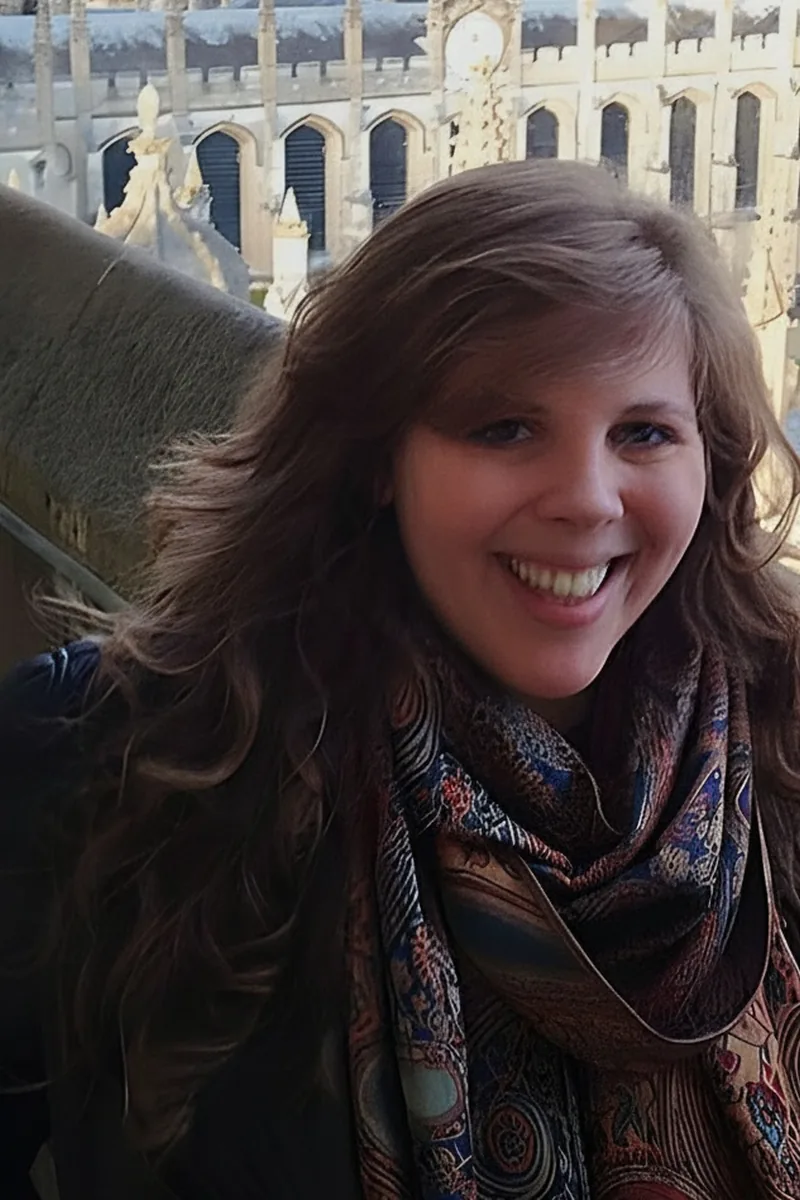
An anthropology degree from Northwestern means Samantha spent years studying exactly what AP Human Geography tests — how cultures form, spread, and collide across regions, and why migration and political organization look different depending on where you are in the world. She brings that ethnographic lens to units on cultural patterns, population dynamics, and political geography, turning abstract models into the kind of human stories that actually stick before exam day.
Christopher's economics degree from UCLA means he already thinks in the supply-demand and development frameworks that underpin some of AP Human Geography's densest units — Rostow's modernization theory, core-periphery dynamics, and how economic incentives drive agricultural and industrial land use. His history training adds the colonial and migration context that turns those economic models into full geographic arguments on FRQ prompts. Rated 4.7 by students.
Few tutors bring a more natural fit to AP Human Geography than someone trained in social anthropology at Harvard. Jorge digs into the spatial patterns behind migration, urbanization, and cultural diffusion with the same analytical lens he used studying human communities academically. He teaches students to think like geographers — reading landscapes, interpreting demographic models, and building arguments with data.
David is a practicing city planner, which means concepts like Christaller's central place theory, urban sprawl models, and the demographic transition aren't abstract exam topics for him — they're tools he uses at work. He unpacks AP Human Geography through real-world examples from his own projects, making it easier to internalize the spatial patterns and vocabulary the exam demands.
Spatial thinking trips up a lot of AP Human Geography students — understanding why cities develop where they do, how migration reshapes cultural landscapes, or what Ravenstein's laws actually predict. Amena tackles the free-response questions by teaching students to link geographic models to real-world examples, which is where most exam points are won or lost.
Designing educational materials for WSKG's PBS outreach programs gave Adam hands-on experience translating big-picture themes — migration, cultural change, political power — into accessible lessons, which is exactly what AP Human Geography demands across units like population dynamics and political organization. His history degree from Binghamton anchors that work in the kind of regional and thematic analysis the exam's FRQ prompts require, where students need to connect models to real-world processes rather than just define them. Holds a 5.0 rating.
I am a sophomore at Columbia University, studying political science and philosophy. I often like to joke that teaching runs in my blood I come from a family of teachers who instilled in me the passion to help others learn. Since I could grasp concepts I learned in school, I've always gone out of my way to help my fellow classmate. As I got older, that became formalized tutoring through school organizations and I eventually worked for the New York City Department of Education. There, I helped students with their standardized testing for the state assessments and the SAT. I love teaching math because I feel it's the subject where I can gauge the strength of my students best. Math is such a versatile (though widely-hated) subject, where every unique learning style can always result in the same answer. I also get the most freedom when it comes to designing questions to help students grow and practicing alongside them easily the most fun part of a tutoring session with me. I'm never shy when it comes to tutoring anything else, though, whether it be any sort of history, literature, or government-related topic. My goal as a tutor is not all about teaching anything new to my students, but instead drawing out the skills they already have.
Zain's senior thesis at Wesleyan traced the 1947 Partition of India and Pakistan — the kind of deep-dive into borders, migration, and political reorganization that maps directly onto AP Human Geography's units on political geography and population movement. His fieldwork across the Indian subcontinent, funded by grants for studying diasporas and transnationalism, means he can ground concepts like Ravenstein's migration laws or centripetal and centrifugal forces in real places and real stories rather than textbook abstractions.
As a passionate educator with a Bachelor's in History from Princeton University and a Master's in Music from Yale University, I have over 2 years of tutoring experience in subjects, with particular specialization in history, academic writing, and politics. My teaching philosophy centers on breaking down difficult concepts into more accessible and digestible forms of knowledge. I believe in tailoring my approach to meet each student's unique needs, utilizing creative methods to enhance understanding and retention. My dedication to helping students succeed is reflected in their improved confidence and performance. Outside of tutoring, I enjoy exploring different cultures through music and language, which enriches my teaching and connects me with my students on a personal level.
A Latin American History degree from Duke means Jean spent years studying the exact processes — colonialism, land reform, rural-to-urban migration, political boundary shifts — that AP Human Geography tests across nearly every unit. She unpacks models like Rostow's stages of development or the core-periphery framework using real Latin American case studies that make the content stick far better than textbook definitions alone. Her 1500 SAT also reflects the analytical reading skill that pays off on the exam's stimulus-based questions.
Mikkel's biology degree with a biochemistry focus might seem like an odd fit for AP Human Geography, but the population ecology and resource distribution concepts he studied at Carleton map surprisingly well onto units covering the demographic transition model, Malthusian theory, and agricultural development patterns. He also brings strong Spanish fluency and broad social studies knowledge to the cultural geography and political organization units, where understanding how language and identity shape regional boundaries makes abstract models feel concrete.
Double-majoring in Digital Journalism and Political Science means Alyssa spends her coursework analyzing how media, governments, and cultural forces shape communities — the same dynamics that drive AP Human Geography units on political organization, cultural patterns, and urbanization. She's strongest with the K-6 through middle school crowd, but her social studies background and knack for making dense vocabulary accessible translate well to walking through concepts like sovereignty, devolution, and supranationalism in ways that go beyond flashcard memorization.
Teaching World History and Economics to high schoolers means Bradley already covers the historical forces — colonialism, industrialization, migration — that sit behind most AP Human Geography units. He connects those classroom experiences to the exam's trickiest content, like applying the demographic transition model or explaining how Wallerstein's world-systems theory plays out in real trade patterns. His 33 ACT composite also signals the kind of analytical reading skill that pays off on stimulus-based multiple choice.
Christopher's PhD in History of American Civilization from Harvard — where he studied how political power, migration, and cultural identity reshaped the American landscape — maps almost perfectly onto AP Human Geography's core units on political organization, population dynamics, and cultural patterns. He treats concepts like Ratzel's organic state theory or Ravenstein's migration laws as historical arguments rather than flashcard fodder, grounding each model in the real civilizational shifts that produced it. His additional Yale training in religious and intellectual history adds unusual depth to Unit 3's coverage of cultural hearths, language diffusion, and religious landscapes.
Charlotte's economics training at Vanderbilt gives her a natural handle on the development and globalization units that dominate AP Human Geography — she can unpack concepts like Rostow's modernization model or core-periphery dynamics with real economic reasoning instead of rote definitions. Her 36 ACT composite means she's also sharp on the stimulus-based multiple choice, where reading maps and data tables quickly matters as much as knowing the content. Rated 5.0 by students.
AP Human Geography's free-response questions ask students to connect geographic concepts — like urbanization models or cultural diffusion — to real-world examples in a structured written argument. Eileen approaches these as analytical writing exercises, teaching students to unpack the prompt, organize their evidence, and write concisely enough to finish on time.
The IB program's interdisciplinary structure — connecting science, politics, and cultural analysis across a global curriculum — mirrors exactly how AP Human Geography asks students to think about spatial patterns and human decision-making. Rithika draws on that IB training and her Science, Technology, and Society coursework to unpack how technological change drives urbanization, agricultural shifts, and industrial development across Units 5 through 7. She's especially sharp at helping students see connections between models rather than treating each unit as a separate vocabulary list.
Population pyramids, the Demographic Transition Model, spatial diffusion — AP Human Geography throws a lot of vocabulary at students and expects them to apply it to real-world scenarios on the FRQs. Liraz teaches students to think geographically, connecting concepts like urbanization patterns and cultural landscapes to places they already know about.
Rima's health policy background gives her a concrete way into some of AP Human Geography's trickiest units — she can explain why the epidemiological transition or Rostow's development model aren't just abstract diagrams but reflections of real policy decisions that reshape how populations grow, move, and organize. That cross-disciplinary perspective, combined with her humanities training in reading and writing analysis, makes her particularly useful when students need to connect dense vocabulary to the kind of process-based explanations the FRQs demand. Holds a 5.0 rating.
Jenna's AP background spans multiple disciplines — AP English, AP Calculus, AP Environmental Science, AP U.S. Government — which means she's familiar with the cross-subject thinking AP Human Geography actually rewards, where a single question might pull from economics, politics, and environmental science simultaneously. She's particularly sharp at helping students decode the exam's multiple-choice stimulus materials, drawing on the same analytical reading skills that earned her a 1400 SAT and 31 ACT. Rated 4.9 by students.
A Duke History major with Biology and Chemistry minors, Rayhan reads AP Human Geography's agriculture and development units the way a pre-med student reads systems — tracing how variables like industrialization, resource access, and population pressure interact to produce specific outcomes. That cross-disciplinary habit is especially useful when students need to explain *why* a model like Rostow's stages or the Green Revolution played out differently across regions, not just label the stages on a diagram. Rated 5.0 by students.
Testimonials
Because the right AP Human Geography tutor makes all the difference.
Average Session Rating – Based on 3.4M Learner Ratings
Practice AP Human Geography
Free practice tests, flashcards, and AI tutoring for AP Human Geography
Nearby AP Human Geography Tutors
Other Bronx Tutors
Related Social Studies Tutors in Bronx
Frequently Asked Questions
AP Human Geography explores how humans interact with their environment across eight units: thinking geographically, population and migration patterns, cultural patterns and processes, political organization of space, economic systems and development, cities and urban land use, agriculture and rural land use, and human-environment interaction. The exam tests your ability to analyze real-world geographic concepts through maps, data, and case studies, so tutoring often focuses on connecting these themes to current global examples and developing strong analytical skills.
The exam has two sections: 60 multiple-choice questions (50 minutes) and three free-response questions (75 minutes). The multiple-choice section tests your ability to identify geographic concepts and interpret maps and data, while the free-response section requires you to apply geographic thinking to real-world scenarios. Many students benefit from tutoring that emphasizes time management—pacing through multiple-choice efficiently and structuring clear, evidence-based responses for the essays.
Students often struggle with three key areas: distinguishing between similar geographic concepts (like different types of migration or economic systems), interpreting complex maps and spatial data quickly, and writing free-response answers that clearly connect geographic theory to specific examples. For Bronx students, personalized tutoring can help you practice with actual AP exam materials, develop strategies for reading maps under time pressure, and build confidence in explaining geographic concepts with relevant evidence.
Score improvement depends on your starting point and how consistently you apply strategies learned in tutoring sessions. Many students see meaningful gains—often 2-4 points on the 5-point scale—when they work with a tutor to identify weak units, practice with released exams, and refine their free-response writing. The key is combining personalized instruction with regular practice; tutors can help you focus your study time on the concepts holding you back rather than reviewing material you already know well.
Your first session typically involves an assessment of your current understanding of AP Human Geography concepts, a diagnostic practice test or review of past assignments, and a discussion of your goals—whether you're aiming for a 3, 4, or 5. From there, your tutor will create a personalized study plan that targets your specific weak areas, establishes a realistic timeline before the exam, and sets expectations for practice between sessions. This foundation helps ensure every session builds on your progress.
Most students benefit from 1-2 sessions per week starting 8-12 weeks before the exam, though this varies based on your current level and target score. If you're starting mid-year, more frequent sessions early on can help you catch up on units you've already covered in class. Your tutor will help you balance tutoring with independent practice—typically 30-45 minutes of practice between sessions—to reinforce concepts and build test-taking endurance.
Test anxiety often stems from uncertainty about what to expect or feeling unprepared for specific question types. Tutoring builds confidence by having you practice with real AP exam questions repeatedly, so the format becomes familiar and less intimidating. Your tutor can also teach you specific strategies—like how to quickly eliminate wrong answers on multiple-choice or how to outline your free-response before writing—that give you a sense of control during the actual exam.
Varsity Tutors connects you with expert tutors who specialize in AP Human Geography and understand the exam's specific demands. When you get matched with a tutor, you can discuss your availability, learning style, and goals—whether you prefer to focus on specific units, practice full-length exams, or work on essay writing skills. Tutors can personalize instruction to fit your schedule and adapt their teaching based on how you learn best.
Let’s find your perfect tutor
Answer a few quick questions. We’ll recommend the right plan and match you with a top 5% tutor.