Award-Winning College Chemistry Tutors
serving Albuquerque, NM
College Chemistry
Tutors in Albuquerque
Private 1-on-1 tutoring, weekly live classes for academic support, test prep & enrichment, practice tests and diagnostics, and more to elevate grades and test scores.
Based on 3.4M Learner Ratings
UniversitiesSchools & Universities
DeliveredHours Delivered
ProficiencyGrowth in Proficiency
Who needs tutoring?
No obligation. Takes ~1 minute.
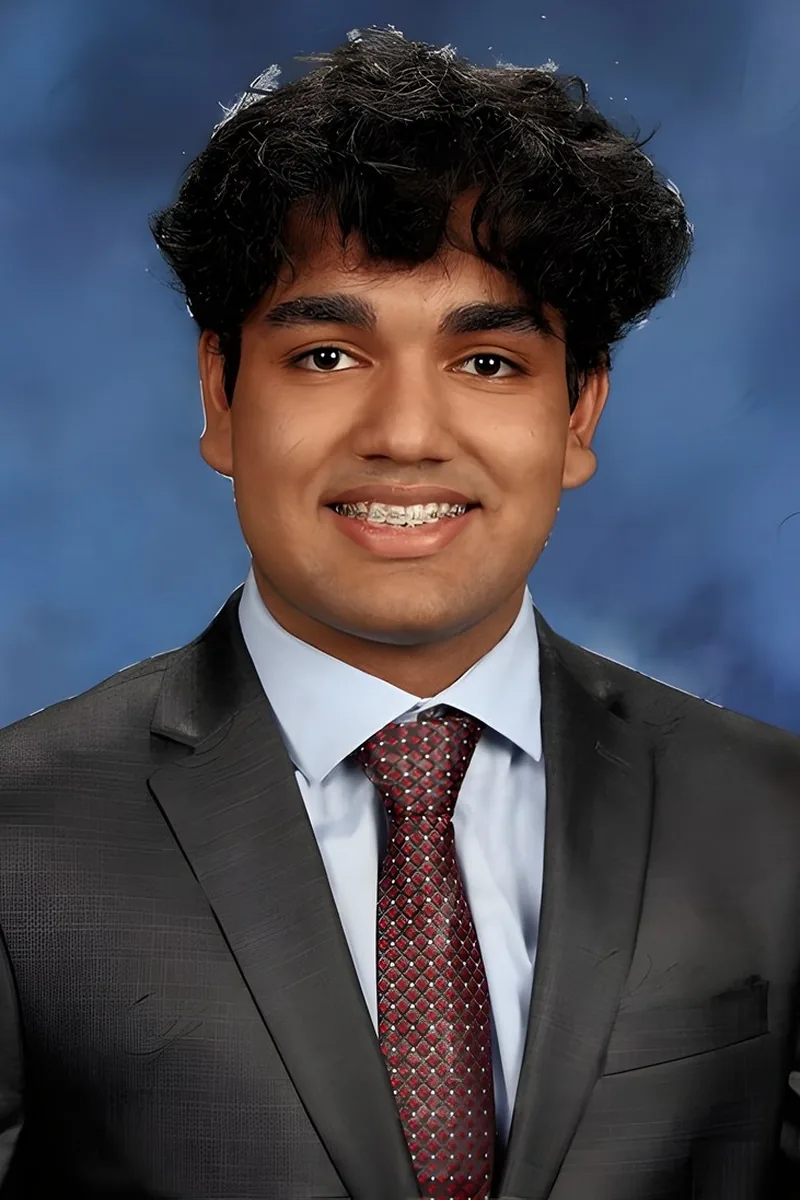
Computer science at Cornell Engineering required Ravnoor to grind through the same rigorous gen chem sequence that gates so many STEM majors — and his 5.0 rating suggests he retained more than enough to teach it. He tackles calculation-dense topics like stoichiometry and gas laws by decomposing them the way a programmer would: isolate the variables, track the units, and debug each step before moving forward.

General chemistry at the college level demands comfort with both conceptual reasoning and quantitative problem-solving — balancing redox half-reactions one day, then interpreting molecular orbital diagrams the next. Kate's master's work in environmental engineering required deep fluency in chemical thermodynamics and kinetics, and she brings that applied perspective to topics like enthalpy calculations, acid-base equilibria, and electrochemistry.
Cognitive Studies at Vanderbilt gave Vy an unusual angle on college chemistry — she understands how students actually learn and retain dense, concept-heavy material like electron configurations, equilibrium shifts, and thermodynamic laws, not just the content itself. She uses that awareness to structure explanations around how the brain organizes new information, which makes a real difference when a student is drowning in a fast-paced gen chem course. Holds a 5.0 rating.
Four years of chemical engineering coursework at Pitt meant Olivia didn't just take gen chem — she leaned on it daily through material balances, reaction engineering, and process thermodynamics, so concepts like enthalpy, equilibrium constants, and stoichiometry are second nature rather than distant memories from freshman year. She's especially sharp at bridging the gap when students can set up a problem conceptually but lose the thread during multi-step calculations involving unit conversions or gas law algebra. Rated 4.9 by students.
Having taken the full gen chem sequence at Cornell alongside organic chemistry and upper-level biology coursework, Jonathan knows exactly where college chemistry concepts like electron configuration, VSEPR theory, and solution stoichiometry start causing problems — usually when the course shifts from memorizable rules to applied reasoning. His human biology background means he naturally ties chemical principles back to biological systems, which tends to click for the pre-med and life science students who make up most of his college chemistry sessions. Rated 4.9 by students.
Organic reaction mechanisms, thermodynamic versus kinetic control, and multi-step synthesis problems demand more than memorization — they require a framework for thinking through electron movement and molecular behavior. Maggie studied Molecular, Cellular, and Developmental Biology as an undergraduate and now applies that foundation daily in her Stanford medical program. She unpacks each mechanism by tracing exactly why electrons move where they do, making complex transformations feel logical.
Thermodynamics, equilibrium constants, and reaction kinetics demand more than memorizing formulas — they require thinking about why a reaction proceeds the way it does. Garrett's coursework in physical chemistry and organic chemistry means he can unpack the energy landscapes and molecular interactions behind each concept. He connects general chemistry principles to their applications in biochemistry and physiology, which makes abstract ideas click faster.
Thermodynamics, equilibrium constants, and electrochemistry all click faster when the tutor has spent years applying them in engineering contexts. Abismael earned his B.S. in Chemical Engineering, so he teaches college-level concepts through real reaction systems rather than abstract formulas. He's known for pushing students with spontaneous, exam-level questions until the material becomes second nature.
Neuroscience at Yale meant David couldn't just skim gen chem — he needed concepts like electrochemistry, molecular bonding, and reaction thermodynamics to stick, because they showed up again in every neurobiology and biochemistry course that followed. Now pursuing graduate work in bioethics, he teaches college chemistry by linking each topic to the bigger scientific picture, so students see why mastering something like intermolecular forces or acid-base equilibria pays off well beyond the final exam. Rated 5.0 by students.
Having studied biology alongside organic chemistry and physical chemistry, Ade knows how college chemistry concepts like electron configuration, molecular geometry, and reaction stoichiometry thread through the rest of a science degree — and where students lose the plot when those ideas get abstract. He tackles the subject by anchoring each new topic to concrete examples from the lab bench, making the jump from Lewis structures to real molecular behavior feel less like a leap of faith.
Dual-majoring in biomedical and chemical engineering at Vanderbilt means William encounters gen chem concepts like reaction thermodynamics, equilibrium, and stoichiometry not as isolated textbook chapters but as tools he actively uses in engineering coursework — which gives him a sharp sense of what "good enough" understanding looks like versus what actually holds up under pressure. He scored a 5 on the AP Chemistry exam and now tackles college chemistry by connecting the molecular-level reasoning to the quantitative problem-solving, so students see why the math works instead of just memorizing setups. Rated 4.8 by students.
Thermodynamics, quantum numbers, and reaction kinetics all demand the kind of mathematical fluency that comes naturally to Nima as a Duke physics student. He unpacks college chemistry problems by grounding each calculation in the underlying physical principles, which makes topics like enthalpy, molecular orbital theory, and electrochemistry far more intuitive.
Testimonials
Because the right College Chemistry tutor makes all the difference.
Average Session Rating – Based on 3.4M Learner Ratings
Other Albuquerque Tutors
Related Science Tutors in Albuquerque
Frequently Asked Questions
College Chemistry demands both conceptual understanding and practical problem-solving skills. Students often struggle with visualizing molecular structures and bonding, balancing complex equations, and applying stoichiometry to real-world scenarios. Many also find the pace challenging—the jump from high school chemistry requires stronger foundational math skills and the ability to think abstractly about atomic and molecular behavior. Personalized tutoring helps bridge these gaps by breaking down abstract concepts into understandable pieces and connecting theory to practical applications.
Your first session focuses on understanding where you are and what you need. A tutor will review your current coursework, identify specific topics causing difficulty, and assess your foundational knowledge in areas like math and general chemistry concepts. Together, you'll create a personalized plan targeting your unique challenges—whether that's mastering equilibrium concepts, improving lab report writing, or strengthening problem-solving strategies. This foundation ensures every subsequent session builds directly toward your goals.
Yes. Tutors help students understand the scientific method, design experiments, analyze data, and write lab reports that demonstrate genuine comprehension. Beyond just getting the right answer, tutoring develops your ability to think like a scientist—predicting outcomes, troubleshooting when experiments don't go as planned, and drawing meaningful conclusions from your observations. This deeper understanding of the experimental process strengthens both your lab grades and your overall grasp of chemistry concepts.
Understanding is the foundation, but strategic memorization supports it. College Chemistry requires you to know key reactions and formulas, but memorizing without understanding leads to mistakes when problems are slightly different from examples you've seen. The best approach combines both: tutors help you understand the underlying principles so formulas make sense, then reinforce key information through practice and retrieval strategies. This builds confidence and flexibility when tackling unfamiliar problems on exams.
These skills improve with structured practice and clear conceptual understanding. Many students struggle because they're treating conversions as mechanical steps rather than understanding the relationships between quantities. Tutors break down the logic behind dimensional analysis and stoichiometry, show you how to set up problems systematically, and provide targeted practice on progressively harder problems. Once you see the underlying patterns, conversions and stoichiometry become much more manageable.
Tutors use multiple strategies to make abstract concepts concrete—drawing Lewis structures, using molecular models, connecting bonding to observable properties, and relating concepts to real-world examples. For instance, understanding why water is polar becomes clearer when you visualize electron distribution and see how that polarity explains why water dissolves salts. Regular practice with visual representations and analogies helps your brain build stronger mental models, making it easier to predict behavior and solve problems.
Varsity Tutors connects you with expert tutors who have strong backgrounds in chemistry and experience teaching college-level students. When you get matched with a tutor, you'll know their qualifications, teaching approach, and availability. You can also discuss your specific needs—whether you need help with general chemistry concepts, organic chemistry, or lab skills—to ensure a great fit. Most students start with a trial session to confirm the tutoring relationship works before committing to ongoing sessions.
Improvement depends on your starting point and how consistently you engage with tutoring, but research on 1-on-1 instruction shows significant gains when students work with a tutor who tailors explanations to their learning style. Many students see meaningful score improvements within 4-6 weeks of regular sessions, especially when tutoring is combined with consistent practice between sessions. The key is addressing gaps early and building genuine understanding rather than cramming—tutors help you develop both the knowledge and test-taking strategies needed for success.
Let’s find your perfect tutor
Answer a few quick questions. We’ll recommend the right plan and match you with a top 5% tutor.