Award-Winning AP Biology Tutors
serving Albuquerque, NM
AP Biology
Tutors in Albuquerque
Private 1-on-1 tutoring, weekly live classes for academic support, test prep & enrichment, practice tests and diagnostics, and more to elevate grades and test scores.
Based on 3.4M Learner Ratings
UniversitiesSchools & Universities
DeliveredHours Delivered
ProficiencyGrowth in Proficiency
Who needs tutoring?
No obligation. Takes ~1 minute.
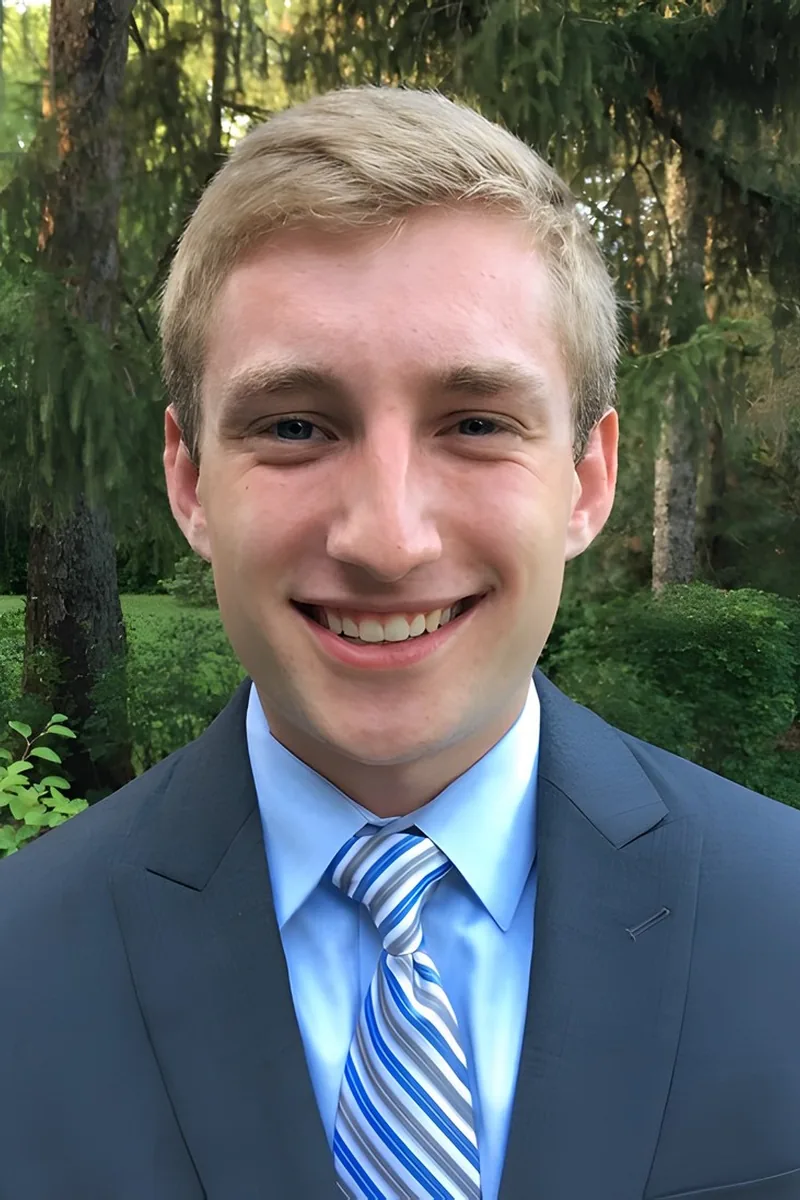
As a biology major at Washington University in St. Louis who served as a teaching assistant for an upper-level biology course, Alexander knows AP Bio from both sides — the content and the exam. He digs into the trickiest units, like cell signaling pathways and gene regulation, by mapping out the logic visually rather than relying on rote memorization. His approach emphasizes the data-analysis and experimental-design questions that carry heavy weight on the AP exam.

A Yale biochemistry degree plus a year of wet lab research at the NIH means Matthew knows AP Biology's toughest units — molecular genetics, cellular energetics, signal transduction — from the inside out. He teaches the exam's data-analysis questions the way a working scientist reads them: by identifying variables, controls, and what the graph is actually telling you. His 4.9 rating speaks to how well that real-world perspective translates in sessions.
Brown's Health and Human Biology concentration has Nova deep in the cellular and molecular content that AP Bio tests hardest — but her real edge is on the SAT Subject Test in Biology E/M, which means she's drilled the kind of rapid concept application the AP exam's multiple-choice section demands. She scored a 1530 SAT and holds a 5.0 rating, and she approaches the evolution and ecology units by tying them back to the human biology lens that makes abstract population dynamics feel concrete.
Studying biological sciences at Cornell means Viraj is immersed in the same cellular processes, genetics pathways, and ecological principles that AP Biology tests at a college level. He teaches students to think in terms of energy flow and information transfer — the two conceptual threads the College Board uses to connect every unit on the exam. His 5.0 rating speaks to how well that framework translates to exam-day performance.
Cell and molecular biology was Emily's concentration at Duke, where she graduated summa cum laude — so the AP Bio units on gene expression, cell communication, and the central dogma aren't review material she's recalling vaguely, they're concepts she studied at an advanced level and now revisits daily as a Columbia medical student. She's especially sharp at teaching students to diagram signal transduction pathways and trace how a single mutation can ripple through protein function, cell behavior, and organism-level phenotype — the kind of multi-scale reasoning that separates 4s from 5s on the exam. Rated 5.0 by students.
Teaching has been a lifelong passion of mine. What drives me is sharing knowledge while genuinely connecting with others. I discovered my love for tutoring in high school and have been dedicated to it ever since. At Stanford University, I earned a BS in Human Biology and Chemistry while continuing to tutor throughout, advancing to Lead Tutor. After graduation, I spent a year as a Teaching Associate, designing and delivering course content which significantly broadening my pedagogical approach. What sets me apart is my versatility. Having served as both tutor and instructor, I can adapt my teaching style to each student's unique needs, whether that be building up foundational skills or pursuing advanced mastery. I'm now pursuing graduate studies at The Johns Hopkins School of Medicine, staying engaged with cutting-edge science while maintaining my commitment to education. I look forward to helping you achieve your academic goals!
Nicolette's bioengineering degree from Rice meant she didn't just memorize biological systems — she had to model them, which is exactly the kind of mechanistic thinking AP Bio's free-response questions demand when students need to explain processes like signal transduction or feedback in gene regulation. Her engineering training makes her especially sharp at teaching students to reason through experimental design and data interpretation questions, where you have to connect variables to biological outcomes rather than just recall facts. Rated 5.0 by students.
Environmental science coursework gave Ethan an ecology-first perspective on biology — population dynamics, energy flow through ecosystems, and the interplay between organisms and their environments — which lines up directly with AP Bio's ecology and evolution units that many science-focused tutors breeze past. He also teaches AP Statistics, so he's unusually comfortable with the data interpretation and experimental design questions that trip students up on the exam. Rated 5.0 by students.
Graduate research in Chemical and Physical Biology at Vanderbilt meant Dennis spent years at the intersection of chemistry and living systems — dissecting metabolic pathways, protein interactions, and cellular energetics at a level that makes AP Bio's toughest biochemistry content second nature. His biochemistry undergraduate degree adds even more depth to the molecular biology and genetics units, where he can unpack processes like enzyme kinetics or gene regulation by grounding them in the actual chemistry students rarely get to see in a high school course. Rated 5.0 by students.
Laura's economics background might seem like an odd fit for AP Bio, but it actually sharpens one of the exam's trickiest skills: interpreting data sets, reading graphs under pressure, and constructing logical arguments from evidence — exactly what the free-response section demands. She also tutors the SAT Bio Subject Test and college biology, so she's comfortable with content from ecology and population dynamics to cellular processes. Rated 5.0 by students.
Ethan's economics and public policy studies at the University of Chicago aren't a typical path into AP Bio, but they've made him sharp at interpreting data sets, constructing evidence-based arguments, and reasoning through cause-and-effect chains — all skills the exam's free-response questions heavily reward. He's especially useful for students who struggle with the experimental design and data analysis portions of the test, where reading graphs and evaluating hypotheses matters more than memorizing vocabulary.
Studying neurobiology and behavior at Penn means Emily lives in the territory where AP Bio gets hardest — signal transduction, nervous system function, and the molecular machinery behind how cells communicate and respond to their environment. She's especially good at unpacking the genetics-to-phenotype pipeline, showing students how a mutation in one gene can ripple through protein folding, cell signaling, and ultimately organism-level behavior. Rated 5.0 by students.
Testimonials
Because the right AP Biology tutor makes all the difference.
Average Session Rating – Based on 3.4M Learner Ratings
Practice AP Biology
Free practice tests, flashcards, and AI tutoring for AP Biology
Other Albuquerque Tutors
Related Science Tutors in Albuquerque
Frequently Asked Questions
AP Biology covers eight major units: chemistry of life, cell structure and function, cellular transport, cell communication and division, heredity, gene expression and regulation, natural selection, and ecology. Most students benefit from starting test prep 3-4 months before the May exam, though personalized tutoring can help you focus on your specific weak areas and accelerate progress. The exam itself is 3 hours long and includes multiple-choice questions, free-response questions, and lab-based scenarios.
Many students struggle with connecting abstract cellular concepts to real-world applications, managing the heavy vocabulary load, and understanding complex processes like photosynthesis and cellular respiration. Additionally, the free-response section requires students to explain concepts in depth and apply knowledge to new situations—skills that benefit greatly from targeted practice and feedback. Personalized instruction helps you identify which concepts aren't clicking and build stronger conceptual understanding rather than just memorizing facts.
Score improvement depends on your starting point and how consistently you engage with tutoring and practice. Students who work with a tutor 1-2 times per week for 2-3 months typically see meaningful gains—often 2-4 points on the 1-5 scale—by addressing conceptual gaps and developing stronger test-taking strategies. The key is identifying your weakest units early and dedicating focused practice time to those areas before the exam.
Your first session focuses on understanding your current knowledge level, identifying which AP Biology concepts are strongest and which need work, and discussing your goals for the exam. A tutor will likely ask about your class performance, any practice test scores you have, and which topics feel most confusing. From there, you'll develop a personalized study plan that targets your specific needs and fits your timeline before the May exam.
Success on AP Biology requires balancing speed with accuracy on the multiple-choice section while managing your time for the free-response questions. Key strategies include reading questions carefully to catch what's actually being asked, eliminating obviously wrong answers first, and spending adequate time on free-response questions where you can earn partial credit by showing your reasoning. Practice tests are essential—they help you develop pacing, identify question formats that trip you up, and build confidence before test day.
Varsity Tutors connects you with expert tutors in Albuquerque who specialize in AP Biology and understand the curriculum inside and out. Whether you need help with specific units, full exam preparation, or strategies for the free-response section, you can get matched with a tutor who fits your learning style and schedule. Personalized 1-on-1 instruction allows you to move at your own pace and focus on exactly what you need to succeed.
Practice tests are crucial—they help you get comfortable with the exam format, identify which concepts you haven't fully mastered, and develop realistic pacing for test day. Taking full-length practice tests under timed conditions several weeks before the exam gives you valuable data about where to focus your final study efforts. A tutor can review your practice test results with you, explain why you missed certain questions, and help you refine your approach to similar problems.
The AP Biology exam includes questions based on the required labs and general experimental design principles. These questions test your ability to interpret data, design experiments, and apply lab concepts to new scenarios. Working with a tutor, you can practice analyzing graphs and data sets, understanding experimental controls, and explaining results—skills that go beyond memorizing what happened in specific labs and help you tackle unfamiliar lab scenarios on test day.
Let’s find your perfect tutor
Answer a few quick questions. We’ll recommend the right plan and match you with a top 5% tutor.