Award-Winning AP Physics C: Mechanics Tutors
serving Albuquerque, NM
AP Physics C: Mechanics
Tutors in Albuquerque
Private 1-on-1 tutoring, weekly live classes for academic support, test prep & enrichment, practice tests and diagnostics, and more to elevate grades and test scores.
Based on 3.4M Learner Ratings
UniversitiesSchools & Universities
DeliveredHours Delivered
ProficiencyGrowth in Proficiency
Who needs tutoring?
No obligation. Takes ~1 minute.

Building toward a physics degree at UNM, Jordan treats AP Physics C: Mechanics the way he approaches his own coursework — grounding every problem in physical intuition before touching the calculus. He spends time making sure a student actually understands how gravitational acceleration and net force connect before asking them to set up the differential equation for a pendulum or integrate a variable force along a curved path. Rated 4.7 by students.
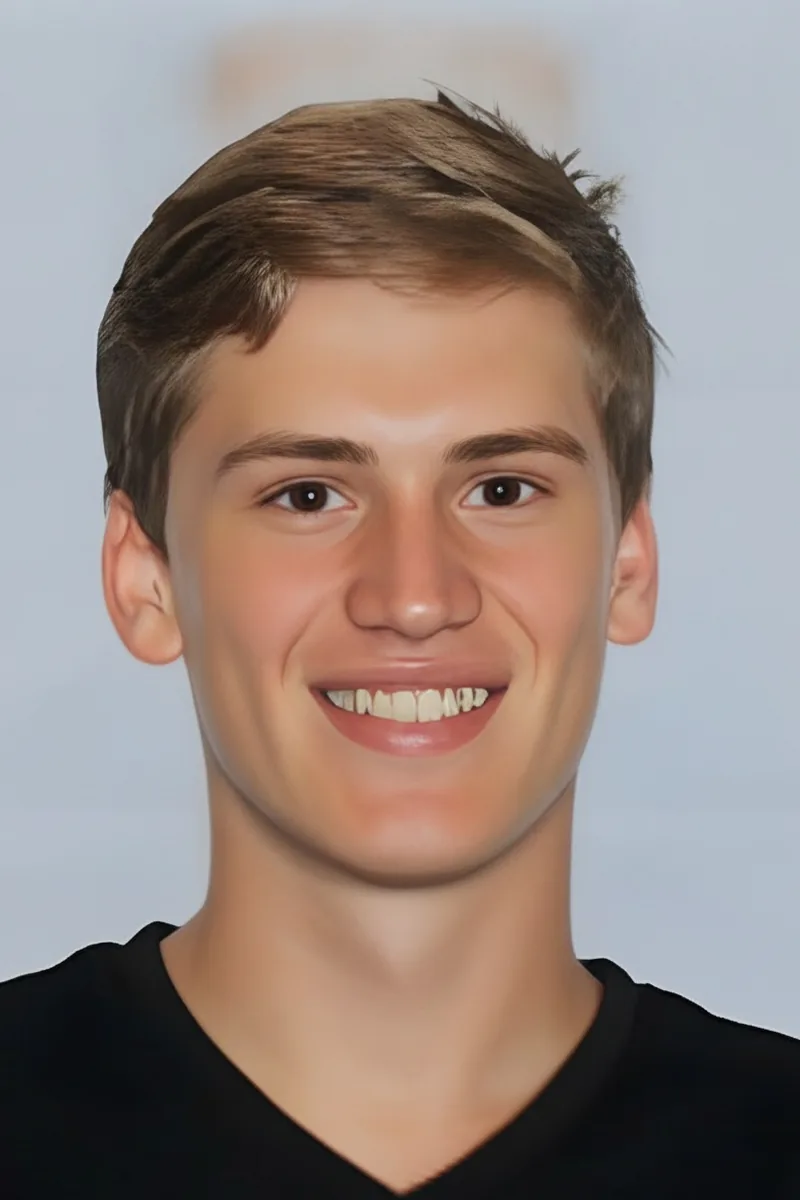
Studying Mechanical & Aerospace Engineering at Princeton, Nicolas solves calculus-based mechanics problems daily that go well beyond what the AP exam asks — rigid body dynamics, energy methods for complex systems, and the vector calculus behind rotational motion. That depth lets him quickly pinpoint whether a student's mistake lives in the physics reasoning or the integral setup, and fix the actual gap. Rated 5.0 by students.
Three years of tutoring introductory physics students while completing dual bachelor's degrees in physics and mathematics — followed by a PhD in Computational Mathematics — means Justin has taught the calculus-based mechanics in AP Physics C from both sides of the chalkboard. He digs into the spots where students typically stall, like setting up angular momentum problems or knowing when a scenario calls for energy methods versus force analysis, and walks through the underlying math until the physics clicks. Rated 5.0 by students.
Biophysics at Rice means Aadith solves mechanics problems where the calculus isn't optional — modeling forces on protein structures, analyzing torque in molecular motors, applying Newton's laws to systems most students never picture in a physics classroom. That cross-disciplinary lens gives him a knack for teaching students how to read a physical scenario and decide whether to reach for an energy integral or a force-based differential equation. His 1590 SAT underscores the mathematical precision he brings to every free-response setup.
Dylan's physics major at Vanderbilt means he's working through the same calculus-based Newtonian mechanics — torque integrals, rotational kinematics, differential equations for oscillating systems — that AP Physics C: Mechanics demands, and his 36 ACT reflects the quantitative precision that carries over to exam performance. He leans on graphical and physical intuition to make abstract quantities like angular momentum feel tangible before translating them into the calculus setup the free-response section scores on.
Biology majors at Cornell don't usually seek out calculus-based physics — but Drishti's 1500 SAT and her comfort across both AP Calculus BC and AP Physics C suggest she genuinely clicks with the quantitative side of science, not just the biological. She's especially useful for students who need someone to slow down on the free-body-diagram-to-integral pipeline, translating the physical setup into the calculus without assuming steps are obvious. Rated 5.0 by students.
UCLA's engineering curriculum has David solving the same calculus-based mechanics — work-energy integrals, variable-force problems, rotational inertia derivations — that the AP Physics C exam tests, and his computer science training adds a systematic, algorithmic approach to setting up multi-step free-response problems. He's especially sharp at teaching students to diagram a physical system, identify which conservation law applies, and then write the correct integral or derivative before calculating anything. Rated 4.8 by students.
Corrina's mechanical engineering degree means she's solved the calculus-based force, torque, and energy problems in AP Physics C: Mechanics not as exam prep but as daily coursework — and her 1580 SAT reflects the quantitative precision that makes the difference on tricky free-response integrations. She zeroes in on the transition from linear to rotational dynamics, where most students lose points by misapplying familiar formulas instead of building the physics from the differential equation up.
Often, courses forget the fun and intuitive aspects of physics and mathematics, so I try to emphasize this while problem-solving. Since everyone learns differently, multiple approaches to solving problems are useful to discuss when possible. I understand many students have different priorities (e.g., time crunch on problem sets, building intuition, developing learning strategies), so I try to be flexible.
AP Physics C: Mechanics often trips up students who are comfortable with calculus in a math class but freeze when they need to apply it to a pulley system or a variable-force spring problem. Andrew pairs his strong math background — he's pursuing a double focus in finance and mathematics at Boston College — with hands-on physics tutoring across multiple levels, including the SAT Physics subject test. That cross-subject fluency means he can spot whether a student's stuck on the physics setup or the calculus execution and address the right one.
Mechanics is where Cory is most at home. He treats AP Physics C: Mechanics as a student's first real encounter with calculus-based reasoning about the physical world — deriving kinematic equations from integrals, connecting Newton's laws to differential equations in rotational dynamics, and building intuition for conservation laws that goes beyond plugging into formulas. His physics degree means the vector calculus never gets hand-waved away.
Darren is midway through his physics degree at Northwestern, which means he's actively taking the upper-division mechanics courses that build directly on everything AP Physics C tests — and he still remembers exactly where the conceptual jumps from kinematics to rotational dynamics tripped him up the first time. He zeroes in on free-body diagrams and getting the calculus setup right before students ever touch a number, treating each problem as a reasoning exercise rather than a formula hunt. Rated 5.0 by students.
Jared's PhD work in mechanical engineering at Lehigh means he's solving advanced dynamics problems daily — the kind where AP Physics C's rotational kinematics and work-energy integrals are just the warm-up. His biomedical engineering background adds a practical dimension: he can show students how a torque problem on the exam mirrors the same mechanics behind joint loading or prosthetic design, making abstract calculus-based physics feel grounded in something real.
Testimonials
Because the right AP Physics C: Mechanics tutor makes all the difference.
Average Session Rating – Based on 3.4M Learner Ratings
Practice AP Physics C: Mechanics
Free practice tests, flashcards, and AI tutoring for AP Physics C: Mechanics
Other Albuquerque Tutors
Related Science Tutors in Albuquerque
Frequently Asked Questions
AP Physics C: Mechanics focuses on classical mechanics and includes kinematics, Newton's laws, work and energy, momentum, circular motion, oscillations, and gravitation. The course emphasizes calculus-based problem solving, so you'll need to apply derivatives and integrals to physics concepts. This rigorous curriculum prepares you for the AP exam, which tests both conceptual understanding and mathematical application across these core topics.
The main difficulty lies in combining calculus with physics—you're not just solving equations, but understanding how rates of change and accumulation apply to motion and forces. Many students struggle with free-response problems that require multi-step reasoning and clear mathematical justification. Time management during the exam is another common challenge, as the 90-minute section requires quick problem solving without a calculator for part of it.
The exam is divided into two sections: a 45-minute multiple-choice section (35 questions, calculator not allowed) and a 45-minute free-response section (3 problems, calculator allowed). The multiple-choice tests quick recall and conceptual understanding, while free-response problems require detailed work showing your reasoning and calculations. Scoring well on both sections requires different strategies—speed and accuracy for multiple choice, and thorough problem-solving for free response.
Score improvement depends on your starting point and consistency with practice. Students who work with tutors to identify weak topics, practice regularly with released AP exams, and refine problem-solving strategies typically see improvements of 1-3 points on the AP scale (out of 5). The key is targeted practice on your specific challenges—whether that's understanding circular motion, mastering energy conservation, or improving free-response communication.
Look for tutors with strong physics backgrounds—ideally those who've taught AP Physics C, scored well on the exam themselves, or have degrees in physics or engineering. They should understand both the conceptual framework and the calculus required, and be able to explain why formulas work, not just how to use them. Experience with AP exam scoring rubrics is valuable too, as it helps tutors teach you how to communicate your solutions effectively.
Start by mastering one topic at a time using practice problems from released exams, then gradually combine topics as you progress. Build in regular practice tests under timed conditions to develop pacing skills and identify weak areas. Dedicate extra time to free-response problems, since they require showing all your work and reasoning—this is where many students lose points. A tutor can help you create a personalized timeline and focus on the topics that need the most work.
Your first session is about assessment and planning. A tutor will review your current understanding of key mechanics concepts, look at any practice problems or exams you've already completed, and identify which topics need the most attention. Together, you'll create a study plan tailored to your timeline and goals—whether you're preparing months in advance or cramming before the exam. This personalized approach ensures your tutoring time is spent where it matters most.
Albuquerque's 31 school districts and 241 schools offer varying levels of AP Physics support, and many have study groups or review sessions in the weeks before the exam. Connecting with expert tutors through Varsity Tutors gives you personalized instruction that complements your school's resources, helping you fill gaps and work through challenging concepts at your own pace. This combination of school support and personalized tutoring is especially valuable for a demanding course like AP Physics C.
Let’s find your perfect tutor
Answer a few quick questions. We’ll recommend the right plan and match you with a top 5% tutor.